
Chef Remy
Bananas Foster French Toast
Thick-cut brioche drenched in vanilla custard, griddled until golden, then crowned with rum-flambéed bananas swimming in butter and brown sugar, the kind of breakfast that makes you cancel your morning plans.
A cooking platform built around craft, culture, and the stories behind what we eat.

Created by Chef Remy
Thick slices of day-old French bread transformed by a rich vanilla custard, pan-fried until golden and crisp on the outside, impossibly custardy within, dusted with powdered sugar and drizzled with warm Louisiana cane syrup.
Pain perdu means 'lost bread' in French, and that tells you everything about where this dish comes from. It comes from thrift, from not wasting a single thing in the kitchen, from making something extraordinary out of what most folks would throw away. My grandmother Evangeline made this every Sunday morning with the bread left over from the week, and I promise you, nobody at that table felt like they were eating leftovers.
The secret is stale bread. Fresh bread falls apart in the custard and turns to mush. Day-old French bread has dried out just enough to absorb that rich egg mixture without dissolving. The outside gets crisp and golden in the butter while the inside stays soft as a cloud. That contrast is what makes pain perdu different from ordinary French toast.
At Lagniappe, we serve this with real Louisiana cane syrup, the kind that tastes like molasses and caramel had a baby. That's the bayou way. You can use maple if you must, but once you try cane syrup on pain perdu, you won't go back. The sweetness is deeper, more complex, and it belongs to this dish the way jazz belongs to New Orleans.
Quantity
1 loaf (about 16 inches)
Quantity
4
Quantity
1 cup
Quantity
1/2 cup
Quantity
1/4 cup
Quantity
2 teaspoons
Quantity
1/2 teaspoon
Quantity
1/4 teaspoon
freshly grated
Quantity
1/4 teaspoon
Quantity
4 tablespoons
divided
Quantity
for dusting
Quantity
for serving
warmed
Quantity
for serving
| Ingredient | Quantity |
|---|---|
| day-old French bread | 1 loaf (about 16 inches) |
| large eggs | 4 |
| whole milk | 1 cup |
| heavy cream | 1/2 cup |
| granulated sugar | 1/4 cup |
| pure vanilla extract | 2 teaspoons |
| ground cinnamon | 1/2 teaspoon |
| nutmegfreshly grated | 1/4 teaspoon |
| fine sea salt | 1/4 teaspoon |
| unsalted butterdivided | 4 tablespoons |
| powdered sugar | for dusting |
| Louisiana cane syrupwarmed | for serving |
| fresh berries (optional) | for serving |
Slice the French bread on the bias into pieces about one and a quarter inches thick. You want thick slices because thin ones will fall apart in the custard. The diagonal cut gives you more surface area for soaking and a prettier presentation on the plate. You should get about eight good slices from a standard loaf.
Crack the eggs into a wide, shallow dish (a pie plate works perfectly). Add the milk, heavy cream, sugar, vanilla, cinnamon, nutmeg, and salt. Whisk until everything is completely combined and the sugar has dissolved. The custard should be a uniform pale yellow with no streaks of egg white visible. Taste it. It should taste like liquid vanilla ice cream. That's the bayou way: taste as you go.
Lay three or four bread slices in the custard, depending on how many fit without overlapping. Let them soak for about thirty seconds, then flip and soak the other side for another thirty seconds. The bread should feel heavy and saturated but still hold together when you lift it. Press gently with your fingers. If it feels spongy and gives slightly, it has absorbed enough. Do not rush this step, but do not drown the bread either.
Melt two tablespoons of butter in a large cast iron skillet or heavy-bottomed pan over medium heat. Swirl to coat the bottom completely. When the butter stops foaming and smells nutty, just before it starts to brown, your pan is ready. Listen for a gentle sizzle when you flick a drop of custard into the pan. Too hot and the outside burns before the inside cooks. Too cool and you get soggy, greasy bread.
Lay the soaked bread slices in the pan, leaving an inch between each piece. Cook without moving them for three to four minutes until the bottom is deeply golden and caramelized. When you peek underneath and see that rich amber color, flip gently with a spatula. The second side needs another three to four minutes. The bread should feel firm when pressed lightly and spring back. Work in batches, adding more butter between each batch.
Transfer finished slices to a wire rack set over a baking sheet in a 200F oven while you cook the remaining batches. The rack keeps the bottoms from getting soggy. Add another tablespoon of butter to the pan, let it melt and foam, then continue with the next batch of soaked bread.
Arrange two slices per plate, overlapping slightly. Give them a generous shower of powdered sugar through a fine-mesh strainer, letting some drift onto the plate like fresh snowfall. Drizzle warm cane syrup over the top in lazy ribbons. Add fresh berries if you like, though the dish stands on its own beautifully. Serve immediately. Pain perdu waits for no one.
1 serving (about 255g)
Culinary guides, cultural storytelling, and the editorial depth that makes cooking meaningful.
Discover Culinary ExplorerChef Remy
Thick-cut brioche drenched in vanilla custard, griddled until golden, then crowned with rum-flambéed bananas swimming in butter and brown sugar, the kind of breakfast that makes you cancel your morning plans.

Chef Remy
Creamy bread pudding transformed into thick, golden slices with caramelized edges and soft custard centers, drowned in a sinful bourbon whiskey sauce that pools on the plate and demands to be mopped up with every bite.

Chef Remy
The crown jewel of New Orleans brunch since 1908: silky poached eggs perched on tender artichoke hearts and garlicky creamed spinach, blanketed in golden hollandaise that pools into every crevice
Chef Remy
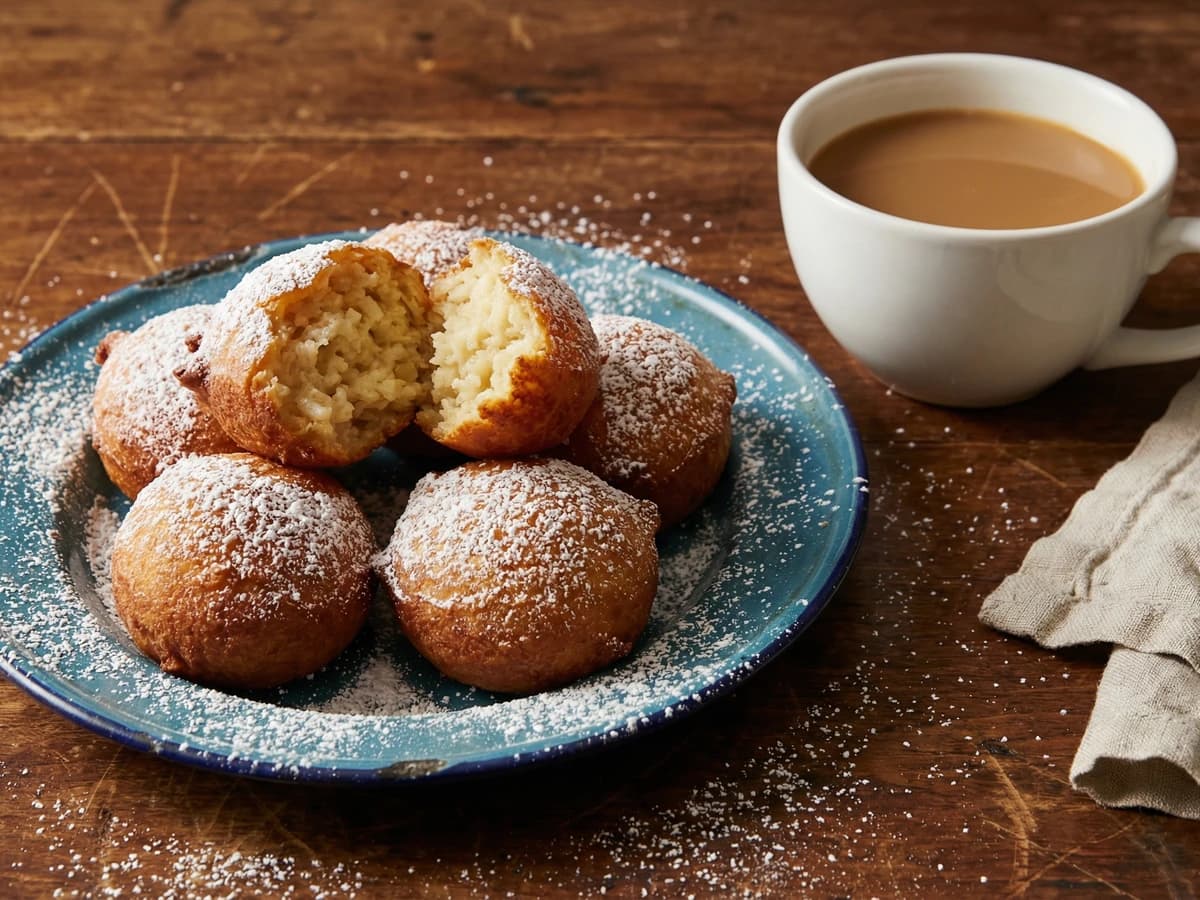
Crispy, golden rice fritters born from the streets of the old French Quarter, where vendors once called out 'Belles calas!' at dawn, dusted with powdered sugar and eaten warm with café au lait.