Chef Isabel
Abanico Ibérico a la Plancha
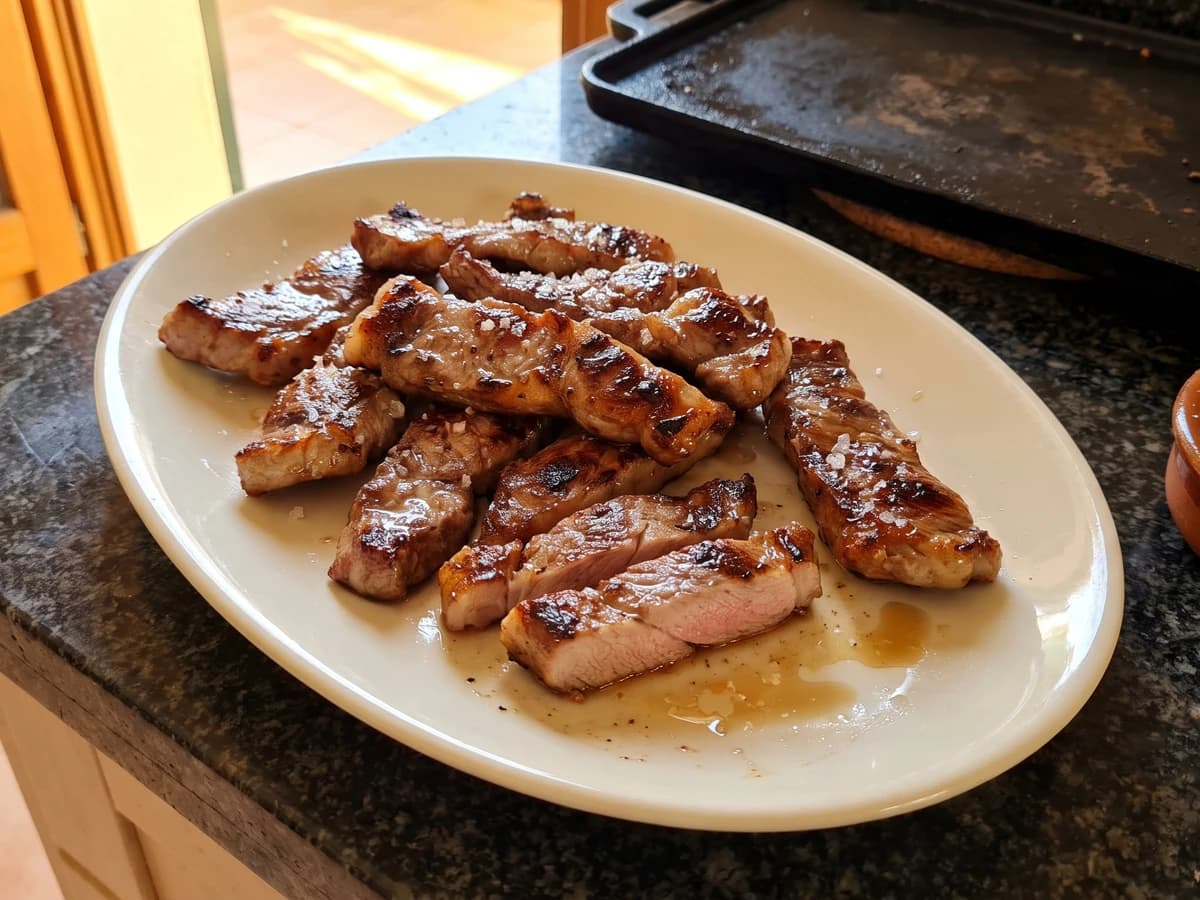
Extremadura's dehesa gives us this fan-shaped, marbled rib cut: salt it at the last moment, lay it on a fierce plancha, and count in seconds so the centre stays juicy.
A cooking platform built around craft, culture, and the stories behind what we eat.
Created by
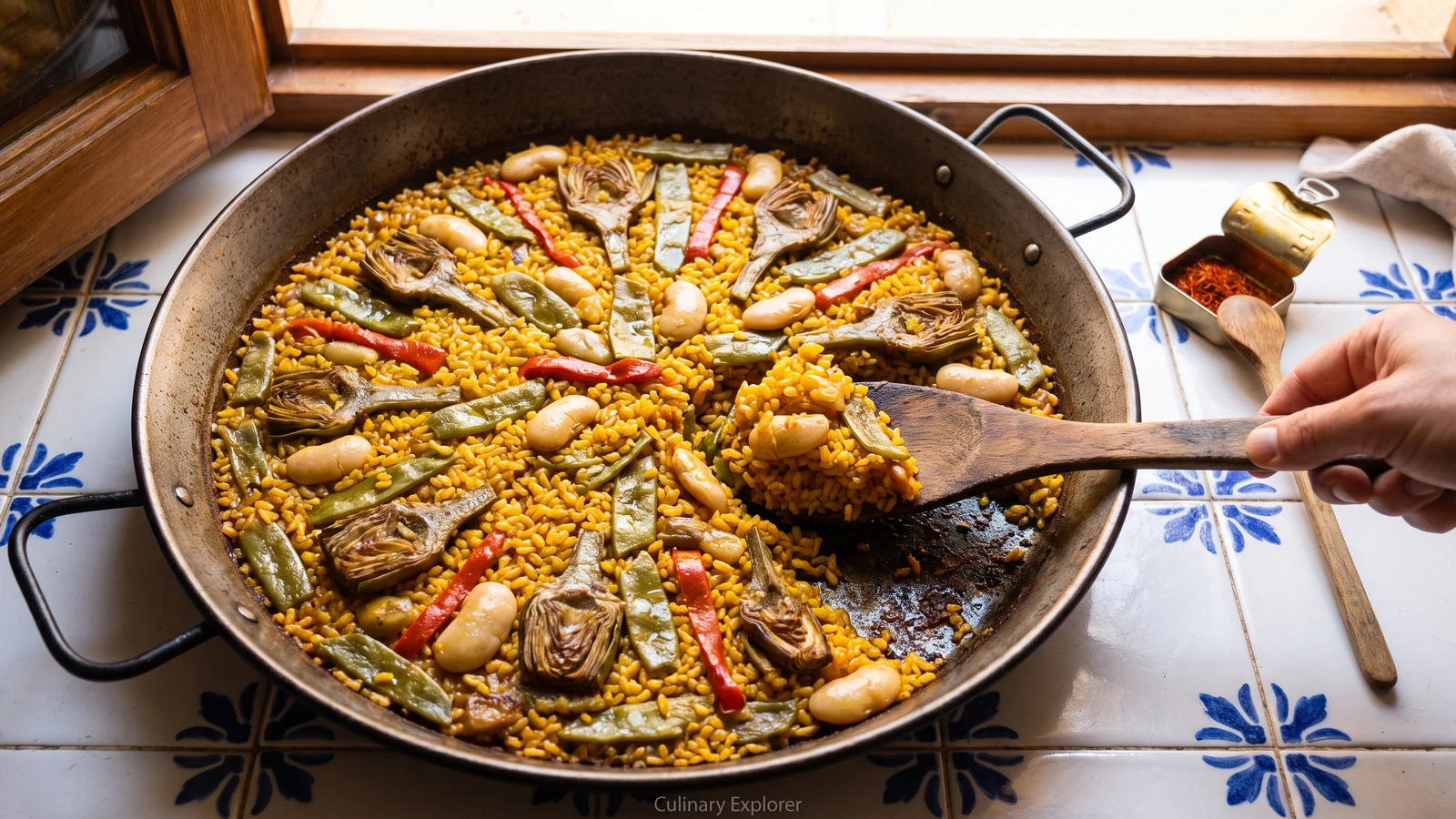
Paella de verduras is Valencia's market-garden paella: artichokes, ferraura, garrofó, peppers, saffron rice, and a dry finish. Build the sofrito, toast the rice, then leave the pan alone.
Paella de verduras is Valencian, from the rice land and the huerta around Valencia, and it is a paella because the rice cooks wide, shallow, and dry in the pan. Artichokes, ferraura (flat green beans), garrofó, the broad Valencian lima bean, pepper, tomato sofrito, saffron, and short-grain rice. No meat is needed. No chorizo either. That would be another dish trying to wear this one's name.
Here the method that decides it is the stillness after the stock goes in. You build the sofrito, the slow tomato and garlic base, until it is thick and sweet; you move the rice through that oil until each grain gleams; then you add the hot liquid all at once and leave it alone. Stir after that and you release the starch that makes the finish soft. A Valencian paella wants separate rice, a dry top, and socarrat, the toasted crust, catching underneath.
No hace falta haber pisado España. If garrofó is not where you are, use frozen large lima beans; they are plainer, but they behave. If you cannot find Valencian rice, Calasparra is the next honest choice, and arborio only at a pinch, with a little less liquid and no stirring. In the Margin beside this one I wrote one sentence: leave the pan alone. Siempre sale, si lo sigues.
Paella belongs to Valencia, especially the rice country around l'Albufera and the huerta that feeds the city, where shallow pans of arroz seco were cooked outdoors over vine and orange prunings. The word paella names the pan itself in Valencian, and the dish keeps that logic: a wide surface, a thin layer of rice, and liquid cooked away rather than stirred in. A vegetable paella follows the same rule with market-garden produce, ferraura, garrofó, artichokes, and peppers in their seasons; chorizo belongs to other dishes, and not every arroz gets to borrow the name.
Quantity
400g
not rinsed
Quantity
1.2L
hot, unsalted or lightly salted
Quantity
80ml
Quantity
250g fresh or 220g canned
grated if fresh
Quantity
200g
trimmed and cut into 4cm pieces
Quantity
200g
fresh or frozen
Quantity
3 medium (about 600g whole, 250g trimmed)
trimmed and quartered
Quantity
1 (about 180g)
cut into broad strips
Quantity
3
finely chopped
Quantity
1 teaspoon
Quantity
0.2g
crumbled into hot stock
Quantity
10g, plus more to taste
| Ingredient | Quantity |
|---|---|
| Valencian short-grain rice, preferably bomba or senianot rinsed | 400g |
| light vegetable stock or waterhot, unsalted or lightly salted | 1.2L |
| extra virgin olive oil | 80ml |
| ripe tomatoes or good canned crushed tomatograted if fresh | 250g fresh or 220g canned |
| flat green beans (ferraura)trimmed and cut into 4cm pieces | 200g |
| garrofó or large frozen lima beansfresh or frozen | 200g |
| artichokestrimmed and quartered | 3 medium (about 600g whole, 250g trimmed) |
| red bell peppercut into broad strips | 1 (about 180g) |
| garlic clovesfinely chopped | 3 |
| sweet pimentón | 1 teaspoon |
| saffron threadscrumbled into hot stock | 0.2g |
| fine sea salt | 10g, plus more to taste |
Warm the stock in a small pot and crumble the saffron into 2 tablespoons of it. Set a 38-40cm paellera over a wide, even heat. Taste the stock; with the rice added it should land savoury and clear, not dull. If it is unsalted, start with the 10g salt and adjust before the rice goes in.
Add the olive oil to the paellera over medium-high heat. Fry the pepper strips for 3 minutes, then add the artichokes cut side down and let them take colour, 4 to 5 minutes. Add the flat green beans and garrofó and cook 3 minutes more, moving everything now and then. Pale vegetables give pale rice, so let the edges catch a little.
Push the vegetables to the edges and add the garlic to the oil in the centre for 20 seconds. Add the grated tomato and cook it down, scraping the pan, until it is thick, darker, and the oil shows at the edges, 8 to 10 minutes. Stir in the pimentón for 10 seconds. This slow sofrito is where the sweetness comes from; rush it and the whole pan tastes thinner.
Scatter in the rice and move it through the vegetables and sofrito for 1 minute, until every grain is glossy and the edges look a little pearly. Pésalo, no lo adivines: too much rice for the pan makes a heavy layer that cannot cook dry. This is a paella, not a stirred arroz.
Pour in the hot stock and saffron all at once. Use the spoon only now to spread the rice into an even layer and settle the vegetables, then stop touching it. From this moment, do not stir. Stirring works the starch loose and gives you a soft rice dish, possibly a good one, but not this Valencian paella.
Let the pan bubble strongly for 9 to 10 minutes, then lower the heat and cook another 8 to 10 minutes, rotating the pan if your burner is uneven. The grains should rise through the liquid and the surface should look dry near the end. If the pan is dry while the top grains are still chalky, trickle 60ml hot water around the edge and give it 2 minutes more, still without stirring.
When the rice is tender with a little bite and the pan sounds dry, raise the heat for 60 to 90 seconds. Listen for a fine crackle and smell for toasted cereal, not bitterness. Take the paella off the heat, cover it with a clean cloth, and rest it 5 to 10 minutes. Serve straight from the pan, scraping a little socarrat into each portion.
1 serving (about 550g)
Culinary guides, cultural storytelling, and the editorial depth that makes cooking meaningful.
Discover Culinary ExplorerChef Isabel
Extremadura's dehesa gives us this fan-shaped, marbled rib cut: salt it at the last moment, lay it on a fierce plancha, and count in seconds so the centre stays juicy.
Chef Isabel
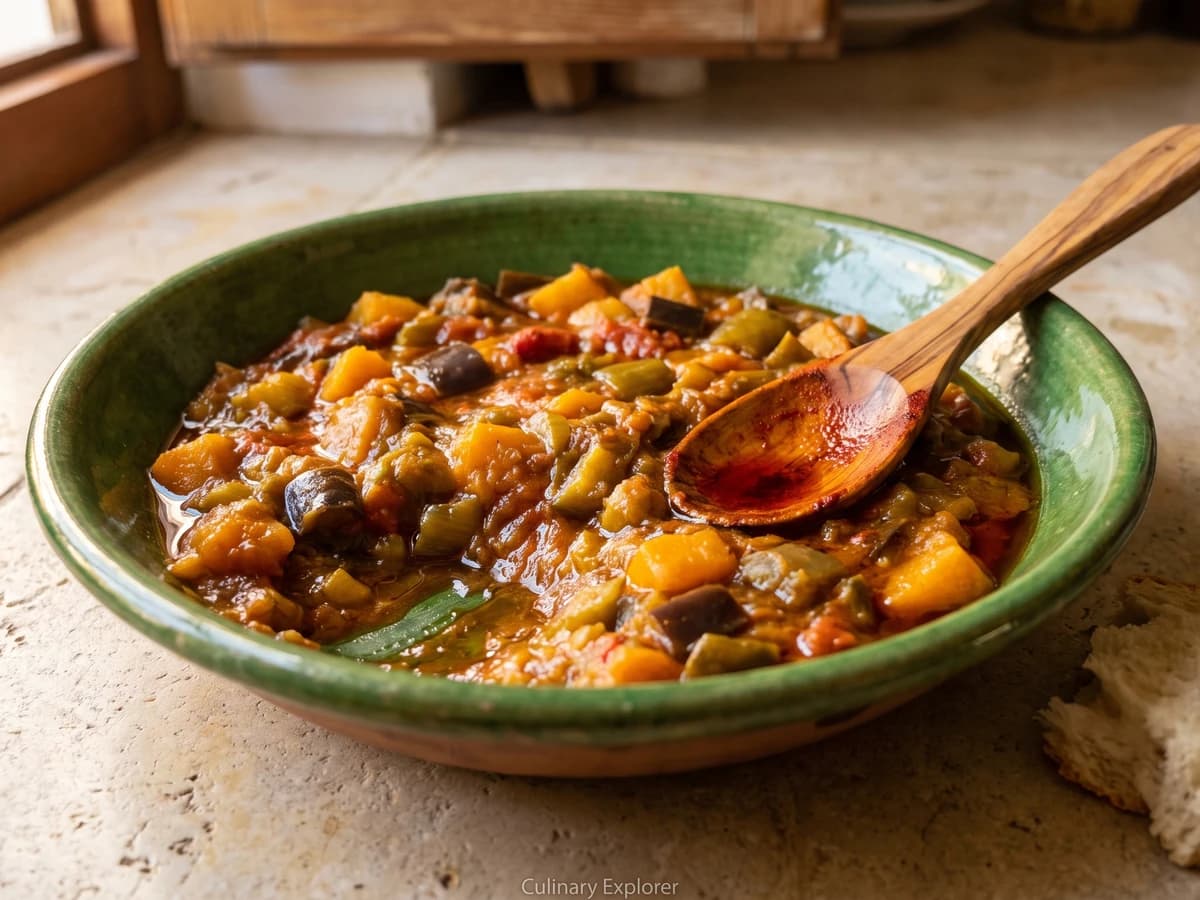
Alboronía is Andalucía's old pumpkin and aubergine stew, deepened with tomato, pimentón, and cumin, then cooked without hurry until the vegetables settle into a glossy, sweet, spoon-soft whole.

Chef Isabel
Aletría Murciana is Murcia's humble noodle guiso: fine fideos, pork ribs, potato, saffron, and a dark sweet sofrito. Get that base right and the pot knows where it's going.
Chef Isabel
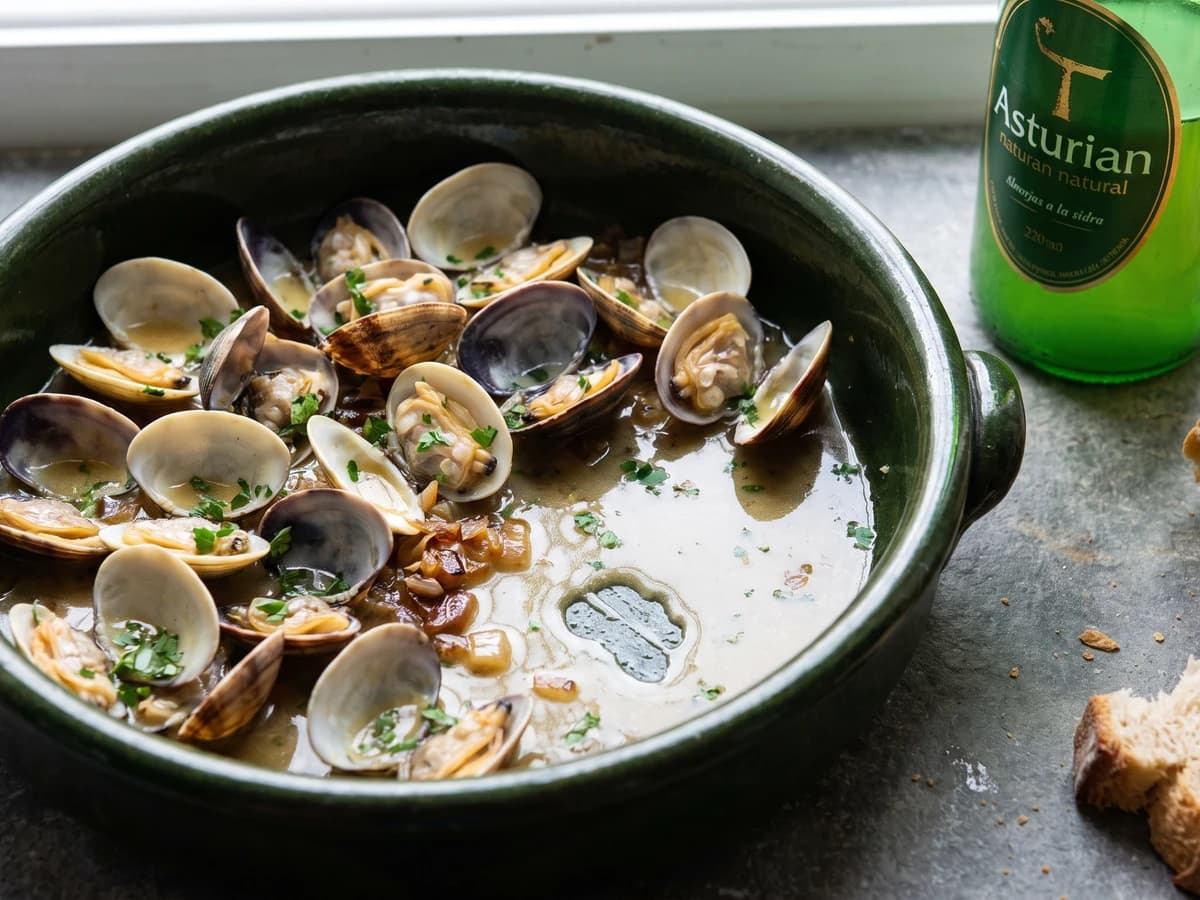
Asturias opens clams in tart natural cider over a slow onion and garlic sofrito, making a bright, briny sauce that asks for bread and rewards one rule: lift each clam as it opens.