
Chef Fai
Dry Egg Noodles (Ba Mee Haeng)
The four pillars live at the bottom of the bowl before the noodles ever touch it: nam pla for salt, sugar for sweet, vinegar for sour, chili for heat. Every noodle cart in Bangkok runs on this principle.
A cooking platform built around craft, culture, and the stories behind what we eat.
Created by
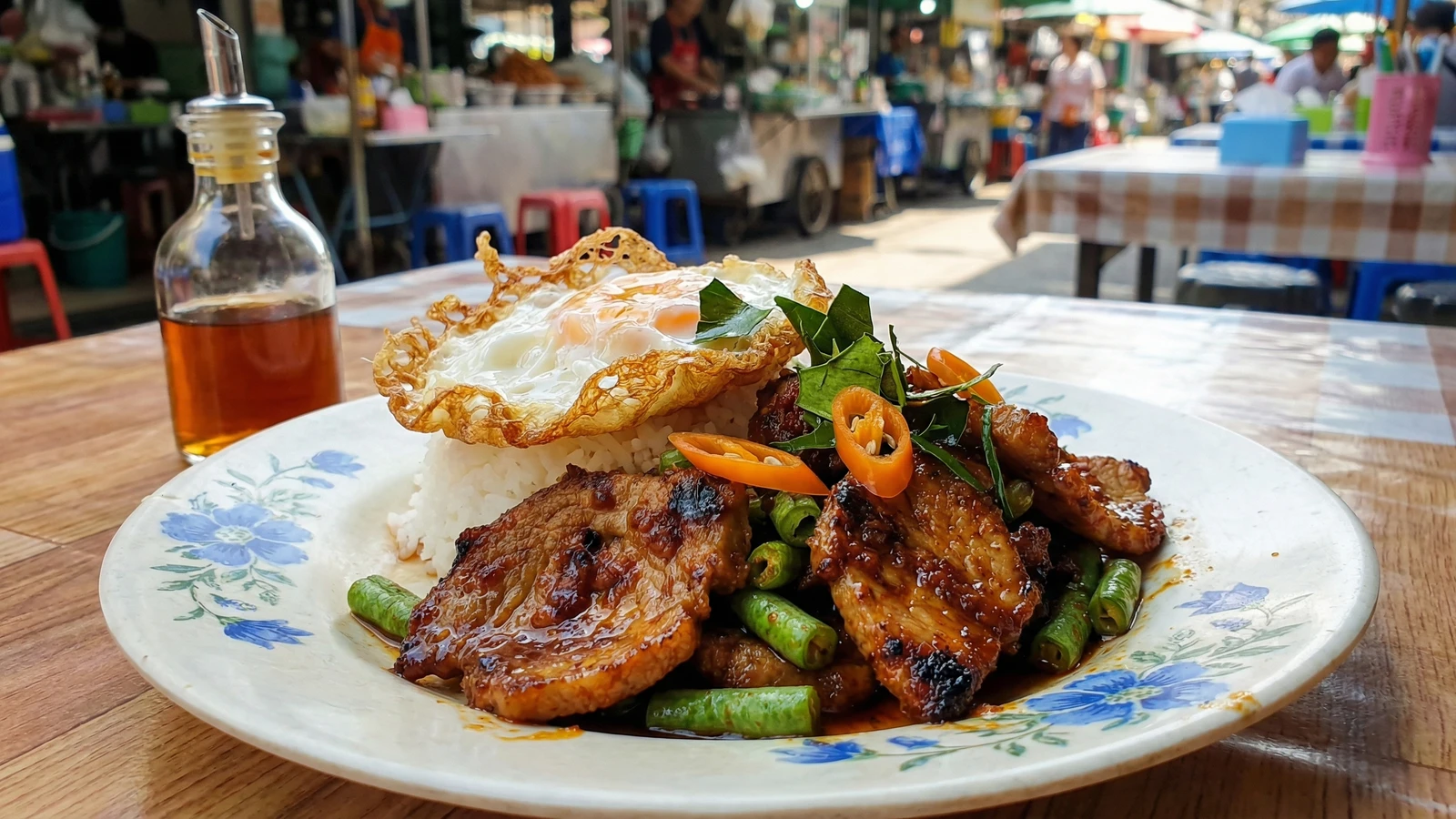
Red curry paste slammed into a screaming wok with no coconut milk to hide behind. This is the kreung tam stripped naked: paste, pork, long beans, kaffir lime, and wok hei doing all the talking.
This is the dish that proves the kreung tam is everything. No coconut milk. No broth. No buffer. Just red curry paste hitting hot oil in a wok and frying until it darkens, splits, and the essential oils bloom into the air. If your kitchen doesn't smell like a Thai street stall within thirty seconds, you're not doing it right.
Ajarn always said: the paste is the foundation of Thai cooking. Every curry, every stir-fry that uses paste, starts in the mortar. Pad prik gaeng takes that principle and strips it down to the bone. There's nowhere to hide. A mediocre paste in a coconut curry can be forgiven. A mediocre paste fried naked in a wok? You'll taste every shortcut.
The method is Central Thai wok cooking at its most direct. Paste fries in oil first, always. The oil separates from the paste, the color deepens from red to a dark, almost brick-brown, and then the pork goes in. Not before. The paste needs that time alone in the wok to transform from raw to cooked, from sharp and harsh to round and fragrant. Protein sears on top of that cooked paste. Fish sauce for salt. Palm sugar for balance. Oyster sauce for body. Kaffir lime leaves torn in at the end for that electric citrus punch.
I make this at every Fai Thai workshop because it forces people to confront the paste. You can't fake it. You can't shortcut it. The kreung tam is the dish. If you understand that, you understand why Ajarn spent the first three months of my training making me pound paste every single day before I was allowed to cook a single thing.
Pad prik gaeng belongs to a family of Central Thai stir-fries that emerged from home kitchens and market stalls, where cooks needed fast, high-flavor dishes using the same curry pastes destined for coconut-based gaeng. The technique of frying curry paste directly in oil without coconut milk likely predates the now-dominant coconut curry format, as coconut cream was historically a luxury ingredient in Central Thailand. The dish remains a lunchtime staple at made-to-order rice stalls (ร้านข้าวราดแกง) across Bangkok, where vendors keep pre-made red and green curry pastes and can fire out a plate in under two minutes.
Quantity
250g
sliced thin against the grain
Quantity
3 tablespoons
homemade or quality store-bought
Quantity
150g
cut into 1-inch pieces
Quantity
5
central vein removed, torn
Quantity
3 tablespoons
Quantity
1.5 tablespoons
Quantity
1 tablespoon
Quantity
1 teaspoon
Quantity
3
sliced on the bias
Quantity
2 tablespoons
Quantity
for serving
| Ingredient | Quantity |
|---|---|
| pork loin or shouldersliced thin against the grain | 250g |
| red curry paste (prik gaeng phet)homemade or quality store-bought | 3 tablespoons |
| long beans (thua fak yao)cut into 1-inch pieces | 150g |
| kaffir lime leaves (bai makrut)central vein removed, torn | 5 |
| vegetable oil | 3 tablespoons |
| fish sauce (nam pla) | 1.5 tablespoons |
| oyster sauce | 1 tablespoon |
| palm sugar (nam tan pip) | 1 teaspoon |
| bird's eye chilies (prik khi nu)sliced on the bias | 3 |
| water or stock | 2 tablespoons |
| steamed jasmine rice | for serving |
Get your wok screaming hot over high heat. Add the oil and let it shimmer. Now add the red curry paste directly into the hot oil. This is the most important moment. Stir the paste constantly, pressing it against the wok surface. You're frying it, not sautéing it. Within 30 to 45 seconds the paste will darken from bright red to a deeper brick-brown, the oil will start to separate and pool at the edges, and the aroma will shift from raw and sharp to round and fragrant. Your eyes might sting. Good. That means the capsaicin is releasing. That means it's working.
Add the sliced pork to the wok in a single layer. Let it sit for five seconds on the hot surface before you touch it. You want contact with the metal. You want char. Then toss and stir, coating every piece of pork in the fried paste. The pork should cook through in about a minute and a half. Each slice should have color on the edges and be lacquered with that dark red paste. If the wok looks dry, add the splash of water or stock to loosen things. Just a splash. This isn't a soup.
Throw in the long beans and toss hard. They need about a minute in the wok. You want them cooked but still snappy, with a slight crunch when you bite. Not raw. Not limp. Add the fish sauce, oyster sauce, and palm sugar. Toss everything together. The fish sauce provides salinity and depth. The oyster sauce gives body and a glossy coat. The palm sugar is barely there, just enough to round the edges of the paste's heat. Taste. Adjust. If it needs more salt, a little more nam pla. If the paste is too aggressive, another pinch of sugar.
Kill the heat. Tear the kaffir lime leaves directly over the wok, scattering the pieces across the stir-fry. Add the sliced bird's eye chilies. Toss once. The residual heat is enough. The lime leaves should be bright green and fragrant, not cooked down and dark. When you tear them, the cell walls break and release citrus oils that cut through the richness of the paste. That's the finishing note. Plate over jasmine rice. Eat immediately. This dish does not wait.
1 serving (about 415g)
Culinary guides, cultural storytelling, and the editorial depth that makes cooking meaningful.
Discover Culinary ExplorerChef Fai
The four pillars live at the bottom of the bowl before the noodles ever touch it: nam pla for salt, sugar for sweet, vinegar for sour, chili for heat. Every noodle cart in Bangkok runs on this principle.

Chef Fai
The kreung tam fried in cracked coconut cream until the oil bleeds red. That's the technique. Concentrated, semi-dry, spooned thick over crispy fish. This is what happens when the four pillars meet restraint.

Chef Fai
Isan foraging in a bowl: wild taro stems stripped of their sting, simmered in padaek broth with a pounded chili paste and yanang leaf extract. The land feeds you if you know the rules.

Chef Fai
Lanna's kreung tam breaks from Central Thai rules: ginger over galangal, cumin and coriander from Burmese spice routes, tamarind for sour instead of lime. The North has its own system, and this curry is its crown.