
Chef Fai
Dry Egg Noodles (Ba Mee Haeng)
The four pillars live at the bottom of the bowl before the noodles ever touch it: nam pla for salt, sugar for sweet, vinegar for sour, chili for heat. Every noodle cart in Bangkok runs on this principle.
A cooking platform built around craft, culture, and the stories behind what we eat.
Created by
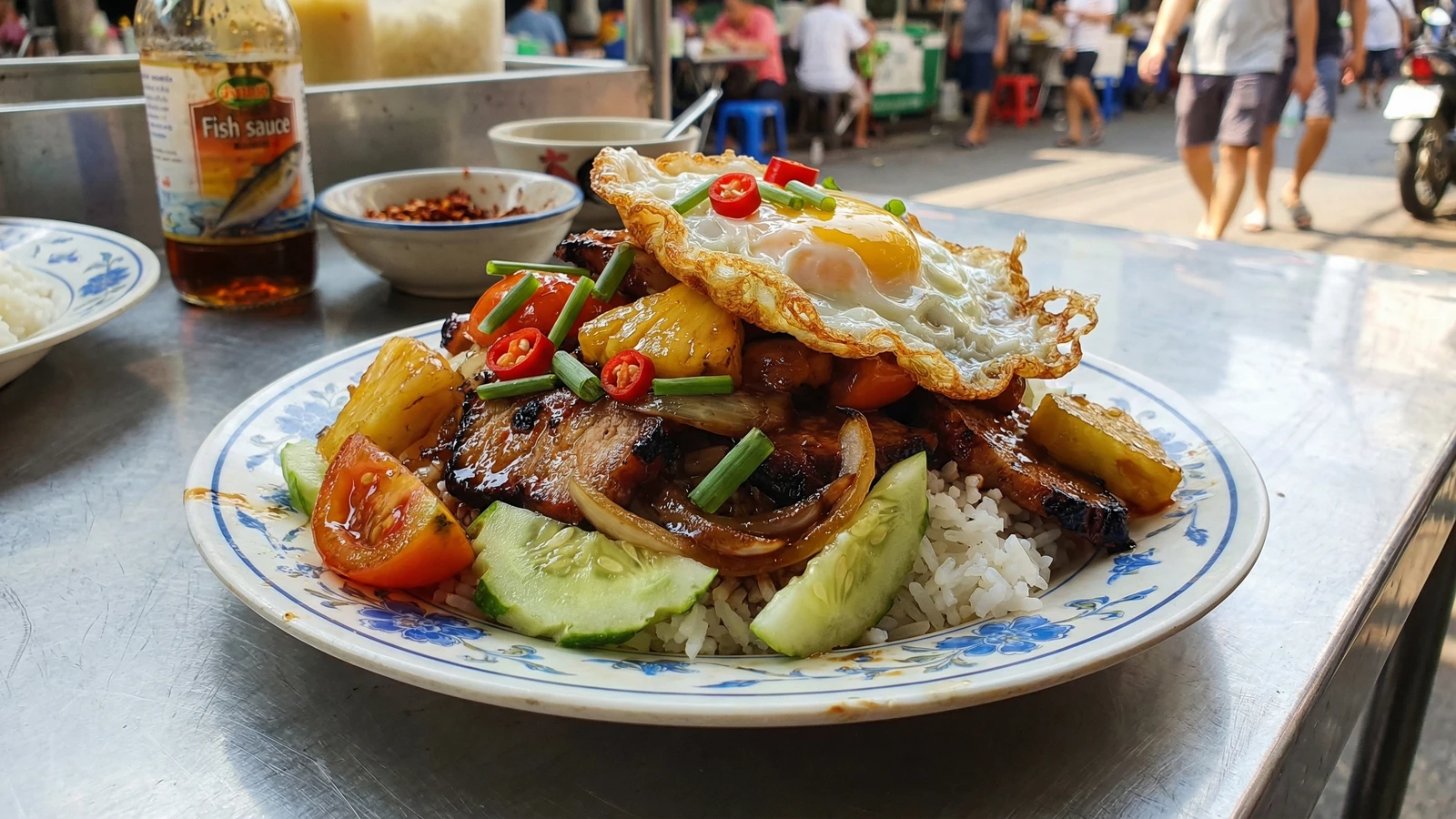
Tamarind for sour, not vinegar. Palm sugar for sweet, not white sugar. Fish sauce for salt, not soy. Thai sweet and sour follows the four pillars, and it tastes nothing like the neon-orange version you're thinking of.
Sour doesn't always mean lime. That's the lesson pad preaw wan teaches, and it's one of the most misunderstood principles in Thai cooking.
Ajarn always said the four pillars include "tropical fruit acids" for a reason. He didn't say lime. He said tropical fruit acids. Lime is the most common, sure. But tamarind (makham) is the sour backbone of an entire category of Thai dishes: pad preaw wan, certain gaeng som recipes, the dipping sauces you get with satay. Tamarind gives you a rounder, deeper sourness than lime. Less sharp. More complex. It caramelizes when it hits the wok with palm sugar. Lime can't do that. Understanding which acid to use and why is the difference between following a recipe and understanding the system.
Here's what drives me crazy. People hear "sweet and sour" and think of that gloopy pink sauce at a Chinese-American takeaway joint. Cornstarch, white vinegar, ketchup, white sugar. That's not this dish. Not even close. Pad preaw wan is tamarind pulp dissolved in water, cooked down with palm sugar until it goes dark and glossy, seasoned with fish sauce. Three ingredients. That's the sauce. It hits the wok after the pork sears, coats everything in thirty seconds, and you're done. No slurry. No food coloring. Just the principles doing their work.
The vegetables here aren't afterthoughts. Tomato, cucumber, pineapple, onion: each one is doing a job. The tomato adds acid and body. The pineapple adds fruity sweetness that plays against the tamarind. The cucumber stays crunchy and cool against the hot sauce. The onion gives bite. You cook them fast, thirty seconds, just enough to warm through. If your cucumber is soft, you went too long. This is wok cooking. Speed is the technique.
Pad preaw wan is a Central Thai adaptation of Chinese sweet and sour cooking brought by Teochew immigrants who settled in Bangkok from the 18th century onward. The Chinese original relied on rice vinegar and cane sugar; Thai cooks replaced them with tamarind and palm sugar, transforming the flavor profile entirely through the four-pillar framework. The dish became a staple of ran khao rad gaeng (made-to-order rice shops) in Bangkok by the mid-20th century, often paired with a fried egg and served over jasmine rice as a fast weekday lunch.
Quantity
250g
sliced 1/4 inch thick against the grain
Quantity
3 tablespoons
dissolved in 4 tablespoons warm water, strained
Quantity
2 tablespoons
Quantity
1 1/2 tablespoons
Quantity
4 cloves
roughly chopped
Quantity
1 medium
cut into 6 wedges
Quantity
1/2 small (about 1 cup)
cut into bite-sized chunks
Quantity
1/2 medium
halved lengthwise, sliced 1/4 inch thick on the bias
Quantity
1/2 medium
cut into thick wedges
Quantity
2
cut into 1 1/2 inch lengths
Quantity
3
bruised
Quantity
2 tablespoons
Quantity
1 tablespoon
Quantity
for serving
| Ingredient | Quantity |
|---|---|
| pork loin or tenderloinsliced 1/4 inch thick against the grain | 250g |
| tamarind paste (makham piak)dissolved in 4 tablespoons warm water, strained | 3 tablespoons |
| palm sugar (nam tan pip) | 2 tablespoons |
| fish sauce (nam pla) | 1 1/2 tablespoons |
| garlicroughly chopped | 4 cloves |
| tomatocut into 6 wedges | 1 medium |
| pineapplecut into bite-sized chunks | 1/2 small (about 1 cup) |
| cucumberhalved lengthwise, sliced 1/4 inch thick on the bias | 1/2 medium |
| onioncut into thick wedges | 1/2 medium |
| scallions (ton hom)cut into 1 1/2 inch lengths | 2 |
| bird's eye chilies (prik khi nu)bruised | 3 |
| vegetable oil | 2 tablespoons |
| oyster sauce | 1 tablespoon |
| steamed jasmine rice | for serving |
In a small bowl, combine the strained tamarind water, palm sugar, fish sauce, and oyster sauce. Stir until the palm sugar dissolves. Taste it. Right now it should taste too strong, almost aggressive. Good. It's going to coat the pork and vegetables in a hot wok, which means it'll mellow and spread. If it tastes balanced in the bowl, it'll taste flat on the plate. You want sour first, sweet second, salty underneath. That's the architecture of this sauce.
Lay out your sliced pork, garlic, chilies, and all your cut vegetables within arm's reach of the stove. Once the wok is hot, you have about three minutes total. There's no time to reach for the cutting board. Everything is prepped, everything is in bowls, everything is ready. This is wok discipline.
Get the wok screaming hot over the highest heat you have. Add the oil. When it shimmers and a wisp of smoke rises, spread the pork slices across the wok in a single layer. Don't touch them. Let them sit on that hot metal for forty-five seconds until they get color on the bottom. Then flip. Another thirty seconds. You want browning. You want char at the edges. Wok hei starts here. If the pork is pale and gray, your wok wasn't hot enough. Pull the pork out and set it aside.
Same wok, still screaming hot. If there's not enough oil, add a splash. Slam the garlic and bruised chilies in. Two seconds of sizzle, the garlic going golden at the edges, the chili releasing its heat into the oil. That's your aromatic base. Garlic hits the oil first, always. That's Central Thai wok cooking.
Add the onion wedges and toss for twenty seconds. Then the tomato wedges, another fifteen seconds. Then the pineapple chunks. Toss. Everything should be warming through but holding its shape. The tomato should barely start to soften at the edges. The onion should still have crunch. Don't baby them, but don't cook them to mush either. You're warming, not braising.
Return the pork to the wok. Pour in the tamarind sauce. It should hiss and bubble the instant it hits the hot metal. Toss everything once, twice, three times. The sauce will thicken slightly from the residual heat and coat every piece of pork and vegetable with a dark, glossy sheen. Now the cucumber and scallions go in. These cook for exactly ten seconds, just enough to take the raw edge off but keep their crunch. Taste. More fish sauce if it needs salt. A squeeze of lime if the tamarind wasn't tart enough. Plate it over jasmine rice. Done.
1 serving (about 365g)
Culinary guides, cultural storytelling, and the editorial depth that makes cooking meaningful.
Discover Culinary ExplorerChef Fai
The four pillars live at the bottom of the bowl before the noodles ever touch it: nam pla for salt, sugar for sweet, vinegar for sour, chili for heat. Every noodle cart in Bangkok runs on this principle.

Chef Fai
The kreung tam fried in cracked coconut cream until the oil bleeds red. That's the technique. Concentrated, semi-dry, spooned thick over crispy fish. This is what happens when the four pillars meet restraint.

Chef Fai
Isan foraging in a bowl: wild taro stems stripped of their sting, simmered in padaek broth with a pounded chili paste and yanang leaf extract. The land feeds you if you know the rules.

Chef Fai
Lanna's kreung tam breaks from Central Thai rules: ginger over galangal, cumin and coriander from Burmese spice routes, tamarind for sour instead of lime. The North has its own system, and this curry is its crown.