
Chef Dean
Broccoli Cheddar Soup
A bowlful of pure American comfort: velvety soup loaded with tender broccoli and an almost indecent amount of sharp cheddar, the kind of honest cooking that warms you from the inside out.
A cooking platform built around craft, culture, and the stories behind what we eat.
Created by
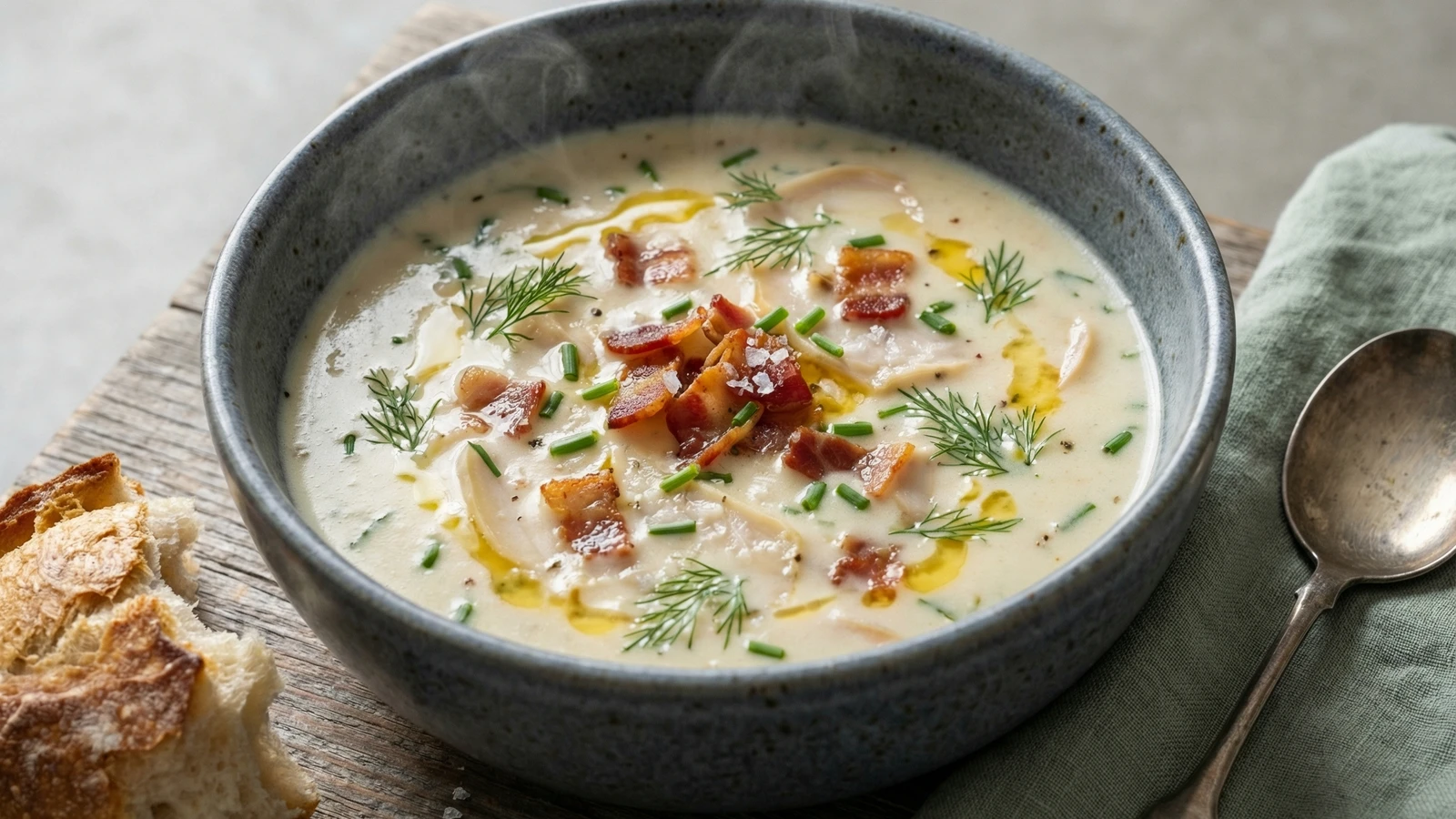
A briny, cream-rich chowder showcasing the Pacific Northwest's most peculiar bivalve, sliced gossamer-thin and barely kissed by heat to preserve its sweet oceanic essence.
The geoduck is the strangest creature you'll ever cook. Native peoples of the Salish Sea have harvested these giant clams for millennia, steaming them over cedar fires, honoring them in potlatches. The name comes from the Lushootseed word meaning "dig deep." You'll understand why when you see one. These prehistoric-looking bivalves can weigh eight pounds and live over a hundred years, their long siphons extending from shells buried three feet in the sand.
This chowder represents the Pacific Northwest at its finest: the convergence of Native American tradition, Scandinavian dairy craft, and Asian respect for pristine seafood. The Scandinavian fishermen who settled these waters brought their cream-based soup traditions. The Asian influence taught us restraint—that geoduck requires barely thirty seconds of heat before it turns from tender to rubber. The Native wisdom reminds us that these waters are borrowed, not owned.
I first tasted geoduck chowder in a clapboard restaurant overlooking Puget Sound, fog rolling past the windows, the cook an old Norwegian woman who bought her clams from the same Muckleshoot diver for forty years. She added the geoduck at the very end, just long enough to turn it opaque. That moment of transformation—raw to cooked in seconds—taught me everything about respecting an ingredient.
Source your geoduck from divers who practice sustainable harvest. The good ones know their beds, rotate their collection sites, and understand that a geoduck population recovers slowly. This is not cheap food, and it shouldn't be. What you're buying is a creature older than most trees, pulled from waters your grandchildren should inherit.
Quantity
1 (about 2 pounds)
cleaned and prepared
Quantity
4 ounces
diced
Quantity
4 tablespoons
Quantity
2
halved and sliced thin
Quantity
1 medium
diced
Quantity
3
diced
Quantity
3 cloves
minced
Quantity
1 cup
Quantity
1 pound
peeled and cubed
Quantity
2 cups
Quantity
2 cups
Quantity
1
Quantity
4
Quantity
1 1/2 cups
Quantity
2 tablespoons
chopped
Quantity
2 tablespoons
sliced thin
Quantity
to taste
Quantity
to taste
Quantity
for finishing
| Ingredient | Quantity |
|---|---|
| whole geoduckcleaned and prepared | 1 (about 2 pounds) |
| thick-cut bacondiced | 4 ounces |
| unsalted butter | 4 tablespoons |
| leeks, white and light green parts onlyhalved and sliced thin | 2 |
| yellow oniondiced | 1 medium |
| celery stalksdiced | 3 |
| garlicminced | 3 cloves |
| dry white wine | 1 cup |
| Yukon Gold potatoespeeled and cubed | 1 pound |
| bottled clam juice | 2 cups |
| fish stock | 2 cups |
| bay leaf | 1 |
| fresh thyme sprigs | 4 |
| heavy cream | 1 1/2 cups |
| fresh dillchopped | 2 tablespoons |
| fresh chivessliced thin | 2 tablespoons |
| kosher salt | to taste |
| white pepper | to taste |
| flaky sea salt (optional) | for finishing |
Bring a large pot of water to a rolling boil. Plunge the whole geoduck into the water for exactly ten seconds, then immediately transfer to an ice bath. This brief blanch loosens the outer skin. Once cool enough to handle, peel away the dark membrane covering the siphon. It should slip off like a glove. Split the shell and remove the body. Separate the siphon from the breast meat. Slice the breast into thin strips. Slice the siphon crosswise into coins no thicker than a quarter inch. Refrigerate until ready to use.
Place the diced bacon in a heavy-bottomed pot or Dutch oven over medium heat. Cook slowly, stirring occasionally, until the fat renders and the bacon turns golden and crisp. This takes eight to ten minutes. The kitchen should smell like breakfast. Remove the bacon pieces with a slotted spoon and set aside on paper towels. Leave the rendered fat in the pot.
Add the butter to the bacon fat and let it foam. Add the leeks, onion, and celery with a pinch of salt. Cook over medium heat, stirring occasionally, until the vegetables soften and turn translucent. This takes about ten minutes. You want them tender but without color. Browning would compete with the clean oceanic flavor we're building. Add the garlic in the final minute, stirring until fragrant.
Pour in the white wine and increase heat to medium-high. Let it bubble vigorously, scraping up any fond from the bottom of the pot. The alcohol burns off in about two minutes, leaving behind clean acidity and a subtle fruitiness. The liquid should reduce by half.
Add the potatoes, clam juice, fish stock, bay leaf, and thyme sprigs. Bring to a gentle simmer. Cook until the potatoes yield easily when pierced with a knife but hold their shape. This takes fifteen to eighteen minutes. The liquid will reduce slightly and become infused with the essence of the sea.
Remove the bay leaf and thyme sprigs. Pour in the heavy cream and return to a gentle simmer. Cook for five minutes, allowing the cream to meld with the briny broth. The chowder should coat a spoon but still flow easily. Season with salt and white pepper. Taste critically. The ocean should come through clearly, the cream supporting rather than masking.
Remove the pot from heat. Immediately stir in the sliced geoduck. The residual heat of the chowder cooks the thin slices in thirty seconds. You'll see the meat turn from translucent to opaque. This happens fast. Do not return the pot to the burner. Overcooked geoduck becomes tough and rubbery, a waste of a magnificent ingredient.
Ladle the chowder into warmed bowls. Scatter the reserved bacon, fresh dill, and chives over each serving. Finish with a pinch of flaky sea salt. Serve with crusty bread for soaking up every drop. This chowder does not improve with sitting. The geoduck continues to cook in the hot broth, so bring bowls to the table quickly.
1 serving (about 320g)
Culinary guides, cultural storytelling, and the editorial depth that makes cooking meaningful.
Discover Culinary ExplorerChef Dean
A bowlful of pure American comfort: velvety soup loaded with tender broccoli and an almost indecent amount of sharp cheddar, the kind of honest cooking that warms you from the inside out.

Chef Ally
Golden broth simmered from a whole chicken, ladled over tender handmade egg noodles with honest vegetables and fresh herbs. The soup that teaches why stock matters more than technique ever could.

Chef Dean
A velvet-smooth celebration of peak-season corn, chilled until refreshing and crowned with sweet lump crab and emerald chive oil. This is the soup that makes August worth the wait.

Chef Dean
A robust, deeply seasoned pot of ground beef, beans, and tomatoes simmered until the spices bloom, the meat surrenders, and the whole becomes something far greater than its humble parts.