
Chef Lupita
Arroz a la Oaxaqueña
Oaxaca's red rice, stained with tomato and fried in lard, steamed with carrots, ejotes, black beans, and epazote. The side that anchors a Oaxacan family meal and earns its place beside the main.
A cooking platform built around craft, culture, and the stories behind what we eat.
Created by
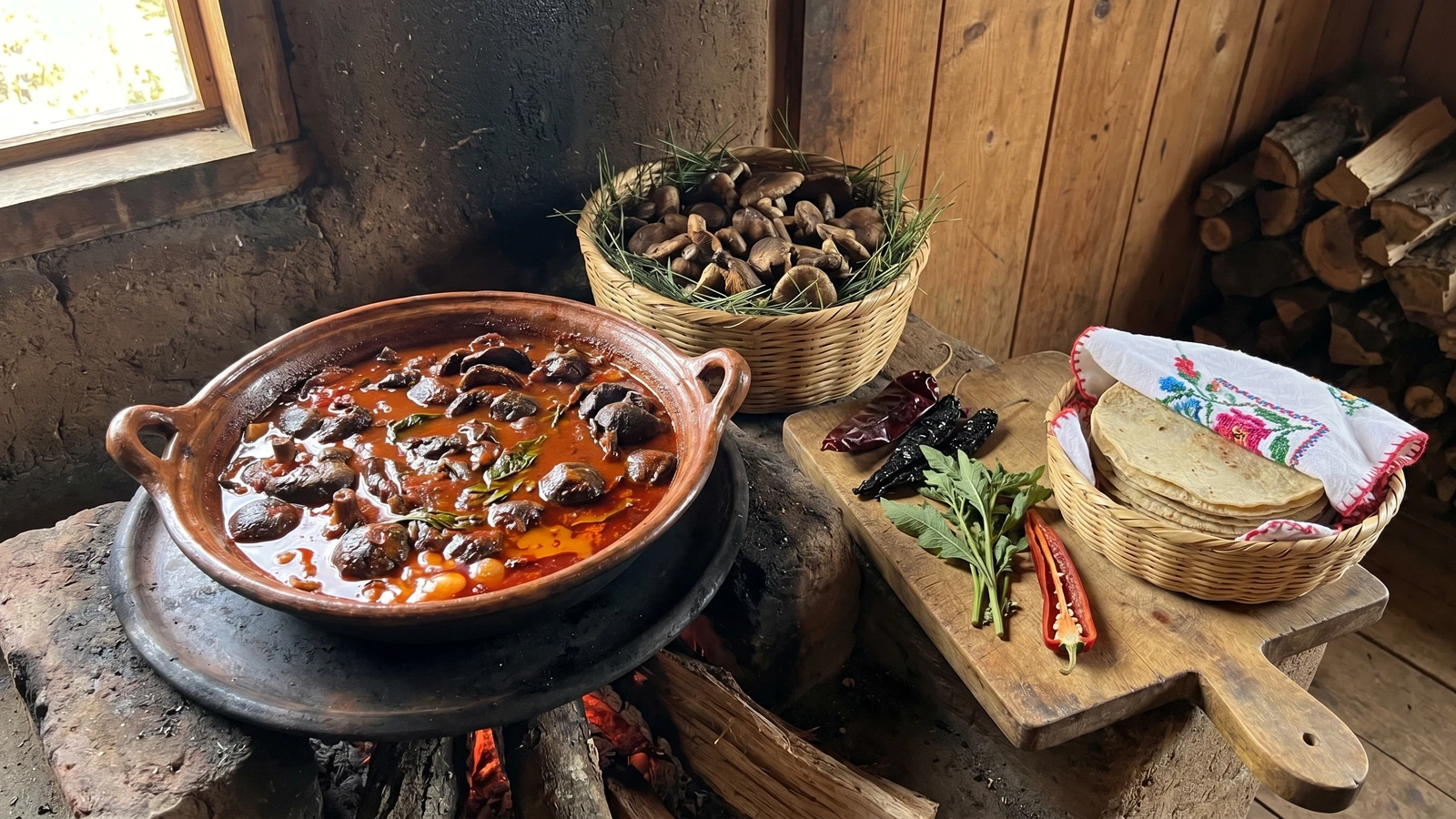
Michoacán's Meseta P'urhépecha rainy-season pachacuas, foraged near Cocucho and guisadas in red guajillo-pasilla chile with manteca de cerdo, epazote, and warm corn tortillas from the comal de leña.
Michoacán's Meseta P'urhépecha, between the pine forests above Lake Pátzcuaro and the high pueblos of Cocucho, Cherán K'eri, Comachuén, and Nahuatzen, is where this plate belongs. Pachacuas, also called pashakua and named shakuá in P'urhépecha speech, are terekuecha, rainy-season wild mushrooms gathered when the forest floor is wet and pine needles cling to the stems. María Elena Reyes of Cocucho, cocinera tradicional, names them among the principal hongos of her tradition. That matters. This is not a mushroom side dish from anywhere.
The red chile is guajillo and pasilla, toasted on the comal de barro, softened, ground, and fried in manteca de cerdo until the salsa darkens and clings. The fat is not decoration. It carries the chile into the mushrooms and gives the guiso its body. Vegetable oil makes a thinner, poorer plate. La manteca es el sabor, and here the women of the Meseta have known that longer than any cookbook writer.
Do not make this in March with supermarket champiñones and call it pachacuas. Outside July and August, the terekuecha plate is not available, and the cocinera tradicional waits for the rain. If the market has trompa de puerco, ask whether the forager calls it charámakua. If the basket is pata de pájaro from Comachuén or Nahuatzen, ask for terékua kuín jatsíri by name. Pregúntale a las señoras del mercado. They know what the forest gave that week.
The cazuela should come to the table with sauce still glossy at the edges, tortillas wrapped in a servilleta bordada, and no apology for being seasonal. Saber cocinar es saber vivir.
P'urhépecha-speaking communities in the Meseta and Lake Pátzcuaro basin have long classified terekuecha by habitat, shape, color, and cooking use, a knowledge system tied to the July-August rains in Michoacán's pine-oak forests. Cocineras tradicionales such as María Elena Reyes of Cocucho have identified pachacuas or pashakua among the principal foraged mushrooms of the region, while Cherán K'eri is associated with chilke rojo and Comachuén and Nahuatzen with pata de pájaro, terékua kuín jatsíri. This indigenous seasonal cooking belongs to the Michoacán food paradigm cited when Traditional Mexican Cuisine was inscribed by UNESCO as Intangible Cultural Heritage in 2010.
Quantity
1 pound
cleaned and torn into large pieces
Quantity
5
stemmed and seeded
Quantity
2
stemmed and seeded
Quantity
2
Quantity
2
unpeeled
Quantity
1/4 medium
Quantity
1/2
split open and finely minced or grated
Quantity
3 tablespoons
divided
Quantity
1/2 small
thinly sliced
Quantity
2 sprigs
Quantity
1 cup
squeezed dry and chopped
Quantity
3/4 teaspoon, plus more to taste
Quantity
1/2 cup, as needed
Quantity
for serving
warmed on the comal de leña
| Ingredient | Quantity |
|---|---|
| fresh rainy-season pachacuas or pashakua (P'urhépecha shakuá)cleaned and torn into large pieces | 1 pound |
| dried chile guajillostemmed and seeded | 5 |
| dried chile pasillastemmed and seeded | 2 |
| ripe jitomates guaje or Roma tomatoes | 2 |
| garlic clovesunpeeled | 2 |
| white onion for the salsa | 1/4 medium |
| fresh chile perónsplit open and finely minced or grated | 1/2 |
| manteca de cerdodivided | 3 tablespoons |
| white onion for the guisothinly sliced | 1/2 small |
| fresh epazote | 2 sprigs |
| cooked chilke quelites (optional)squeezed dry and chopped | 1 cup |
| sal de grano | 3/4 teaspoon, plus more to taste |
| hot water or chile soaking water | 1/2 cup, as needed |
| hand-pressed corn tortillas (optional)warmed on the comal de leña | for serving |
Work only with pachacuas gathered by a knowledgeable forager in July or August, when the Meseta P'urhépecha rains have made the pine forest honest. Brush away soil and pine needles with a dry cloth or soft brush. Trim the dirty ends and tear large mushrooms by hand. Do not soak them. They already carry enough forest water.
Set a comal de barro over leña and let it heat until a drop of water dances and disappears. Toast the guajillo and pasilla separately, about 20 to 30 seconds per side. The skins should darken slightly and smell deep, not burned. Pasilla is thin and turns bitter fast. Watch it like you paid for it, because you did.
On the same comal, roast the jitomates, garlic, and onion until the tomatoes are blistered, the garlic is soft inside its skin, and the onion has browned edges. Soak the toasted chiles in hot water for 15 minutes. Hot, not boiling. Boiling water punishes the chile skin and gives you bitterness.
Peel the garlic. Grind the softened chiles, roasted jitomates, garlic, onion, chile perón, and sal de grano on a metate, or blend them with just enough soaking water to move the blades. Strain if using a blender. You want a smooth brick-red salsa that tastes like chile first and tomato second.
Set a blackened barro cazuela over the comal and melt 2 tablespoons of manteca de cerdo. Add the sliced onion and cook until it softens without browning hard. Add the pachacuas and stir with a wooden cuchara. They will release liquid, then begin to take it back. Cook until the edges look glossy and the mushroom smell turns deep and nutty. La manteca es el sabor.
Push the mushrooms to one side of the cazuela. Add the remaining tablespoon of manteca to the empty side, then pour in the chile rojo. It will sputter. Fry the salsa for 5 to 7 minutes, stirring it into the fat before folding it through the mushrooms. This is where the chile stops tasting raw and becomes guiso. No me vengas con atajos.
Add the epazote sprigs and, if using, the cooked chilke quelites. Cook 5 more minutes, until the sauce clings to the pachacuas and the fat shines at the edge of the cazuela. Taste for salt. The quelites go in cooked, never raw. Raw leaves scattered on top are not this dish.
Carry the cazuela to the table or spoon the guiso into a rough red barro serving dish from Capula or Tzintzuntzan. Serve with hand-pressed corn tortillas from the comal de leña. No flour tortillas. No cheese blanket. This is P'urhépecha food from Michoacán. Cada estado, su propia cocina.
1 serving (about 285g)
Culinary guides, cultural storytelling, and the editorial depth that makes cooking meaningful.
Discover Culinary ExplorerChef Lupita
Oaxaca's red rice, stained with tomato and fried in lard, steamed with carrots, ejotes, black beans, and epazote. The side that anchors a Oaxacan family meal and earns its place beside the main.
Chef Lupita
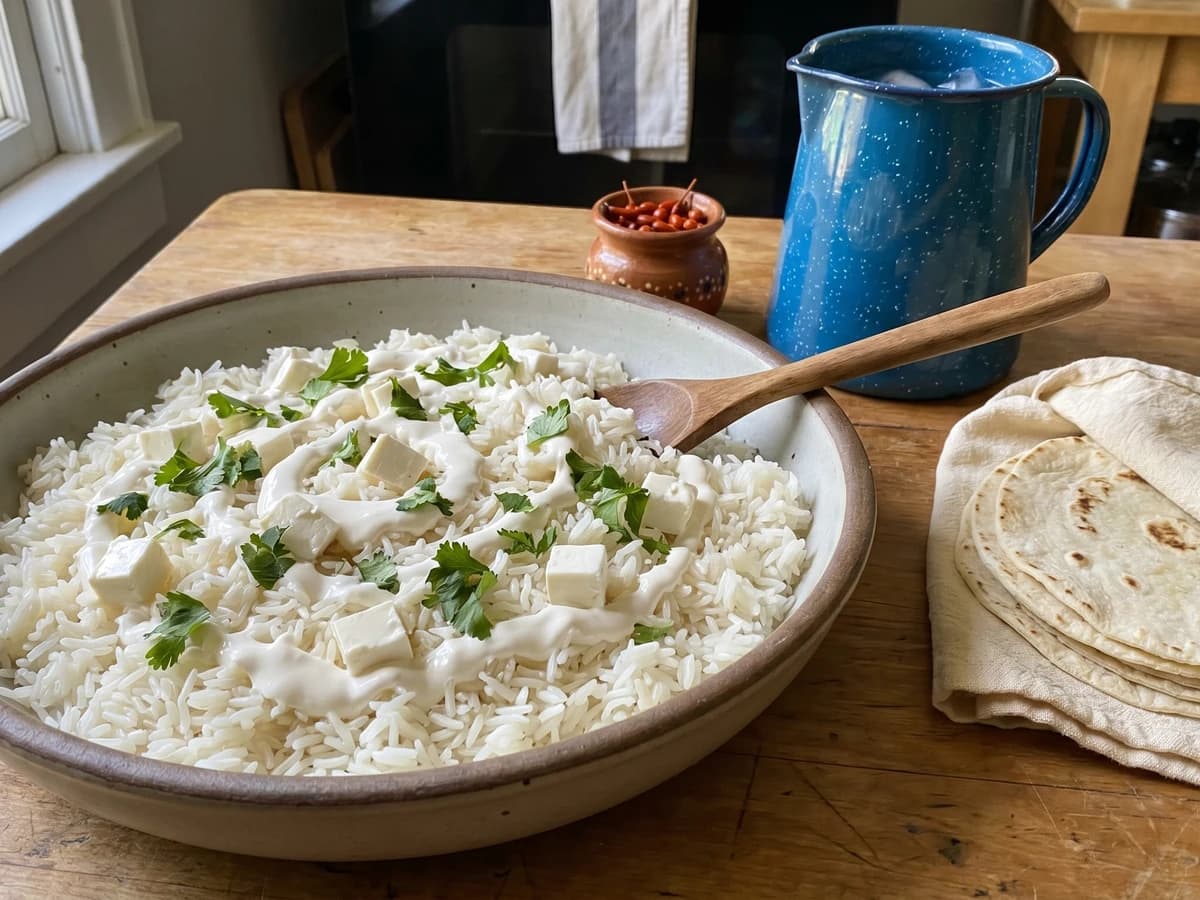
Sinaloa's home-cook white rice topped with cold cubes of cream cheese that soften into the warm grain, finished with crema and a sprinkle of chiltepin at the table. The trick that makes a side dish feel like a small luxury.
Chef Lupita
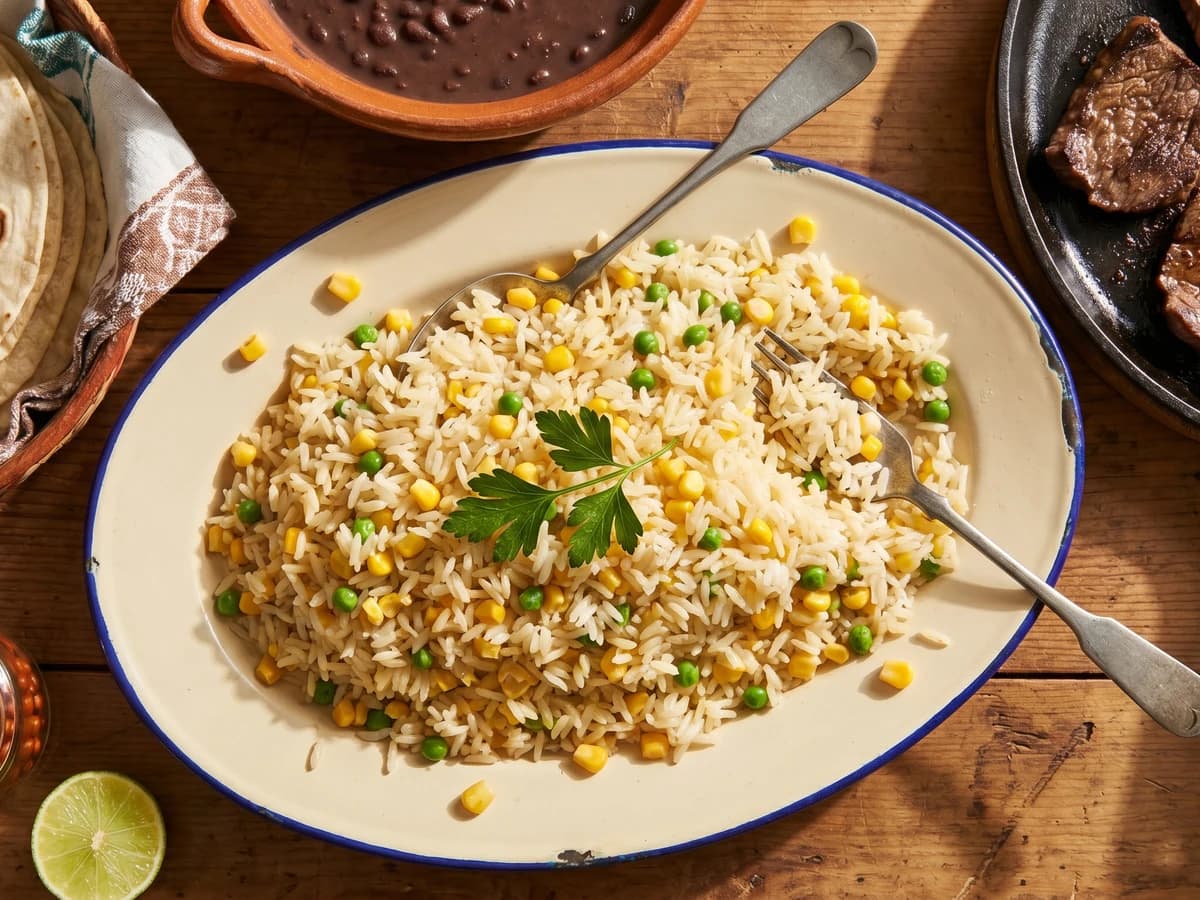
Sonora's white rice, toasted in butter and steamed with sweet corn and tender peas. The clean, quiet partner to a plate of carne asada, not the red rice of central Mexico.

Chef Lupita
Yucatán's white rice with sweet corn kernels, toasted in lard with garlic and onion. The quiet base that holds up against the peninsula's bold achiote-stained stews.