
Chef Makoa
Chicken Hekka (Hawaiʻi Local Plantation-Style Chicken Sukiyaki)
Hawaiʻi Local chicken hekka, the plantation-camp cousin of Japanese sukiyaki, with tender chicken, long rice, shiitake, bamboo shoots, and sweet shoyu gravy for rice.
A cooking platform built around craft, culture, and the stories behind what we eat.
Created by
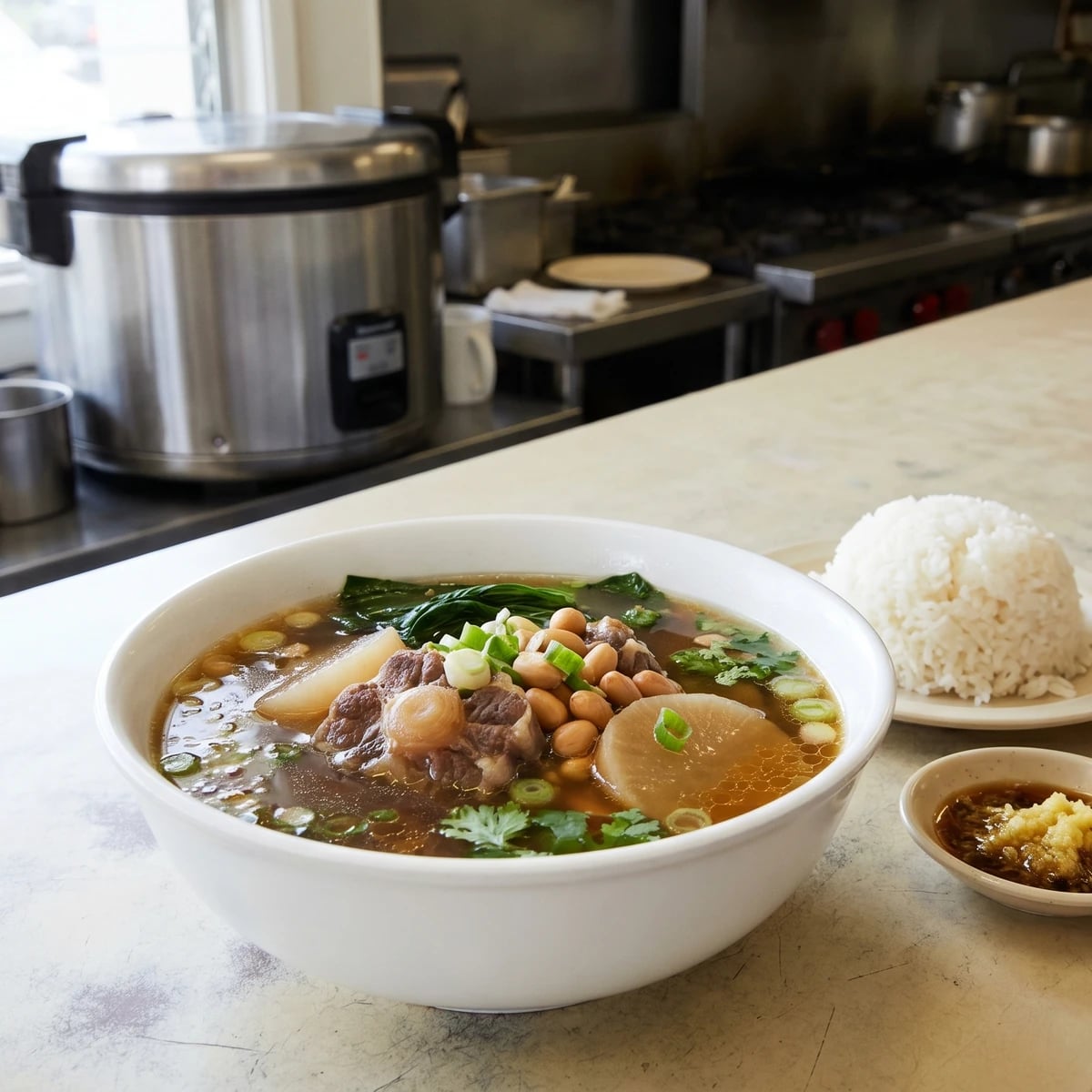
Hawaiʻi's Local comfort bowl, Chinese-rooted and fully island-made: oxtail simmered slow with star anise, ginger, peanuts, and greens, then eaten with rice, grated ginger, and shoyu.
The rice cooker click is a kind of family bell in Hawaiʻi. Not old like the pahu drum, not sacred like the board where we pound kalo, but real in the way a kitchen is real when everybody hears it and starts drifting in. This bowl belongs to Hawaiʻi Local, not ancient Hawaiʻi: oxtail soup from Chinese hands, plantation hunger, Honolulu counters, windward kitchens, and all the people who made one island table out of many hard roads.
I need to say that clear. This is Hawaiian in the Local sense, the food of Hawaiʻi, not the deep Native Hawaiian food of Hāloa, poi, paʻiʻai, laulau, and the imu. The old foods are kin and kuleana, responsibility. This bowl is kin another way, by adoption, by neighbor, by the aunty who feeds you until you stop pretending you're not hungry. No blame the plate for being humble.
Across the Triangle, every island has these newer comfort pots sitting beside the older foods: Sāmoan sapasui, chop suey made Sāmoan; Māori boil-up in Aotearoa, pork bones and greens and kūmara feeding the whānau, the family; Tongan tables with corned beef and rice next to lū pulu, taro leaves with coconut cream and beef. Same lesson, different pot. The ancestors carried one ocean, one canoe, one root, and later their grandchildren took what history threw at them and still fed the family.
So cook this one slow. Blanch the bones clean, let the star anise and ginger walk through the broth, let the peanuts soften until they belong there. Then serve rice, grated ginger, and shoyu alongside. That's the whole move. Eat what you have, feed who came through the door, and keep enough broth for one more.
Chinese contract laborers began arriving in Hawaiʻi in 1852, and their soup pots became part of the plantation and town foodways that grew into Hawaiʻi's Local table. Oxtail soup likely came from Cantonese long-simmered beef-bone traditions, then took on island habits: shoyu at the table, peanuts in the broth, rice on the side, cilantro called Chinese parsley, and grated ginger for dipping the meat. It is not pre-contact deep food, but it belongs beside plate lunch, saimin, manapua, and chow fun as the other half of Hawaiʻi's food story, the everyday food made by Hawaiian, Chinese, Japanese, Portuguese, Korean, Filipino, Puerto Rican, and other hands cooking close together.
Quantity
4 pounds
cut into 1 1/2- to 2-inch pieces
Quantity
as needed
for blanching
Quantity
12 cups
plus more as needed for simmering
Quantity
1 cup
soaked overnight and drained
Quantity
8
soaked until pliable, stems removed, soaking liquid strained and reserved
Quantity
1 large
peeled and halved
Quantity
1 head
halved crosswise
Quantity
1 (3-inch) piece
sliced
Quantity
2 tablespoons
grated, for serving
Quantity
4
Quantity
1 small piece
Quantity
1 tablespoon
plus more to taste
Quantity
2 tablespoons
plus more for serving
Quantity
1 pound
peeled and cut into 1-inch half-moons
Quantity
1 bunch
chopped
Quantity
4
thinly sliced
Quantity
1 cup
chopped
Quantity
for serving
Quantity
for serving
| Ingredient | Quantity |
|---|---|
| oxtailscut into 1 1/2- to 2-inch pieces | 4 pounds |
| waterfor blanching | as needed |
| cool waterplus more as needed for simmering | 12 cups |
| raw shelled peanutssoaked overnight and drained | 1 cup |
| dried shiitake mushroomssoaked until pliable, stems removed, soaking liquid strained and reserved | 8 |
| yellow onionpeeled and halved | 1 large |
| garlichalved crosswise | 1 head |
| fresh gingersliced | 1 (3-inch) piece |
| fresh gingergrated, for serving | 2 tablespoons |
| whole star anise | 4 |
| dried tangerine peel or dried orange peel (optional) | 1 small piece |
| Hawaiian salt or kosher saltplus more to taste | 1 tablespoon |
| shoyuplus more for serving | 2 tablespoons |
| daikonpeeled and cut into 1-inch half-moons | 1 pound |
| kai choy (Chinese mustard greens) or bok choychopped | 1 bunch |
| green onionsthinly sliced | 4 |
| cilantro leaves and tender stems (Chinese parsley)chopped | 1 cup |
| steamed white rice | for serving |
| chili pepper water (optional) | for serving |
Put the oxtails in a heavy pot and cover with cool water by a few inches. Bring it to a hard boil for 10 minutes, until the first scum rises and the water goes cloudy, then drain, rinse the bones, and wash the pot. That first boil is the Chinese auntie move for a clean broth. You are not throwing away the soul. You are washing the noise off it.
Return the rinsed oxtails to the clean pot with 12 cups cool water, the strained mushroom soaking liquid, peanuts, shiitake caps, onion, garlic, sliced ginger, star anise, dried peel if using, and salt. Bring it just to a boil, then drop it to a quiet simmer and skim the top until the broth settles clear and amber.
Cover the pot partly and let it murmur for 3 1/2 to 4 hours, adding water when needed to keep the oxtails covered. Don't let it roll hard. A rough boil makes the broth greasy and cloudy, and this bowl wants patience. The meat is ready when a chopstick slides in with no fight and the tendon around the bone turns soft and glossy.
Lift out the onion, garlic head, star anise, and peel if you want a cleaner bowl, then stir in the shoyu and daikon. Simmer 30 to 40 minutes more, until the daikon turns tender and almost translucent but still holds its shape. Taste the broth now. Salt it until it tastes rounded, not sharp.
Add the kai choy or bok choy and cook 5 to 8 minutes, just until the stems soften and the greens turn deep and glossy. Skim off any heavy fat from the surface. Leave a little shine, yeah? That is part of the comfort, but the bowl should not eat oily.
Ladle oxtail, peanuts, daikon, greens, mushrooms, and clear broth into big bowls. Scatter green onion and cilantro over the top. Serve with hot white rice and a small saucer of grated ginger mixed with shoyu, so everybody can dip the meat right off the bone. Chili pepper water can sit on the table if your house eats that way. No need make it fancy. This is Hawaiʻi Local comfort, spoon in one hand, rice on the side, somebody already asking for the next bowl.
1 serving (about 875g)
Culinary guides, cultural storytelling, and the editorial depth that makes cooking meaningful.
Discover Culinary Explorer
Chef Makoa
Hawaiʻi Local chicken hekka, the plantation-camp cousin of Japanese sukiyaki, with tender chicken, long rice, shiitake, bamboo shoots, and sweet shoyu gravy for rice.

Chef Makoa
Hawaiʻi's Local plate-lunch comfort: juicy chicken thigh in panko, fried crisp, sliced over white rice with mac salad and katsu sauce, the sugar-camp stove brought home.

Chef Makoa
A Hawaiʻi Local plate-lunch staple: tender seasoned beef patties smothered in onion brown gravy over two scoops rice, with mac salad alongside. The loco moco's plainspoken cousin, no egg needed.

Chef Makoa
North Shore Oʻahu shrimp-truck garlic shrimp, shells on and shining in butter, garlic, lemon, and paprika, piled over two scoops rice with mac salad nearby.