
Chef Margarida
Chouriço Assado na Brasa
Chouriço set ablaze with aguardente, cooked by fire until the casing splits and the paprika-rich fat pools in the dish. Tear the bread. Press it into the fat. This is how we've always done it.
A cooking platform built around craft, culture, and the stories behind what we eat.
Created by
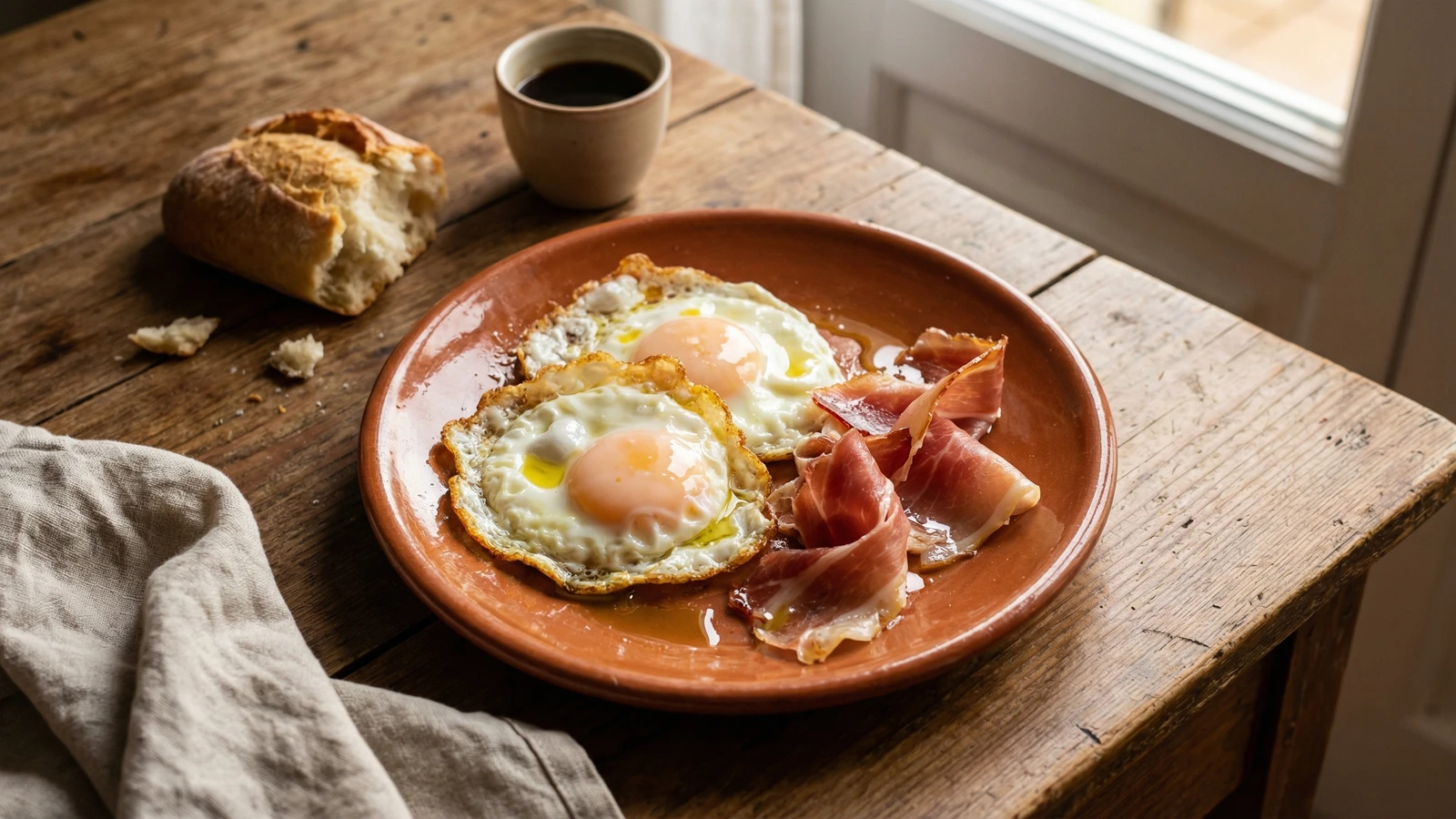
The simplest breakfast in Portugal, just eggs fried in good azeite with paper-thin presunto crisped at the edges. Two ingredients. Decades of curing. One perfect morning.
Some mornings don't need complication. Some mornings need exactly this: eggs fried in good azeite until the edges go lacy and golden, presunto crisped just enough that it crackles when you bite through, a runny yolk waiting to be broken with bread.
Avó Leonor made this on slow mornings when there was nowhere to be. She'd stand at the stove in her housecoat, the radio on low, a small cup of coffee going cold on the counter because she always forgot to drink it while cooking. The smell of presunto hitting a hot pan is the smell of those mornings. It's the smell of being cared for.
Ovos estrelados means "starred eggs" because of the way the whites spread out like points. The Portuguese don't flip their fried eggs. We baste the whites with hot oil and leave the yolks soft, trembling, ready to run. The presunto isn't a garnish here. It's an equal partner. Two ingredients, both doing exactly what they do best.
This is the kind of cooking that exposes you. There's nowhere to hide when you're working with two ingredients. The quality of your azeite shows. The quality of your presunto shows. The patience you have with the eggs shows. But that's the point. A cozinha é memória. This breakfast remembers who made it.
Ovos estrelados appear across Portugal wherever presunto is cured, from Chaves in the north to Alentejo's rolling cork forests. The dish reflects the Portuguese reverence for both the egg and the pig, two pillars of rural cooking. Presunto, dry-cured for months in mountain air, transforms a humble fried egg into something worth sitting down for.
Quantity
4 large
room temperature
Quantity
4 thin slices (about 60g)
Quantity
3 tablespoons
Quantity
to taste
Quantity
freshly ground, to taste
Quantity
for serving
| Ingredient | Quantity |
|---|---|
| eggsroom temperature | 4 large |
| presunto (Portuguese cured ham) | 4 thin slices (about 60g) |
| extra virgin olive oil (azeite) | 3 tablespoons |
| flaky sea salt | to taste |
| black pepper | freshly ground, to taste |
| crusty bread | for serving |
Heat a wide skillet over medium heat. Lay the presunto slices flat in the dry pan, no oil needed. The ham has enough fat. Cook for about 30 seconds per side until the edges turn golden and slightly crispy, the fat becoming translucent. Watch carefully. The line between perfectly crisped and burned is thin. Transfer to a plate and keep warm.
Add the olive oil to the same skillet over medium heat. Let it warm until it shimmers but doesn't smoke. The oil should be hot enough that the egg whites sizzle on contact but not so hot that they spit and splatter. Tilt the pan to pool the oil to one side.
Crack the eggs one at a time into the pooled oil. The whites will bubble and crisp at the edges while the yolks stay protected. Spoon the hot oil over the whites to help them set, but leave the yolks alone. They should stay soft, trembling, ready to break over the presunto. Two to three minutes is enough. The edges should lace golden, almost frilly, while the centers stay tender.
Slide the eggs onto warm plates. Drape the crisped presunto alongside or slightly over the whites. Season with flaky salt and a few grinds of pepper. Spoon any remaining azeite from the pan over everything. Serve with bread for mopping up the yolk. This is breakfast the way it should be: honest, simple, perfect.
1 serving (about 150g)
Culinary guides, cultural storytelling, and the editorial depth that makes cooking meaningful.
Discover Culinary ExplorerChef Margarida
Chouriço set ablaze with aguardente, cooked by fire until the casing splits and the paprika-rich fat pools in the dish. Tear the bread. Press it into the fat. This is how we've always done it.

Chef Margarida
Spring peas braised slowly with chouriço and bacon, eggs nestled on top to poach in the aromatic sauce. One pan, no fuss, pure comfort. This is how Portuguese grandmothers have been feeding families for generations.

Chef Margarida
The working-class breakfast that became comfort food, thick with smoky chouriço and golden potato, baked until the eggs set proud and golden. Pack it for the field or slice it at the Sunday table.

Chef Margarida
Blood sausage and pineapple from the Azores, where volcanic soil grows the sweetest fruit and tradition pairs it with the richest morcela. Two bites that belong together.