
Chef Lesia
Buryakovyi Salat (буряковий салат, raw beet salad)
The beet stays raw, so the salad bites back: crimson, garlicky, nutty, slick with green sunflower oil, and ready before the bread is on the table.
A cooking platform built around craft, culture, and the stories behind what we eat.
Created by
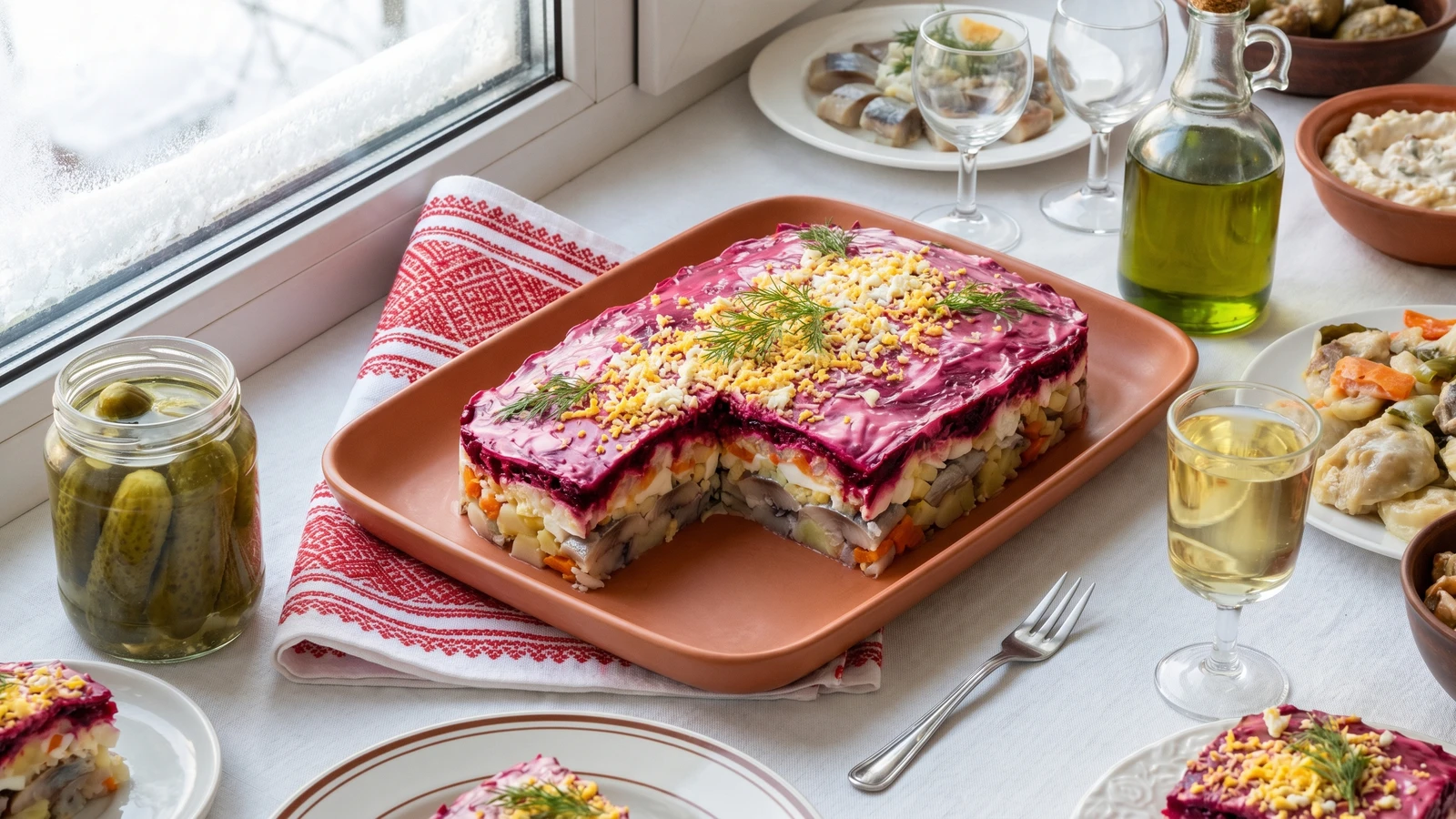
Salted herring disappears under grated roots and mayonnaise, then the beet stains everything crimson overnight. By the time you slice it, the salad has put on its winter coat.
The first honest thing about this salad is that it hides the fish. Salted herring goes down sharp and silver, onion over it, then potato, carrot, egg, and beet until the whole thing wears a crimson coat so bright it looks almost rude on a winter table. You bring it out cold, slice it like cake, and the layers sag a little at the edges. Good. Food for people does that.
Shuba means fur coat, and the joke is better than it sounds in English. The herring needs covering: potato softens the salt, carrot brings sweetness, beet gives earth and colour, and mayonnaise carries everything through the night so separate boiled roots become one salad. Aunt Nadia's note only said, "let it sleep, don't poke it," which is bossy and correct.
This is a New Year's table dish in my London kitchen now, but it still tastes of southern winter: jars opened, root vegetables from the cold pantry, herring rinsed under the tap because it came saltier than expected. Make it the day before. That's not convenience; that is the method. One platter is enough for eight guests or one hungry Ukrainian hovering by the fridge after midnight.
Oseledets pid shuboyu means herring under a fur coat, a plain joke about salted fish buried beneath boiled roots and mayonnaise. The salad became a holiday standard in Ukrainian homes during the late Soviet period, especially on New Year tables, because herring, stored vegetables, eggs, and mayonnaise were winter foods people could get and dress up. The often repeated acronym story about Sh.U.B.A. and 1918 politics is folklore rather than history; the real history is in family versions, with apple, pickled onion, extra egg, or a beet layer left proudly crimson.
Quantity
300g
skinned, boned and finely diced
Quantity
3 medium
scrubbed, tails left on
Quantity
3 medium
scrubbed
Quantity
2 medium
scrubbed
Quantity
3 large
Quantity
1 small
very finely diced
Quantity
2 tablespoons
for softening the onion
Quantity
1 tablespoon
Quantity
180g
Quantity
80g
Quantity
1 small
peeled and coarsely grated
Quantity
small handful
finely chopped
Quantity
to taste
| Ingredient | Quantity |
|---|---|
| salted herring filletsskinned, boned and finely diced | 300g |
| beetsscrubbed, tails left on | 3 medium |
| waxy potatoesscrubbed | 3 medium |
| carrotsscrubbed | 2 medium |
| eggs | 3 large |
| yellow onionvery finely diced | 1 small |
| cucumber pickle brine or mild vinegarfor softening the onion | 2 tablespoons |
| unrefined sunflower oil | 1 tablespoon |
| mayonnaise | 180g |
| smetana or full-fat sour cream | 80g |
| tart apple (optional)peeled and coarsely grated | 1 small |
| fresh dillfinely chopped | small handful |
| sea salt and black pepper | to taste |
Put the beets in one pan and the potatoes and carrots in another, cover with cold salted water, and simmer gently. Cook until a thin knife slides through the thickest part without finding a hard core; the beets will usually take longest, and their smell should move from raw earth to something round and sweet. Keep the beet tails and vegetable skins on so the flavour stays inside. Cool completely, then peel.
Hard-boil the eggs, cool them in cold water, then peel. Separate the whites from the yolks. Grate the whites for the middle layer and keep the yolks for the top, where their yellow makes the beet look even more dramatic.
Taste the herring before you cut it. If it bites too hard with salt, rinse it briefly under cold water and pat it dry, or let it sit in milk while the vegetables cool. Dice it small, toss with the sunflower oil, and let the onion sit in the pickle brine until it loses its raw shout. Drain and squeeze the onion with your hands.
Stir the mayonnaise with the smetana until it falls from the spoon in a soft ribbon. It should spread easily but not run. If it feels stiff, loosen it with a teaspoon of pickle brine. Taste before salting; the herring is already doing plenty.
Grate the potatoes, carrots, beets, and egg whites on the coarse holes of a box grater, keeping each pile separate. Season the potatoes and carrots lightly with black pepper and a little salt. If the beets are very wet, squeeze them gently in your hands so the coat sits cleanly instead of weeping across the platter.
On a shallow platter, spread the herring first, then the drained onion and the grated apple if you're using it. Add the potato in an even layer and spread with a thin coat of dressing. Follow with carrot, another thin coat, then grated egg white. Mix two spoonfuls of dressing into the grated beets and spread them over the top and sides like a crimson blanket. Use a light hand. You are covering the herring, not building a wall.
Cover the platter and chill overnight, or at least until the layers have settled and the top stains the dressing a deep pink at the edges. Before serving, crumble the egg yolks over the beet and scatter with dill. Slice it like cake, with a wet knife, and don't fuss when the first piece slumps. The second one always behaves.
1 serving (about 240g)
Culinary guides, cultural storytelling, and the editorial depth that makes cooking meaningful.
Discover Culinary ExplorerChef Lesia
The beet stays raw, so the salad bites back: crimson, garlicky, nutty, slick with green sunflower oil, and ready before the bread is on the table.

Chef Lesia
The pickle keeps this so-called men's salad honest: beef and beans bring the appetite, fried onion brings sweetness, and cucumber brine cuts through the mayonnaise until the bowl wakes up.
Chef Lesia
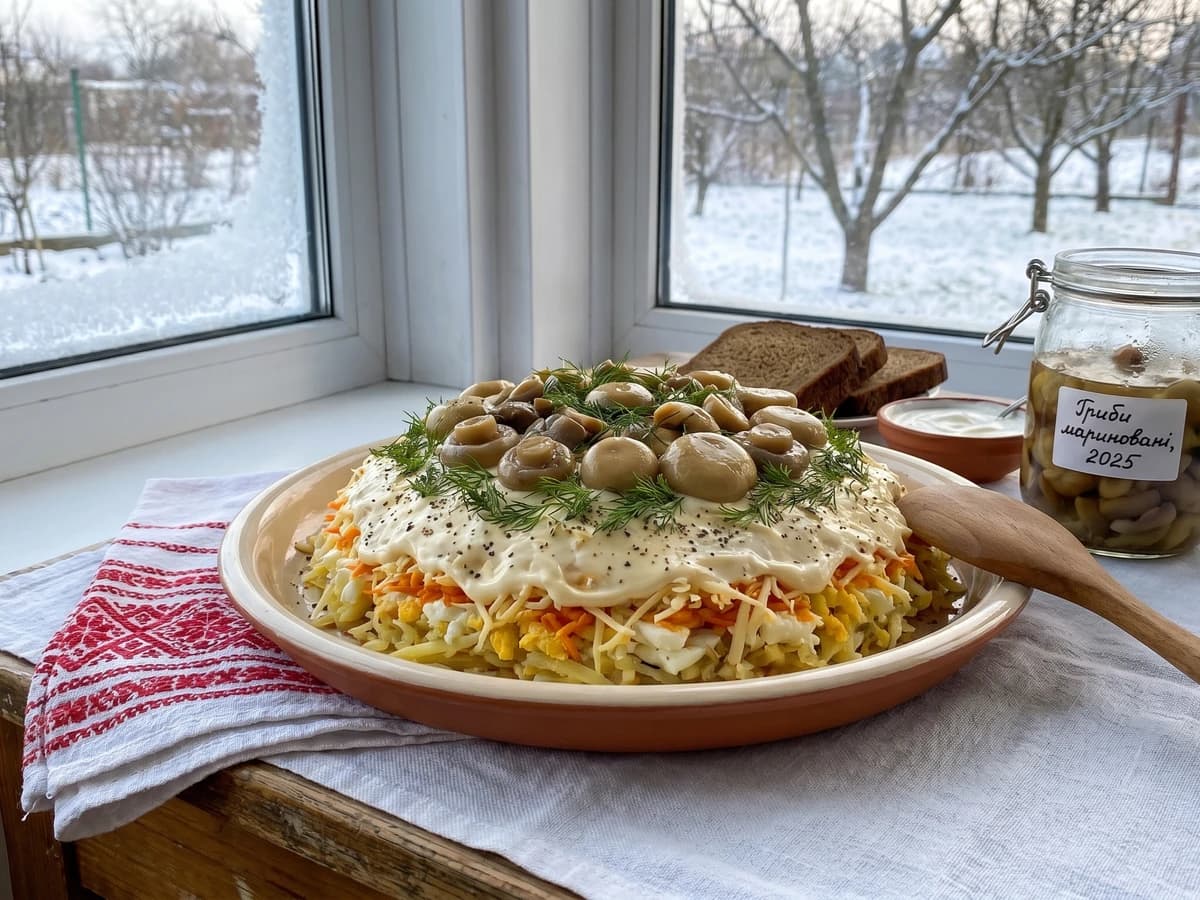
Open the jar and the holiday table smells briefly of the woods: marinated mushrooms, potato, egg, cheese, dill, and just enough mayonnaise to make it hold together.

Chef Lesia
The cabbage changes under your hands: stiff, squeaky ribbons soften into a glossy summer salad with carrot sweetness, dill sharpness, and green sunflower oil catching the light.