
Chef Takumi
Agar Jelly with Anko and Fruit (あんみつ, Anmitsu)
Anmitsu looks like a tray of small tasks, but the work is calm: dissolve the kanten fully, chill the pieces clean, then let fruit, anko, and kuromitsu do the speaking.
A cooking platform built around craft, culture, and the stories behind what we eat.

Created by
Kuri kinton is New Year gold made from sweet potato and chestnuts, smooth enough to gleam, simple enough once you know that color and texture decide everything.
Kuri kinton looks like treasure because it is meant to. In the osechi box, where each little dish carries a wish for the year, this one speaks in gold: prosperity, good fortune, a bright beginning. It can look more difficult than it is. Really, it is sweet potato cooked gently, mashed smooth, and folded around whole candied chestnuts.
The one detail that decides it is the sweet potato. Use satsumaimo if you can, yellow-fleshed and dense, because its sweetness and color are already close to the dish we want. Soak the cut pieces well before simmering. That isn't fussing. It draws away surface starch and some bitterness, so the finished mash tastes clean and shines rather than turning muddy.
We add kuchinashi, dried gardenia pod, for the deep yellow color. It gives the mash its New Year brightness without changing the flavor much, which is exactly the kind of quiet work a good ingredient should do. Mash while the potato is hot, then cook it with syrup until glossy and thick enough to hold a soft mound. Too stiff and it eats like paste. Too loose and it slumps in the jubako, looking embarrassed, which is no way to greet January.
Fold the chestnuts in at the end so they stay whole. That is the kindness here: smooth gold around round pieces of chestnut, restrained and jewel-like. Leave it room in the lacquer box. Ma, the empty space, makes even a sweet spoonful feel composed.
Kuri kinton became a standard part of osechi ryōri, the layered New Year foods packed in lacquer jubako, because its golden color suggested kin, or gold, and therefore prosperity. The word kinton is written with characters meaning 'gold dumpling' or 'gold group,' though the dish itself is usually a smooth sweet potato paste rather than a formed dumpling. Modern household versions often use satsumaimo and kuri no kanroni, chestnuts preserved in syrup, a practical postwar form that keeps the older symbolic color and whole-chestnut shape.
Quantity
700g
peeled thickly and cut into 2 cm rounds
Quantity
1
lightly cracked
Quantity
12 pieces, about 220g drained
Quantity
1/2 cup
Quantity
3 tablespoons, or to taste
Quantity
2 tablespoons
Quantity
1/4 teaspoon
Quantity
as needed
for soaking and simmering
| Ingredient | Quantity |
|---|---|
| satsumaimo Japanese sweet potatoespeeled thickly and cut into 2 cm rounds | 700g |
| kuchinashi no mi (dried gardenia pod)lightly cracked | 1 |
| whole candied chestnuts in syrup | 12 pieces, about 220g drained |
| syrup from the candied chestnuts | 1/2 cup |
| sugar | 3 tablespoons, or to taste |
| mirin | 2 tablespoons |
| sea salt | 1/4 teaspoon |
| waterfor soaking and simmering | as needed |
Peel the satsumaimo thickly until the pale yellow flesh is clean, then cut it into rounds about 2 cm thick. The skin and the layer just beneath it can carry bitterness and gray color, so don't be timid with the peeler. Put the pieces in plenty of cold water and soak for 20 minutes, changing the water once if it clouds heavily.
Tie the cracked kuchinashi pod in a small square of cheesecloth, or place it in a tea infuser. Drain the potatoes, put them in a pot, cover with fresh cold water by 2 cm, and add the kuchinashi. Bring up gently and simmer until a skewer slides through without resistance, about 15 to 20 minutes.
Remove the kuchinashi and drain the potatoes well. While they are still hot, pass them through a fine sieve or mash them very thoroughly with a wooden spoon. Hot potato breaks down cleanly; once it cools, it turns stubborn and the finished kinton becomes lumpy no matter how politely you ask it to behave.
Return the mash to a clean pot. Add the chestnut syrup, sugar, mirin, and salt, then cook over low heat, stirring steadily with a wooden spatula. The mixture should loosen first, then thicken and turn glossy, pulling softly from the bottom of the pot. Taste as you go, because bottled chestnut syrup varies. The salt should not announce itself; it only keeps the sweetness from going flat.
Take the pot off the heat and fold in the whole candied chestnuts gently, keeping them intact. If the chestnuts are very large, halve a few and leave the rest whole for a better rhythm in the box. Let the kuri kinton cool completely before packing it into the jubako or a small lacquer bowl.
Spoon the cooled kinton into one compartment of the jubako in a low mound, showing several chestnuts on top. Don't press it flat. A little height catches the light, and open space around it makes the gold read clearly. Serve cool or at room temperature.
1 serving (about 175g)
Culinary guides, cultural storytelling, and the editorial depth that makes cooking meaningful.
Discover Culinary ExplorerChef Takumi
Anmitsu looks like a tray of small tasks, but the work is calm: dissolve the kanten fully, chill the pieces clean, then let fruit, anko, and kuromitsu do the speaking.

Chef Takumi
A cool square of almond-scented milk, set softly and served with mikan in thin syrup, is dinner-party food without theater. The only stern demand is restraint with the fragrance.

Chef Takumi
Azuki bar asks for patience twice: once while the beans soften, and once while the frozen bar yields. That hardness is not a flaw. It is the character of the thing.
Chef Takumi
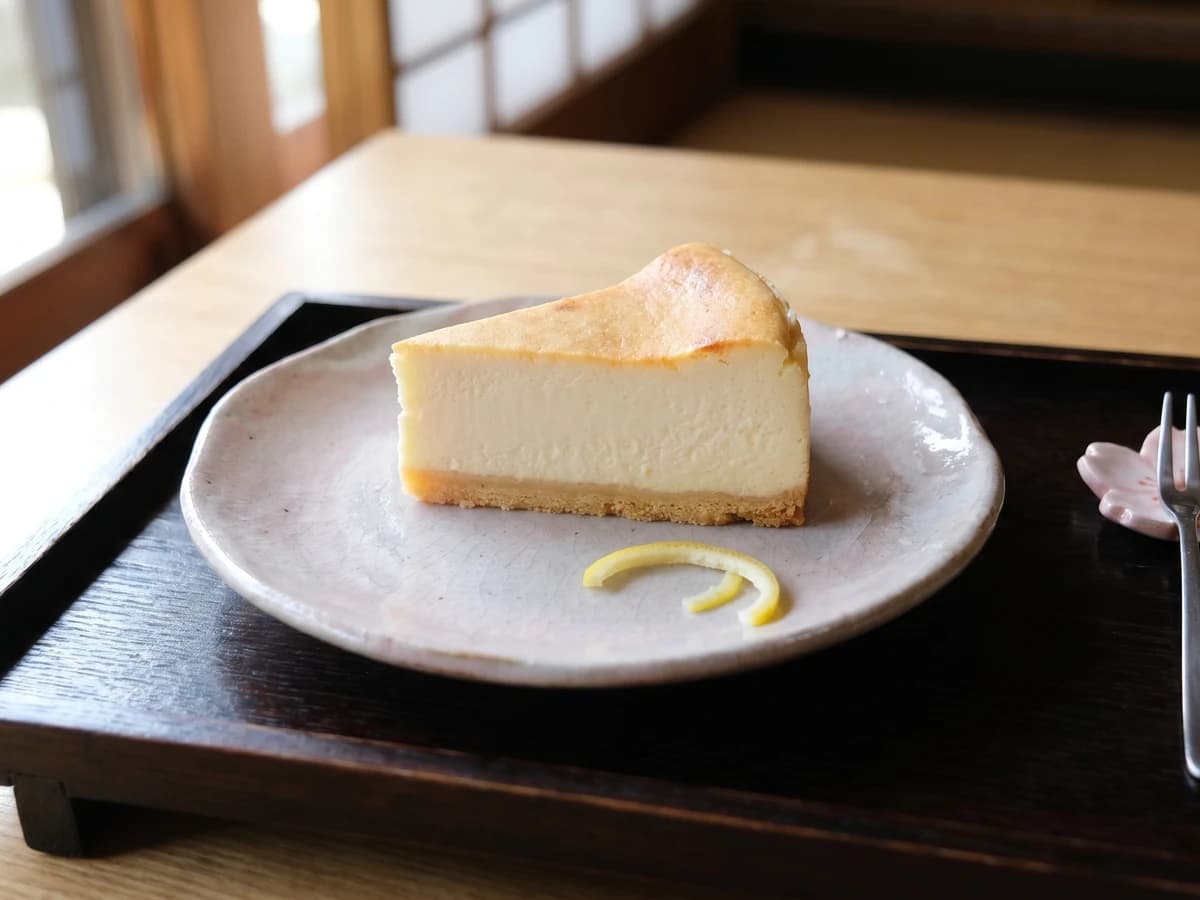
A Japanese baked cheesecake is not trying to float away. It is dense, smooth, and quietly tart, with a clean slice doing the work of decoration.