
Chef Joost
Beschuit met Muisjes
The airy Dutch rusk sold in rolls of thirteen, twice baked until crisp, then buttered and crowned with sugared aniseed for the birth of a child.
A cooking platform built around craft, culture, and the stories behind what we eat.
Created by
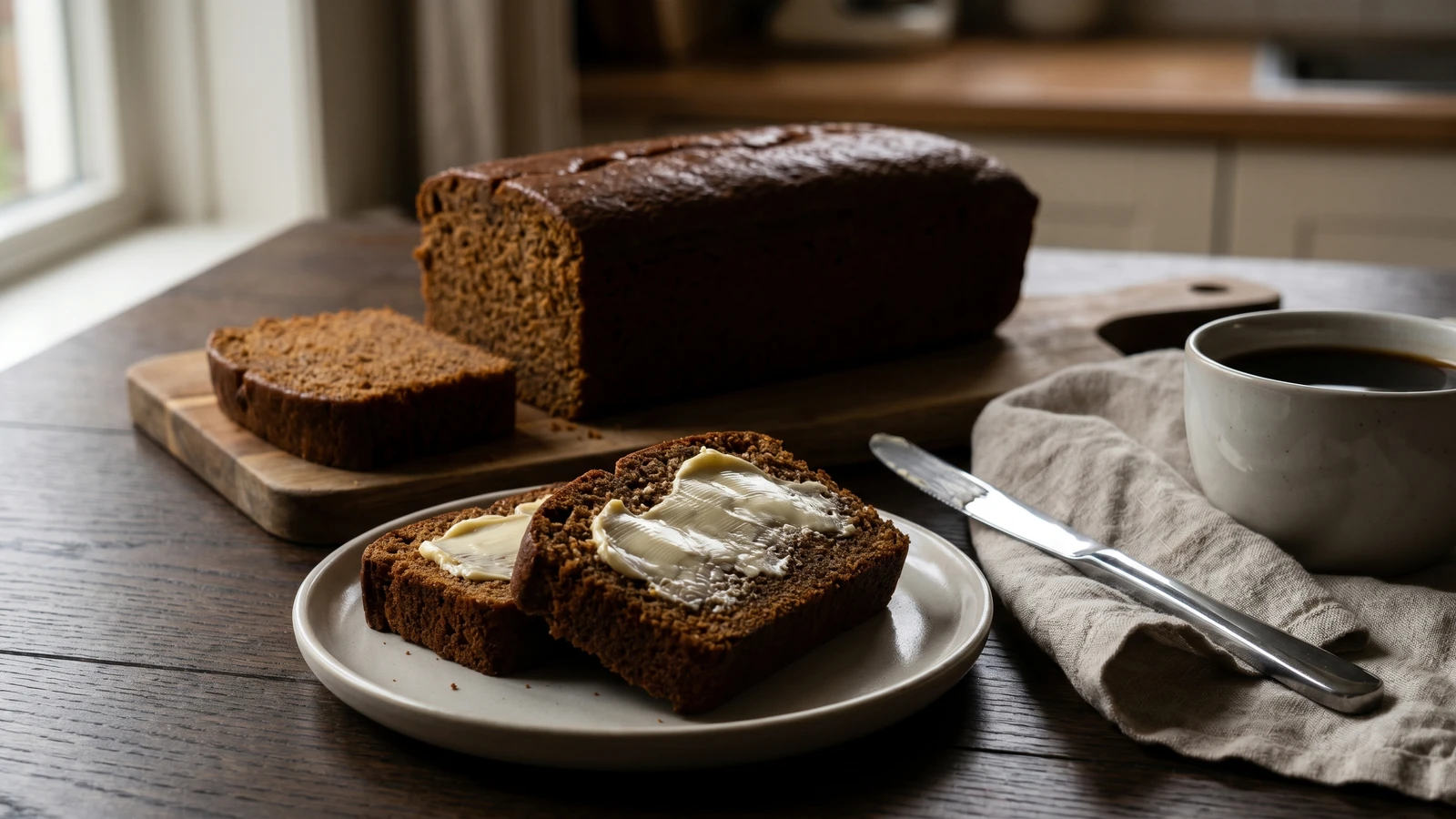
The name says breakfast cake, but ontbijtkoek carries the older story of rye, honey, peppered spices, and a frugal country turning a slice of cake into daily bread.
Smell ontbijtkoek and you're smelling the Dutch spice cupboard before the day has properly begun. Cinnamon, clove, ginger, nutmeg, a little white pepper if you're honest with the word peperkoek, pepper cake, because peper once meant spices more broadly than the black grains alone. The name already tells you the public face of the thing: ontbijt means breakfast, koek means cake. But let me tell you a secret. Nobody eats it only at breakfast. It appears beside coffee, in lunchboxes, after school, and under a thick smear of butter when a grey afternoon needs persuading.
This is exuberant cookery in a frugal country. Rye flour keeps it dark and close-grained, honey and stroop, syrup, make it damp and keeping, and the koekkruiden, cake spices, carry the old cargo: cinnamon, clove, mace, nutmeg, ginger. History and cookery, they cannot be separated. The Dutch did not put their spices only in grand feast dishes. They put them where ordinary people would meet them every day, in speculaas, in hachee, in a slice of dark cake wrapped in paper and taken to work.
The method is plain because the cake is plainspoken. Stir the wet into the dry, do not beat it into toughness, bake it slowly, then wrap it and wait. That last part matters. Fresh ontbijtkoek is only half awake; after a day, the rye softens, the spices settle, and the crumb becomes the dark, tender slice the baker intended. Hou het altijd simpel, always keep it simple, but simple is not the same as skipped.
Ontbijtkoek belongs to the medieval Low Countries tradition of honeyed rye spice cakes, with famous regional versions such as Deventer koek documented in city baking culture by the fifteenth century. In the south of the Netherlands and in Flanders it is often called peperkoek, where peper historically points to costly mixed spices rather than only black pepper. Its survival as an everyday breakfast and coffee-table slice shows how VOC-era spices moved from luxury trade goods into ordinary Dutch cupboards.
Quantity
250g
Quantity
100g
Quantity
150g
Quantity
2 tablespoons
Quantity
2 teaspoons
Quantity
1/2 teaspoon
Quantity
1/2 teaspoon
Quantity
250ml
Quantity
150g
Quantity
100g
Quantity
1 tablespoon
Quantity
as needed
| Ingredient | Quantity |
|---|---|
| rye flour | 250g |
| plain flour | 100g |
| dark brown basterdsuiker or dark brown sugar | 150g |
| koekkruiden or speculaaskruiden | 2 tablespoons |
| baking powder | 2 teaspoons |
| baking soda | 1/2 teaspoon |
| fine salt | 1/2 teaspoon |
| whole milk | 250ml |
| honey | 150g |
| dark stroop, treacle or molasses | 100g |
| neutral oil | 1 tablespoon |
| butter, for serving (optional) | as needed |
Heat the oven to 160C. Grease a 23 x 13 cm loaf tin and line it with baking paper, leaving a little overhang so you can lift the cake out later. Ontbijtkoek sticks with quiet determination; paper is not fussiness, it's prudence.
Whisk the rye flour, plain flour, sugar, koekkruiden, baking powder, baking soda, and salt together in a large bowl. Break up any lumps of dark sugar with your fingers. The spices must be spread evenly now, because once the syrup goes in the batter becomes too heavy for polite corrections.
Put the milk, honey, stroop, and oil in a small saucepan and warm gently until the honey and syrup loosen into the milk. Do not boil it. You want a pourable dark mixture, not a pan of dairy making its objections known.
Pour the warm syrup mixture into the dry ingredients and stir with a wooden spoon until no dry flour remains. Stop there. Rye does not reward beating, and a tough ontbijtkoek is a small domestic sadness. The batter should be thick, glossy, and dark brown.
Scrape the batter into the lined tin and smooth the top. Bake for 55 to 65 minutes, until the top is firm, the edges pull slightly from the paper, and a skewer pushed into the centre comes out with a few damp crumbs but no wet batter. If the top darkens too quickly, lay a loose sheet of foil over it for the last fifteen minutes.
Cool the cake in the tin for 15 minutes, then lift it out and cool completely on a rack. Wrap it tightly in baking paper or foil and leave it overnight before slicing. This is the step that makes the crumb tender and close, the way bakery ontbijtkoek is: the rye drinks, the spice settles, and breakfast becomes patient.
1 serving (about 85g)
Culinary guides, cultural storytelling, and the editorial depth that makes cooking meaningful.
Discover Culinary ExplorerChef Joost
The airy Dutch rusk sold in rolls of thirteen, twice baked until crisp, then buttered and crowned with sugared aniseed for the birth of a child.

Chef Joost
The Dutch square loaf baked under a lid, with a quiet crumb, a disciplined crust, and exactly the right shape for the tosti pan.

Chef Joost
Before bread came from a packet of yeast, it came from yesterday: flour, water, salt, and a living desem starter carrying one loaf into the next.

Chef Joost
A round raisin bread for Driekoningen, Three Kings' Day, with a hidden bean, a star in the crust, and one ordinary eater crowned king for a day.