Chef Juliana
Abobrinha Refogada
You think you'll turn zucchini into mush. Fine. Anota aí: high heat, wide pan, salt at the end, and suddenly this little green side starts solving dinner.
A cooking platform built around craft, culture, and the stories behind what we eat.
Created by
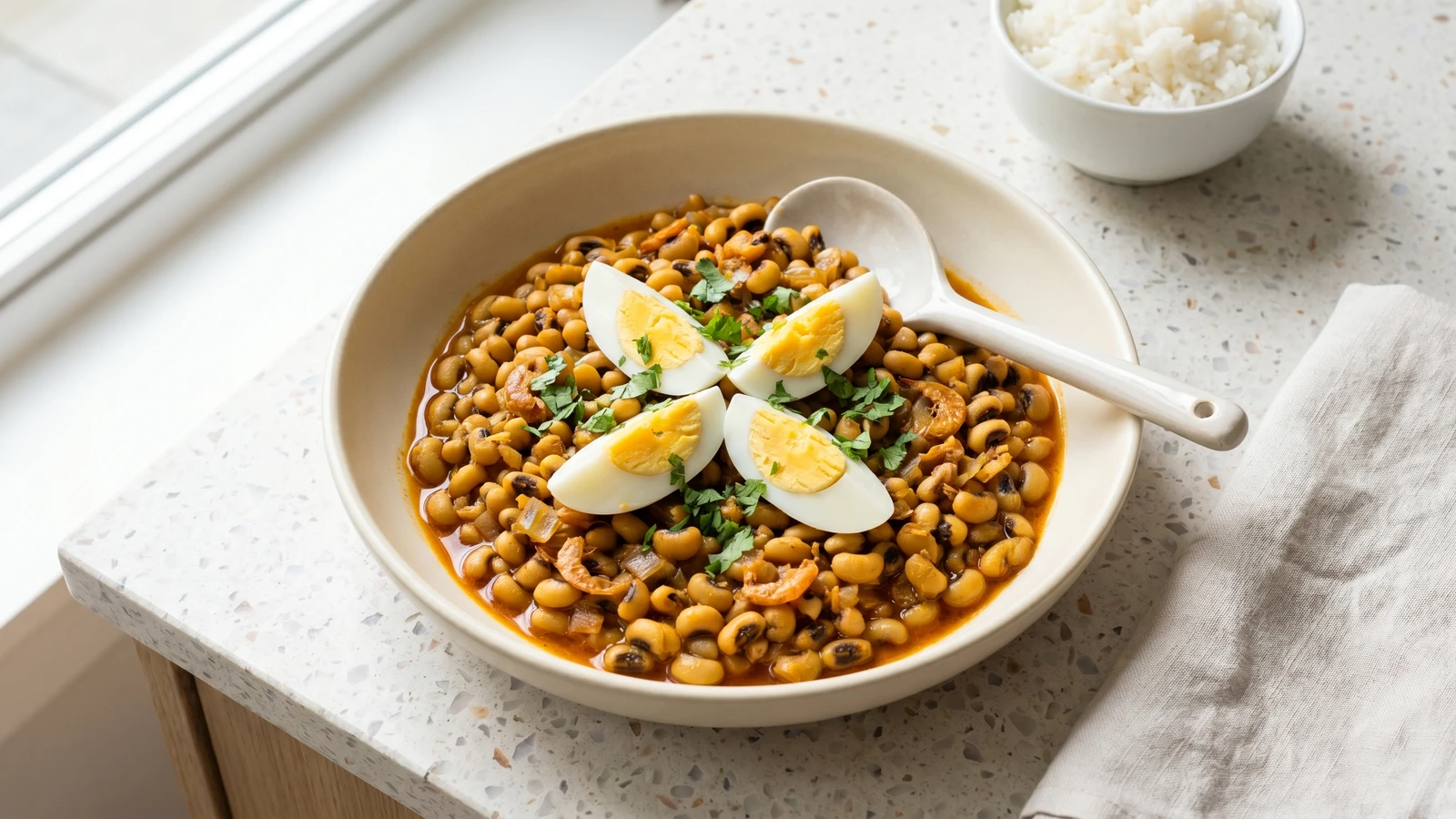
You think sacred food is automatically impossible at home. It isn't. Omolocum belongs to Oxum, and this version teaches respect through method: beans, dendê, onion, shrimp, eggs, and attention.
You may look at a plate like this and hear that quiet voice, isso não é pra mim. Too sacred, too Afro-Baiana, too full of rules I wasn't born knowing. Good. That means you're paying attention. Omolocum belongs to Oxum, the orixá of fresh water, sweetness, fertility, and gold, and I won't pretend a home recipe makes you the owner of what the cooks of the terreiros carry. It doesn't. It teaches you to approach the food with respect, plain hands, and no fake shortcut.
A gente can cook comida de verdade without stealing mystery from anybody. Here, that means feijão-fradinho soaked until it cooks evenly and sits easier, then simmered until tender, never blown apart. It means an honest refogado with onion, garlic, dried shrimp, and azeite de dendê, red African palm oil, because dendê is not decoration here. Annatto in sunflower oil is not a clever substitution. It's erasure in a bottle, and I won't hand it to you.
The method is simple if you stop treating simple as lesser. Mash a ladle of cooked beans into the refogado so the caldo turns creamy instead of watery. Fold the rest in gently so the beans still look like beans. Crown the plate with boiled egg quarters laid like petals, golden on gold. This is not a Tuesday pê-efe side the same way plain feijão is, but it still teaches the same foundation: rice, beans, something from the pan, something green, the plate that quietly keeps a country itself.
Cozinhar não é dom, é um aprendizado. Anota aí: soak, simmer, refogar, mash, fold, garnish. Sacred food asks for respect. The kitchen part asks for practice.
Omolocum, also written omolokum in some houses, is comida de santo for Oxum in Afro-Brazilian Candomblé, built from feijão-fradinho, dendê, onion, dried shrimp, and boiled eggs, though details vary by terreiro and lineage. In 2005, IPHAN inscribed the Ofício das Baianas de Acarajé in the Livro dos Saberes, recognizing the Afro-Baian knowledge around foods such as acarajé, abará, and the tabuleiro tradition. That registry is not ownership of every sacred dish, but it does mark how food, labor, memory, and religion sit together in Bahia.
Quantity
2 cups
soaked overnight
Quantity
7 cups, plus more as needed
Quantity
2
Quantity
4 large
Quantity
1/4 cup
Quantity
1 large
finely chopped
Quantity
3 cloves
minced
Quantity
1/2 cup
rinsed and finely chopped
Quantity
1 teaspoon, plus more to taste
Quantity
1/2 teaspoon
Quantity
2 tablespoons
chopped
| Ingredient | Quantity |
|---|---|
| dried black-eyed peas (feijão-fradinho)soaked overnight | 2 cups |
| water | 7 cups, plus more as needed |
| bay leaves | 2 |
| eggs | 4 large |
| azeite de dendê (red African palm oil) | 1/4 cup |
| onionfinely chopped | 1 large |
| garlicminced | 3 cloves |
| dried shrimprinsed and finely chopped | 1/2 cup |
| salt | 1 teaspoon, plus more to taste |
| freshly ground black pepper | 1/2 teaspoon |
| cilantro (optional)chopped | 2 tablespoons |
Put the feijão-fradinho in a bowl, cover with plenty of water, and leave overnight, at least 8 hours. Drain and rinse before cooking. Soaking is not fuss. It helps the beans cook evenly and sit easier in your stomach, which is what a good cook wants before any pretty plate.
Put the drained beans in a heavy pot with 7 cups water and the bay leaves. Bring to a boil, then lower to a gentle simmer with the lid partly open. Cook until the beans are tender but still holding their shape, about 35 to 45 minutes. Bite one. It should give easily without turning to paste, because omolocum needs body, not bean mud.
While the beans cook, put the eggs in a small pan and cover with water. Bring to a boil, lower the heat, and simmer 10 minutes. Move them to cold water, peel, and cut into quarters. The yolks should be firm and bright, because they crown the dish like petals, not like an afterthought.
Warm the dendê in a wide pan over medium heat until it looks glossy. Add the onion and cook, stirring, until soft and sweet-smelling, about 6 minutes. Add the garlic for 1 minute, just until you smell it, then stir in the chopped dried shrimp. This is the flavor base. Burn the garlic and it goes bitter; rush the onion and the whole dish tastes thin.
When the beans are tender, scoop 1 cup of beans with a little cooking liquid into the refogado. Mash them right in the pan with a spoon until creamy. This mashed ladle is what makes the caldo cling to the beans instead of running around the plate like weak soup. No powder, no packet, no pretending.
Lift the bay leaves out of the bean pot. Stir the refogado back into the beans, add the salt and black pepper, and simmer gently for 8 to 10 minutes. Stir from the bottom so nothing catches. The finished omolocum should be golden, glossy, and moist, with whole beans visible and a creamy caldo holding them together.
Taste and adjust the salt, remembering the shrimp may already bring plenty. Spoon the beans onto a shallow plate or bowl and lay the egg quarters around the top like flower petals, yolk side up. Add cilantro only if you like it and if it belongs on your table. Serve warm, with arroz soltinho and something green if you're making it part of a meal.
1 serving (about 230g)
Culinary guides, cultural storytelling, and the editorial depth that makes cooking meaningful.
Discover Culinary ExplorerChef Juliana
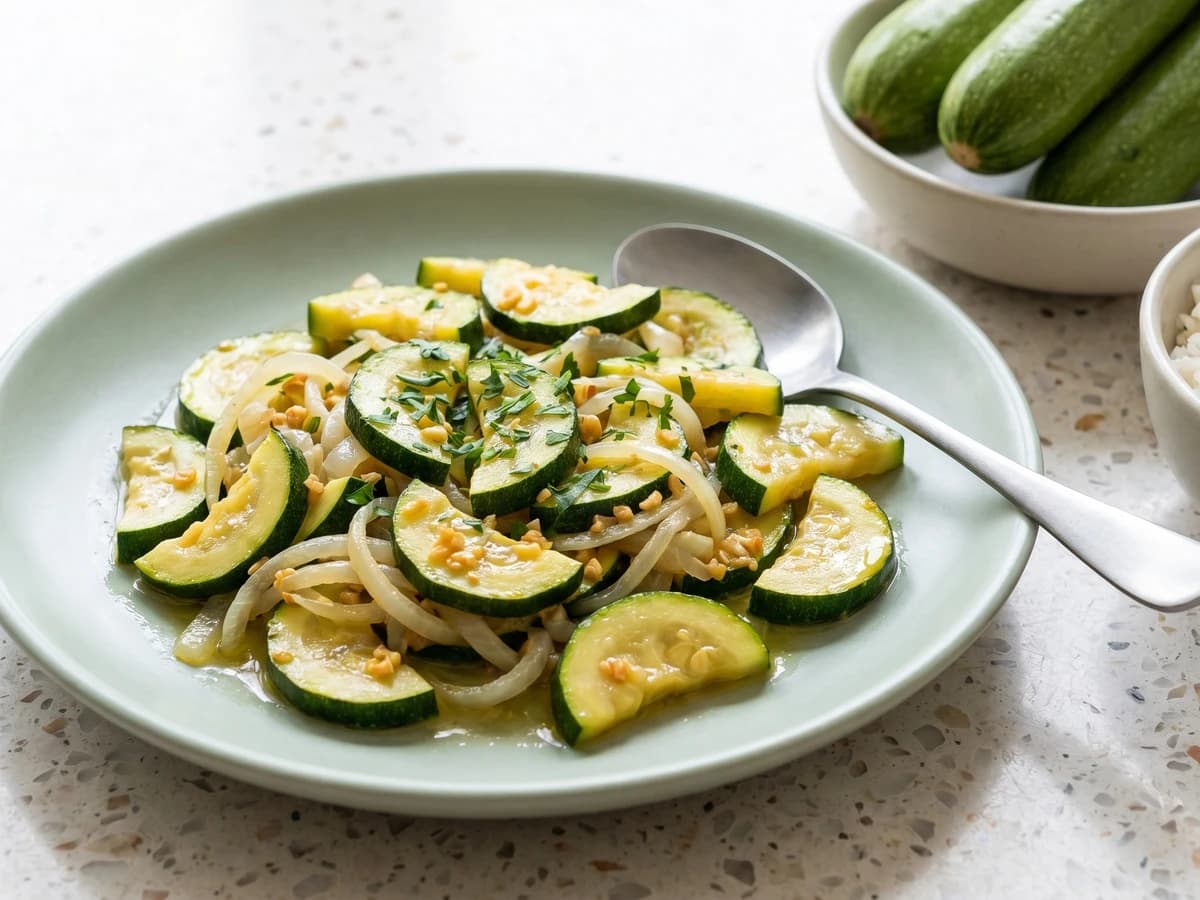
You think you'll turn zucchini into mush. Fine. Anota aí: high heat, wide pan, salt at the end, and suddenly this little green side starts solving dinner.

Chef Juliana
You think this is sacred enough to be impossible. It isn't. Acaçá is patience, stirring, and ponto, taught plainly, with respect for the terreiros that carry it.
Chef Juliana
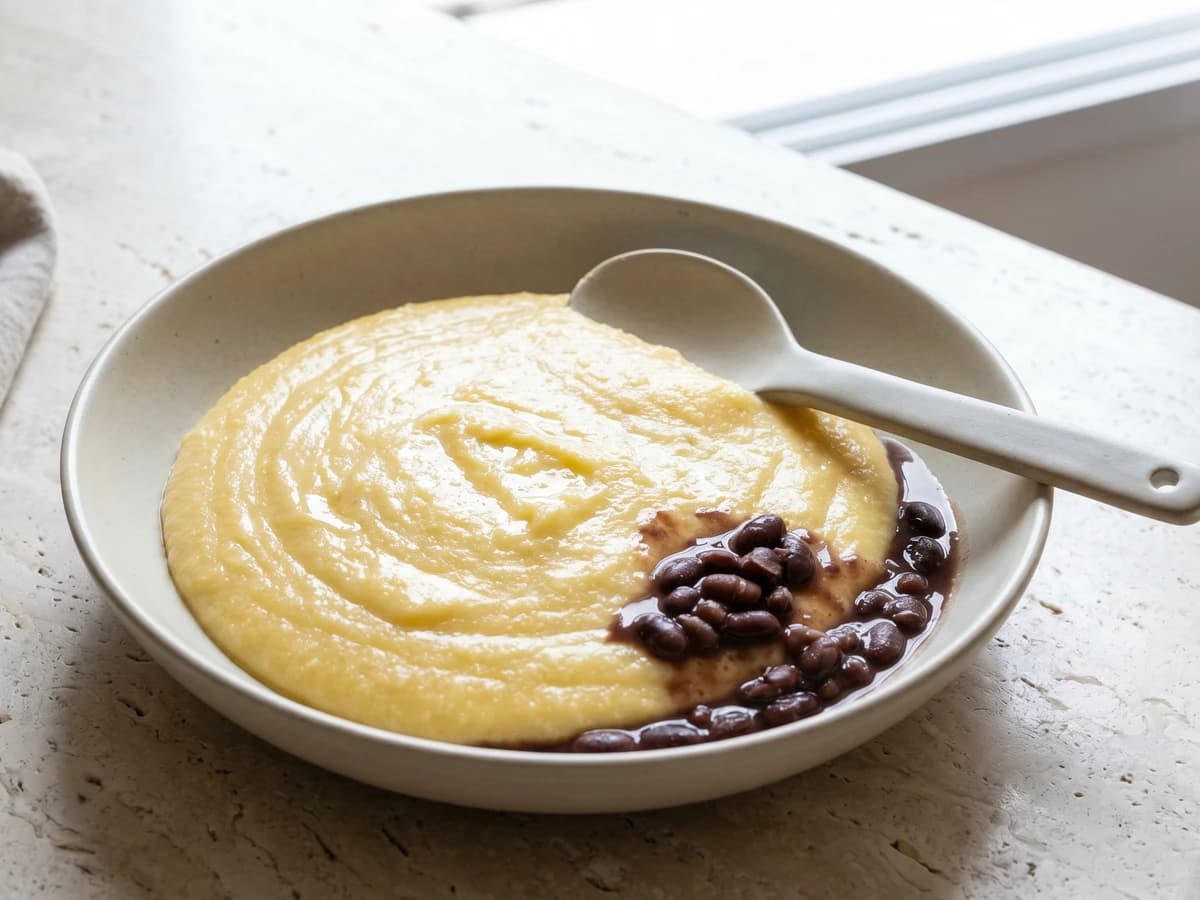
You think cornmeal will turn into lumps and shame. It won't. Cold water first, patient stirring, and a real garlic base give you angu that solves dinner.
Chef Juliana
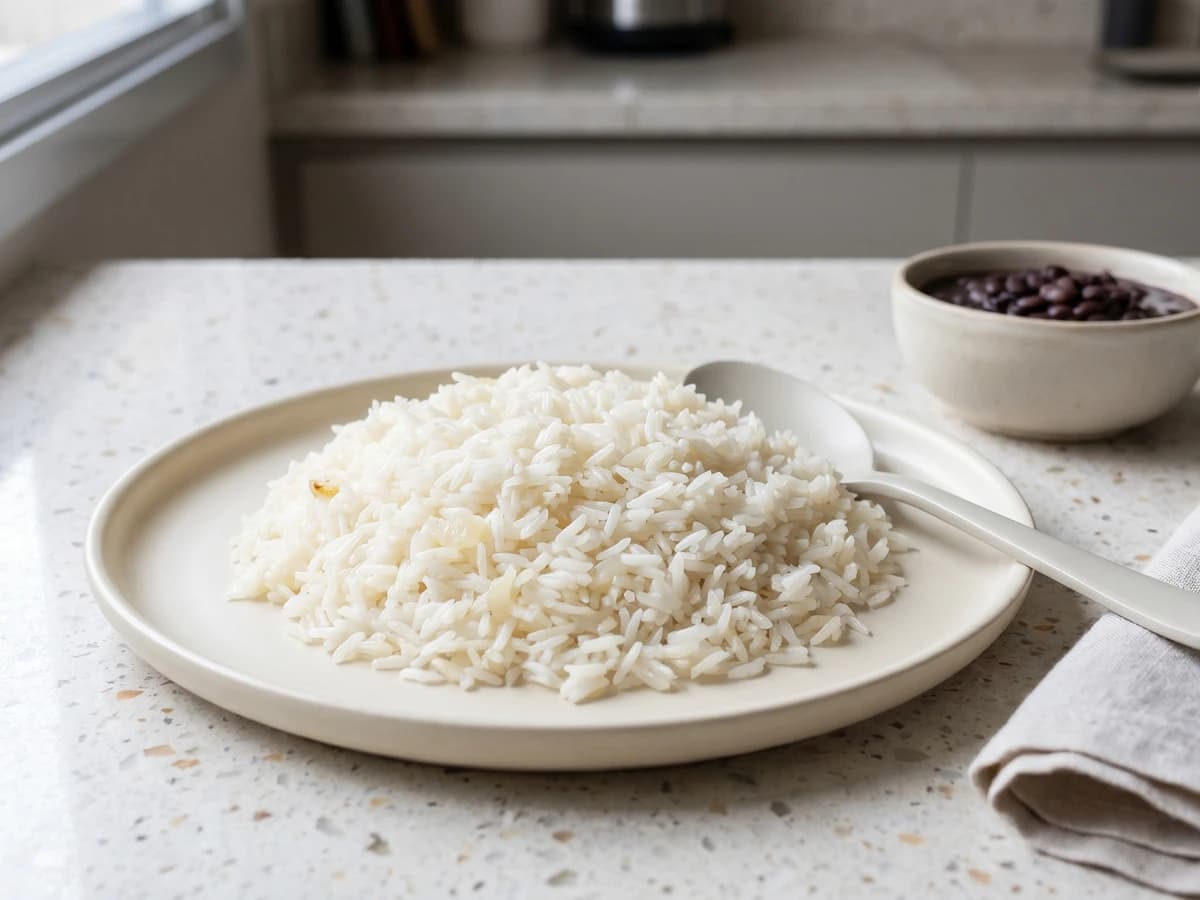
Everyone swears they can't make good rice. They're wrong. Refogue onion and garlic, use two parts water to one rice, then close the lid and leave the poor thing alone.