
Chef Margarida
Chouriço Assado na Brasa
Chouriço set ablaze with aguardente, cooked by fire until the casing splits and the paprika-rich fat pools in the dish. Tear the bread. Press it into the fat. This is how we've always done it.
A cooking platform built around craft, culture, and the stories behind what we eat.
Created by
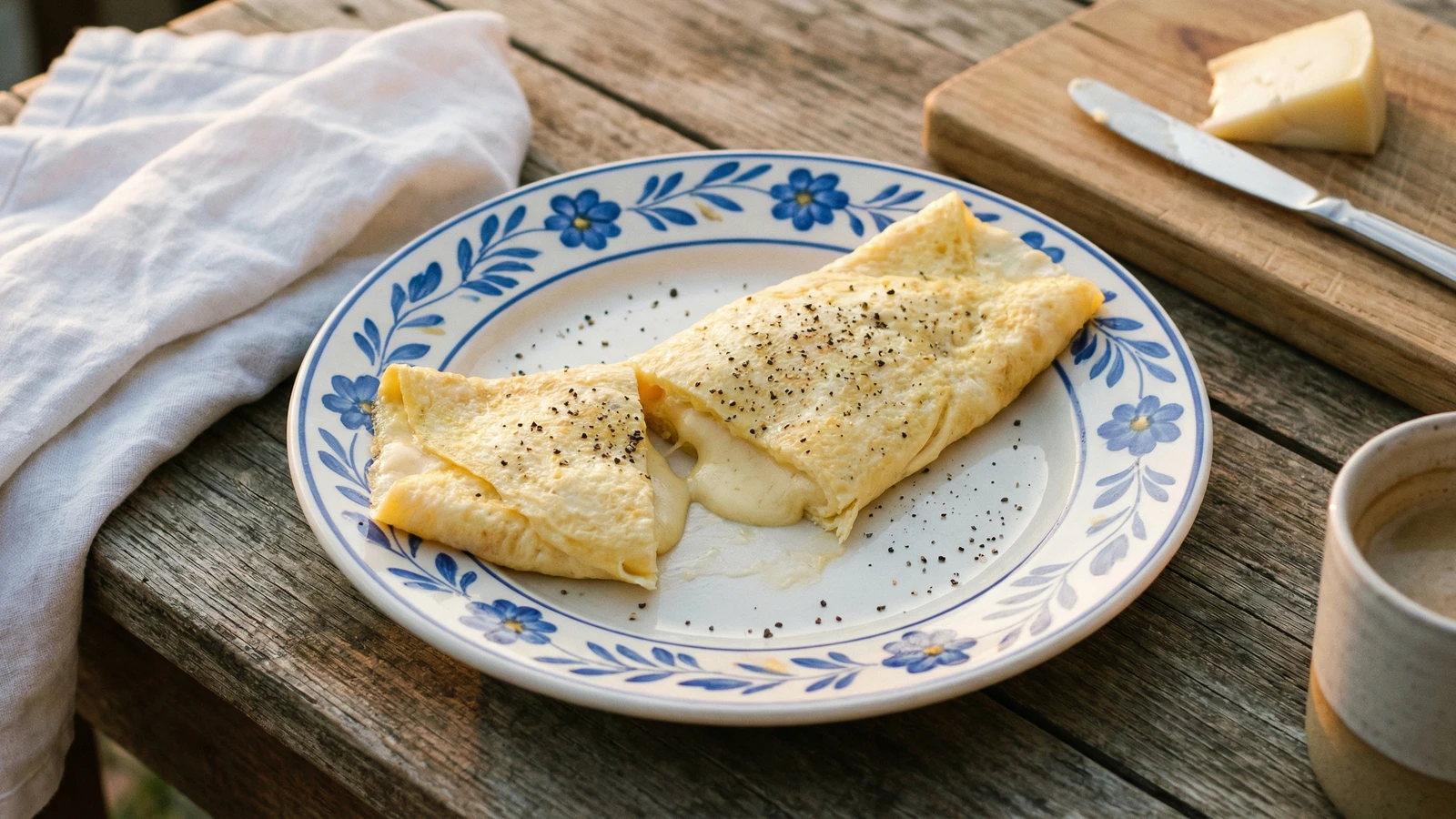
A simple omelet made extraordinary by Serra da Estrela cheese, the creamy sheep's milk treasure from Portugal's highest mountains. Some mornings deserve better than ordinary.
There's a moment in every Portuguese kitchen when you open the refrigerator and find a wedge of good cheese, a few eggs, and nothing else that matters. This is that meal.
Queijo da Serra is not just any cheese. It comes from the Serra da Estrela mountains in Beira, where shepherds have been making it the same way for centuries. Sheep's milk, thistle rennet, salt. When the cheese is young, you cut off the top and spoon out the interior like custard. When it's a bit older, it holds its shape but still melts into something extraordinary.
Avó Leonor kept a small wheel of queijo da serra in the larder, wrapped in cloth, saved for moments like this. She'd slice it thin, let it come to room temperature while she beat the eggs, then fold it into an omelet so simple it felt almost too easy. "The cheese does the work," she'd say. "You just need to stay out of its way."
At Mesa da Avó, I sometimes serve this for late breakfast when guests have lingered too long over coffee and stories. It takes five minutes. It tastes like you spent an hour. That's the magic of cooking with ingredients that need nothing from you but respect.
Queijo da Serra da Estrela holds Portugal's oldest cheese-making tradition, with origins tracing back over 2,000 years to when the Lusitanian shepherds first grazed their flocks in Beira's mountains. It received PDO protection in 1996, making it one of Europe's most rigorously protected cheeses. The use of wild thistle (cardo) as a coagulant instead of animal rennet gives it a distinctive slightly bitter, complex flavor found nowhere else.
Quantity
3 large
Quantity
60g
sliced or crumbled
Quantity
1 tablespoon
Quantity
pinch
Quantity
to taste
freshly ground
| Ingredient | Quantity |
|---|---|
| eggs | 3 large |
| Queijo da Serra da Estrelasliced or crumbled | 60g |
| butter | 1 tablespoon |
| fine sea salt | pinch |
| black pepperfreshly ground | to taste |
Take the cheese from the refrigerator 15 minutes before cooking if you can. Cold cheese won't melt properly. If your queijo da serra is young and creamy, cut it into thin slices. If it's more aged and firm, crumble it with your fingers. Either way works.
Crack the eggs into a bowl. Add the salt. Beat with a fork just until the yolks and whites are combined. You're not making a soufflé. Twenty seconds, maybe thirty. Stop when you no longer see streaks of white.
Heat a small nonstick pan (20cm is ideal) over medium heat. Add the butter and let it melt and foam. When the foam subsides but before it browns, pour in the eggs. Let them sit undisturbed for 10 seconds while the bottom sets. Then use a spatula to gently push the edges toward the center, tilting the pan so the uncooked egg flows to the edges. Repeat two or three times. The top should still look slightly wet and glossy.
When the eggs are set on the bottom but still soft on top, arrange the cheese down the center of the omelet. Remove from heat immediately. The residual heat will continue cooking the eggs and melting the cheese. Fold one third of the omelet over the cheese, then slide it onto a warm plate, folding the final third underneath as it lands. The omelet should be pale golden, never browned.
Finish with a grinding of black pepper. Serve the moment it hits the plate. The cheese inside should be melting, the eggs still tender. An omelet waits for no one. This is breakfast food that demands you sit down and eat it while it's perfect.
1 serving (about 220g)
Culinary guides, cultural storytelling, and the editorial depth that makes cooking meaningful.
Discover Culinary ExplorerChef Margarida
Chouriço set ablaze with aguardente, cooked by fire until the casing splits and the paprika-rich fat pools in the dish. Tear the bread. Press it into the fat. This is how we've always done it.

Chef Margarida
Spring peas braised slowly with chouriço and bacon, eggs nestled on top to poach in the aromatic sauce. One pan, no fuss, pure comfort. This is how Portuguese grandmothers have been feeding families for generations.

Chef Margarida
The working-class breakfast that became comfort food, thick with smoky chouriço and golden potato, baked until the eggs set proud and golden. Pack it for the field or slice it at the Sunday table.

Chef Margarida
Blood sausage and pineapple from the Azores, where volcanic soil grows the sweetest fruit and tradition pairs it with the richest morcela. Two bites that belong together.