
Chef Margarida
Chouriço Assado na Brasa
Chouriço set ablaze with aguardente, cooked by fire until the casing splits and the paprika-rich fat pools in the dish. Tear the bread. Press it into the fat. This is how we've always done it.
A cooking platform built around craft, culture, and the stories behind what we eat.
Created by
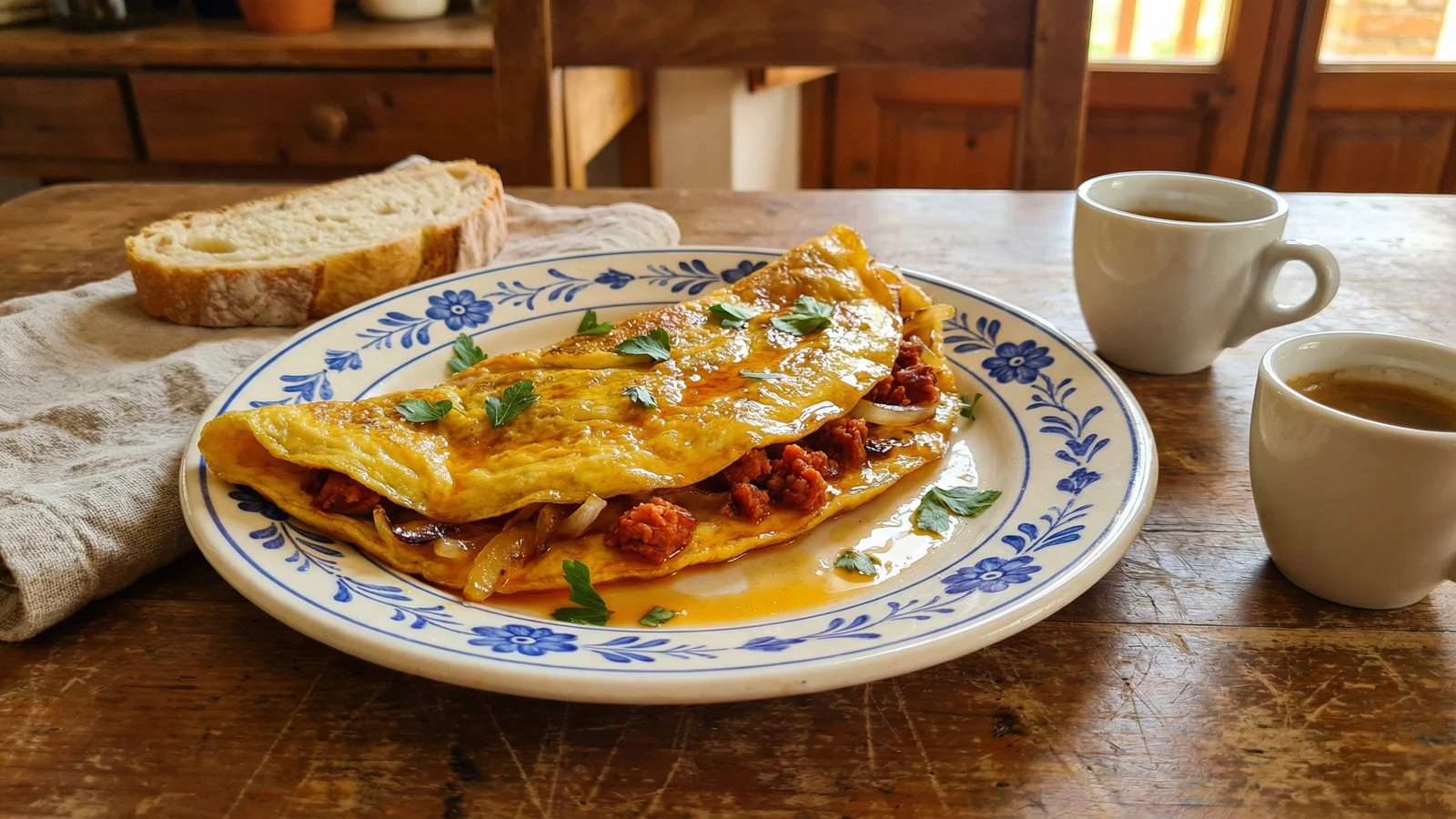
Crumbled chouriço and slowly caramelized onions folded into a soft, golden omelet. Tavern cooking that found its way to the breakfast table and never left.
Ilearned to make this standing at Avó Leonor's elbow on Saturday mornings. She'd slice the chouriço while the coffee brewed, and by the time the cups were poured, the whole kitchen smelled like smoke and paprika and caramelized onion. That smell is my childhood.
This isn't a fancy French omelet with its perfect rolled shape and baveuse center. This is Portuguese cooking. Practical. Unfussy. You cook the filling first, fold the eggs over, and eat it with bread and strong coffee. The technique matters, but not in a precious way. It matters because eggs deserve respect, and chouriço fat is too good to waste.
The secret is the onion. You cook it slowly in the rendered chouriço fat until it practically dissolves. This is the refogado principle that runs through all Portuguese cooking: build flavor at the bottom of the pan before anything else happens. Rush the onion and you've made something ordinary. Give it time and you've made something that tastes like it took all morning.
At Mesa da Avó, we sometimes serve this for late brunch, and people always ask what makes it taste so good. The answer is patience. And real chouriço. And not being afraid of fat. That's it. That's Portuguese breakfast.
Portuguese omelets trace back to tavern cooking, where eggs stretched precious proteins into filling meals for workers. Chouriço found its way into morning dishes because it was already hanging in every kitchen, ready to slice. Unlike the refined French tradition, Portuguese omelets were always practical: folded rather than rolled, generous with filling, meant to fuel a day of labor.
Quantity
3 large
Quantity
60g
casing removed, crumbled
Quantity
1 small
halved and sliced thin
Quantity
1 tablespoon
Quantity
pinch
Quantity
freshly ground, to taste
Quantity
for garnish
chopped
| Ingredient | Quantity |
|---|---|
| eggs | 3 large |
| chouriçocasing removed, crumbled | 60g |
| onionhalved and sliced thin | 1 small |
| extra virgin olive oil (azeite) | 1 tablespoon |
| sea salt | pinch |
| black pepper | freshly ground, to taste |
| flat-leaf parsley (optional)chopped | for garnish |
Set a small nonstick skillet over medium-low heat. Add the crumbled chouriço and let it cook slowly, stirring occasionally, until the fat renders out and the edges turn golden and slightly crispy, about 5 minutes. The kitchen will fill with that smoky, paprika-rich smell that means morning in Portugal. Transfer the chouriço to a small bowl, leaving the rendered fat in the pan.
Add the olive oil to the chouriço fat in the pan. Add the sliced onion and cook over medium-low heat, stirring occasionally, until completely soft and golden, about 10 to 12 minutes. Não tenhas pressa. The onion should practically melt. This is your refogado, the foundation of the whole dish. If you rush this, you've lost everything. Transfer most of the onion to the bowl with the chouriço, leaving a thin layer in the pan.
Crack the eggs into a bowl. Add a pinch of salt and a few grinds of pepper. Beat with a fork until the whites and yolks are just combined. You're not making a French omelet here. Don't overbeat. A few streaks of white are fine.
Return the pan to medium heat. When the residual onion begins to sizzle gently, pour in the beaten eggs. Let them set on the bottom for about 30 seconds, then use a spatula to gently push the edges toward the center, tilting the pan so uncooked egg flows underneath. Repeat until the top is still slightly wet but no longer liquid, about 2 minutes total. The eggs should be soft, almost trembling. If you cook until they look done, they're overdone.
Scatter the chouriço and onion mixture over one half of the omelet. Use your spatula to fold the other half over the filling. Let it sit in the pan for just 10 seconds more to warm the filling through. Slide onto a warm plate.
Finish with a little more black pepper and parsley if you like. Serve with crusty bread for mopping up any escaped filling and a strong coffee. This is breakfast the way it should be. Omelets don't wait. Sit down and eat.
1 serving (about 270g)
Culinary guides, cultural storytelling, and the editorial depth that makes cooking meaningful.
Discover Culinary ExplorerChef Margarida
Chouriço set ablaze with aguardente, cooked by fire until the casing splits and the paprika-rich fat pools in the dish. Tear the bread. Press it into the fat. This is how we've always done it.

Chef Margarida
Spring peas braised slowly with chouriço and bacon, eggs nestled on top to poach in the aromatic sauce. One pan, no fuss, pure comfort. This is how Portuguese grandmothers have been feeding families for generations.

Chef Margarida
The working-class breakfast that became comfort food, thick with smoky chouriço and golden potato, baked until the eggs set proud and golden. Pack it for the field or slice it at the Sunday table.

Chef Margarida
Blood sausage and pineapple from the Azores, where volcanic soil grows the sweetest fruit and tradition pairs it with the richest morcela. Two bites that belong together.