Chef Makoa
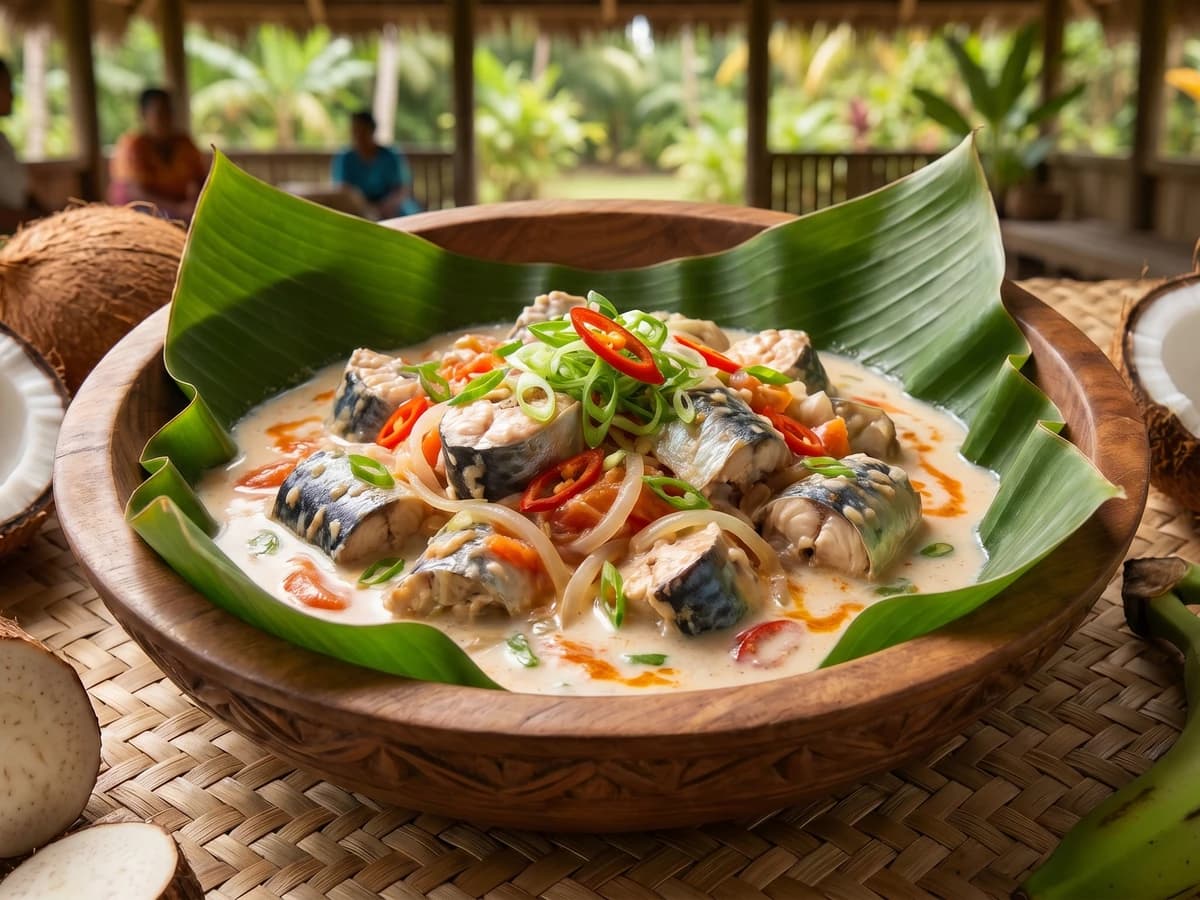
Faiʻai Eleni (Sāmoan Mackerel in Coconut Cream)
Sāmoa's faiʻai eleni turns tinned mackerel, onion, and coconut cream into a quick, generous supper, the pantry fish that feeds the whole ʻaiga beside talo, ʻulu, green banana, or rice.
A cooking platform built around craft, culture, and the stories behind what we eat.
Created by
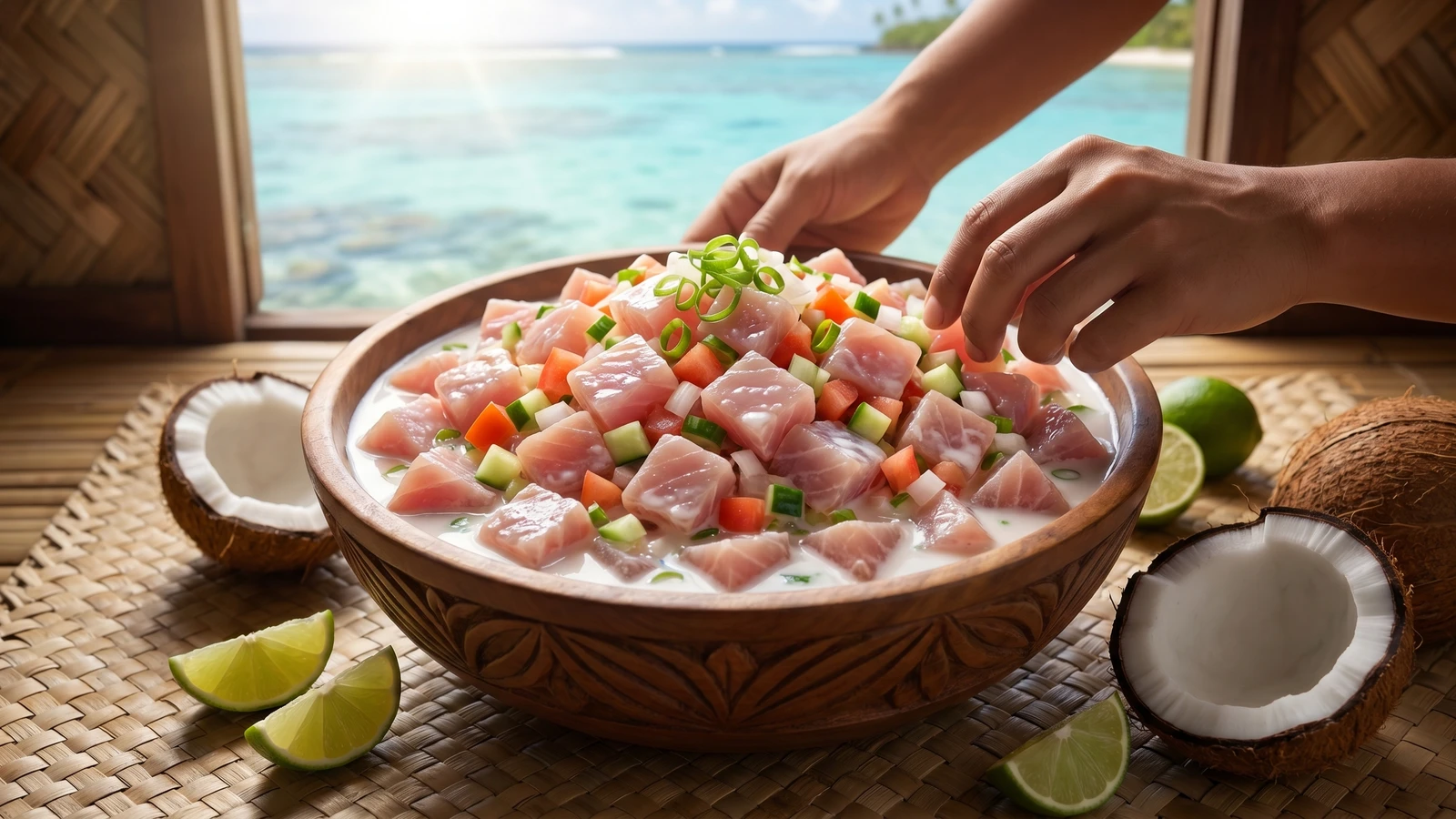
Sāmoa’s oka iʻa bathes fresh fish in citrus and peʻepeʻe, fresh coconut cream, then runs tomato, cucumber, and onion through it cold. Same fish as Tahiti’s ʻia ota, different bowl.
The ocean teaches this one first. In Sāmoa, oka iʻa, raw fish in coconut cream, belongs to the aiga, the family, and to the reef and boats that fed them before any market counter did. I learned it at my cousins’ table, not from my own board back home, so I cook it with my hands open and I name whose hand it is.
Same fish, different bowl. Sāmoa’s oka iʻa is rich with peʻepeʻe, fresh coconut cream, and lemon or lime, with tomato, cucumber, and onion for crunch. Tonga has ʻota ʻika, Tahiti has ʻia ota, the Cook Islands have ika mata, and back home in Hawaiʻi we make poke with limu and ʻinamona. One ocean caught it. Every island dressed it its own way.
The method is simple because the source has to be strong. Buy fish from somebody who can tell you when it came out of the water. The citrus only kisses it until the outside turns pale, then the coconut cream goes in close to the table, fresh if you can squeeze it, canned if that is what your week gives you. Eat what you have, yeah, but start with fish clean enough you would eat it plain.
This is quick food, but not careless food. Keep it cold, dress it late, fold the vegetables in last so they stay crisp, and serve it for everyone from one bowl. Deep food is not fancy. It is ʻāina, kānaka, meaʻai: land, people, food, and in Sāmoa you would say fanua, aiga, meaʻai, the same law in another tongue.
Oka iʻa sits inside a wider Polynesian raw-fish family, named island by island as Sāmoan oka, Tongan ʻota ʻika, Tahitian ʻia ota, Cook Islands ika mata, and Hawaiian poke. Coconut, fish, citrus, and reef timing tell the story of ocean foodways that kept moving after contact, with fresh coconut cream still carrying the older Sāmoan hand even when modern kitchens use a can on a weeknight. The dish is common at family meals, outdoor spreads, and toʻonaʻi, the Sāmoan Sunday meal, where deep foods and everyday foods sit together without shame.
Quantity
1 1/2 pounds
skin and bones removed, cut into 3/4-inch cubes
Quantity
3/4 cup
enough to lightly bathe the fish
Quantity
1 1/2 teaspoons
plus more to taste
Quantity
1 1/2 cups
or thick canned coconut cream, chilled and stirred smooth
Quantity
1 medium
seeded and diced
Quantity
1 small
seeded and diced
Quantity
1/2 small
finely diced
Quantity
2
thinly sliced
Quantity
1 small
seeded and minced
Quantity
for serving
| Ingredient | Quantity |
|---|---|
| very fresh firm white fish or sashimi-grade tunaskin and bones removed, cut into 3/4-inch cubes | 1 1/2 pounds |
| fresh lime or lemon juiceenough to lightly bathe the fish | 3/4 cup |
| fine sea saltplus more to taste | 1 1/2 teaspoons |
| fresh coconut cream (peʻepeʻe)or thick canned coconut cream, chilled and stirred smooth | 1 1/2 cups |
| tomatoseeded and diced | 1 medium |
| cucumberseeded and diced | 1 small |
| sweet onionfinely diced | 1/2 small |
| green onionsthinly sliced | 2 |
| fresh chile (optional)seeded and minced | 1 small |
| lime wedges (optional) | for serving |
Use fish clean enough you would eat it plain: firm, cold, sweet-smelling, and fresh from a trusted fishmonger. If it smells strong or looks tired, no make it raw. Cook it instead and nobody loses face.
Cut the fish into clean 3/4-inch cubes and put it in a chilled nonreactive bowl. Sprinkle with the salt and turn it gently with your fingers or a spoon. The pieces should stay whole and glossy, not mashed.
Pour over enough lime or lemon juice to lightly bathe the fish, then chill for 8 to 12 minutes, turning once. Watch the outside of each cube go from clear to pale while the center stays tender. The citrus is turning the fish, not punishing it.
Pour off most of the citrus, leaving just a spoonful or two clinging to the fish. Taste a corner. It should be bright, not sour enough to make your face close up.
Add the peʻepeʻe, the fresh coconut cream, and fold gently until every piece is coated in a milky sheen. Fresh-squeezed cream is the soul of Sāmoan food here. A good thick can does the weeknight work, but stir it smooth first.
Fold in the tomato, cucumber, sweet onion, green onion, and chile if using. Keep your hand light so the fish stays in clean pieces and the vegetables stay crisp, like they just met the bowl.
Taste for salt, citrus, and coconut richness. Add a pinch of salt or a squeeze of lime only if the bowl asks for it. Serve right away, cold and glossy, family-style with lime wedges, taro, breadfruit, or rice beside it.
1 serving (about 320g)
Culinary guides, cultural storytelling, and the editorial depth that makes cooking meaningful.
Discover Culinary ExplorerChef Makoa
Sāmoa's faiʻai eleni turns tinned mackerel, onion, and coconut cream into a quick, generous supper, the pantry fish that feeds the whole ʻaiga beside talo, ʻulu, green banana, or rice.
Chef Makoa
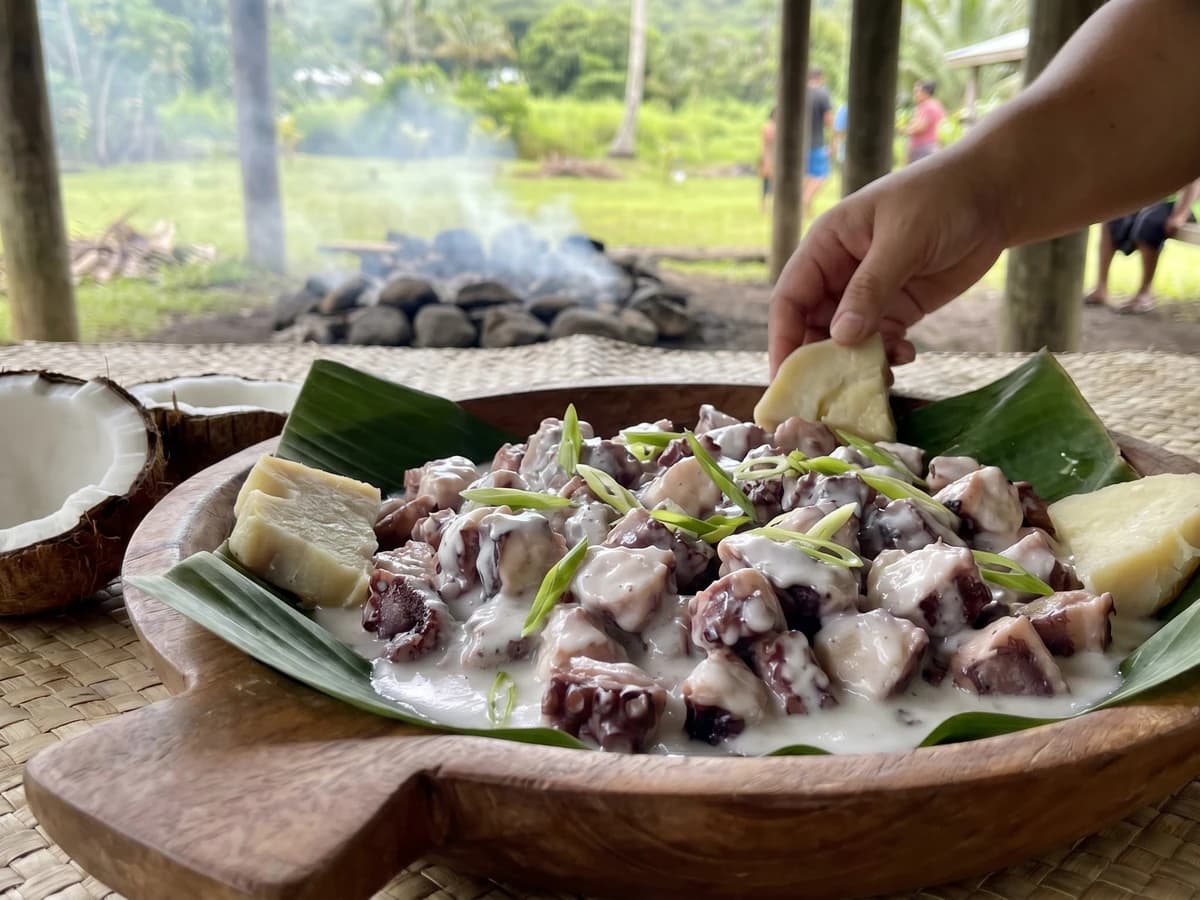
Sāmoa's faiʻai feʻe is reef octopus simmered patient in fresh coconut cream, rich and glossy enough to eat beside talo at toʻonaʻi, with the ocean feeding the whole aiga.
Chef Makoa
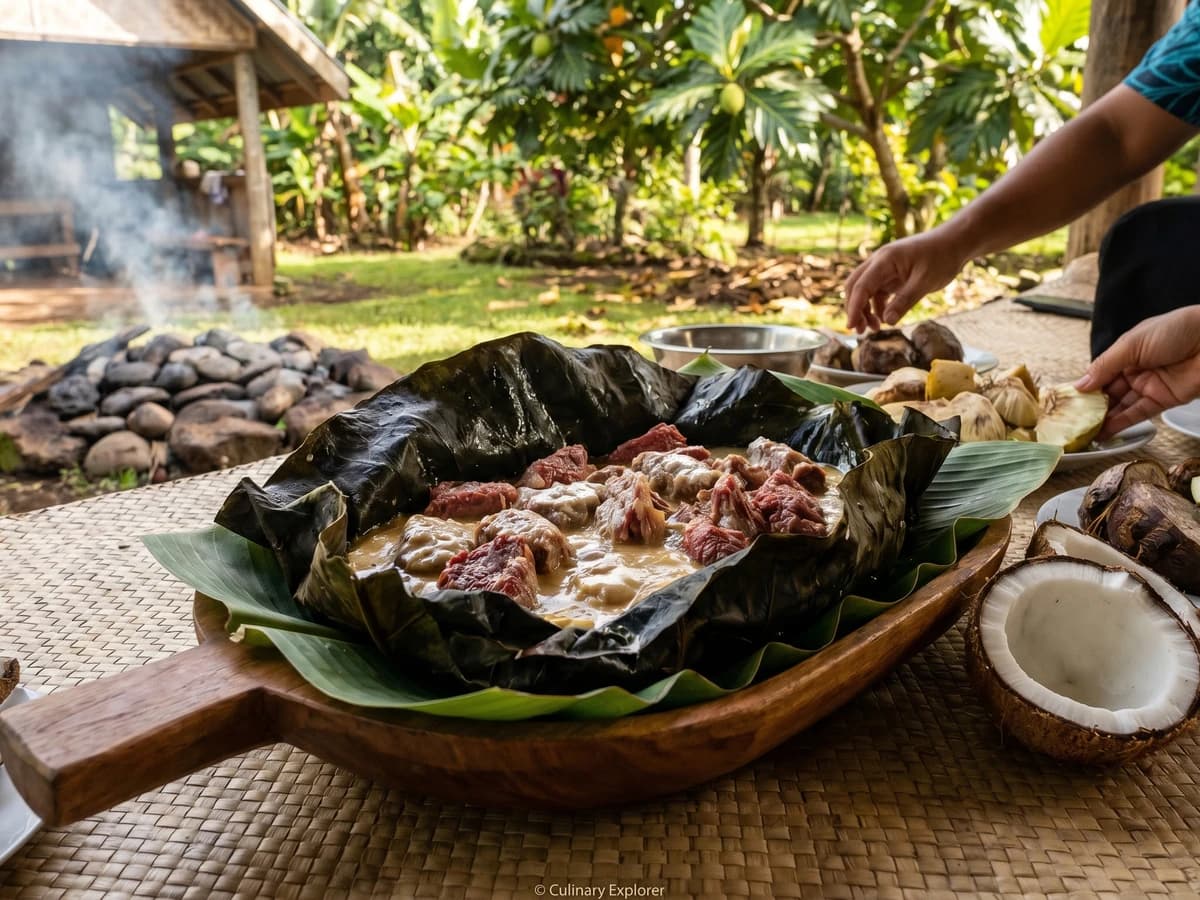
Sāmoa's taro-leaf parcel made generous with pisupo, coconut cream, and time: a toʻonaʻi kind of comfort, with Tonga's lū pulu and Hawaiʻi's laulau sitting close as cousins.
Chef Makoa
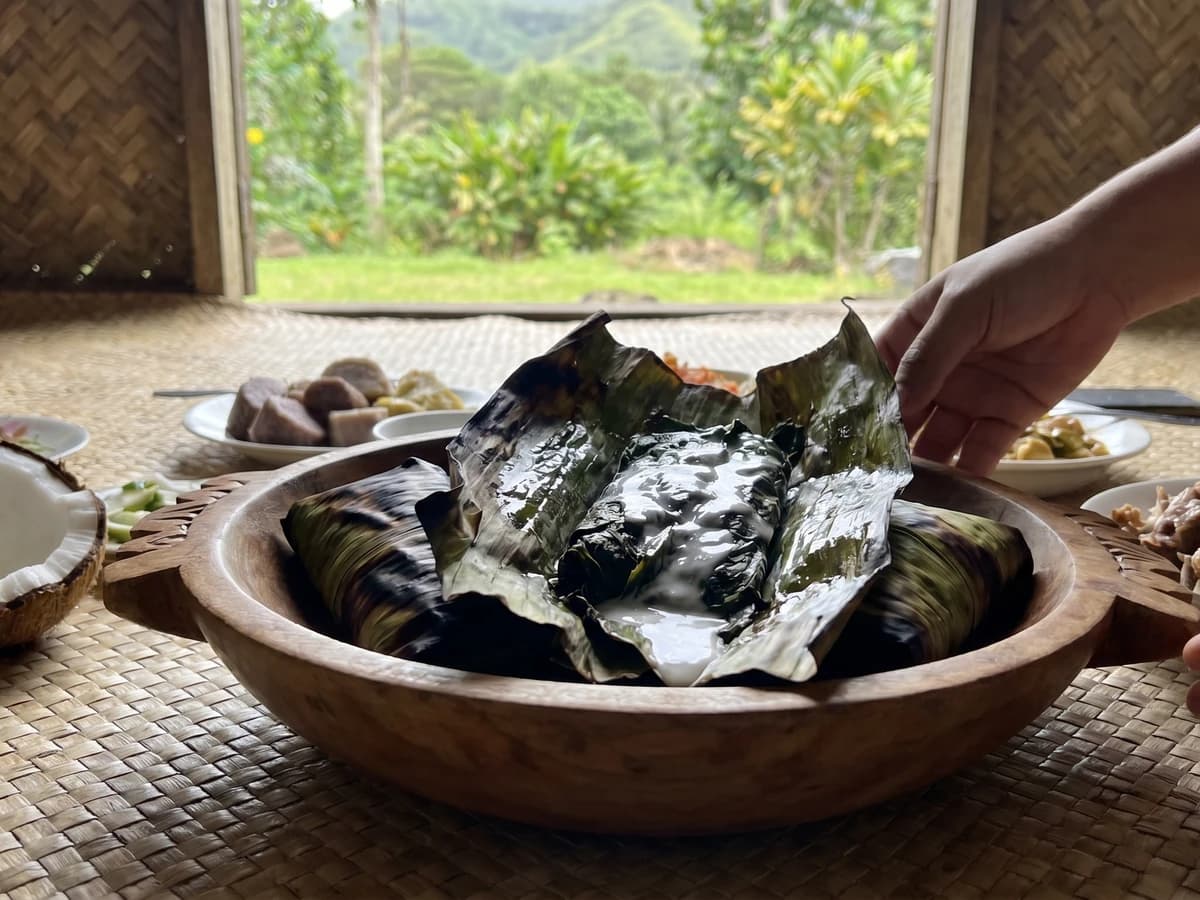
Sāmoa’s Sunday toʻonaʻi parcel: young taro leaves folded around fresh coconut cream and baked until the leaf turns dark, silky, and rich enough to feed the whole aiga.