
Chef Dean
Basler Brunsli
Chewy Swiss chocolate-almond cookies perfumed with cinnamon and cloves, their crackled sugar crust giving way to fudgy, intensely flavored centers that have graced Basel's Christmas tables for over three centuries.
A cooking platform built around craft, culture, and the stories behind what we eat.
Created by
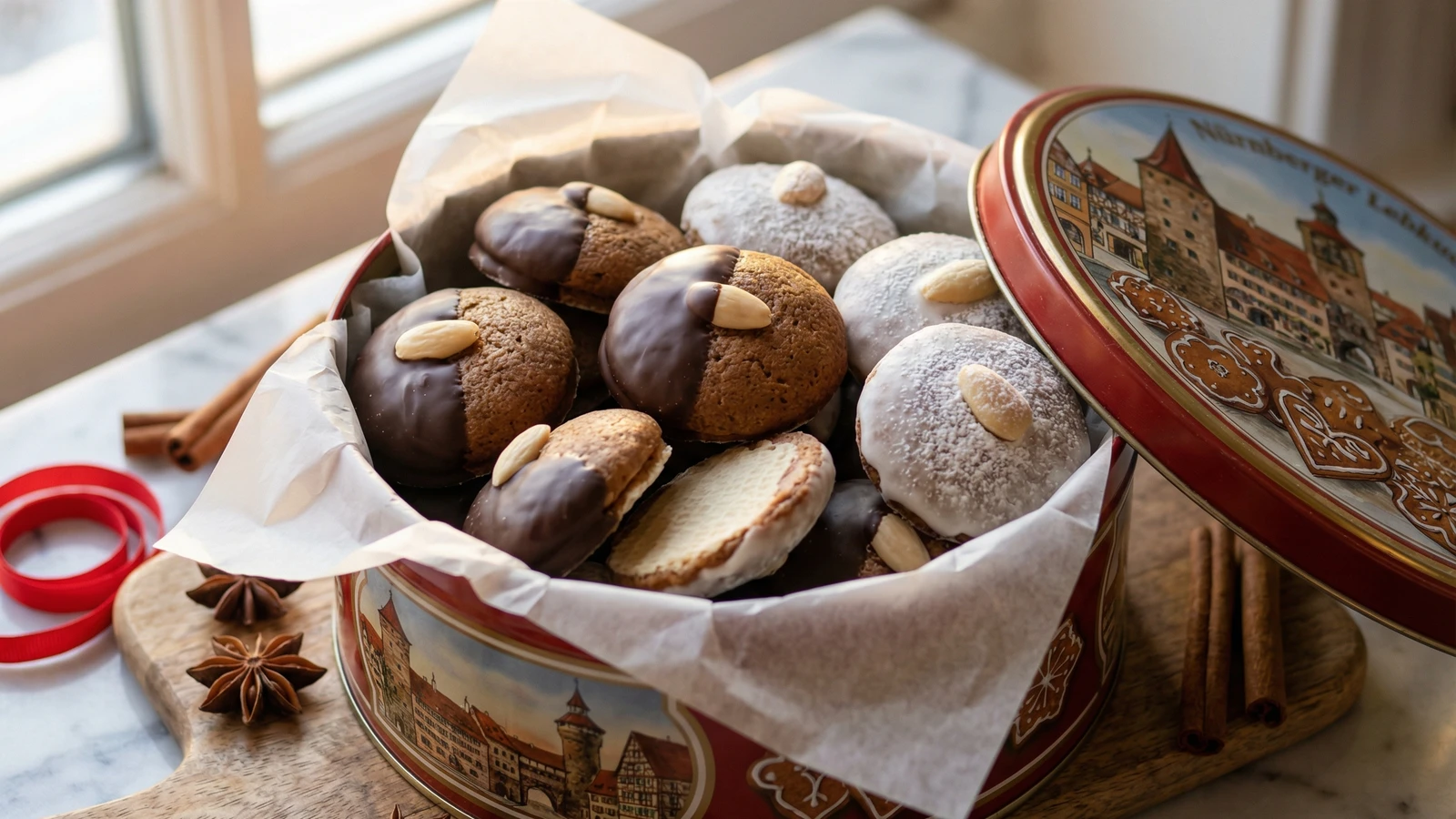
Nuremberg's legendary soft gingerbread cookies, rich with ground nuts and ancient spices, baked on delicate wafer bases and finished with gleaming chocolate or snow-white icing. A gift-worthy tradition since the medieval spice trade.
Nuremberg sits at the crossroads of old European trade routes, and for five centuries its bakers have transformed this geographic fortune into Germany's most treasured Christmas cookie. The spice merchants who passed through brought cinnamon from Ceylon, cloves from the Moluccas, cardamom from India. The beekeepers of the surrounding Franconian forests provided honey by the barrel. Local monasteries, always the keepers of culinary knowledge, combined these riches into something extraordinary.
True Lebkuchen contains almost no flour. Ground almonds and hazelnuts provide structure, while honey and eggs bind everything together. The result is a cookie that stays soft for weeks, actually improving as the spices meld and mellow. This is why Lebkuchen became the original mail-order gift. German emigrants sent tins across oceans to homesick relatives, and the cookies arrived intact, still tender, still fragrant.
The thin wafer base, called an Oblate, prevents sticking and adds a pleasant crispness against the chewy interior. You can find these communion-style wafers at German specialty shops or online. Some bakers skip them entirely and use parchment paper, but I encourage you to seek them out. The tradition exists for good reason.
Make these in early December. Store them in a tin with a slice of apple to maintain moisture. By Christmas Eve they'll reach their peak, soft as a pillow, warm with spice, honest in every bite.
Quantity
200g (2 cups)
finely ground
Quantity
100g (1 cup)
finely ground
Quantity
100g (1/2 cup)
finely minced
Quantity
50g (1/4 cup)
finely minced
Quantity
1 teaspoon
finely grated
Quantity
1 teaspoon
finely grated
Quantity
150g (1/2 cup)
Quantity
100g (1/2 cup)
Quantity
2
room temperature
Quantity
2 tablespoons
Quantity
1 1/2 teaspoons
Quantity
1/2 teaspoon
Quantity
1/4 teaspoon
Quantity
1/4 teaspoon
Quantity
1/4 teaspoon
Quantity
1/4 teaspoon
Quantity
pinch
Quantity
1/2 teaspoon
Quantity
50g (1/3 cup)
Quantity
24
70mm diameter
Quantity
150g (5 oz)
Quantity
1 tablespoon
Quantity
200g (1 1/2 cups)
Quantity
3 tablespoons
Quantity
for decoration
| Ingredient | Quantity |
|---|---|
| blanched almondsfinely ground | 200g (2 cups) |
| hazelnutsfinely ground | 100g (1 cup) |
| candied citronfinely minced | 100g (1/2 cup) |
| candied orange peelfinely minced | 50g (1/4 cup) |
| lemon zestfinely grated | 1 teaspoon |
| orange zestfinely grated | 1 teaspoon |
| honey | 150g (1/2 cup) |
| granulated sugar | 100g (1/2 cup) |
| large eggsroom temperature | 2 |
| dark rum or brandy | 2 tablespoons |
| ground cinnamon | 1 1/2 teaspoons |
| ground cloves | 1/2 teaspoon |
| ground nutmeg | 1/4 teaspoon |
| ground cardamom | 1/4 teaspoon |
| ground ginger | 1/4 teaspoon |
| ground allspice | 1/4 teaspoon |
| ground white pepper | pinch |
| baking powder | 1/2 teaspoon |
| all-purpose flour | 50g (1/3 cup) |
| round Oblaten wafers70mm diameter | 24 |
| bittersweet chocolate (optional) | 150g (5 oz) |
| coconut oil (optional) | 1 tablespoon |
| powdered sugar (optional) | 200g (1 1/2 cups) |
| lemon juice (optional) | 3 tablespoons |
| blanched almond halves (optional) | for decoration |
Spread almonds and hazelnuts on separate sheet pans. Toast in a 325°F oven for 8 to 10 minutes, stirring halfway, until fragrant and barely golden. The hazelnuts will color faster than the almonds, so watch them carefully. Cool completely. Grind each in a food processor until very fine but not oily. You want powder, not paste. Stop before you create nut butter.
Mince the candied citron and orange peel as finely as your patience allows. Larger pieces create uneven texture. Combine all ground spices in a small bowl: cinnamon, cloves, nutmeg, cardamom, ginger, allspice, and that pinch of white pepper. This is your Lebkuchen gewürz, the soul of the cookie. Smell it. The aroma should transport you to a German Christmas market, all woodsmoke and mulled wine.
Combine honey and sugar in a small saucepan over medium-low heat. Stir until the sugar dissolves and the mixture just begins to simmer. Remove from heat immediately. You're not making caramel. You're simply liquefying the sugar so it incorporates smoothly. Let cool for 5 minutes.
In a large bowl, whisk together the ground almonds, ground hazelnuts, minced candied fruits, both zests, the spice mixture, baking powder, and flour. Make a well in the center. Beat the eggs lightly with the rum. Pour the warm honey mixture and the egg mixture into the well. Stir with a wooden spoon until everything comes together into a thick, sticky dough. It will look rough. That's correct.
Cover the bowl tightly with plastic wrap and refrigerate for at least 1 hour, or overnight if time permits. Traditional bakers let their Lebkuchen dough rest for up to a week, claiming the spices bloom and deepen. Even one hour improves the texture noticeably. The dough should be firm enough to handle without sticking to everything it touches.
Preheat your oven to 350°F. Arrange the Oblaten wafers on parchment-lined sheet pans, leaving an inch between each. Wet your hands lightly. Take a generous tablespoon of dough, roll it into a ball, then flatten it slightly and press it onto an Oblaten. The dough should cover the wafer but not extend past the edges. Smooth the top into a gentle dome. The cookie will spread slightly as it bakes.
Bake for 12 to 15 minutes, rotating the pans halfway through. The Lebkuchen are done when the tops appear dry and matte, with the faintest golden tinge at the edges. They will feel soft. Do not overbake. These cookies are meant to be chewy, almost fudgy. They firm as they cool but should never turn crisp. Transfer the pans to wire racks and cool completely before glazing.
Chop the chocolate finely and place in a heatproof bowl with the coconut oil. Set over a pot of barely simmering water. The bowl should not touch the water. Stir occasionally until smooth and glossy. Remove from heat. Dip the top of each cookie into the chocolate, letting excess drip back into the bowl. Place chocolate-side up on the rack. Press a blanched almond half into the center before the chocolate sets.
Sift the powdered sugar into a bowl. Add the lemon juice and water. Whisk until smooth and thick enough to coat a spoon but still pourable. If too thick, add water a few drops at a time. If too thin, add more powdered sugar. Spread over the cooled cookies with the back of a spoon or drizzle artfully. The glaze should be opaque white, not translucent. Decorate with almonds while wet.
Let the glazed cookies set completely at room temperature, about 2 hours. Layer them in an airtight tin with parchment between layers. Add a slice of fresh apple or a small piece of bread to the tin to maintain moisture. Store at cool room temperature for up to 4 weeks. The cookies soften and improve over the first week as the spices marry and the honey does its work.
1 cookie (about 57g)
Culinary guides, cultural storytelling, and the editorial depth that makes cooking meaningful.
Discover Culinary ExplorerChef Dean
Chewy Swiss chocolate-almond cookies perfumed with cinnamon and cloves, their crackled sugar crust giving way to fudgy, intensely flavored centers that have graced Basel's Christmas tables for over three centuries.

Chef Dean
Tender, golden Swiss butter cookies perfumed with fresh lemon zest, brushed with egg wash to achieve that signature glossy finish that has graced holiday tins from Zurich to Geneva for generations.
Chef Dean
A pillowy yeasted crust cradling ripe fruit beneath a trembling layer of sweet cream custard, baked until golden and served with the pride of generations of German-Russian grandmothers who carried this recipe across an ocean and a continent.

Chef Dean
Thin, shattering spice cookies pressed into carved wooden molds, carrying the warm perfume of cinnamon, cardamom, and cloves that has announced the arrival of St. Nicholas for six hundred years.