
Chef Lupita
Almendrados Conventuales Poblanos
Puebla's convent almond cookies, made from blanched almonds, sugar syrup, egg yolks, canela, and patient hands, the kind of sweet that belongs beside coffee in talavera, not in a plastic bakery box.
A cooking platform built around craft, culture, and the stories behind what we eat.
Created by
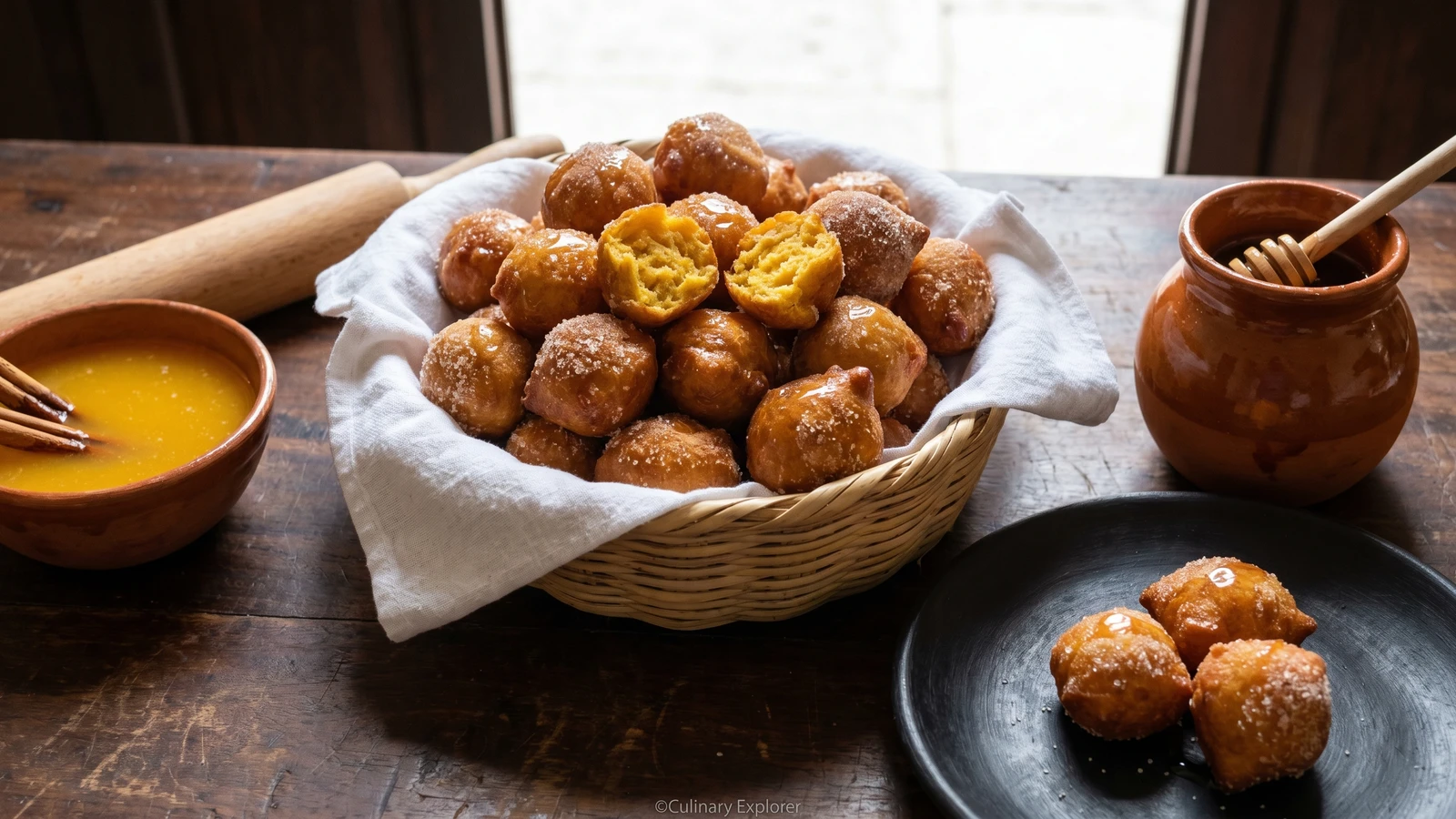
Chiapas nuégados are small fried dough nuggets from the highland panadería basket, scented with orange juice, brushed with miel de abeja, and rolled in sugar until they shine.
Chiapas, especially the highland corridor between Comitán and San Cristóbal de las Casas, knows this kind of sweet from the canasta, not from a glass bakery case. Nuégados travel under cloth napkins with turuletes and caballitos, sold by women who know exactly how long the dough rested and whether the oil is tired. That matters. Old fat makes a bitter sweet.
The orange juice in the masa is what gives these their Chiapas character. Not vanilla perfume. Not frosting. Orange juice, egg, wheat flour, a little manteca de cerdo, and enough kneading to make a dough that can be cut into small nuggets without turning heavy. Then they are fried until golden, touched with miel de abeja, and rolled in sugar. No me vengas con atajos. If the honey is bad, the nuégado is bad.
I learned a version like this from a señora in the mercado viejo of Comitán who shaped them with hands shiny from manteca and kept correcting the size. Too big and the center stays doughy. Too small and they dry out before the honey can cling. Cada estado, su propia cocina, and Chiapas has a sweet tooth with discipline.
Nuégados belong to a broader family of fried festival sweets that spread through southern Mexico and Central America after wheat flour, cane sugar, and Spanish frying techniques entered colonial kitchens in the 16th century. In Chiapas, the sweet became tied to market baskets and feast-day dulcería, with local versions appearing beside turuletes, caballitos, suspiros, and other regional panadería pieces. The Chiapas version is distinct for its orange-scented wheat dough and honey or panela syrup finish, unlike the yuca-based nuégados found farther south.
Quantity
3 cups, plus more for dusting
Quantity
1/2 teaspoon
Quantity
1/2 teaspoon
Quantity
2
at room temperature
Quantity
1/2 cup
strained
Quantity
1 tablespoon
Quantity
3 tablespoons
softened
Quantity
1 tablespoon
Quantity
2 to 3 tablespoons
only if needed
Quantity
3 cups
for frying
Quantity
3/4 cup
Quantity
1 small piece
Quantity
1 teaspoon
for the honey
Quantity
3/4 cup
for rolling
| Ingredient | Quantity |
|---|---|
| all-purpose wheat flour | 3 cups, plus more for dusting |
| baking powder | 1/2 teaspoon |
| fine sea salt | 1/2 teaspoon |
| large eggsat room temperature | 2 |
| fresh orange juicestrained | 1/2 cup |
| orange zest | 1 tablespoon |
| manteca de cerdosoftened | 3 tablespoons |
| granulated sugar | 1 tablespoon |
| warm water (optional)only if needed | 2 to 3 tablespoons |
| neutral oil or fresh pork lardfor frying | 3 cups |
| miel de abeja | 3/4 cup |
| canela mexicana | 1 small piece |
| fresh orange juicefor the honey | 1 teaspoon |
| granulated sugarfor rolling | 3/4 cup |
Whisk the flour, baking powder, and salt in a wide bowl. Make a well in the center. This dough is not cake batter. It needs structure so the nuégados fry crisp outside and tender inside.
Beat the eggs with the orange juice, orange zest, softened manteca de cerdo, and tablespoon of sugar. Pour this into the flour well and begin mixing with your fingers, pulling flour from the sides into the center. The dough should come together rough and slightly firm. If dry flour remains, add warm water one tablespoon at a time. Do not drown it.
Knead on a lightly floured table for 6 to 8 minutes, until the dough feels smooth and elastic but not soft like bread dough. Cover with a clean cloth and rest for 20 minutes. The rest lets the flour drink the orange juice and makes the pieces easier to cut. A rushed dough fights you in the oil.
Divide the dough into 4 pieces. Roll each piece into a rope about 3/4 inch thick, then cut into small nuggets about the size of the first joint of your thumb. Keep them even. A señora selling from a basket will spot the lazy cutting before the first customer does.
Heat the oil or fresh lard in a heavy pot to 350F. Fry the nuégados in small batches, stirring gently so they color evenly. They should turn deep golden in 3 to 4 minutes, with tiny blisters on the surface and no raw line at the center when one is broken open. Lift them out with a spider and drain on a rack. Paper towels trap oil underneath. Use a rack.
Warm the miel de abeja with the canela mexicana and 1 teaspoon orange juice over low heat for 3 minutes. Do not boil it hard. Honey turns sharp when abused. Remove the canela. The honey should be loose enough to coat, not so hot that it soaks the nuégados into heaviness.
Put the warm nuégados in a wide bowl. Drizzle with the warm honey and toss with a wooden spoon until every piece is lightly glazed. You want shine, not a puddle. If you bury them in honey, you made sticky dough balls, not Chiapas nuégados.
Spread the 3/4 cup sugar on a tray. Roll the honey-coated nuégados while they are still tacky, then let them sit 10 minutes so the sugar sets into a thin crust. Serve piled in a basket lined with a cloth napkin, the way they belong. Recetas probadas y garantizadas.
1 serving (about 26g)
Culinary guides, cultural storytelling, and the editorial depth that makes cooking meaningful.
Discover Culinary ExplorerChef Lupita
Puebla's convent almond cookies, made from blanched almonds, sugar syrup, egg yolks, canela, and patient hands, the kind of sweet that belongs beside coffee in talavera, not in a plastic bakery box.

Chef Lupita
Ciudad de Mexico's panaderia banderillas are long sticks of hojaldre pressed with sugar, baked until amber, and finished with a hard glaze for coffee at the kitchen table.

Chef Lupita
Mérida's pale egg-yolk-and-vanilla kisses, tiny cookies built on eight yolks and a perfume of orange blossom, sandwiched with guava paste and dusted heavy with powdered sugar.

Chef Lupita
Hidalgo's bisquet de nata carries Pachuca's mining history into the breakfast table: a Cornish-style bread softened by Mexican nata, split warm and eaten with café de olla.