Chef Fai
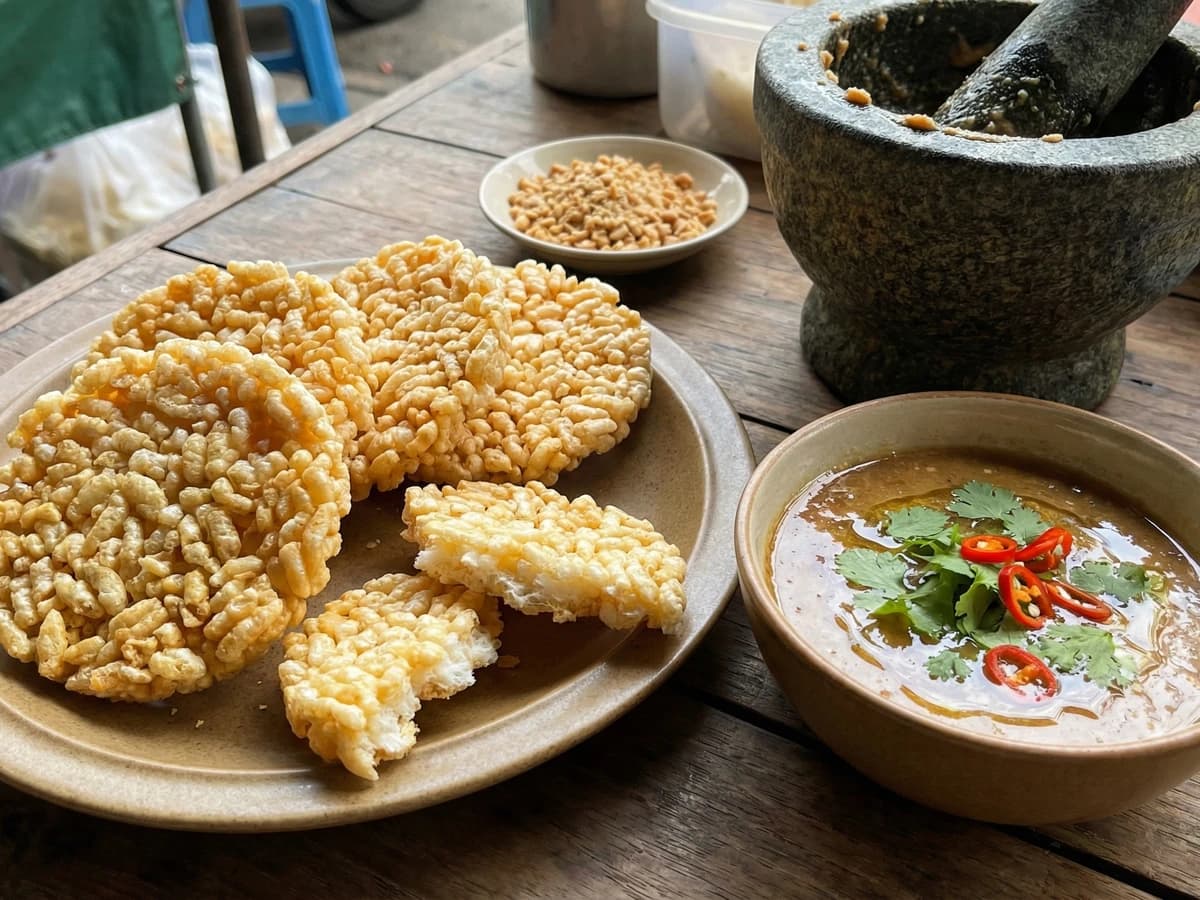
Crispy Rice with Coconut Dip (Khao Tang Na Tang)
The kreung tam doesn't rest, not even for a snack. Pounded paste cracked into coconut cream, spooned over golden rice that shatters on contact. Four pillars in every bite.
A cooking platform built around craft, culture, and the stories behind what we eat.

Created by
Salt draws moisture, sun concentrates flavor, frying seals the surface. Three stages of transformation governed by one principle: preservation is not the absence of freshness, it's the intensification of it.
Preservation is flavor engineering. That's the principle nua daet diew teaches you. Every technique in this dish, the salting, the drying, the frying, exists to concentrate what's already there. You're not just keeping beef from spoiling. You're making it more intensely itself.
Ajarn always said the four pillars govern everything, even dishes that seem like they're just "dried meat." Look at the marinade: nam pla (fish sauce) for salt and umami, nam tan pip (palm sugar) for sweetness that caramelizes in the sun, cilantro root and garlic pounded in the krok to form a miniature kreung tam that penetrates every fiber of the beef. The kreung tam is everything, even when the dish isn't a curry.
Here's the science. Fish sauce contains roughly 25% salt by weight. When you coat beef strips in it, osmotic pressure pulls moisture out of the muscle fibers. The protein contracts. Flavor compounds concentrate. Then the sun finishes the job. Bangkok afternoon sun at 35 degrees Celsius is a dehydrator. Four to six hours under that heat, and the beef loses over half its water content. What's left is dense, chewy, deeply savory. The sugar in the marinade undergoes Maillard browning on the surface even before the beef hits the fryer.
Then you fry. Hot oil seals the concentrated exterior into a shattering crust while the interior stays dense and chewy. Three transformations: wet to salted, salted to dried, dried to fried. Each one builds on the last. Nothing is wasted. Nothing is accidental.
This is the food of Central Thai markets and family kitchens. My mother didn't make nua daet diew at the stall, but every vendor at Khlong Toei who sold dried goods had their own version hanging on hooks in the afternoon sun. You'd see the strips turning dark, glossy, shrinking as the moisture left. The smell was incredible: garlic, fish sauce, warm beef, sugar caramelizing in open air. That's the smell of patience turned into flavor.
Nua daet diew (เนื้อแดดเดียว, literally "beef of one sun") is a Central Thai preservation technique dating back to an era before refrigeration, when salting and sun-drying were the primary methods for extending the life of fresh protein. The name refers to the traditional single day of sun exposure needed, typically four to six hours of strong afternoon sun. The dish bridges the gap between preservation and snack food: originally practical, it became a beloved drinking snack (gab klaem) served at bars and informal gatherings across Bangkok, often alongside jaew dipping sauce borrowed from the Isan tradition.
Quantity
500g
sliced against the grain into strips 1/4 inch thick, 4-5 inches long
Quantity
3 tablespoons
Quantity
1 tablespoon
Quantity
2 tablespoons
shaved or crushed
Quantity
5 cloves
peeled
Quantity
3
scraped and cleaned
Quantity
1 teaspoon
Quantity
for deep-frying
Quantity
1 tablespoon
| Ingredient | Quantity |
|---|---|
| beef sirloin or flanksliced against the grain into strips 1/4 inch thick, 4-5 inches long | 500g |
| fish sauce (nam pla) | 3 tablespoons |
| oyster sauce | 1 tablespoon |
| palm sugar (nam tan pip)shaved or crushed | 2 tablespoons |
| garlicpeeled | 5 cloves |
| cilantro roots (rak pak chi)scraped and cleaned | 3 |
| white peppercorns (prik thai khao) | 1 teaspoon |
| vegetable oil | for deep-frying |
| white sesame seeds | 1 tablespoon |
In a granite mortar (krok hin), pound the garlic, cilantro roots, and white peppercorns into a rough paste. Not a powder. You want visible pieces of garlic and root still identifiable, but crushed enough that the cell walls are broken and the oils are released. The aroma should be sharp: garlic heat, the earthy green smell of cilantro root, the floral bite of white pepper. This is your kreung tam for the marinade. Three ingredients, but they govern the entire flavor of the finished beef.
In a large bowl, combine the pounded paste with the fish sauce, oyster sauce, and palm sugar. Stir until the sugar dissolves. Add the beef strips and work the marinade into every piece with your hands. You want full contact. Every surface coated. The fish sauce starts pulling moisture from the beef immediately, so don't marinate for hours. Twenty minutes at room temperature is enough. The drying phase does the heavy lifting. Over-marinating makes the beef too salty because the osmotic exchange keeps going.
Lay the marinated beef strips in a single layer on a wire rack set over a sheet pan. If you have strong afternoon sun and dry air, set the rack outside covered with a fine mesh to keep insects away. Four to six hours of direct sun at 30 degrees Celsius or higher. The strips should lose about half their moisture: darker in color, tacky to the touch, shrunken but still pliable. Not brittle. If you don't have reliable sun, use your oven at the lowest setting (around 70 degrees Celsius) with the door cracked open, for about 3 hours. A dehydrator at 65 degrees Celsius works too, about 3 to 4 hours. Flip the strips once halfway through regardless of method.
Heat vegetable oil to 180 degrees Celsius in a wok or deep pot. You need at least 3 inches of oil. Test with a small piece: it should sizzle immediately and rise to the surface within seconds. Fry the dried beef strips in batches. Don't crowd the wok. Each batch takes 2 to 3 minutes. The strips will puff slightly, darken to a deep mahogany, and the surface will develop a crust that shatters when you bite in. The sugars in the marinade caramelize, creating a glaze. When the bubbling slows down, the moisture is gone from the surface. Pull them out. Drain on a wire rack, not paper towels. Paper towels trap steam and soften the crust.
Toast the sesame seeds in a dry pan over medium heat, shaking constantly, until they're golden and fragrant. Thirty seconds of inattention and they burn. Scatter them over the fried beef. Serve with jaew dipping sauce (nam jim jaew): toasted rice powder, fish sauce, lime juice, dried chili flakes, shallots. The jaew adds the sour and spicy pillars that the beef itself doesn't carry. Together, the four pillars are complete. Salty and sweet in the beef. Sour and spicy in the jaew. That's the system.
1 serving (about 70g)
Culinary guides, cultural storytelling, and the editorial depth that makes cooking meaningful.
Discover Culinary ExplorerChef Fai
The kreung tam doesn't rest, not even for a snack. Pounded paste cracked into coconut cream, spooned over golden rice that shatters on contact. Four pillars in every bite.
Chef Fai
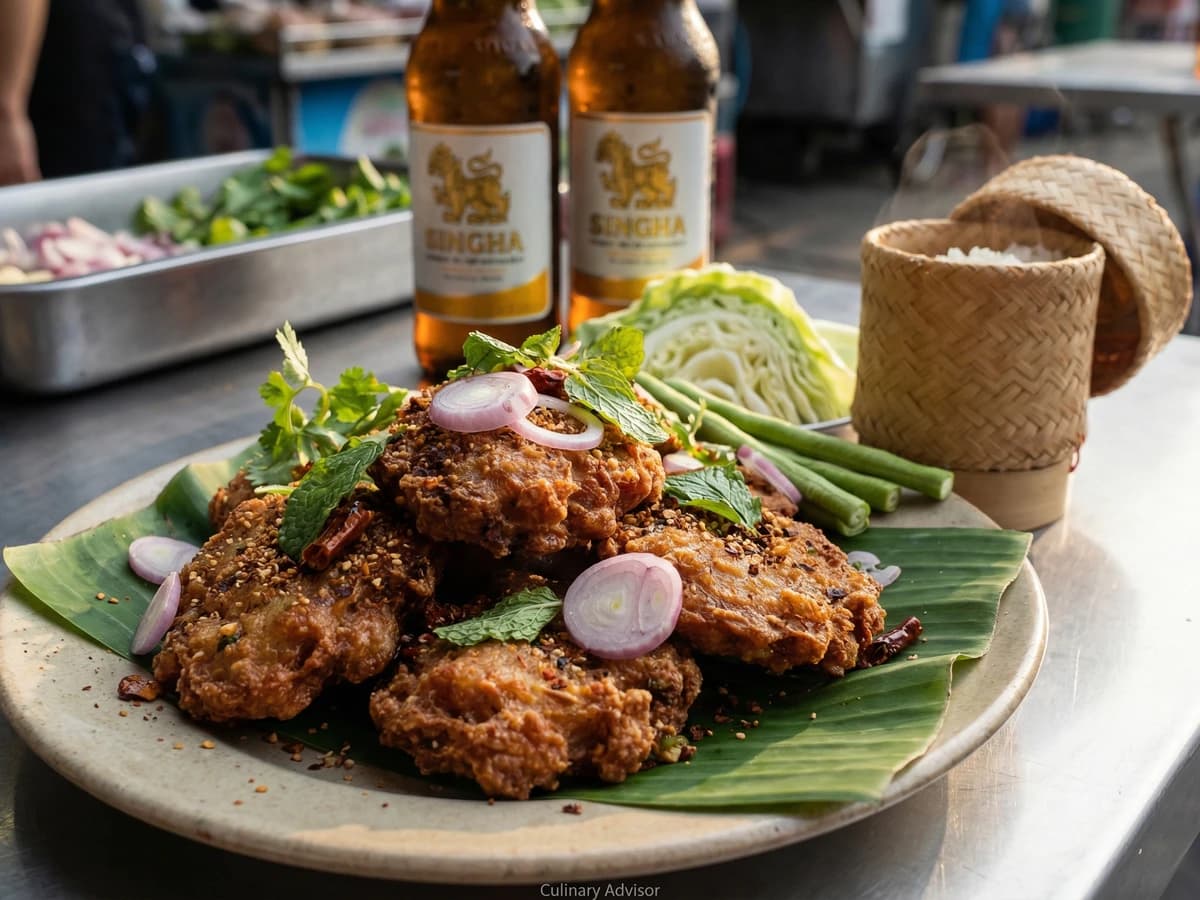
Isan's larb principles pressed into patties and fried golden: fish sauce for salt, lime for sour, khao khua for structure and crunch, prik pon for heat. No sugar. That's the rule that separates Isan from everything else.
Chef Fai
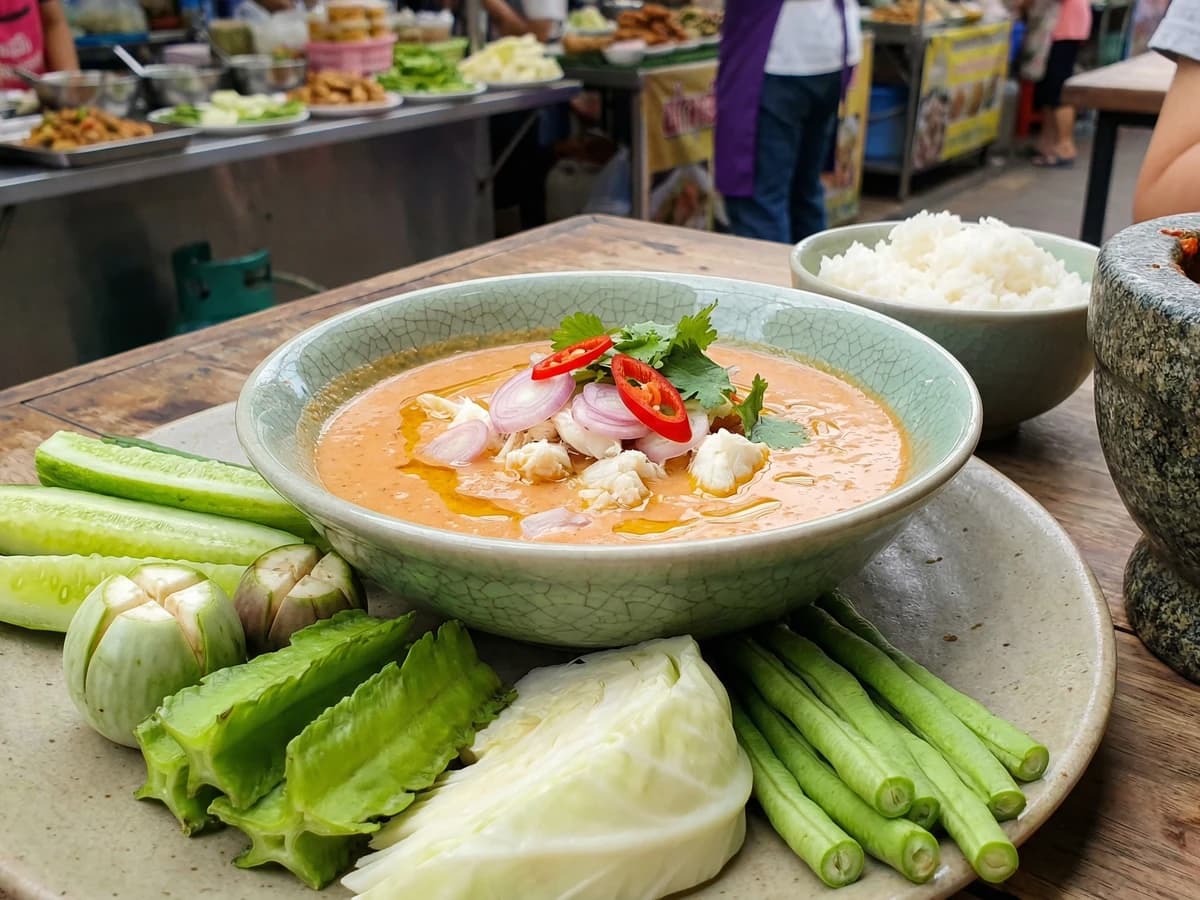
A kreung tam pounded in the krok, dissolved into cracked coconut cream, sweet crab folded through at the end. All four pillars balanced in a dip so silky you'll forget it started in a granite mortar. Central Thai home cooking at its most principled.

Chef Fai
Twenty-four meatballs, eight bamboo skewers, a charcoal grill the size of a shoebox, and one pot of nam jim built on the four pillars. The simplest vendor setup in Thailand proves the system works everywhere.