Chef Lupita
Acúmara Tatemada al Comal
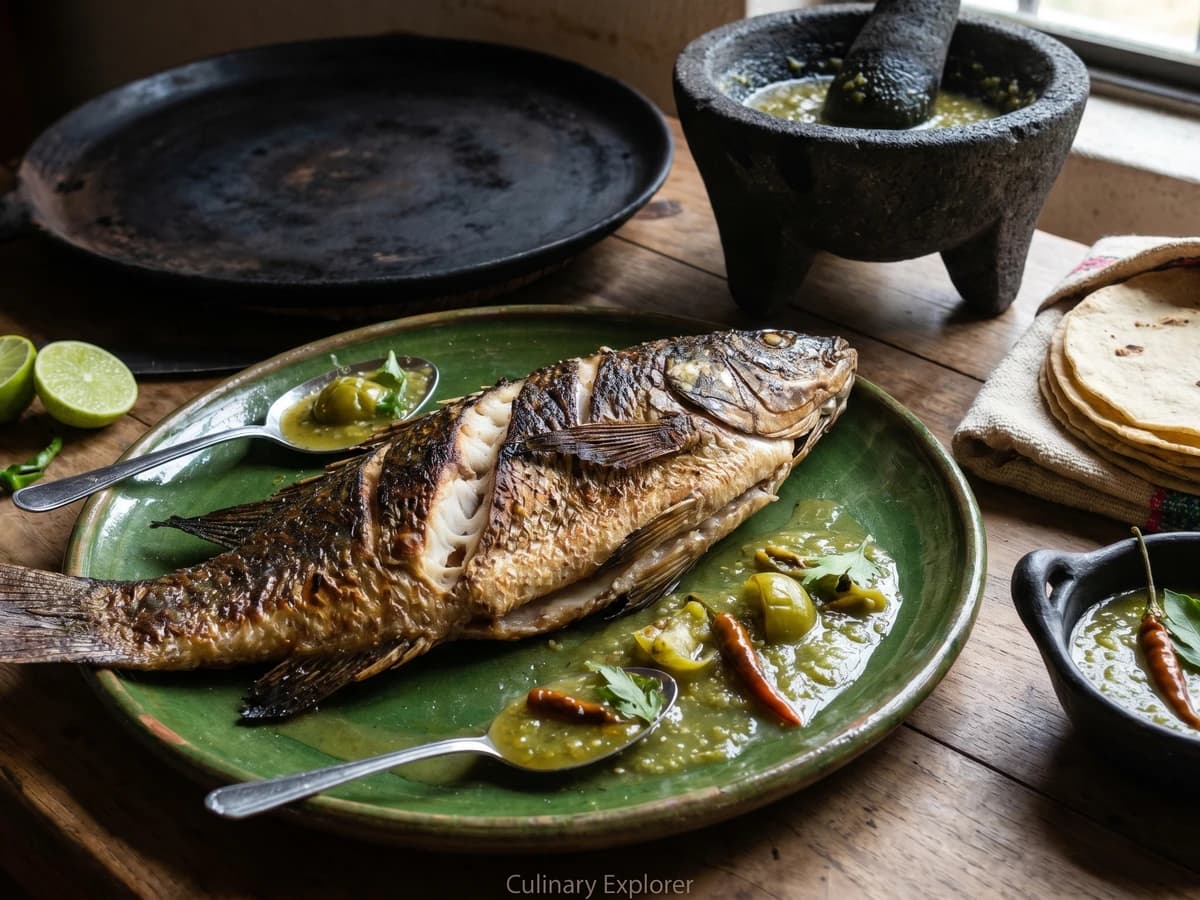
Michoacán's Lake Pátzcuaro acúmara, a whole kurucha from the lago tatemada on a comal de leña and served with chile perón atápakua, corn tortillas, and P'urhépecha discipline.
A cooking platform built around craft, culture, and the stories behind what we eat.
Created by
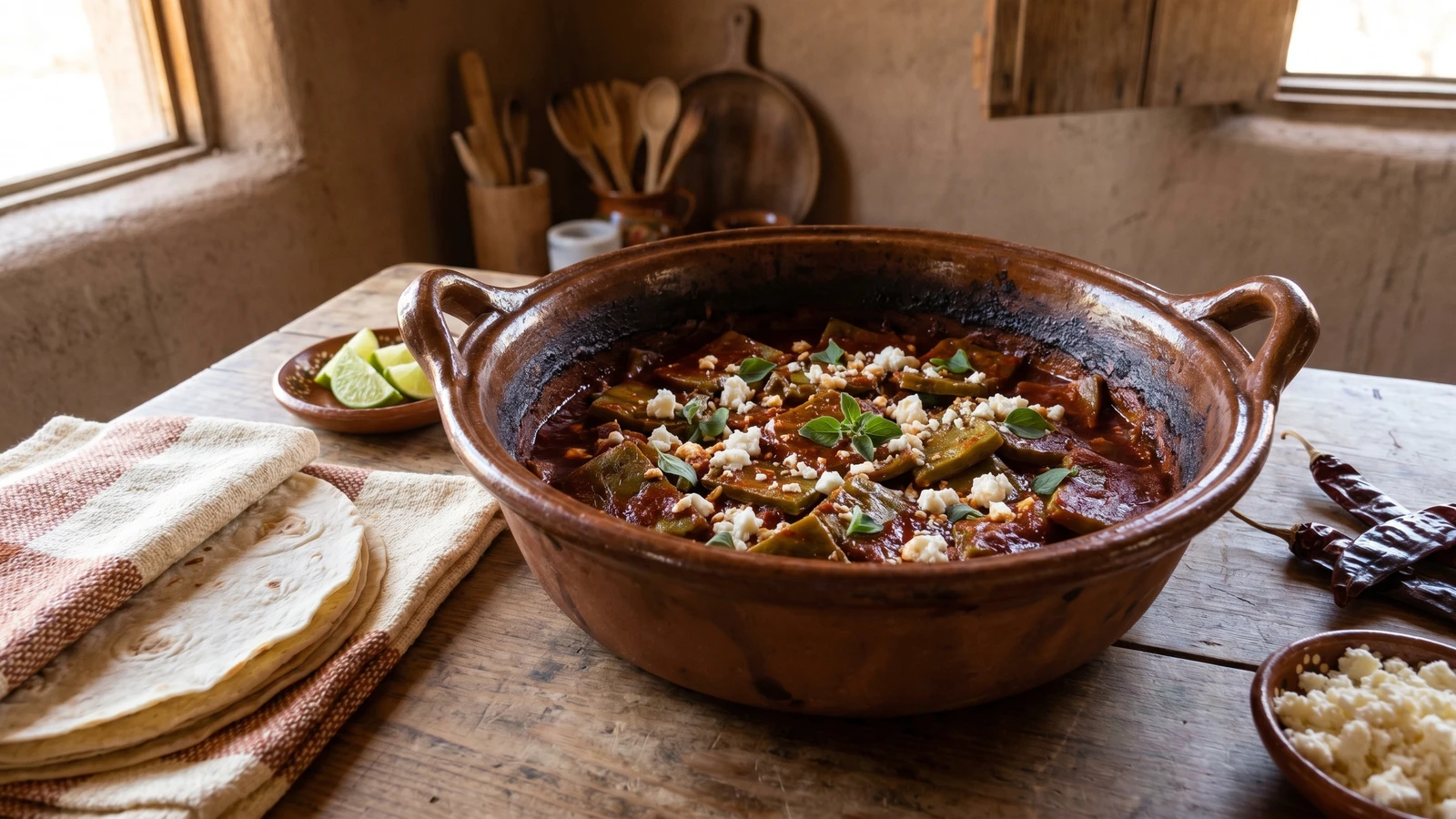
Sonora's desert ranch dish of tender nopales simmered in a deep red sauce of toasted California chile, garlic, and oregano sonorense. The plant-based main of the northern Mexican kitchen, served with flour tortillas the way the rancheras do it.
This is a Sonoran dish. Not Mexico City Sonoran, not border Sonoran, but rancho Sonoran, the kind of cooking that comes out of kitchens where the desert is at the back door and the nopal grows wild on the property. Nopales con chile colorado is a working dish, made when the paddles are tender in the spring and again in the late summer flush, cooked in a wide cazuela on a wood stove or a propane burner, served with flour tortillas the size of a dinner plate.
The chile that gives this dish its name is chile California, also called chile colorado in Sonora. Do not substitute. The California is sweeter and milder than the guajillo it resembles, with a deep brick-red color and almost no heat. A small amount of guajillo and ancho rounds it out, but the California carries the dish. If your chile vendor does not stock it, find one who does. The mercados in Hermosillo and Ciudad Obregon stack them in burlap sacks by the kilo.
The nopales themselves are the second protagonist. Pick them young, no bigger than your hand, with a bright green skin and a firm body. Old paddles turn fibrous and bitter. Clean them carefully, the spines hide, and boil them with onion and garlic to release the baba, that slick green liquid the cactus gives off. Rinse until the water runs clear. From there it is a simple stew, but simple in the Sonoran sense, which is to say built on three or four good ingredients treated correctly.
My mother was from Jalisco, not Sonora, and she cooked nopales in the Jalisciense way, with tomato and chile de arbol. The first time I had them done sonorense was in a small dining room in Magdalena de Kino, served by a senora who had been cooking the same dish on the same stove for forty years. She handed me a flour tortilla the size of a record album and told me to scoop. I have been making her version ever since. Saber cocinar es saber vivir.
Nopales (the paddles of the Opuntia cactus) have been cultivated and foraged in northern Mexico for thousands of years and are among the most important pre-Columbian foods of the arid Mexican plateau and Sonoran Desert. The pairing with chile colorado, a dried red chile sauce, reflects the post-conquest convergence of indigenous desert ingredients with Spanish-introduced techniques of dried-chile preparation; the chile California itself is a New Mexican and Sonoran cultivar of the Anaheim/Magdalena lineage that became commercially standardized in the 20th century. Sonora's flour tortilla tradition, distinct from the corn tortilla of central and southern Mexico, developed because wheat thrived in the irrigated valleys of the Rio Yaqui and Rio Mayo while corn struggled in the desert climate, making this one of the few Mexican states where flour, not corn, anchors the daily table.
Quantity
8 medium (about 1.5 pounds)
spines and eyes removed
Quantity
1
half left whole, half finely diced
Quantity
4
2 whole, 2 minced
Quantity
1 tablespoon, plus more to taste
Quantity
2
husked
Quantity
10
stemmed and seeded
Quantity
2
stemmed and seeded
Quantity
1
stemmed and seeded
Quantity
3
Quantity
1 teaspoon
Quantity
1/2 teaspoon
Quantity
1/4 teaspoon
freshly ground
Quantity
2 tablespoons
or vegetable shortening for a vegan version
Quantity
1 1/2 cups
Quantity
for serving
warmed
Quantity
for serving
Quantity
for serving
| Ingredient | Quantity |
|---|---|
| nopales (cactus paddles)spines and eyes removed | 8 medium (about 1.5 pounds) |
| white onionhalf left whole, half finely diced | 1 |
| garlic cloves (for cooking the nopales)2 whole, 2 minced | 4 |
| kosher salt | 1 tablespoon, plus more to taste |
| tomatillos (optional)husked | 2 |
| dried chile California (chile colorado)stemmed and seeded | 10 |
| dried chile guajillostemmed and seeded | 2 |
| dried chile anchostemmed and seeded | 1 |
| garlic cloves (for the sauce) | 3 |
| dried Mexican oregano (preferably oregano sonorense) | 1 teaspoon |
| ground cumin | 1/2 teaspoon |
| black pepperfreshly ground | 1/4 teaspoon |
| manteca de cerdo (pork lard)or vegetable shortening for a vegan version | 2 tablespoons |
| warm water or vegetable broth | 1 1/2 cups |
| flour tortillas (optional)warmed | for serving |
| queso fresco or queso menonita, crumbled (optional) | for serving |
| lime wedges (optional) | for serving |
Lay each paddle flat on a cutting board. Hold it by the base with a towel and shave off the spines and the small black eyes with a sharp knife, working away from your hand. Trim the thick rim. Rinse and cut the paddles into half-inch strips, then crosswise into half-inch squares. The smaller the cut, the faster the slime, the baba, releases and washes away later. Asi se hace y punto.
Bring a large pot of water to a gentle boil. Add the cut nopales, the half onion left whole, the two whole garlic cloves, the tomatillos if using, and a tablespoon of salt. Boil uncovered for 10 to 12 minutes. The nopales will go from bright green to a duller olive green and the water will turn cloudy and viscous. That cloudiness is the baba leaving. Drain in a colander and rinse thoroughly under cold water until the water runs clear and the strips no longer feel slick. Set aside. Discard the onion, garlic, and tomatillo.
Heat a dry comal or heavy skillet over medium heat. Toast the California, guajillo, and ancho chiles separately, pressing each one flat with a spatula for about 20 seconds per side. They should puff slightly and turn fragrant, never blacken. The chile California is the soul of this sauce. It is sweet, deep red, mild. Sonora cooks call it chile colorado and it is what gives the dish its name. Burned chile is bitter chile. There is no recovering from it.
Place the toasted chiles in a heatproof bowl and cover with hot tap water, not boiling. Let them soften for 20 minutes until pliable. Drain and transfer to a blender with the three garlic cloves, the oregano, cumin, black pepper, a teaspoon of salt, and 1 1/2 cups warm water or vegetable broth. Blend on high for at least two minutes until the sauce is completely smooth and a deep brick red. Pour through a fine-mesh strainer, pressing on the solids. Discard the skins. You want a clean, velvety chile colorado base.
In a wide cazuela or heavy skillet, melt the manteca over medium heat until it shimmers. Add the diced onion and cook for three to four minutes until soft and translucent. Add the minced garlic and cook for 30 seconds. Pour in the strained chile puree. It will sputter, this is the moment. Cook for five to seven minutes, stirring often, until the sauce darkens, thickens, and the fat starts to bead at the edges of the pan. La manteca es el sabor. This step is the difference between a sauce that tastes like raw chile and one that tastes like a Sonoran rancho kitchen.
Add the drained nopales to the chile colorado. Stir to coat every piece. The sauce should hug the nopales without drowning them. If it is too thick, add a splash of warm water. Lower the heat and simmer uncovered for 15 to 20 minutes, stirring occasionally. The nopales will absorb the chile and turn a deep rust color. Taste for salt now. The sauce should be assertive, slightly tangy from the nopales themselves, with the sweet depth of the California chile carrying everything.
Spoon into a wide clay platter or directly from the cazuela. Serve with warm flour tortillas, the way they do in Sonora, not corn. The flour tortilla is northern Mexican territory and this dish belongs to that territory. A scatter of crumbled queso fresco or queso menonita on top, lime wedges on the side, and you are done. Cada estado, su propia cocina.
1 serving (about 240g)
Culinary guides, cultural storytelling, and the editorial depth that makes cooking meaningful.
Discover Culinary ExplorerChef Lupita
Michoacán's Lake Pátzcuaro acúmara, a whole kurucha from the lago tatemada on a comal de leña and served with chile perón atápakua, corn tortillas, and P'urhépecha discipline.

Chef Lupita
Puebla's weekday adobo of pork shoulder braised in a thick guajillo and ancho sauce sharpened with vinegar, cumin, and clove. The deep red of a market spice stall, the dish a poblana cooks without thinking.

Chef Lupita
Loreto's pit-roasted clams, planted hinge-up in beach sand and tatemadas under a fast fire of dried romerillo brush, the resinous Baja desert shrub that gives this dish its smoke.

Chef Lupita
Oaxaca's eighth mole, the silky, almond-and-cinnamon almendrado, served over poached chicken. Mild, sweet, restrained, and a quiet rebuttal to anyone who thinks Mexican food has to be hot to be Mexican.