
Chef Takumi
Ago Dashi (あごだし, grilled flying fish stock)
Ago dashi is quiet luxury: roasted flying fish, konbu, and patient water. Steep it slowly and you get a clear stock that tastes sweet, clean, and full without heaviness.
A cooking platform built around craft, culture, and the stories behind what we eat.

Created by
This is the everyday dashi with a little backbone: niboshi soaked cold, warmed gently, and strained before bitterness takes hold. It makes miso soup taste like home food, not performance.
Niboshi look too plain to be the foundation of anything: little dried fish, silver and stiff, the sort of ingredient a nervous cook suspects must require secret handling. It doesn't. Give them cold water and time, then warm them gently, and they return a stock with more backbone than konbu and katsuobushi, the everyday dashi we lean on for miso soup when the bowl should taste direct and honest.
The one detail that decides it is the belly. The head and dark innards carry a bitterness that grows when heat wakes them, so we pinch them away before the soak if we want a clean stock. It is not delicate surgery. Your fingers do the work, and the reward is broth that smells of the sea without smelling fishy.
Cold steeping is the kindest method here. Overnight water pulls out sweetness and depth before the stove gets involved; the next morning's gentle heat finishes the extraction without roughening it. Boil it hard and the stock turns cloudy and sharp. Strain without pressing, season nothing yet, and you have honmono ready for miso, noodles, and simmered vegetables. The dashi is plain, so it tells the truth. Use good niboshi, dry and silver, with nothing hidden.
Niboshi are small dried fish, most often Japanese anchovy, used for stock across Japan; in western Japan they are commonly called iriko. The Seto Inland Sea is especially associated with iriko, and Kagawa's Sanuki udon broth often rests on dried anchovies from nearby waters, including Ibuki Island. Their strength made them the practical dashi of everyday miso soup, while the clearer konbu and katsuobushi stock came to carry more formal associations.
Quantity
35g
heads and dark bellies removed unless very small
Quantity
4 cups (950ml)
Quantity
1 small piece (about 5g)
| Ingredient | Quantity |
|---|---|
| niboshi (dried Japanese anchovies or small sardines)heads and dark bellies removed unless very small | 35g |
| cold water | 4 cups (950ml) |
| konbu (dried kelp) (optional) | 1 small piece (about 5g) |
Break off the heads with your fingers, then pinch away the dark belly and innards from each niboshi. This is the one detail that decides the stock. The heads and bellies carry bitterness that grows when heat wakes them, so removing them gives you a cleaner dashi. If your niboshi are very tiny and smell clean, you may leave them whole for a stronger country-style miso soup stock.
Put the trimmed niboshi in a lidded jar or small pot with the cold water. Add the konbu if using. Cover and refrigerate for 8 to 12 hours. Cold water pulls sweetness and depth from the dried fish slowly, without the rough edge that hard boiling brings. This is why the easiest method is also the best one.
Pour the soaked niboshi, water, and konbu into a saucepan. Set it over medium-low heat. When the water trembles and small bubbles climb the sides, lift out the konbu before the water boils. Keep the niboshi at a bare simmer for 5 to 7 minutes, skimming any pale foam from the surface. A hard boil makes the stock cloudy and sharp, which is a poor trade for speed.
Strain the dashi through a fine-mesh strainer lined with a clean cloth or dashi-koshi cloth. Let it drip on its own. Do not press the fish, because pressing forces fine particles and strong oils into the broth. You want a pale-gold stock that smells cleanly of the sea, not a pot trying to win an argument.
Use the dashi at once for miso soup, udon broth, or nimono, gently simmered dishes. Season only after the stock is made. If it tastes thin, the answer is more niboshi or a longer soak next time, not more salt. Let the dashi cool quickly if storing, then refrigerate in a clean covered container.
1 serving (about 240g)
Culinary guides, cultural storytelling, and the editorial depth that makes cooking meaningful.
Discover Culinary ExplorerChef Takumi
Ago dashi is quiet luxury: roasted flying fish, konbu, and patient water. Steep it slowly and you get a clear stock that tastes sweet, clean, and full without heaviness.
Chef Takumi
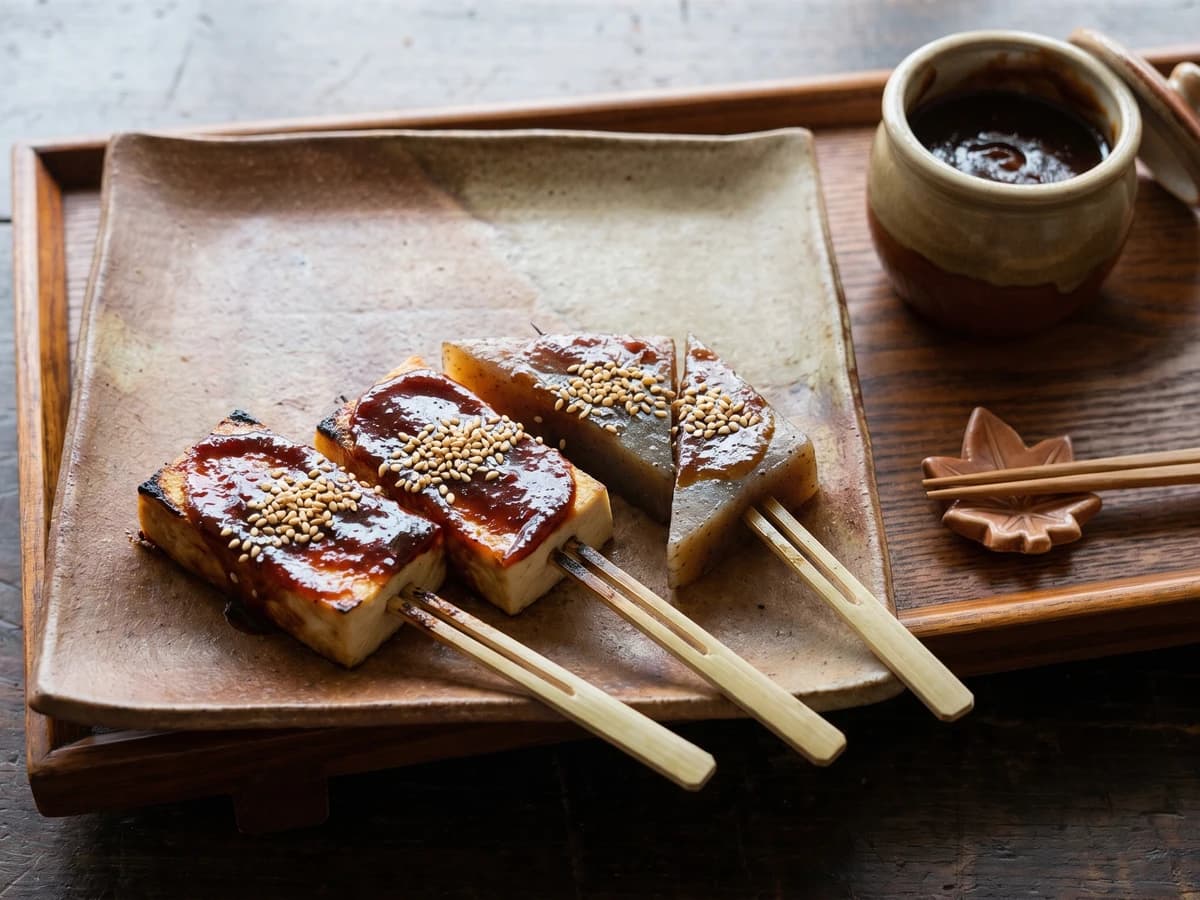
Akamiso dengaku-miso is plain work: bean miso, sweetness, sake, and patient stirring until the glaze turns dark, glossy, and thick enough to cling to the grill.
Chef Takumi
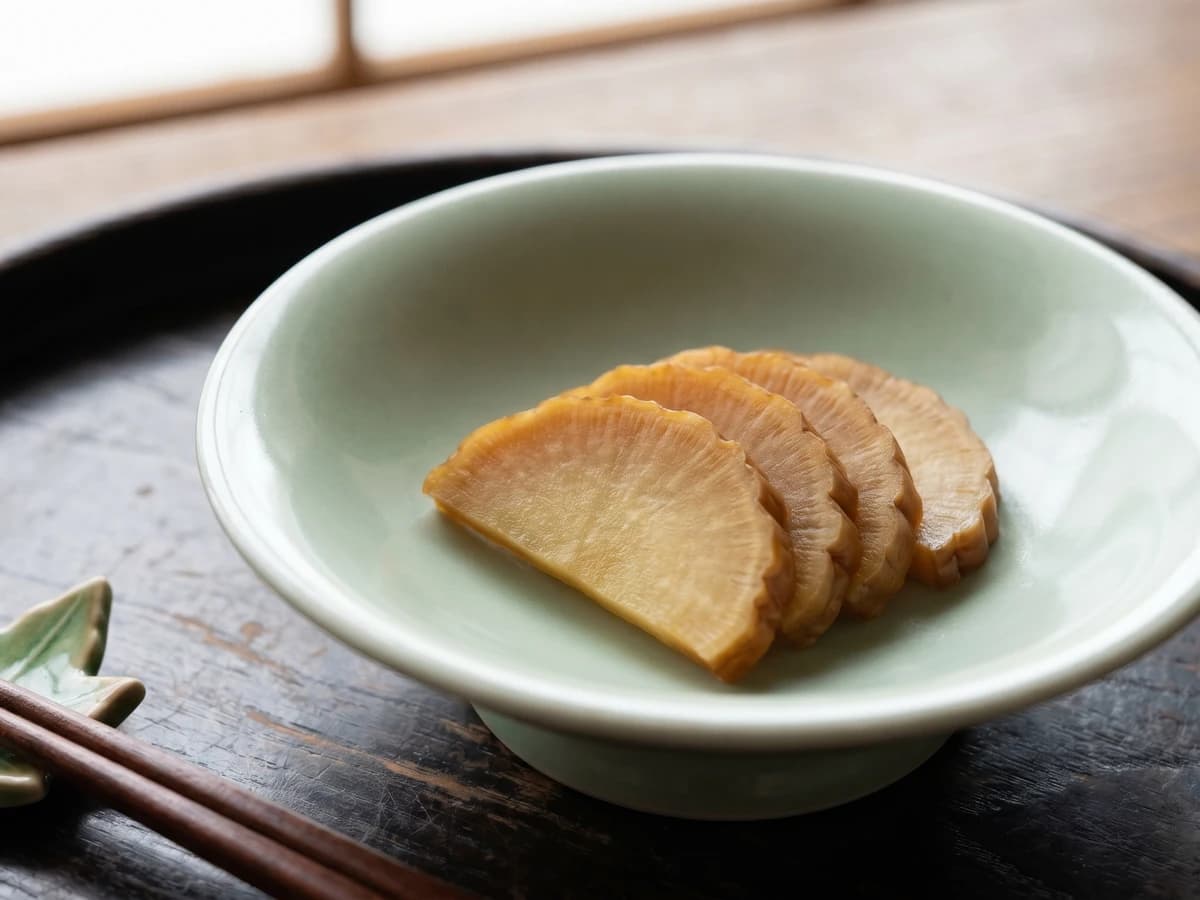
Snow-country takuan begins with smoke. Hang the daikon, dry it gently, then let rice bran, salt, and time turn it into Akita's amber pickle.

Chef Takumi
Aso takanazuke is spring caught in salt: sharp mustard greens pressed until they soften, fermented until their edge turns round, then fried briefly with sesame for rice.