Culinary Explorer

A cooking platform built around craft, culture, and the stories behind what we eat.
Discover Culinary Explorer
New Orleans French Dip

New Orleans French Dip

Created by Chef Remy

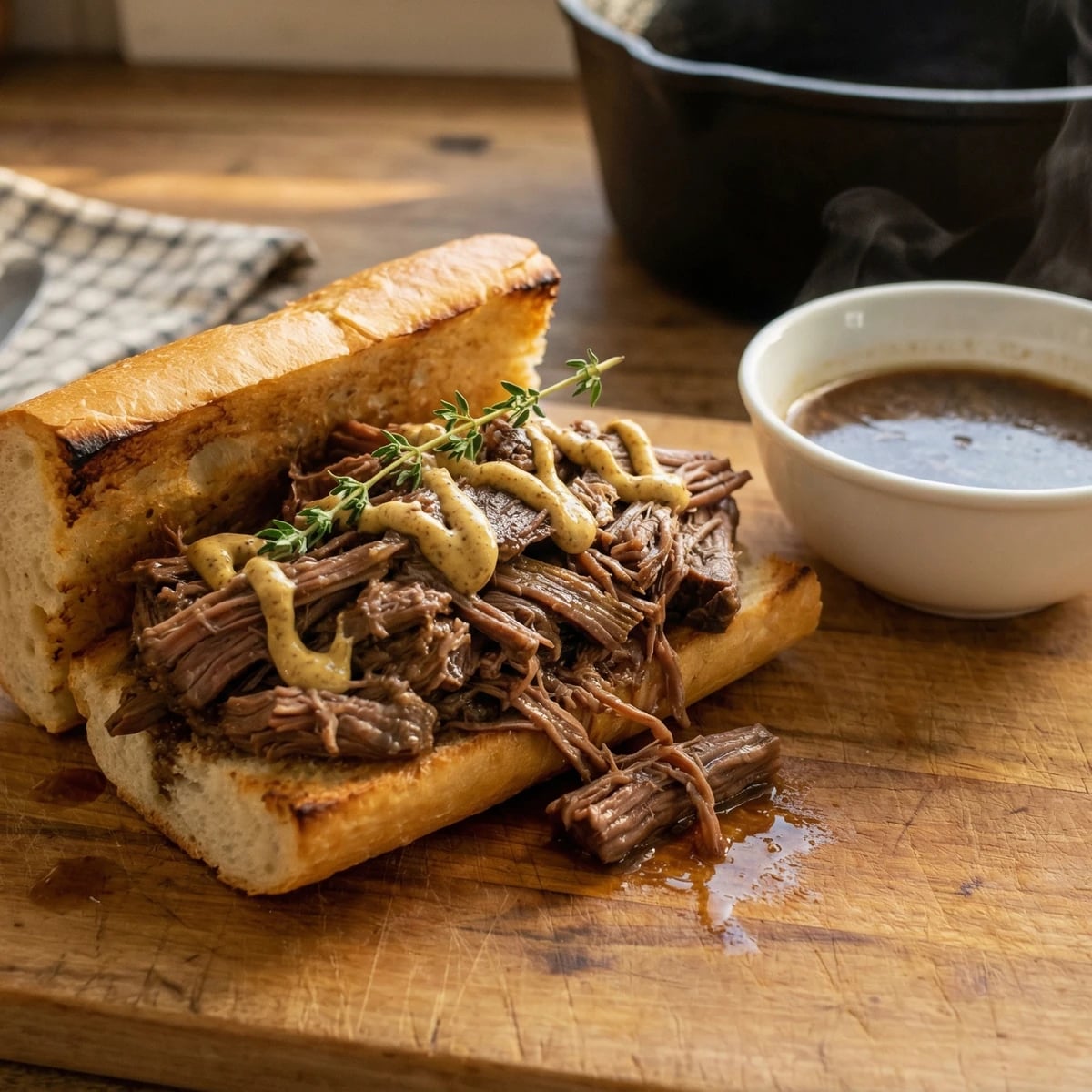
Fork-tender beef piled high on crispy-outside, pillowy-inside French bread, served alongside a bowl of rich debris jus so deeply flavored you'll want to drink it straight.

Sandwiches & Wraps
Creole
Comfort Food
Weeknight
30 min
Active Time
3 hr 30 min cook4 hr total
Yield6 sandwiches

The debris is everything. That's what separates a New Orleans French dip from every other roast beef sandwich on the planet. When you braise beef low and slow with the holy trinity, garlic, and good stock, those bits of meat that fall apart and mingle with the braising liquid become something magical. At Lagniappe, we call that debris gravy liquid gold. It's what makes guests close their eyes when they take that first dip.

My grandmother Evangeline didn't make French dips, but she understood debris. Every Sunday roast she made had that pot of drippings and fallen meat scraps she'd turn into gravy. She taught me that the parts most folks throw away hold the deepest flavor. You season the beef before it goes in the pot. You season the vegetables when they hit the fat. You taste that jus a dozen times while it cooks and adjust until it sings.

This isn't fussy food. It's honest, generous, and built on layers of flavor that reward your patience. The bread has to be right: New Orleans French bread with a shatteringly crisp crust that gives way to a soft, pillowy interior. Anything else and you're not making a proper sandwich. Toast it lightly, pile on the beef, and pour yourself a little bowl of that debris jus. Then dip, and understand why we do things the way we do in Louisiana.

The technique, the tradition, and the story behind every dish.

Discover Culinary Explorer

Ingredients

beef chuck roast

Quantity

3 pounds

Creole seasoning

Quantity

2 tablespoons

divided

kosher salt

Quantity

1 teaspoon

black pepper

Quantity

1 teaspoon

freshly cracked

vegetable oil

Quantity

3 tablespoons

yellow onion

Quantity

1 large

diced

celery stalks

Quantity

2

diced

green bell pepper

Quantity

1

diced

garlic

Quantity

6 cloves

minced

tomato paste

Quantity

2 tablespoons

dry red wine

Quantity

1 cup

beef stock

Quantity

4 cups

bay leaves

Quantity

2

fresh thyme

Quantity

4 sprigs

Worcestershire sauce

Quantity

1 tablespoon

Louisiana hot sauce

Quantity

1 teaspoon

New Orleans French bread or crusty baguettes

Quantity

2 loaves

unsalted butter

Quantity

4 tablespoons

softened

Creole mustard (optional)

Quantity

for serving

Equipment Needed

  • Large Dutch oven with lid (5-7 quart)
  • Fine-mesh strainer
  • Two forks for shredding
  • Small bowls for serving jus

Instructions

  1. 1

    Season the beef generously

    Pat the chuck roast dry with paper towels. Combine one tablespoon of Creole seasoning with the salt and pepper, then rub this mixture all over the meat, pressing it into every crevice. Let the beef sit at room temperature for thirty minutes while you prep your vegetables. This isn't optional. Cold meat hitting a hot pan will steam instead of sear, and you'll lose all that beautiful crust.

    Season more generously than feels comfortable. The beef is thick and needs enough seasoning to flavor the whole piece, not just the surface.
  2. 2

    Sear until deeply browned

    Heat the oil in a large Dutch oven over high heat until it shimmers and just begins to smoke. Lay the roast in the pot and do not touch it for four to five minutes. You want a dark, mahogany crust forming on the bottom. When it releases easily from the pan, flip and sear the other side another four minutes. Remove to a plate. That fond stuck to the bottom of the pot is flavor you're building.

    If your roast is too large for your pot, cut it in half and sear in batches. Crowding prevents browning.
  3. 3

    Build the braising base

    Reduce heat to medium. Add the onion, celery, and bell pepper to the pot with the remaining tablespoon of Creole seasoning. Cook, stirring occasionally and scraping up the fond, until the vegetables soften and turn golden, about eight minutes. Add the garlic and cook until fragrant, another minute. Stir in the tomato paste and cook two minutes more until it darkens slightly and loses its raw edge.

  4. 4

    Deglaze and add liquids

    Pour in the red wine and scrape up every bit of flavor stuck to the bottom of the pot. Let the wine reduce by half, about three minutes. Add the beef stock, bay leaves, thyme sprigs, Worcestershire, and hot sauce. Bring to a simmer, then nestle the seared roast back into the liquid. The beef should be about two-thirds submerged.

    Use a wine you'd actually drink. Cooking concentrates flavors, so a bad wine makes bad jus.
  5. 5

    Braise low and slow

    Cover the pot and transfer to a 300°F oven. Let it braise for three hours, turning the meat once halfway through. The beef is ready when it falls apart at the gentle prod of a fork. The meat should be surrendering, not resisting. You'll see all those beautiful bits of debris floating in the braising liquid. That's what you're after.

    Low and slow is the bayou way. Resist the urge to raise the temperature. Patience here creates tenderness.
  6. 6

    Shred the beef and finish the jus

    Transfer the roast to a cutting board. Remove the bay leaves and thyme stems from the pot. Using two forks, shred the beef into rough pieces, mixing in any debris that clings to the meat. Strain the braising liquid through a fine-mesh strainer into a clean saucepan, pressing on the solids to extract every drop of flavor. Simmer the jus over medium heat for ten minutes to concentrate. Taste and adjust seasoning. It should be rich, beefy, and bold enough to make you want a second dip.

  7. 7

    Toast the bread

    Slice the French bread into six-inch portions and split them lengthwise, leaving a hinge on one side. Spread softened butter on the cut surfaces. Toast under a broiler or in a hot oven at 400°F for three to four minutes until golden and crisp on the edges but still soft in the center. Watch carefully. Burned bread is a sad end to good work.

  8. 8

    Assemble and serve

    Return the shredded beef to the warm jus briefly to keep it moist and flavorful. Using tongs, pile generous amounts of beef onto the toasted bread, letting the juices soak into the bottom half. Spread Creole mustard on the top half if you like. Ladle the debris jus into small bowls for dipping. Serve immediately while the bread is still crisp and the jus is hot. This is the kind of sandwich that demands your full attention.

Chef Tips

  • Chuck roast is my choice because the fat and connective tissue break down into silky richness during braising. Leaner cuts make dry, stringy sandwiches.
  • Make your own Creole seasoning if you can: equal parts paprika, garlic powder, onion powder, then half parts cayenne, black pepper, white pepper, dried thyme, and dried oregano. Store what you don't use.
  • The debris jus can be made a day ahead and refrigerated. The fat will solidify on top. Skim it before reheating, or leave some for richness. At Lagniappe, we always leave a little.
  • True New Orleans French bread comes from local bakeries and doesn't travel well. If you can't find it, use the crustiest baguette your grocery store makes. Soft sandwich bread is not an option.

Advance Preparation

  • The entire braised beef and jus can be made two days ahead and refrigerated separately. Reheat the jus and warm the beef in it before assembling.
  • Toast bread fresh, just before serving. It doesn't hold.
  • Leftover beef and jus freeze beautifully for up to three months. Thaw overnight in the refrigerator and reheat gently.

Frequently Asked Questions

Nutrition Information

1 serving (about 350g)

Calories
1015 calories
Total Fat
51 g
Saturated Fat
21 g
Trans Fat
0 g
Unsaturated Fat
28 g
Cholesterol
200 mg
Sodium
1930 mg
Total Carbohydrates
58 g
Dietary Fiber
3 g
Sugars
2 g
Protein
71 g

Note: Chef personas and recipes are created with AI assistance. Cook with care: follow safe food-handling practices, check doneness with a thermometer when needed, and adapt for allergies and your kitchen.

Where cooking meets culture.

Culinary guides, cultural storytelling, and the editorial depth that makes cooking meaningful.

Discover Culinary Explorer

More from Chef Remy's Sandwiches and Wraps

Browse the full collection