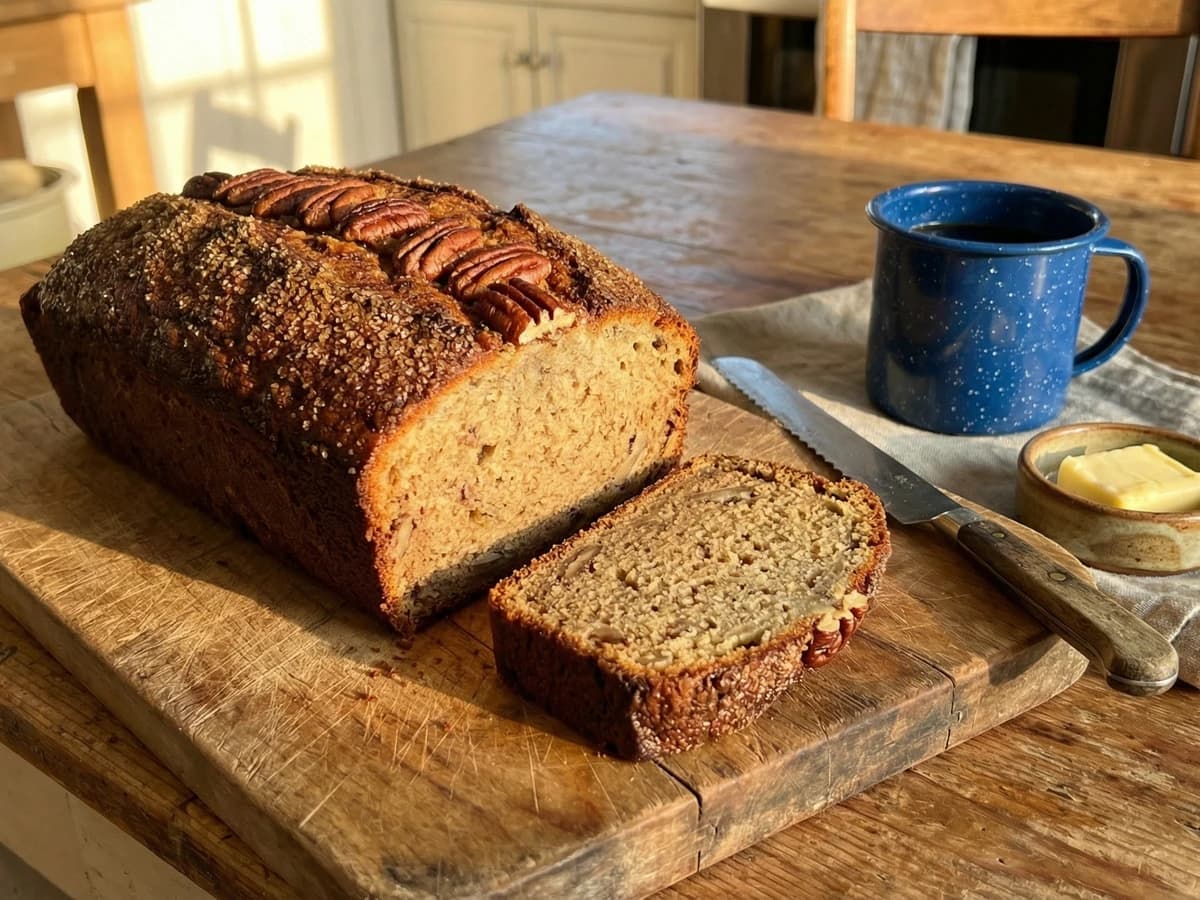
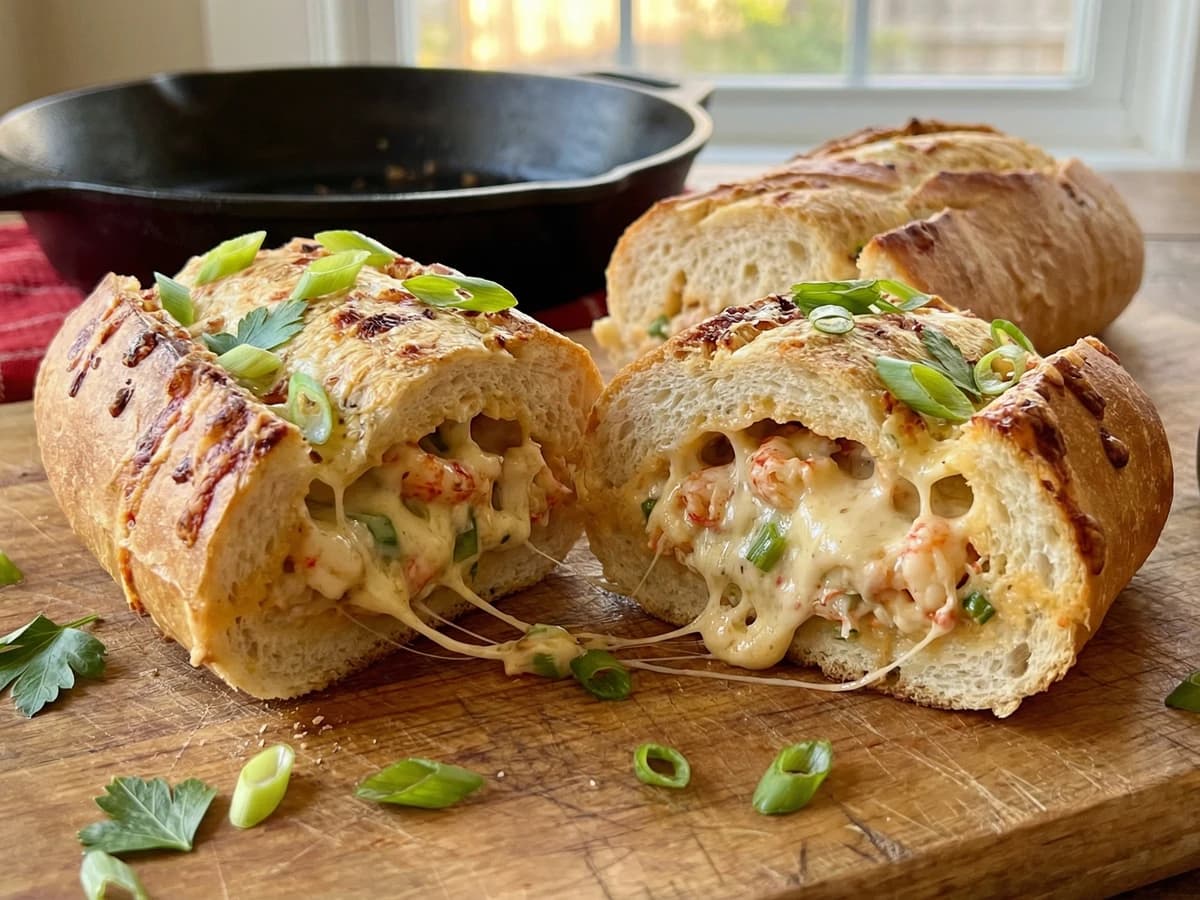
Shatteringly crisp and impossibly light, these individual rolls carry the soul of Louisiana's baking heritage in every golden, crackly bite, ready to cradle your finest po'boy fillings or soak up the last drops of gumbo.
Breads
Cajun
Dinner Party
Potluck
30 min
Active Time
25 min cook•4 hr total
Yield12 rolls
You cannot make a proper po'boy without proper bread. That's the truth of it. The filling matters, sure, but the bread is the foundation, and New Orleans French bread is unlike anything else in the world. Lighter than a baguette, crispier than any sandwich roll, with a crust that shatters when you bite through it and an interior so soft and cottony it practically melts.
I've been baking these rolls at Lagniappe since we opened the doors in 1998. We go through hundreds every week. Po'boys, of course, but also served warm in baskets alongside gumbo and red beans, for sopping up every last bit of goodness in the bowl. My grandmother Evangeline made loaves on Sundays, the smell filling her kitchen in Lafayette Parish before the sun was fully up. She taught me that bread rewards patience. You cannot rush it. You cannot fake it.
The secret is steam. That blast of moisture in a hot oven keeps the crust flexible while the inside expands, then the dry heat takes over and creates that golden, shattering shell. It's the same principle behind the great bakeries of the French Quarter, just scaled down for home ovens. These rolls are best eaten the day they're made. That's not a flaw. That's the nature of honest bread. Tomorrow you can make croutons or bread pudding. Today, you eat them fresh.
The technique, the tradition, and the story behind every dish.
In a large bowl, whisk together the bread flour, salt, sugar, and instant yeast until everything is evenly distributed. Make a well in the center and pour in the warm water and vegetable oil. Stir with a wooden spoon until a shaggy, sticky mass forms. The dough will look rough and unfinished. That's exactly right. New Orleans bread starts wet and transforms through patience.
Water temperature matters more than you think. Too hot kills the yeast. Too cold and it won't wake up. Aim for the temperature of a warm bath.
2
Knead until smooth
Turn the dough onto a lightly floured surface and knead for 8 to 10 minutes. At first it will stick to everything, your hands, the counter, your patience. Keep working. Add flour sparingly, just enough to handle it. After about 5 minutes, something changes. The dough becomes smooth, elastic, almost silky. When you poke it, it springs back slowly. When you stretch a small piece thin enough to see light through it without tearing, you're done.
3
First rise
Lightly oil a large bowl with a few drops of vegetable oil, turning the dough ball to coat all sides. Cover tightly with plastic wrap and set in a warm spot. Let it rise until doubled in size, about 1 to 1 1/2 hours depending on your kitchen temperature. The dough should feel puffy and alive when you press it gently with a fingertip.
If your kitchen runs cool, turn your oven on for exactly 2 minutes, then turn it off. Place the covered bowl inside with the door cracked. That gentle warmth is all you need.
4
Shape the rolls
Punch down the risen dough to release the gas. Turn it out onto a lightly floured surface and divide into 12 equal pieces, about 70 grams each if you have a scale. Roll each piece into an oval about 5 inches long and 2 inches wide, with tapered ends like a small torpedo. These are po'boy rolls, so they need that classic elongated shape. Dust two baking sheets with cornmeal and arrange the rolls 3 inches apart.
5
Second rise
Cover the shaped rolls loosely with clean kitchen towels and let them rise in a warm place for 45 minutes to 1 hour. They should nearly double in size and feel pillowy when you touch them. The surface will look slightly puffy and fragile. Handle them gently from here on.
6
Prepare for baking
About 30 minutes before baking, place a metal baking pan or cast iron skillet on the lowest oven rack. Preheat the oven to 425°F. The pan is for creating steam, which is the secret to that shattering New Orleans crust. Bring a kettle of water to a boil and have it ready.
7
Score the rolls
Using a very sharp knife or razor blade held at a 45-degree angle, make one swift slash down the length of each roll, about 1/4 inch deep. The motion should be confident and quick, like you mean it. A hesitant cut drags and tears. The score allows the bread to expand properly and creates that beautiful split down the center.
If your blade is dragging, dip it in water between cuts. A wet blade glides through sticky dough.
8
Bake with steam
Slide the baking sheets onto the middle racks of the oven. Immediately pour about 1 cup of boiling water into the hot pan on the bottom rack and close the door quickly to trap the steam. You'll hear it hiss and protest. Good. That burst of steam keeps the crust soft long enough for the bread to expand fully before it sets. Bake for 20 to 25 minutes, rotating the pans halfway through, until the rolls are deeply golden and sound hollow when you tap the bottom.
Be careful with the steam. Open the oven door away from your face, and pour the water from the side, not directly above the pan.
9
Cool and serve
Transfer the rolls to a wire rack and let them cool for at least 15 minutes before slicing. The crust will crackle and sing as it cools, tiny sounds of the bread contracting. This is the voice of good bread. Serve within a few hours for the best texture. By tomorrow, the magic fades.
Chef Tips
•Bread flour is not optional here. All-purpose flour lacks the protein to create the proper structure. The higher gluten content gives you that chewy interior and helps the crust develop.
•If you want to get fancy, mist the rolls with water from a spray bottle right before they go in the oven, in addition to the steam pan. More moisture means more crust.
•These freeze beautifully for up to a month. Reheat directly from frozen in a 375°F oven for 10 minutes to restore the crackle.
•Don't slice them until you're ready to fill them. Once you cut through that crust, the clock starts ticking on freshness.
Advance Preparation
•The dough can be made through the first rise, punched down, and refrigerated overnight. The cold fermentation develops deeper flavor. Bring to room temperature before shaping, about 1 hour.
•Shaped rolls can proof slowly in the refrigerator overnight. Bake directly from cold, adding 3 to 5 minutes to the bake time.
•Baked rolls freeze for up to one month. Reheat from frozen at 375°F for 8 to 10 minutes until the crust crisps again.
Frequently Asked Questions
Nutrition Information
1 roll (about 65g)
Calories
170 calories
Total Fat
2 g
Saturated Fat
0 g
Trans Fat
0 g
Unsaturated Fat
2 g
Cholesterol
0 mg
Sodium
300 mg
Total Carbohydrates
32 g
Dietary Fiber
1 g
Sugars
0 g
Protein
5 g
Where cooking meets culture.
Culinary guides, cultural storytelling, and the editorial depth that makes cooking meaningful.