
Chef Ally
All-Butter Croissants
Shatteringly crisp, impossibly tender, and layered with the finest butter you can find. Two days of patience rewarded with the most honest croissant you will ever bake.
A cooking platform built around craft, culture, and the stories behind what we eat.
Created by
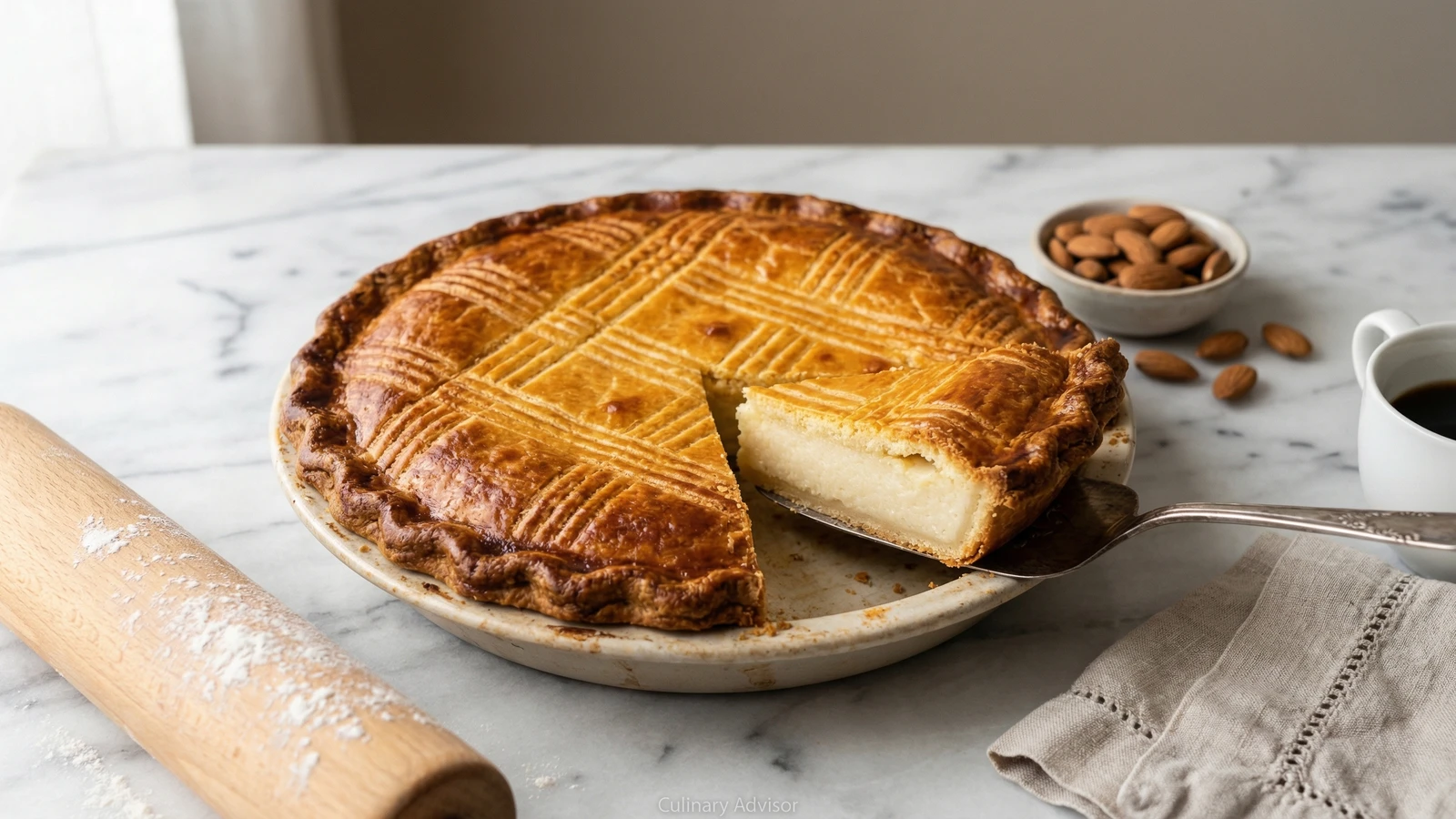
A golden, buttery tribute to the Basque sheepherders who shaped Nevada's high desert, this double-crusted pie holds silky almond pastry cream beneath its traditional cross-hatched top, as honest as the boardinghouses where it was born.
Drive through Elko or Winnemucca and you'll find restaurants where Basque shepherds have gathered for over a century. They came from the Pyrenees to tend flocks in Nevada's high desert, bringing with them a cake that sustained them through lonely months in the mountains. The Gateau Basque traveled well. It kept for days. And it tasted like home.
This pie honors that tradition while acknowledging its American adaptation. The Basque boardinghouses of Nevada served family-style meals to working men, and sweets like this appeared at the end of long communal tables. The crust is more cookie than pastry, rich with butter and almonds, yielding to a knife with gentle resistance. Inside, vanilla-scented pastry cream carries the subtle perfume of almonds, a flavor the original Basque bakers would recognize.
I've adapted the traditional round gateau for a standard pie plate because that's what American home bakers have in their cupboards. The cross-hatch pattern on top isn't decoration. It's identification. Every Basque grandmother marked her gateau this way, and we carry that forward. When you pull this from the oven, golden and fragrant, you're connecting to shepherds who found comfort in this same sweetness a hundred and fifty years ago.
Quantity
2 1/2 cups (315g)
Quantity
1/2 cup (50g)
Quantity
1 cup (200g)
Quantity
1/2 teaspoon
Quantity
1/2 teaspoon
Quantity
1 cup (2 sticks/226g)
cold and cubed
Quantity
2
Quantity
1
Quantity
1 teaspoon
Quantity
1/2 teaspoon
Quantity
1
zested
Quantity
2 cups
Quantity
1/2 cup (100g)
Quantity
4
Quantity
1/4 cup (30g)
Quantity
2 tablespoons
Quantity
1 teaspoon
Quantity
1/2 teaspoon
Quantity
pinch
Quantity
1
beaten with 1 tablespoon milk for wash
| Ingredient | Quantity |
|---|---|
| all-purpose flour | 2 1/2 cups (315g) |
| almond flour | 1/2 cup (50g) |
| granulated sugar (for crust) | 1 cup (200g) |
| fine sea salt | 1/2 teaspoon |
| baking powder | 1/2 teaspoon |
| unsalted butter (for crust)cold and cubed | 1 cup (2 sticks/226g) |
| large egg yolks (for crust) | 2 |
| large whole egg | 1 |
| pure vanilla extract (for crust) | 1 teaspoon |
| almond extract (for crust) | 1/2 teaspoon |
| lemonzested | 1 |
| whole milk | 2 cups |
| granulated sugar (for cream) | 1/2 cup (100g) |
| large egg yolks (for cream) | 4 |
| cornstarch | 1/4 cup (30g) |
| unsalted butter (for cream) | 2 tablespoons |
| pure vanilla extract (for cream) | 1 teaspoon |
| almond extract (for cream) | 1/2 teaspoon |
| fine sea salt (for cream) | pinch |
| egg yolkbeaten with 1 tablespoon milk for wash | 1 |
Heat the milk in a medium saucepan over medium heat until it just begins to steam and small bubbles form at the edges. Do not boil. While the milk heats, whisk together the four egg yolks, half cup sugar, and cornstarch in a bowl until pale and thick, about two minutes of vigorous whisking. This aeration helps prevent lumps.
Slowly pour about half the hot milk into the egg mixture while whisking constantly. This tempers the eggs, preventing scrambling. Pour this mixture back into the saucepan with the remaining milk. Cook over medium heat, whisking without stopping, until the cream thickens dramatically and begins to bubble, about three to four minutes. It should coat a spoon heavily and hold its shape when you lift the whisk.
Remove from heat immediately. Whisk in the two tablespoons butter until melted, then add vanilla extract, almond extract, and salt. Press plastic wrap directly onto the surface of the cream to prevent a skin from forming. Refrigerate until completely cold, at least two hours or overnight.
In a food processor, pulse together the all-purpose flour, almond flour, one cup sugar, salt, and baking powder until combined. Add the cold cubed butter and pulse in short bursts until the mixture resembles coarse sand with some pea-sized pieces remaining. This takes about fifteen pulses. Don't overwork it.
Whisk together the two egg yolks, whole egg, vanilla, almond extract, and lemon zest in a small bowl. Pour this over the flour mixture and pulse until the dough just comes together in clumps. It will look shaggy but should hold when pressed. Turn out onto a lightly floured surface and divide into two portions, one slightly larger than the other. The larger piece becomes your bottom crust.
Flatten each portion into a disk about one inch thick, wrap tightly in plastic, and refrigerate for at least one hour. This dough is soft and buttery. Chilling makes it manageable. You can refrigerate overnight if that suits your schedule.
On a floured surface, roll the larger disk into a twelve-inch circle about three-sixteenths of an inch thick. The dough handles like sugar cookie dough. If it cracks, press it back together. Transfer to a nine-inch pie plate, pressing gently into the corners and up the sides. Trim edges to a half-inch overhang. Refrigerate while you roll the top.
Roll the smaller disk into a ten-inch circle. Transfer to a parchment-lined baking sheet and refrigerate for fifteen minutes. The cold dough transfers more easily and holds its shape.
Remove the chilled pastry cream from the refrigerator and whisk vigorously until smooth and spreadable. It will have set firmly. Spread evenly into the prepared bottom crust, leaving about half an inch of bare dough at the edges. The filling should mound slightly in the center.
Center the top crust over the filling. Press the edges together to seal, then fold the overhang under itself to create a thick rim. Crimp decoratively using fork tines or your fingers. Refrigerate the assembled pie for twenty minutes. Preheat your oven to 350°F during this time.
Brush the entire top crust with egg wash, coating evenly. Using a fork, draw parallel lines across the surface at roughly one-inch intervals. Then draw crossing lines at a diagonal to create the traditional Basque diamond pattern. Press gently so the fork leaves visible grooves without piercing through to the filling.
Bake in the center of the oven for 45 to 50 minutes, until the top is a deep golden brown and the crust feels firm when gently pressed. The color should remind you of dark honey. Pale beige means underbaked. Rotate the pie halfway through for even browning. If the edges brown too quickly, shield with foil.
Transfer to a wire rack and resist the urge to cut for at least two hours, three is better. The filling needs time to set. Slicing too early results in pastry cream that oozes rather than holds its shape. At room temperature, this pie cuts into clean wedges with filling that stays put.
1 serving (about 161g)
Culinary guides, cultural storytelling, and the editorial depth that makes cooking meaningful.
Discover Culinary ExplorerChef Ally
Shatteringly crisp, impossibly tender, and layered with the finest butter you can find. Two days of patience rewarded with the most honest croissant you will ever bake.

Chef Ally
Farmers' market apples sink into butter and caramel, then emerge beneath shatteringly crisp pastry, a French provincial classic that proves the best desserts are the simplest ones.

Chef Ally
Tender, buttery shells filled with jewel-toned curd made from blood oranges at their peak, the kind of winter dessert that reminds you the sun will return.

Chef Ally
A French butter cookie made extraordinary by one patient act: browning the butter until it smells of hazelnuts and caramel, then finishing each round with crystals of fleur de sel that spark against the sweetness.