
Chef Takumi
Aji Fry (アジフライ, panko-fried horse mackerel)
Aji fry is weeknight fish with no mystery: fresh horse mackerel opened cleanly, breaded lightly, and fried until the panko crackles while the flesh stays sweet.
A cooking platform built around craft, culture, and the stories behind what we eat.

Created by
Scallions take the place of cabbage here, by the handful. The pancake cooks greener and lighter than okonomiyaki, then finishes with soy and lemon, sharp, clean, and honest.
Negi-yaki begins with an almost foolish amount of scallion. You look at the bowl and think it can't possibly hold together. It will. The batter is only there to bind the negi, not bury it, and that is the first secret.
This is Osaka comfort food, close kin to okonomiyaki but leaner in spirit. Cabbage gives sweetness and bulk; negi gives perfume, green bite, and a little snap under the teeth. We cook it thin enough that the scallions soften without going dull, then brush the surface with soy sauce and a squeeze of lemon. No thick sweet sauce here. Nothing hidden.
Use fresh, firm scallions with bright green tops and no tired slime at the cut ends. Slice them finely so they tangle into the batter and cook quickly. The one detail that decides the dish is restraint with the batter: too much flour makes a pancake with scallions in it; just enough flour makes negi-yaki.
Negi-yaki is strongly associated with Osaka, especially the Juso shop Negiyaki Yamamoto, which traces the dish to the 1960s. The style grew out of the same griddle culture as okonomiyaki, but it replaced cabbage with chopped green onion and commonly used a soy-based finish rather than the thick sweet sauce used on many okonomiyaki. Suji-negi, made with simmered beef tendon and konnyaku, is a famous Osaka version, while pork belly is a common home and shop variation.
Quantity
1 cup
cooled
Quantity
120g
Quantity
1
Quantity
1 teaspoon, plus 2 tablespoons for brushing
Quantity
1/4 teaspoon
Quantity
6 to 8 (about 180g)
finely sliced
Quantity
120g
Quantity
2 teaspoons
Quantity
1 tablespoon
Quantity
1 teaspoon
Quantity
small handful
| Ingredient | Quantity |
|---|---|
| dashicooled | 1 cup |
| all-purpose flour | 120g |
| large egg | 1 |
| soy sauce | 1 teaspoon, plus 2 tablespoons for brushing |
| sea salt | 1/4 teaspoon |
| scallions or Japanese negifinely sliced | 6 to 8 (about 180g) |
| thinly sliced pork belly | 120g |
| neutral oil | 2 teaspoons |
| lemon juice | 1 tablespoon |
| toasted sesame seeds | 1 teaspoon |
| bonito flakes (optional) | small handful |
Whisk the cooled dashi, flour, egg, 1 teaspoon soy sauce, and salt until just smooth. Stop when the dry flour disappears. Overmixing wakes up the gluten and makes the pancake chewy, when what you want is a tender sheet that lets the negi speak.
Add the sliced scallions and fold until every piece is lightly coated. The bowl should look more like scallions dressed in batter than batter filled with scallions. That imbalance is correct, so don't fix it with extra flour.
Heat a teppan or wide skillet over medium heat and brush it with 1 teaspoon oil. Medium heat matters because the negi needs time to soften and sweeten before the outside gets too dark. If the oil races across the pan and smokes, wait a moment.
Spread half the batter into a thin round, about 7 inches wide. Lay half the pork belly across the top in a single layer. Cook for 4 to 5 minutes, until the underside is lightly browned and the edges look set. The pork goes on top now so it bastes the pancake when you flip it.
Slide a wide spatula under the pancake, steady the top with a second spatula if you have one, and flip it pork-side down. Press lightly, not hard. Cook 4 to 5 minutes more, until the pork is browned and the scallions smell sweet and green. Repeat with the remaining batter and pork.
Turn each pancake pork-side up. Brush with soy sauce while the surface is still glossy, then finish with lemon juice, sesame seeds, and bonito flakes if using. Cut into wedges and serve at once. The soy should season, not drown, and the lemon should wake the negi without making it sour.
1 serving (about 330g)
Culinary guides, cultural storytelling, and the editorial depth that makes cooking meaningful.
Discover Culinary ExplorerChef Takumi
Aji fry is weeknight fish with no mystery: fresh horse mackerel opened cleanly, breaded lightly, and fried until the panko crackles while the flesh stays sweet.
Chef Takumi
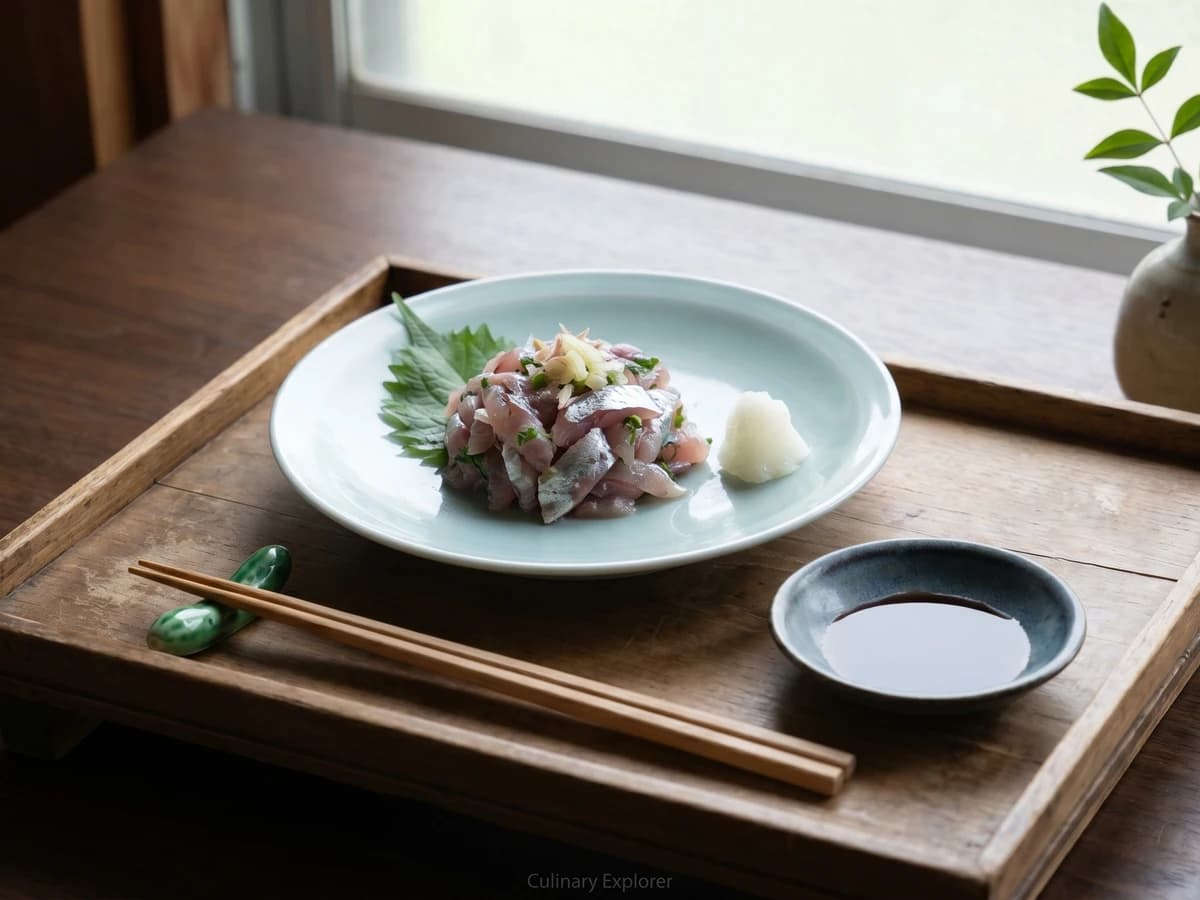
Summer horse mackerel, chopped just enough to catch ginger and scallion, becomes a cool, clean main dish with rice. The secret is fresh fish and a knife that does not bruise it.
Chef Takumi
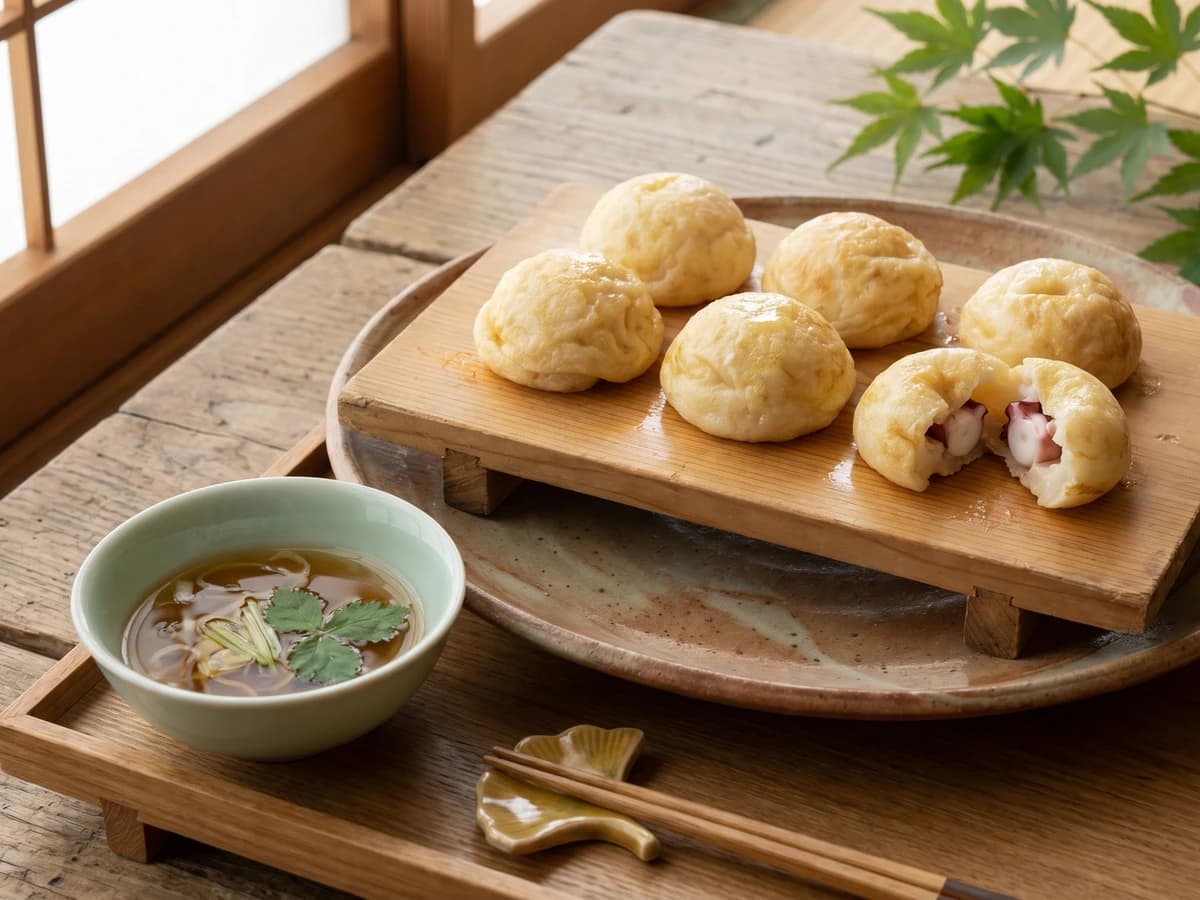
Akashi-yaki is not sauced takoyaki. It is egg-rich batter, tender octopus, and clear dashi, cooked pale and soft so each ball can be dipped like a small custard dumpling.

Chef Takumi
A whole anago looks like a test of nerve. It is mostly good sourcing, a dry skin, cold batter, and oil hot enough to leave the eel sweet under its lace.