
Chef Takumi
Abura Soba (油そば, brothless ramen)
Abura soba is ramen without the hiding place of soup: hot noodles, strong shōyu tare, fragrant oil, and the discipline to mix while every strand is still hot.
A cooking platform built around craft, culture, and the stories behind what we eat.
Created by
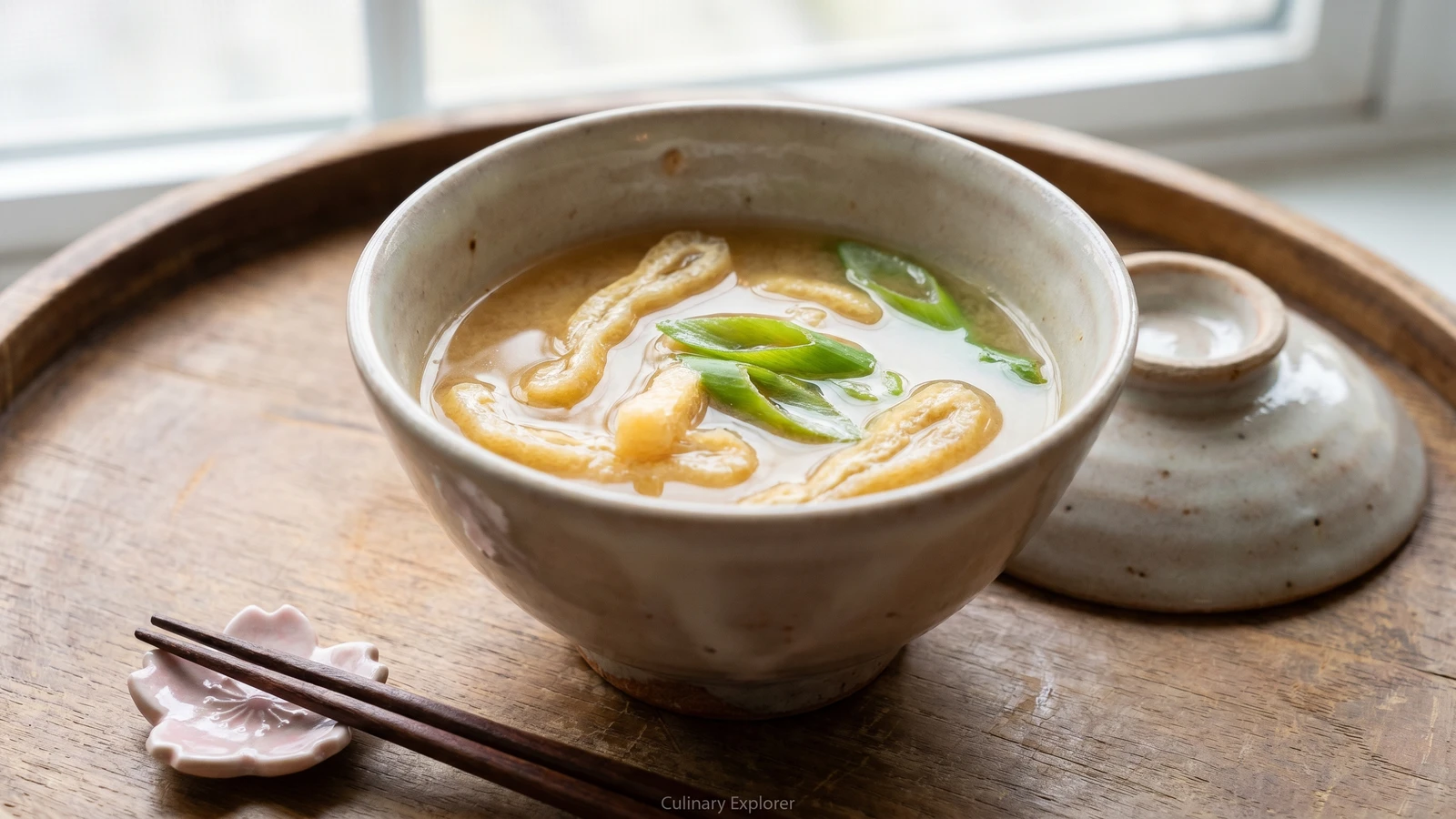
The weeknight miso soup: clear dashi, miso stirred in off the boil, scallion kept bright, and aburaage rinsed first so its richness never muddies the bowl.
This is the soup that proves how little a proper bowl of misoshiru needs. Dashi, miso, a length of negi, and one sheet of aburaage. The fried tofu gives the bowl body, the scallion gives it lift, and rice beside it makes a meal feel settled.
The one detail that decides it is the aburaage. Pour boiling water over it before you cut it, not because we enjoy making one more dish to wash, but because the surface oil can dull the dashi and leave the soup greasy. Rinsed and sliced into thin ribbons, it drinks the broth instead of floating above it.
Then be gentle with the miso. Dissolve it into the hot dashi after the soup comes off the boil, and don't let it roll afterward. Boiling drives off the fragrance and roughens the taste, and miso soup is too plain to forgive that. Plain is not lesser. Plain is where nothing is hidden.
Negi is winter's good servant, sweetening when cold weather tightens its skin. Use it while it is at its shun, slice it on a slant so each piece has a little face, and let the heat soften it just enough. This is honmono made on a weeknight, which is to say, the way we need it most often.
Misoshiru became a daily fixture with the spread of ichijū-sansai, the one-soup, three-dish meal pattern that took shape among warrior households in the medieval period and later entered ordinary home cooking. Aburaage, thin tofu deep-fried into a light pouch, is closely tied to the development of tofu cookery in the Edo period, when specialized tofu shops became common in cities. Its use in soups and simmered dishes reflects a practical Japanese habit: a small, inexpensive ingredient carrying flavor through dashi rather than through heaviness.
Quantity
4 cups
Quantity
1 piece (about 8g)
Quantity
15g
Quantity
1 sheet
rinsed with boiling water and cut into thin ribbons
Quantity
2 negi or 4 scallions
thinly sliced on the diagonal
Quantity
3 to 4 tablespoons
adjust to taste
| Ingredient | Quantity |
|---|---|
| cold water | 4 cups |
| konbu (dried kelp) | 1 piece (about 8g) |
| katsuobushi (bonito flakes) | 15g |
| aburaage (fried tofu pouch)rinsed with boiling water and cut into thin ribbons | 1 sheet |
| Japanese negi or scallionsthinly sliced on the diagonal | 2 negi or 4 scallions |
| awase misoadjust to taste | 3 to 4 tablespoons |
Wipe the konbu with a damp cloth, but don't wash it. That pale bloom on the surface is flavor, not dirt. Put the konbu in the cold water and bring it up slowly over low heat, about ten minutes. Pull it out when the water trembles and small bubbles climb the sides of the pot, before it reaches a boil.
Bring the konbu water just to a gentle boil. Add the katsuobushi all at once, turn off the heat, and leave it alone for two or three minutes until the flakes sink. Don't stir. The flakes give themselves up neatly if you let them.
Strain the dashi through a cloth-lined sieve into a clean pot and let it drip naturally. Don't squeeze the flakes. Squeezing presses strong, oily flavors into the stock, and this soup depends on a clean base.
Set the aburaage in a sieve and pour boiling water over both sides. Pat it dry, then cut it into thin ribbons. This removes excess surface oil so the fried tofu tastes rich without clouding the broth.
Return the dashi to medium heat and add the aburaage ribbons. Simmer quietly for two minutes so they drink in the stock. Add the sliced negi and cook just until softened but still bright, about one minute. If you cook the negi too long, its clean bite disappears.
Turn off the heat. Put the miso in a ladle, lower it into the hot broth, and stir with chopsticks until it dissolves, or press it through a small miso strainer. Taste, then add a little more miso if the soup needs it. Warm the soup gently if needed, but don't boil it once the miso is in. Boiling dulls the aroma and makes the flavor coarse.
Ladle the soup into warmed bowls, giving each bowl a few ribbons of aburaage and an odd little gathering of negi. Serve immediately, while the scallion still reads green and the broth surface is glossy and still.
1 serving (about 250g)
Culinary guides, cultural storytelling, and the editorial depth that makes cooking meaningful.
Discover Culinary ExplorerChef Takumi
Abura soba is ramen without the hiding place of soup: hot noodles, strong shōyu tare, fragrant oil, and the discipline to mix while every strand is still hot.
Chef Takumi
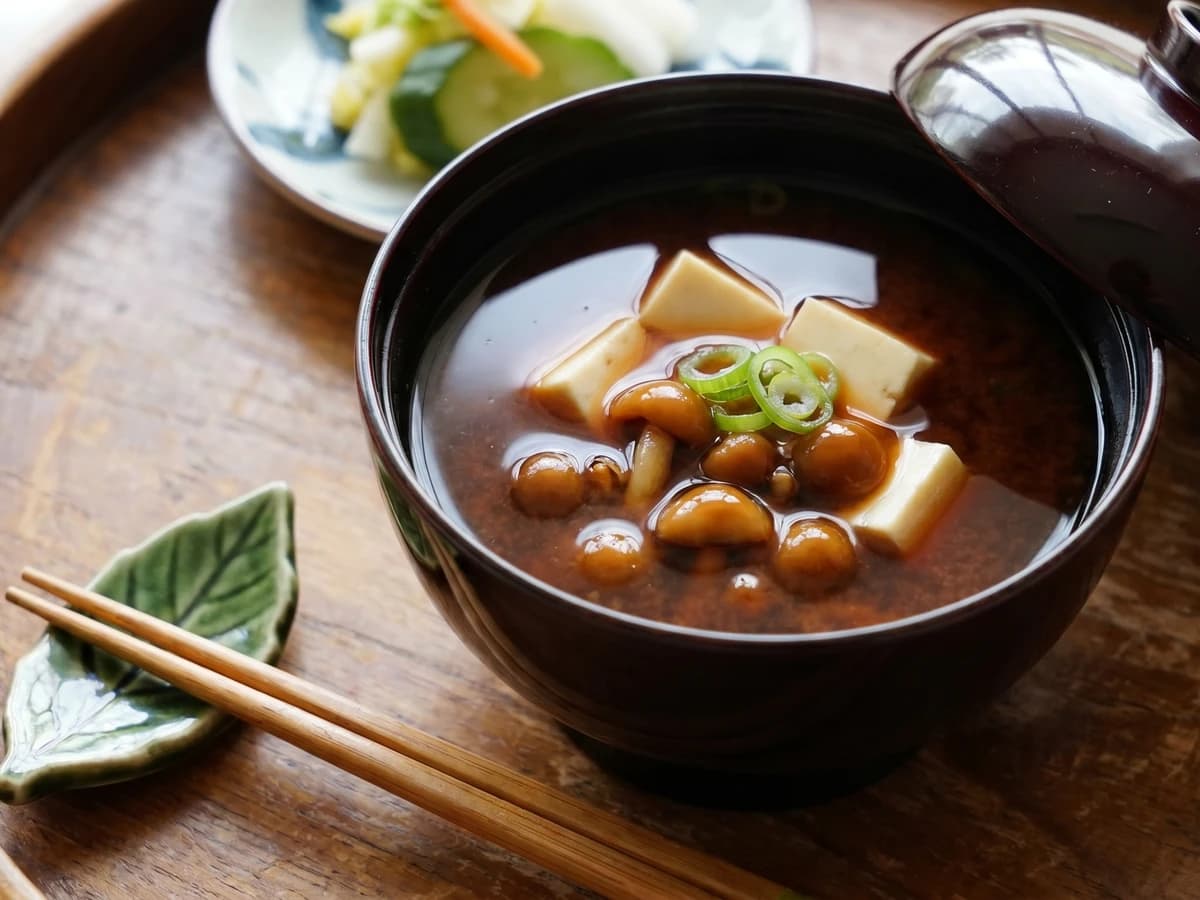
Akadashi asks you to trust the dark miso. Build a clear dashi, loosen the Hatchō mame-miso gently, and the soup turns coffee-dark, savory, and clean.

Chef Takumi
Toast the rice until its skin is firm, then let it meet chicken broth, burdock, maitake, and seri. The pot looks grand, but the work is rice, broth, and patience.
Chef Takumi
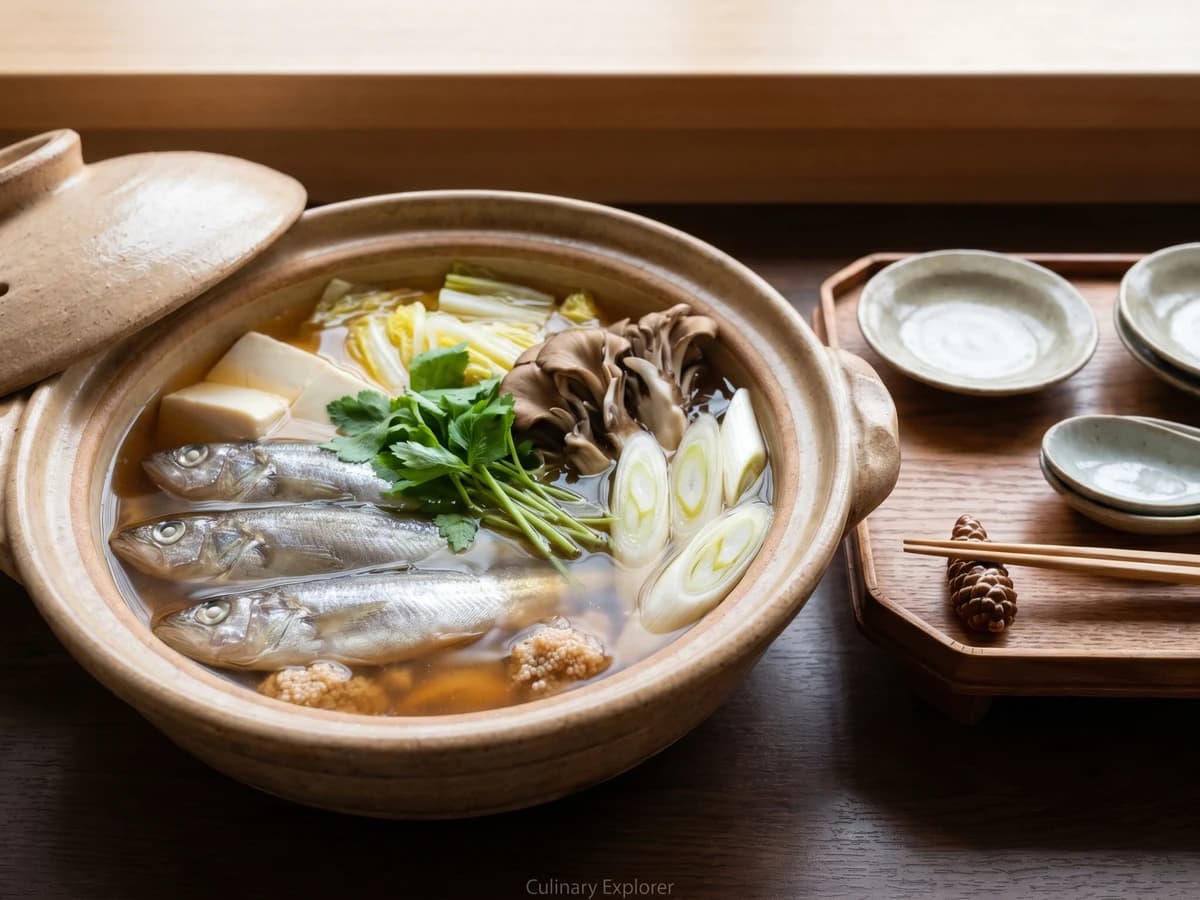
Shottsuru nabe is Akita winter in one pot: clean dashi, hatahata at shun, tofu and napa cabbage carrying a salt-deep broth without anything heavy enough to hide the fish.