Chef Dean
Classic Italian Focaccia
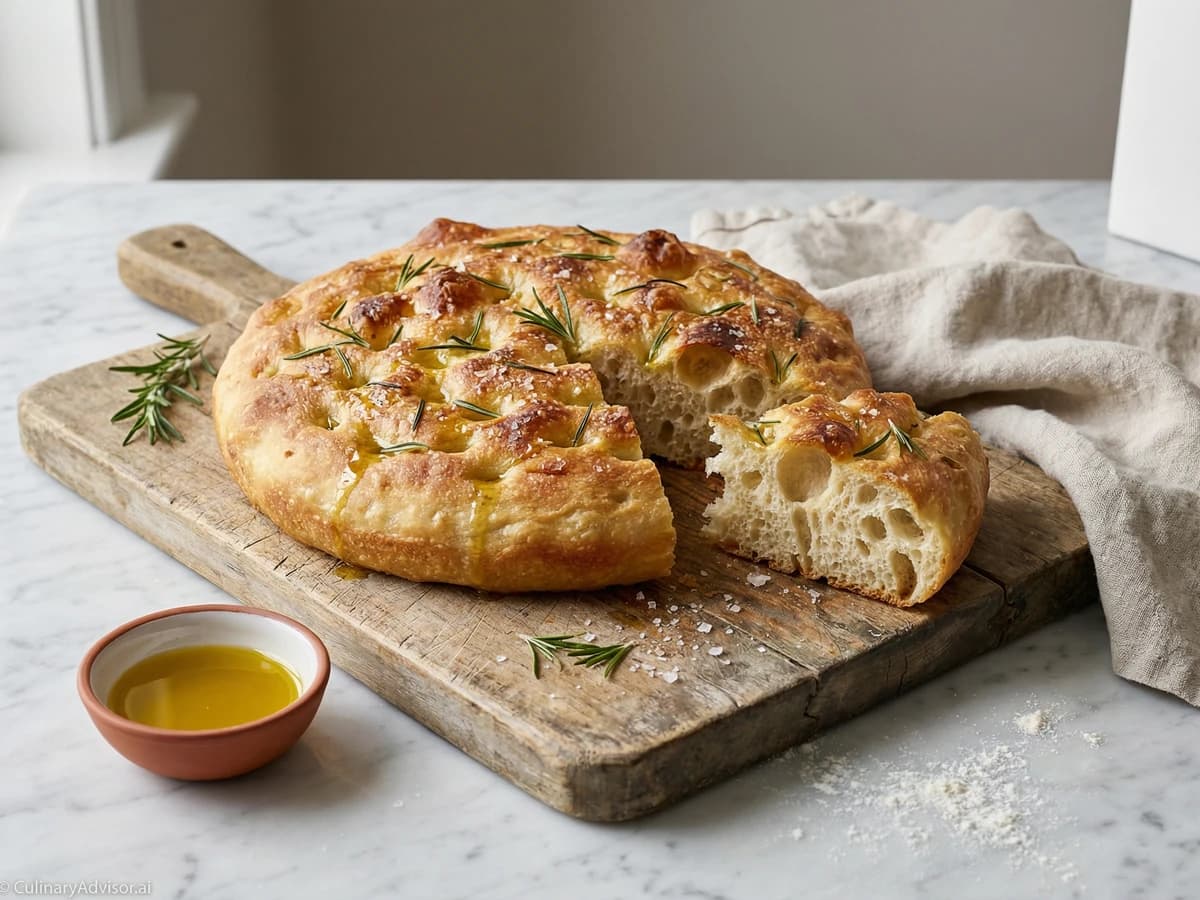
Golden-crusted Ligurian flatbread, generous with olive oil, dimpled by eager fingers, and scattered with rosemary and flaky salt. The bread that proves simplicity requires no apology.
A cooking platform built around craft, culture, and the stories behind what we eat.
Created by
Four ingredients, twenty-four hours, and a willingness to let time do most of the work. This is dough the way Naples has made it for generations, simple and alive with flavor.
Good flour, water, salt, yeast. That is all. The magic happens in the waiting.
I learned this lesson standing in a small pizzeria near the port in Naples, watching a baker who had been shaping dough since childhood. He touched the dough as little as possible. He let it rest, let it rise, let it tell him when it was ready. The pizza that came from that oven was unlike anything I had tasted. The crust blistered and charred in spots, tender and airy inside, with a flavor that spoke of fermentation, of patience.
Quick doughs give you bread. Time gives you something else entirely. During those twenty-four hours, the yeast does slow, steady work, developing acids and alcohols that create complexity no amount of kneading can replace. The gluten relaxes, becoming supple and cooperative. When you finally stretch that dough, it responds to your hands like it wants to become pizza.
Source the best flour you can find. Tipo 00 from Italy is traditional, milled so fine it feels like silk between your fingers. A good bread flour from a mill you trust will also serve you well. This is not the place to economize. Four ingredients means each one carries weight.
Quantity
500g (about 4 cups)
Quantity
325g (1 1/3 cups)
room temperature
Quantity
10g (2 teaspoons)
Quantity
3g (1 teaspoon)
| Ingredient | Quantity |
|---|---|
| Tipo 00 flour or bread flour | 500g (about 4 cups) |
| waterroom temperature | 325g (1 1/3 cups) |
| fine sea salt | 10g (2 teaspoons) |
| active dry yeast | 3g (1 teaspoon) |
Pour the room temperature water into a large mixing bowl. Sprinkle the yeast over the surface and let it sit for five minutes. You should see the granules soften and begin to dissolve. A few lazy bubbles rising to the surface tell you the yeast is alive and willing to work.
Add the flour and salt to the bowl. Using a wooden spoon or your hand, stir until the mixture forms a shaggy, rough mass. Do not worry about smoothness yet. You are simply bringing the ingredients together, letting the flour begin to absorb the water.
Turn the dough onto a clean, unfloured surface. Knead for eight to ten minutes using the heel of your hand to push the dough away, then fold it back on itself. The dough will transform from rough and sticky to smooth and slightly tacky. It should spring back slowly when you press it with a finger.
Shape the dough into a smooth ball and place it in a lightly oiled bowl. Cover tightly with plastic wrap or a damp towel. Let it rest at room temperature for two hours. The dough will puff slightly but will not double. This initial rest allows the gluten to relax and the fermentation to begin.
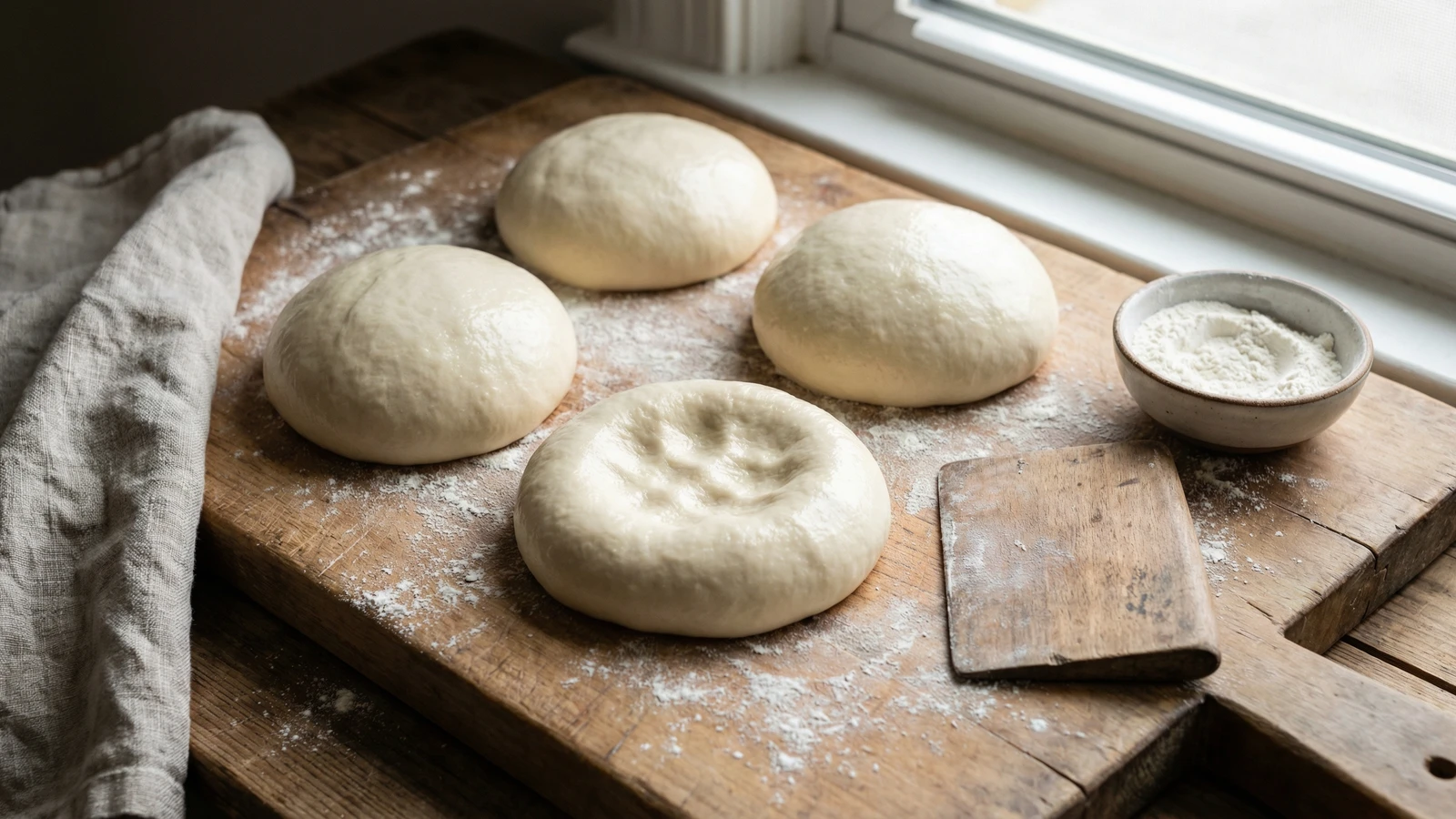
Turn the dough onto your work surface. Divide it into four equal pieces, roughly 210 grams each. Shape each piece into a tight ball by tucking the edges underneath and rotating the dough against the surface. The surface tension you create now will help the dough hold its shape during the long rest.
Place the dough balls on a lightly oiled sheet pan or in individual covered containers, leaving space between them. Cover with plastic wrap pressed gently against the surface. Refrigerate for at least twenty-two hours, up to seventy-two. The cold slows the yeast but does not stop it. This is where flavor develops.
Remove the dough from the refrigerator two hours before you plan to bake. Let the balls rest, covered, at room temperature. Cold dough is tight and resistant. Warm dough becomes supple, stretchy, cooperative. When ready, each ball will feel pillowy and will have nearly doubled in size.
Dust your work surface generously with flour. Using your fingertips, press the center of a dough ball, leaving a small rim around the edge untouched. This rim becomes your cornicione, the puffy outer crust. Pick up the dough and let gravity stretch it, rotating as you go, until you have a ten to twelve inch round. Work gently. The dough should feel alive in your hands.
1 serving (about 210g)
Culinary guides, cultural storytelling, and the editorial depth that makes cooking meaningful.
Discover Culinary ExplorerChef Dean
Golden-crusted Ligurian flatbread, generous with olive oil, dimpled by eager fingers, and scattered with rosemary and flaky salt. The bread that proves simplicity requires no apology.
Chef Dean
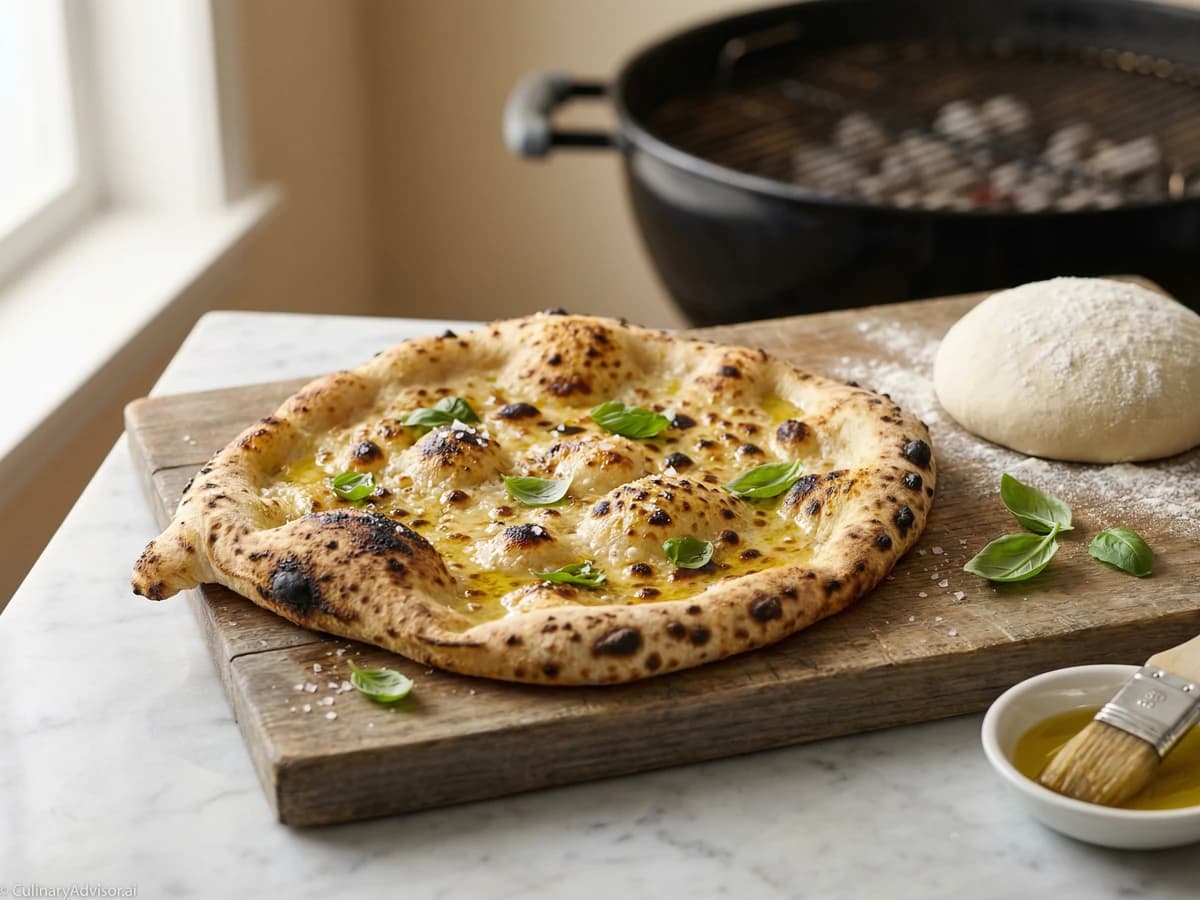
Supple, high-hydration dough stretched thin and kissed by live fire, producing the leopard-spotted char and smoky complexity that no kitchen oven can replicate. This is summer pizza.

Chef Dean
The iconic Italian slipper bread with a shattering golden crust and an interior so open and airy you could lose your car keys in there. High-hydration dough rewards patience with results no bakery can match.

Chef Dean
The legendary Milanese Christmas bread with its golden dome, butter-rich crumb, and jeweled interior of candied citrus and plump raisins. Patient fermentation rewards you with texture like sweet clouds pulled apart by eager hands.