Culinary Explorer
A cooking platform built around craft, culture, and the stories behind what we eat.
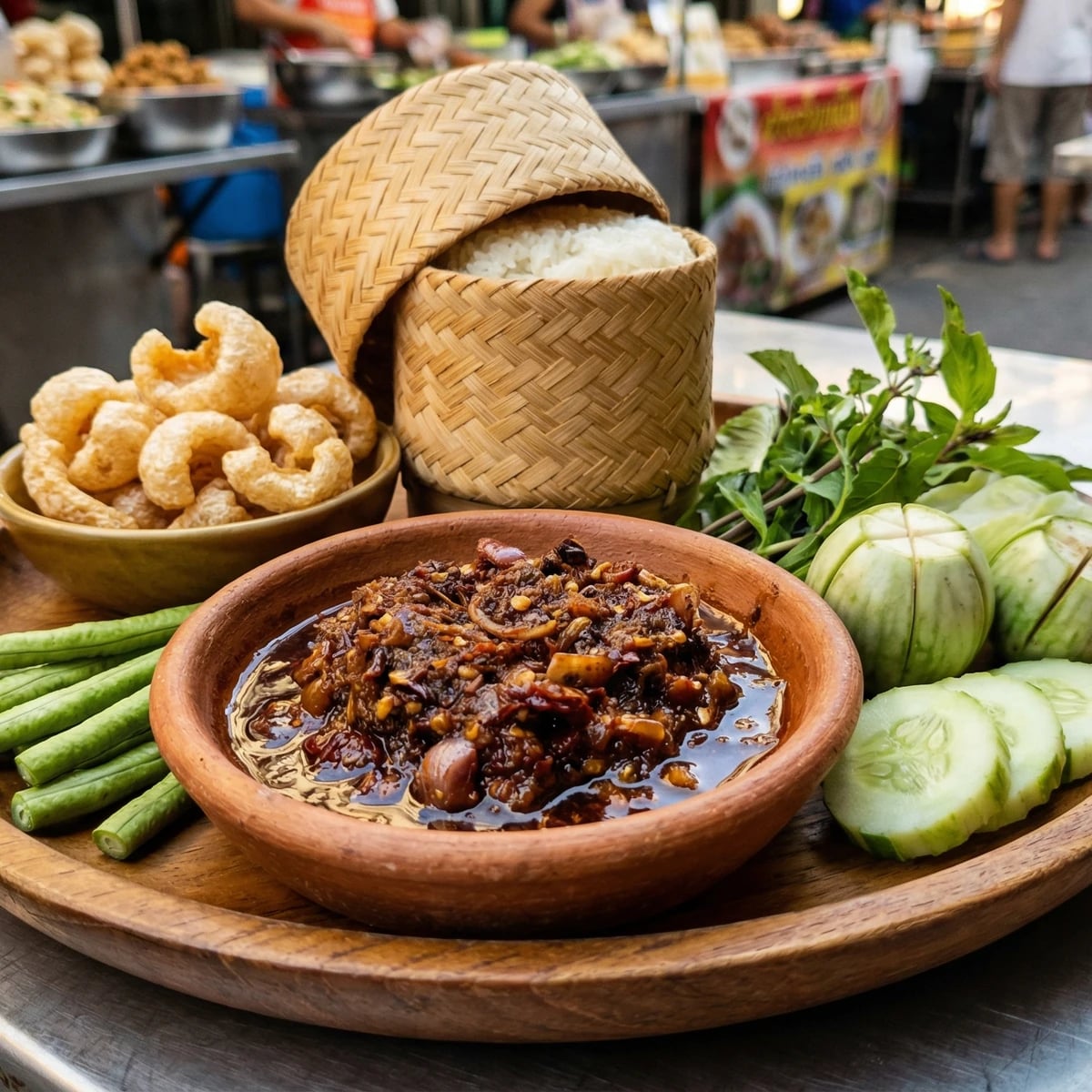
Water Bug Chili Relish (Nam Prik Maeng Da)
Created by Chef Fai
A Northern Thai nam prik built on the strangest, most captivating aroma in all of Thai cuisine: the floral essence of the giant water bug, pounded into a chili relish that stops conversation and starts obsession.
This is the nam prik that separates tourists from cooks. The moment you say "water bug," people flinch. Good. Flinching means you haven't learned yet. Sit down. Let's talk about maeng da na.
The giant water bug (Lethocerus indicus) is a freshwater insect the size of your thumb. The male carries scent glands in its thorax that produce an aroma unlike anything else in the natural world: floral, like overripe pear, with a perfume-like sweetness that borders on surreal. That aroma is the entire point of this dish. Not the chili. Not the garlic. The bug. Everything else in the mortar exists to frame that scent. Strip it out and you have a generic nam prik. Leave it in and you have something that has been on the Lanna table for centuries.
Ajarn always said: the kreung tam tells you what a dish is. When you pound this paste, the garlic and chilies break down first, releasing their sharp, volatile oils. Then you add the maeng da, and the mortar fills with something completely different. Fruity. Floral. Almost sweet. That's the moment. That's where this nam prik announces itself. No blender can replicate that layered release. The krok controls the order of aromatics because you control the pressure. Pound the hard ingredients first. Introduce the delicate ones after. The mortar transforms; a blade destroys.
This is Lanna food. Not Central Thai. Not Isan. The khantoke table in Chiang Mai and Chiang Rai is where this relish lives, in a small bowl alongside sticky rice, kab moo, and raw vegetables. It's cool-season food, the months when fresh water bugs are harvested from rice paddies and reservoirs across the North. If your grandmother in Lamphun made nam prik maeng da, she caught the bugs herself or bought them still alive at the morning market. That's the connection I don't want broken. This isn't a novelty ingredient. This is a governing ingredient with hundreds of years of tradition behind it.
Ingredients
giant water bugs (maeng da na)
Quantity
4-6 whole, or 1 teaspoon maeng da extract (nam maeng da)
wings and hard shell removed if using whole bugs
dried red chilies (prik haeng)
Quantity
8-10
soaked in warm water for 10 minutes, drained
garlic
Quantity
6 cloves
unpeeled, for roasting
| Ingredient | Quantity |
|---|---|
| giant water bugs (maeng da na)wings and hard shell removed if using whole bugs | 4-6 whole, or 1 teaspoon maeng da extract (nam maeng da) |
| dried red chilies (prik haeng)soaked in warm water for 10 minutes, drained | 8-10 |
| garlicunpeeled, for roasting | 6 cloves |
Where cooking meets culture.
Culinary guides, cultural storytelling, and the editorial depth that makes cooking meaningful.
Discover Culinary Explorer