
Chef Jeong-sun
Aehobak-guk (애호박국, Korean Zucchini Soup)
A clean summer soup of Korean zucchini and salted shrimp, built on quick anchovy-kelp broth and finished before the half-moons lose their shape on a weeknight table.
A cooking platform built around craft, culture, and the stories behind what we eat.

Created by
The soup that tastes like spring arriving: shepherd's purse, roots and leaves together, simmered briefly in a clean anchovy-doenjang broth so the green still tastes like itself.
Naengi appears in the market before the body believes winter is finished. The leaves are small, the roots are dusty, and the vendor will tell you to take the bunch with roots attached. Listen to her. For this soup, the root is not a nuisance. It is where the fragrance lives.
My mother made naengi-guk when the table needed waking up. After months of cabbage kimchi, radish, dried fish, and stored soy paste, this little green arrived with its clean bitterness and told the rice bowl that spring had started. It is not a rich soup. It should not be. Anchovy-kelp broth, measured doenjang, a little garlic, then the naengi at the end so it keeps its character.
The work tonight is washing. I won't make that sound smaller than it is. Soil hides at the crown where root meets leaf, and if you rush it, the soup will tell on you with grit between the teeth. Scrub carefully, rinse until the bowl is clean, then cook briefly. 손맛 is real; I measure it anyway, so the next cook gets the same clear bowl.
Naengi, or shepherd's purse (Capsella bursa-pastoris), is one of Korea's early spring bom-namul, the field greens gathered when winter stores began to thin and fresh vegetables were still scarce. Naengi-guk belongs to everyday household cooking rather than palace cooking, especially in doenjang-based soups where the root and leaf are used together. The practice reflects an older Korean habit of eating seasonal wild greens as both food and restorative after the long cold months.
Quantity
170g
roots attached, scrubbed clean
Quantity
6 cups
Quantity
1 piece, about 4 inches square
Quantity
10 large
heads and guts removed
Quantity
2 1/2 tablespoons
Quantity
1 teaspoon, plus more only if needed
Quantity
2 cloves
minced
Quantity
150g
cut into 1/2-inch cubes
Quantity
1
thinly sliced on the diagonal
Quantity
1
thinly sliced
Quantity
1/2 teaspoon
| Ingredient | Quantity |
|---|---|
| fresh naengi (shepherd's purse)roots attached, scrubbed clean | 170g |
| water | 6 cups |
| dried kelp (dasima) | 1 piece, about 4 inches square |
| dried anchovies (myeolchi)heads and guts removed | 10 large |
| doenjang (Korean fermented soybean paste) | 2 1/2 tablespoons |
| guk-ganjang (Korean soup soy sauce) | 1 teaspoon, plus more only if needed |
| garlicminced | 2 cloves |
| medium-firm tofu (optional)cut into 1/2-inch cubes | 150g |
| scallionthinly sliced on the diagonal | 1 |
| green chili (optional)thinly sliced | 1 |
| toasted sesame oil (optional) | 1/2 teaspoon |
Trim only the dried brown tip from each naengi root. Do not cut the root away unless it is woody or damaged, because the root carries the fragrance. Soak the naengi in a large bowl of cold water for 5 minutes, then rub the root with your fingers or the back of a small knife. Rinse in two more changes of water until no grit falls to the bottom of the bowl.
Put the water, kelp, and anchovies in a medium pot. Bring it slowly to a simmer over medium heat. Pull the kelp out as soon as the water begins to tremble at the edges, before it turns the broth slick and bitter. Simmer the anchovies for 8 more minutes, then remove them. You want a clean base that supports the naengi, not one that announces itself first.
Lower the heat to medium-low. Press the doenjang through a small sieve into the broth, or whisk it in very well until no lumps remain. Start with 2 1/2 tablespoons. Doenjang changes by house and by maker, so taste before adding more. The broth should be savory and rounded, but still light enough for a spring green.
Add the guk-ganjang and garlic and simmer 2 minutes. The soup soy sauce seasons more cleanly than extra doenjang, which can make the soup heavy. Taste the broth now. If it is flat, add another 1/2 teaspoon guk-ganjang. If it is already salty, leave it alone.
Slide in the tofu, if using, and simmer gently for 3 minutes. Tofu makes this a fuller weeknight soup, but it should not crowd the bowl. Naengi-guk is still about the green and its root.
Add the cleaned naengi and stir it under the broth. Simmer 2 to 3 minutes, just until the stems soften and the leaves turn a deeper green. Do not boil it hard and do not cook it until dull. The herb should still taste like spring, slightly bitter, clean, and alive under the doenjang.
Turn off the heat. Scatter in the scallion and green chili, and add the sesame oil only if your naengi is older and more bitter. Ladle into bowls with rice beside it. Write down the exact doenjang amount that suited your paste today. Memory is a borrowed bowl.
1 serving (about 410g)
Culinary guides, cultural storytelling, and the editorial depth that makes cooking meaningful.
Discover Culinary ExplorerChef Jeong-sun
A clean summer soup of Korean zucchini and salted shrimp, built on quick anchovy-kelp broth and finished before the half-moons lose their shape on a weeknight table.
Chef Jeong-sun
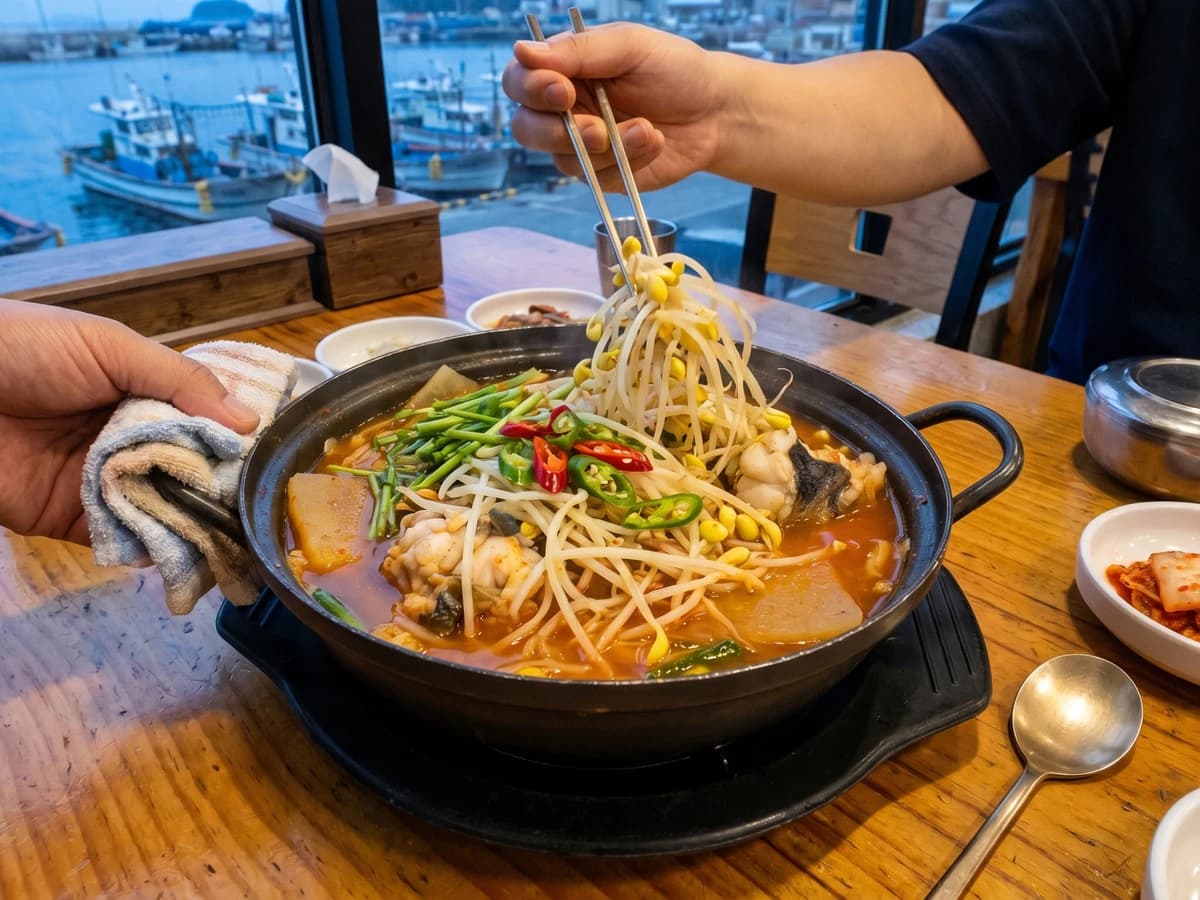
A Masan coast monkfish stew with firm white meat, gelatin at the bones, soybean sprouts for crunch, and a red broth seasoned to carry the fish, not bury it.

Chef Jeong-sun
A weeknight fish roe stew with radish and crown daisy in a clean spicy broth, where the whole success depends on adding the roe late enough that it sets tender, not chalky.

Chef Jeong-sun
Late-summer mallow leaves rubbed with salt until the bitter green water runs off, then simmered in a clean doenjang broth with dried shrimp, the quiet soup a Korean weeknight deserves.