
Chef Jeong-sun
Albaechu-mul-kimchi (Baby Cabbage Water Kimchi)
Tender baby napa cabbage in a clear pear-garlic brine, lightly fermented until the broth turns clean and bright, the summer kimchi a beginner can make without a kimjang floor.
A cooking platform built around craft, culture, and the stories behind what we eat.
Created by
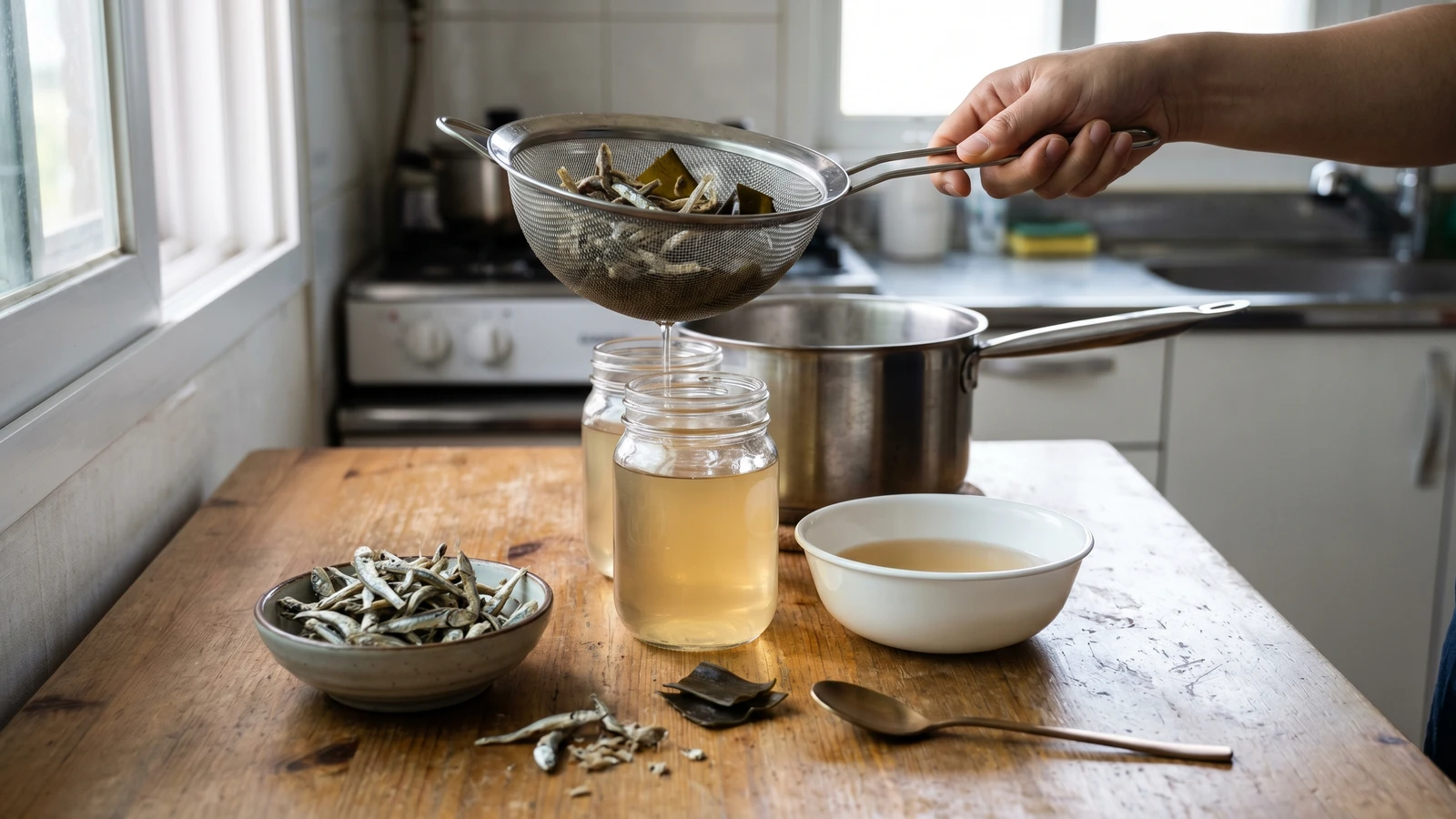
The quiet broth under half the Korean table: dried anchovies and kelp handled with exact timing, clean enough for soup, strong enough to carry jjigae.
This stock lives or dies by timing. Not expense, not a large pot, not some hidden restaurant trick. Kelp, dasima (dried kelp), gives its sweetness quickly and then turns slick and bitter if you make it stay too long. Dried anchovies, myeolchi, need longer, but only after their heads and dark guts are removed. That is the recipe people call simple and then ruin by walking away.
My teacher Master Seong-nyeo would set the pot on the smallest flame and say nothing. 눈동냥, 귀동냥, borrowing with the eyes and ears. I learned to watch the water before I watched the clock: tiny bubbles at the edge, kelp lifting and softening, the first true boil, then out. Ten minutes later the anchovies had given enough. More time did not mean more care. It meant fishiness.
Myeolchi-dasima yuksu is not served for praise. It disappears into doenjang-jjigae (soybean paste stew), kongnamul-guk (soybean sprout soup), tteokbokki sauce, kalguksu noodles, and the little broths that make a weeknight table taste as if someone was paying attention. Make two liters tonight, cool it properly, and your next three meals have already begun. Write it down. Memory is a borrowed bowl.
Anchovy and kelp stock became a backbone of modern Korean home cooking because dried seafood was portable, cheap, and easy to keep in the pantry before refrigeration reached every kitchen. The method is tied especially to everyday soups and stews rather than formal banquet food, and regional coastal markets shaped its strength: southern kitchens often use deeper dried fish flavors, while Seoul home cooking tends to keep the broth cleaner and lighter. Today it remains the most common quick stock for Korean weeknight cooking, especially where beef broth would be too heavy or too slow.
Quantity
2.2 liters
Quantity
40g, about 25 to 30
heads and dark guts removed
Quantity
20g, about two 10 cm squares
Quantity
1/2 medium
unpeeled and rinsed
Quantity
150g
peeled and cut into 2 thick slabs
Quantity
2
| Ingredient | Quantity |
|---|---|
| cold water | 2.2 liters |
| large dried anchovies (myeolchi)heads and dark guts removed | 40g, about 25 to 30 |
| dried kelp (dasima) | 20g, about two 10 cm squares |
| onion (optional)unpeeled and rinsed | 1/2 medium |
| Korean radish (mu) (optional)peeled and cut into 2 thick slabs | 150g |
| dried shiitake mushrooms (optional) | 2 |
Snap the heads off the dried anchovies and pinch out the dark guts from the belly. Leave the bodies whole. This takes five minutes and saves the broth from bitterness, so do not skip it because the stock will be strained later.
Put the cleaned anchovies in a dry pot over medium-low heat and stir for 2 minutes, just until they smell nutty and dry. This drives off stale fishiness. If your anchovies are very fresh and sweet, you can skip this, but old pantry anchovies need the help.
Add the cold water, kelp, and any optional onion, radish, or dried shiitake to the pot. Let it sit 10 minutes if you have time. Starting cold draws out the kelp's clean glutamate before heat makes it slippery, and that quiet savoriness is why we use dasima at all.
Set the pot over medium heat and watch the edge of the water. When small bubbles gather and the first boil begins, about 8 to 10 minutes, lift out the kelp at once. Do not let it roll at a boil with the anchovies. Kelp that boils hard gives the broth a thick, bitter edge.
Lower the heat so the liquid moves gently, then simmer the anchovies and vegetables for 10 minutes. Do not cover the pot. A covered pot traps the stronger fish smell; an open pot lets it lift away while the broth turns pale gold and savory.
Turn off the heat and strain through a fine sieve without pressing hard on the solids. Pressing squeezes out bitterness and cloudiness. You should have about 2 liters of clear, light amber stock.
Use the stock right away, or cool it quickly in shallow containers before refrigerating. Keep it refrigerated up to 4 days, or freeze it up to 2 months in 1-cup or 2-cup portions. That is how a weeknight jjigae becomes possible before everyone at the table gets impatient.
1 serving (about 500g)
Culinary guides, cultural storytelling, and the editorial depth that makes cooking meaningful.
Discover Culinary ExplorerChef Jeong-sun
Tender baby napa cabbage in a clear pear-garlic brine, lightly fermented until the broth turns clean and bright, the summer kimchi a beginner can make without a kimjang floor.

Chef Jeong-sun
The kimchi from before chili, salted napa cabbage packed with radish, pear, jujube, and pine nuts in a clear brine that turns quietly tart in the jar.

Chef Jeong-sun
A pale summer cucumber kimchi, split and stuffed with radish and chives, then held in a cool pear brine so the cucumber stays clean, crunchy, and plainly itself.

Chef Jeong-sun
Flat spring bomdong cabbage, lightly brined and tucked into a clear pear-radish kimchi broth, made without chili and eaten young while the leaves still taste like spring.