Chef Lupita
Acúmara Tatemada al Comal
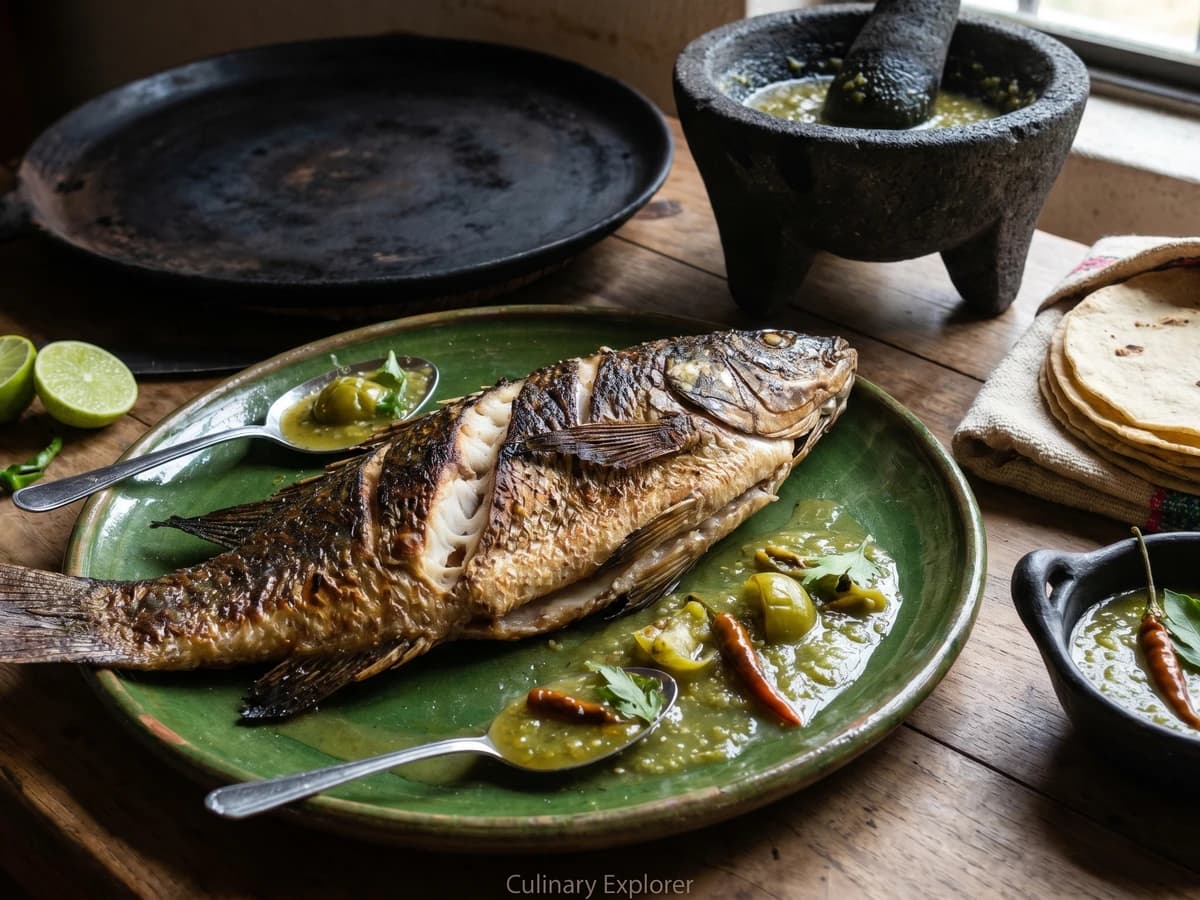
Michoacán's Lake Pátzcuaro acúmara, a whole kurucha from the lago tatemada on a comal de leña and served with chile perón atápakua, corn tortillas, and P'urhépecha discipline.
A cooking platform built around craft, culture, and the stories behind what we eat.
Created by
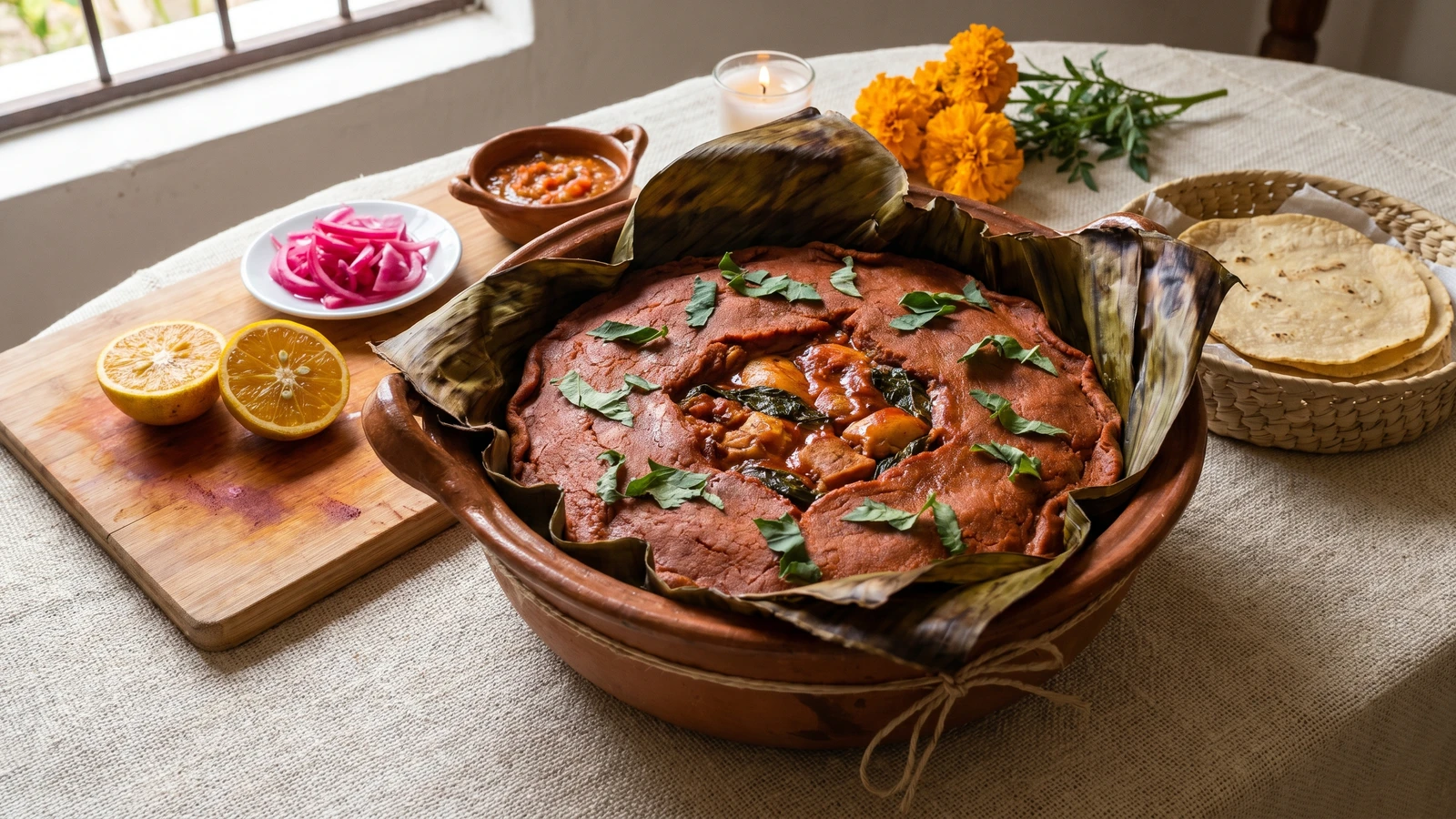
Yucatán's sacred Hanal Pixán pib, a great achiote-stained tamal of chicken, pork, and kol, wrapped in flame-passed banana leaves and slow-baked until the masa sets and the souls come home.
Mukbilpollo belongs to Yucatán. Not to Mexico in some vague national sense, to the peninsula, to the Mayan kitchens of Mérida and Valladolid and the small towns of Yaxcabá and Tixkokob where the families still dig the pib in the backyard at the end of October. The name is Mayan: muk means to bury, bil is the verb form, pollo is chicken. Buried chicken. That is exactly what this dish is.
This is the food of Hanal Pixán, the food of the souls. Between October 31 and November 2, the dead return to eat with the living, and what they come back for is mukbilpollo. The pib is dug in the earth, lined with stones heated in a wood fire, and the cazuela is lowered in, covered with leaves and dirt, and left to bake for hours while the family waits. The oven version you are about to make is a translation, not a substitute. Honor it accordingly.
The recado rojo stains the meat and the masa the color of brick dust. The kol, a thickened broth bound with masa, keeps the filling moist as it bakes. The banana leaves, passed over a flame until pliable, hold the whole thing together and give the masa a deep green herbal smoke that no other wrapper can replicate. Epazote, chile xcatic, sour orange. These are not garnishes. These are the dish.
My mother did not cook Yucatecan food. She was jalisciense. But I learned mukbilpollo from a señora named Doña Elvia in a small town outside Valladolid, who dug the pib with her sons every year on October 30 and taught me to flame the banana leaves over a wood fire so they would not crack. She told me: "Si no haces el pib, los muertos se van con hambre." If you do not make the pib, the dead leave hungry. I have made it every year since. Saber cocinar es saber vivir, and in Yucatán, saber cocinar es también saber recordar.
Mukbilpollo is the central dish of Hanal Pixán, the Yucatec Maya observance of the dead celebrated from October 31 through November 2 and predating the Catholic Day of the Dead by centuries. The pib, an earthen oven of heated stones covered with leaves and soil, is a pre-Columbian cooking method documented in Mayan codices and still used in rural Yucatán communities today, where the burial of the tamal mirrors the symbolic descent of the souls into and out of the underworld. The dish's defining recado rojo, a paste of achiote (annatto) seeds ground with sour orange, garlic, and Mayan oregano, is itself a survival of pre-conquest Mayan spice traditions, with achiote serving both as colorant and as a sacred ingredient associated with blood and renewal in classical Mayan ritual.
Quantity
2 pounds
Quantity
1 pound
cut into 2-inch pieces
Quantity
1 pound
cut into individual ribs
Quantity
1/2 cup
Quantity
1 cup
or 2/3 cup orange juice mixed with 1/3 cup lime juice and 1 tablespoon white vinegar
Quantity
1
cloves peeled
Quantity
1 tablespoon
preferably oregano yucateco
Quantity
1 tablespoon
Quantity
1 teaspoon
Quantity
1 teaspoon
Quantity
2 tablespoons, divided
Quantity
3 pounds
or 5 cups masa harina mixed with 4 cups warm water
Quantity
1 1/2 cups, divided
Quantity
2 tablespoons
Quantity
1
diced
Quantity
2
diced
Quantity
1
stemmed and sliced (or substitute güero or banana pepper)
Quantity
1 bunch
leaves only
Quantity
1/2 cup
Quantity
4 cups
Quantity
2
passed over an open flame until pliable
Quantity
as needed
Quantity
for serving
Quantity
for serving
Quantity
for serving
| Ingredient | Quantity |
|---|---|
| bone-in chicken pieces (thighs and drumsticks) | 2 pounds |
| pork shouldercut into 2-inch pieces | 1 pound |
| pork ribscut into individual ribs | 1 pound |
| recado rojo (achiote paste) | 1/2 cup |
| fresh sour orange juiceor 2/3 cup orange juice mixed with 1/3 cup lime juice and 1 tablespoon white vinegar | 1 cup |
| head of garliccloves peeled | 1 |
| dried Mexican oreganopreferably oregano yucateco | 1 tablespoon |
| ground allspice (pimienta gorda) | 1 tablespoon |
| ground black pepper | 1 teaspoon |
| ground cumin | 1 teaspoon |
| kosher salt | 2 tablespoons, divided |
| fresh masa for tortillasor 5 cups masa harina mixed with 4 cups warm water | 3 pounds |
| manteca de cerdo (pork lard) | 1 1/2 cups, divided |
| recado rojo (for staining the masa) | 2 tablespoons |
| large white oniondiced | 1 |
| large ripe tomatoesdiced | 2 |
| fresh chile xcaticstemmed and sliced (or substitute güero or banana pepper) | 1 |
| fresh epazoteleaves only | 1 bunch |
| masa harina (for the kol) | 1/2 cup |
| reserved cooking broth from the meats | 4 cups |
| large banana leavespassed over an open flame until pliable | 2 |
| kitchen twine | as needed |
| pickled red onions (optional) | for serving |
| habanero salsa (xnipec or chile tamulado) (optional) | for serving |
| hot corn tortillas (optional) | for serving |
In a blender, combine the half cup of recado rojo, the sour orange juice, peeled garlic, oregano yucateco, allspice, black pepper, cumin, and one tablespoon of the salt. Blend until completely smooth. The marinade should be the color of brick dust and smell sharp from the citrus and warm from the pimienta gorda. This is the recado that gives Yucatán its color. Without it, you are making something else.
Place the chicken, pork shoulder, and pork ribs in a large bowl. Pour the recado marinade over the meats and rub it into every surface with your hands. Your hands will turn orange. That is part of the work. Cover and refrigerate for at least four hours, ideally overnight. The recado needs time to penetrate the meat, not just coat it.
Transfer the marinated meats with all their marinade to a heavy stockpot. Add four cups of water and bring to a gentle simmer over medium heat. Skim the foam that rises in the first ten minutes. Simmer partially covered for about one hour and fifteen minutes, until the chicken and pork are tender but not falling apart. They will finish cooking inside the pib. Strain and reserve the broth. Pull the chicken meat from the bones in large pieces. Cut the pork shoulder into rough chunks. Keep the ribs whole.
In a saucepan, whisk the half cup of masa harina into one cup of cool reserved broth until smooth. Stir in two more cups of broth, a pinch of salt, and a few leaves of epazote. Cook over medium heat, stirring constantly with a wooden spoon, until the mixture thickens to the consistency of a loose gravy, about ten to twelve minutes. The kol is what binds the filling. It is what separates a mukbilpollo from a dry tamal. No me vengas con atajos. The kol takes ten minutes. Make it properly.
In a wide skillet, melt two tablespoons of the lard over medium heat. Add the diced onion and cook until soft and translucent, about five minutes. Add the diced tomato and the sliced chile xcatic. Cook for another five minutes until the tomato breaks down and releases its juice. Stir in the reserved meats, the kol, and a generous handful of torn epazote leaves. Season with salt to taste. The filling should be moist and saucy, the color of a deep terracotta. Let it cool slightly while you prepare the masa.
In a large bowl, combine the masa with the remaining lard (about one and a quarter cups) and the two tablespoons of recado rojo dissolved in a little warm broth. Work it together with your hands until the lard is fully incorporated and the masa turns a uniform orange-red. Add salt and enough warm broth to bring the masa to the consistency of soft cookie dough: pliable, slightly tacky, but holding its shape. Beat it for a full five minutes. The lard has to be worked in. La manteca es el sabor and in mukbilpollo it is also the tenderness.
Hold each banana leaf, one at a time, over an open gas flame or a hot dry comal, moving it across the heat for about ten seconds per section. The leaf will turn from matte to glossy and become pliable instead of brittle. This is non-negotiable. An unflamed banana leaf will crack and split the moment you fold it. Lay two leaves in a cross pattern inside a large deep cazuela or Dutch oven, leaving plenty of overhang on all sides to wrap the top later.
Spread about two thirds of the masa across the bottom and up the sides of the lined cazuela, building a thick masa shell about three quarters of an inch deep. Spoon the meat and kol filling into the center, mounding it generously. Tuck whole epazote leaves throughout the filling. Take the remaining masa and pat it into a flat disc the size of the cazuela opening. Lay it over the filling like a lid and seal the edges to the bottom masa shell with your fingers. The filling should be completely enclosed.
Fold the overhanging banana leaves over the top of the masa, one section at a time, until the tamal is completely wrapped. Tuck the edges in tight. Tie the bundle with kitchen twine, crossing over the top in a tight cross pattern to hold everything together as it bakes. Cover the cazuela with its lid or with heavy foil sealed at the edges.
Preheat the oven to 350°F. Place the covered cazuela in the oven and bake for one and a half hours. Do not open the oven for the first hour. The mukbilpollo needs the sealed heat to cook through evenly. After ninety minutes, check by inserting a thin knife through the banana leaf into the masa. It should come out clean and the masa should feel firm and set. If the knife comes out wet, return it to the oven for another fifteen minutes.
Pull the cazuela from the oven and let it rest, covered, for thirty minutes. This rest is critical. The masa needs to settle and the juices need to redistribute. If you cut into it the moment it leaves the oven, the kol will run out and the masa will collapse. Patience is part of the recipe. So is reverence. This is the dish you make for the dead. They have waited a year. You can wait thirty minutes.
Untie the twine and fold back the banana leaves at the table. The smell that rises is achiote, pork, epazote, and burned leaf, the smell of Hanal Pixán in every household across the peninsula. Cut wedges directly from the cazuela like a deep savory pie. Serve with pickled red onions, xnipec habanero salsa, and hot corn tortillas. The first plate goes on the altar for the souls. The second plate goes to the eldest at the table. Así se hace y punto.
1 serving (about 460g)
Culinary guides, cultural storytelling, and the editorial depth that makes cooking meaningful.
Discover Culinary ExplorerChef Lupita
Michoacán's Lake Pátzcuaro acúmara, a whole kurucha from the lago tatemada on a comal de leña and served with chile perón atápakua, corn tortillas, and P'urhépecha discipline.

Chef Lupita
Puebla's weekday adobo of pork shoulder braised in a thick guajillo and ancho sauce sharpened with vinegar, cumin, and clove. The deep red of a market spice stall, the dish a poblana cooks without thinking.

Chef Lupita
Loreto's pit-roasted clams, planted hinge-up in beach sand and tatemadas under a fast fire of dried romerillo brush, the resinous Baja desert shrub that gives this dish its smoke.

Chef Lupita
Oaxaca's eighth mole, the silky, almond-and-cinnamon almendrado, served over poached chicken. Mild, sweet, restrained, and a quiet rebuttal to anyone who thinks Mexican food has to be hot to be Mexican.