
Chef Juliana
Ambrosia Baiana
You think curdled milk means you ruined dessert. Good. Tonight you'll do it on purpose, with lemon, yolks, cravo, and sugar, until the pot turns into golden gruminhos.
A cooking platform built around craft, culture, and the stories behind what we eat.
Created by
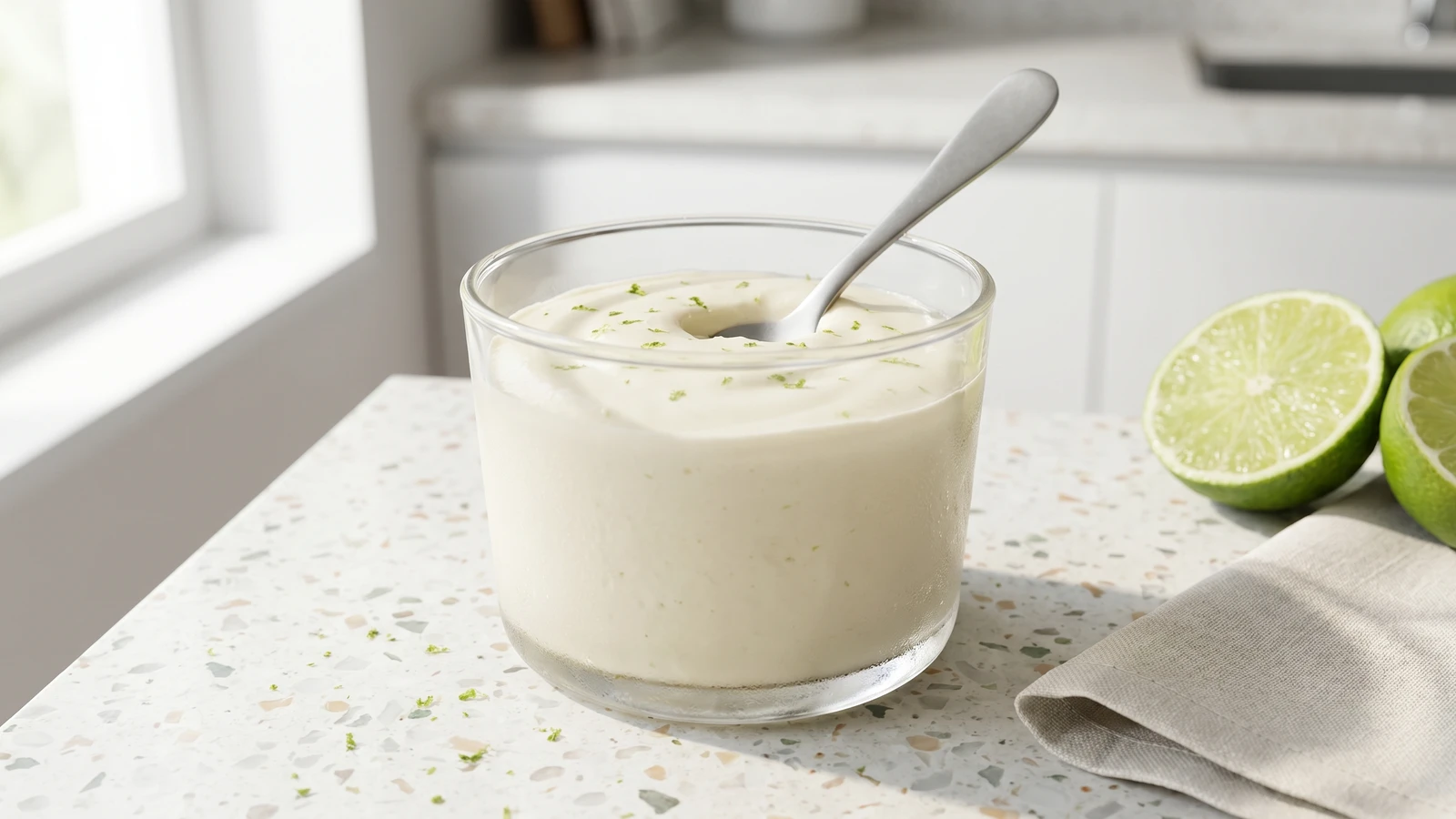
You think dessert is where cooking gets mysterious. Good. This one proves the opposite: fresh lime juice thickens condensed milk and cream while you watch, and the fridge does the rest.
You who mutters isso não é pra mim every time dessert appears, come here. This is the doubter's first dessert, and I say that with affection, because I learned to cook as a grown woman with a cheap notebook open on the counter and fear in my spoon. Cozinhar não é dom, é um aprendizado. Even mousse.
A Brazilian table doesn't need dessert every day, but after the pê-efe has done the serious work, rice, beans, a piece of chicken or egg, something green, a cold spoonful from the fridge can make the meal feel cared for. This mousse belongs there. It isn't a performance. It's condensed milk, cream, and fresh limão doing honest kitchen arithmetic.
The why is right in the blender. Lime juice is acidic, and that acidity makes the milk mixture thicken, so you see it grab onto itself before your eyes. The fridge finishes the job. Use fresh limão, not a powdered sobremesa mix pretending to be clever. Bottled juice will work if Tuesday is leaning on your shoulder, but it tastes flatter and a little tired; fresh limão smells alive the second you cut it.
Blend, watch it thicken, chill until it holds the spoon. Anota aí: receitas que funcionam are not the ones that impress the cook. They're the ones that bring you back to the kitchen tomorrow.
The word mousse is French, but the Brazilian no-oven version became a home dessert of the second half of the twentieth century, when condensed milk and canned or boxed cream turned into pantry bases for party sweets. In Brazil, limão in this recipe usually means limão Tahiti, the green Persian lime, not the yellow lemon common in English-language baking. The no-gelatin blender mousse is less about pastry tradition and more about the Brazilian habit of desgourmetizar dessert until it works in a real kitchen.
Quantity
1 can (14 ounces / 395 g)
Quantity
1 cup, or 1 carton (about 200 g)
Quantity
1/2 cup
from 4 to 6 limão Tahiti or Persian limes
Quantity
1 teaspoon, plus more for serving
finely grated
Quantity
1 pinch
| Ingredient | Quantity |
|---|---|
| sweetened condensed milk | 1 can (14 ounces / 395 g) |
| cold heavy cream or Brazilian creme de leite | 1 cup, or 1 carton (about 200 g) |
| fresh lime juicefrom 4 to 6 limão Tahiti or Persian limes | 1/2 cup |
| lime zestfinely grated | 1 teaspoon, plus more for serving |
| fine salt | 1 pinch |
Wash the limes, dry them, and grate only the green skin until you have 1 teaspoon of zest. Stop before the white pith, because that part is bitter and bossy. Cut and squeeze the limes until you have 1/2 cup juice. Measure it, don't guess, because the lime is what gives the mousse its ponto.
Put the condensed milk, cold cream, zest, and pinch of salt in the blender. Blend for 20 seconds, just until smooth and glossy. This gives the lime an even base to work through, so you don't get thin spots in one spoonful and sharp sour pockets in the next.
With the blender running on low, pour in the lime juice in a thin stream, then blend for 30 to 45 seconds. Watch the mixture change from pourable to thick and satiny. That's the acid doing its work. If it looks like soft pudding and briefly holds the trail of a spoon, you're there.
Divide the mousse into 6 small cups, cover, and refrigerate for at least 2 hours. Shallow cups set faster and serve neatly, which matters when patience has already left the room. The mousse is ready when the surface looks smooth and a spoon sinks in leaving a clean edge.
Finish with a little fresh lime zest right before serving. Add it at the end so it smells bright instead of tired from sitting in the fridge. Serve cold, in real home portions. Dessert is not a test of character. It's a spoon.
1 serving (about 125g)
Culinary guides, cultural storytelling, and the editorial depth that makes cooking meaningful.
Discover Culinary ExplorerChef Juliana
You think curdled milk means you ruined dessert. Good. Tonight you'll do it on purpose, with lemon, yolks, cravo, and sugar, until the pot turns into golden gruminhos.

Chef Juliana
You are not ruining the milk. You're curdling it on purpose, slowly, until sugar, eggs, cinnamon, and patience turn cheap ingredients into dessert.

Chef Juliana
You think curdled milk means failure. Not here. Milk, yolks, sugar, and lemon cook into golden curds in amber whey, a Minas sweet where the ponto teaches the whole recipe.

Chef Juliana
You already trust rice for dinner. Trust it for dessert: cook it gently with milk, coconut, and canela until each grain turns soft, creamy, and impossible to blame on lack of talent.