
Chef Juliana
Ambrosia Baiana
You think curdled milk means you ruined dessert. Good. Tonight you'll do it on purpose, with lemon, yolks, cravo, and sugar, until the pot turns into golden gruminhos.
A cooking platform built around craft, culture, and the stories behind what we eat.
Created by
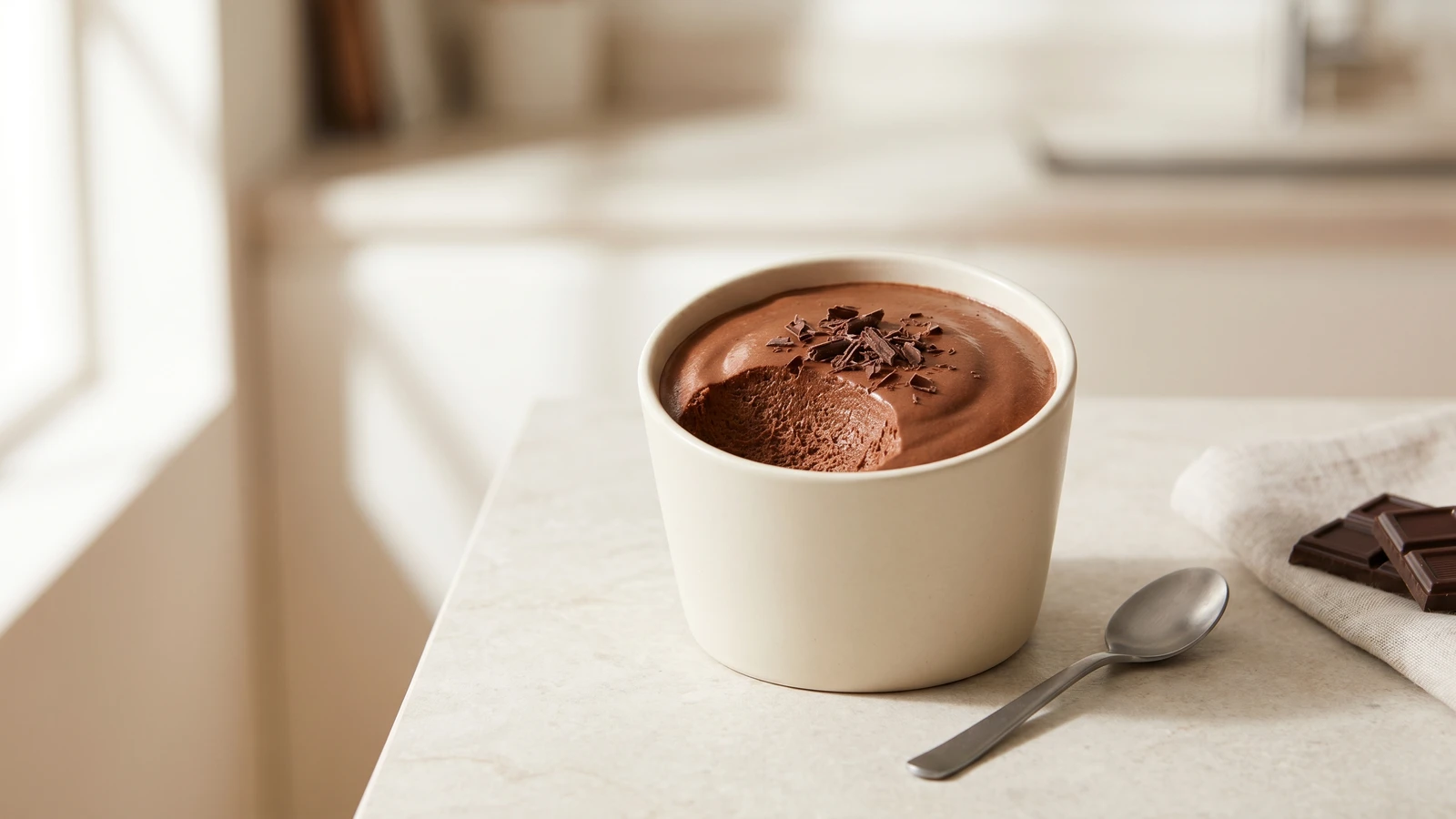
You don't need raw eggs, restaurant nerves, or a packet pretending to be dessert. Melt the chocolate, fold it gently, chill it properly, and you've solved tomorrow's sweet ending tonight.
You think, quietly, isso não é pra mim, because mousse sounds like something that belongs to people with copper bowls and opinions. Good. Let's take that nonsense off the counter. Cozinhar não é dom, é um aprendizado, and this one is just chocolate, cream, a little condensed milk, and the patience to fold instead of beat the life out of it.
I learned late enough to respect a recipe that tells the truth. So here it is: the chocolate gives the deep flavor, the cream gives the air, and the condensed milk sweetens and softens without turning the whole thing into sugar soup. You melt gently so the chocolate stays smooth. You whip only to soft peaks so the mousse stays tender. You fold so the air you just made doesn't disappear. Anota aí: the method is the dessert.
And yes, this belongs at the Brazilian table. After the pê-efe, rice, beans, something from the pan, something green, a small cold spoonful of chocolate is not a betrayal of comida de verdade. It's the sweet finish to real food, made from real ingredients, not powder from a packet with a promise printed on the front.
Make it tonight, let the fridge do its quiet work, and tomorrow you'll have a mousse that cuts an argument short. Soft, dark, cold, and yours.
Chocolate mousse is French in origin, with written versions appearing in the nineteenth century, but Brazil made the dessert its own through the household love of sweetened condensed milk and creme de leite. By the late twentieth century, eggless blender and chilled mousses had become common in Brazilian home kitchens, especially for birthdays, Sunday lunches, and make-ahead desserts. The packet version came later as convenience food, but the real dish needs no mystery: chocolate, dairy, air, and cold.
Quantity
200 g
chopped
Quantity
2 cups
Quantity
1/2 cup
Quantity
1 tablespoon
Quantity
1 teaspoon
Quantity
1 pinch
Quantity
2 tablespoons
| Ingredient | Quantity |
|---|---|
| dark or semisweet chocolatechopped | 200 g |
| cold heavy cream or creme de leite fresco | 2 cups |
| sweetened condensed milk | 1/2 cup |
| unsalted butter | 1 tablespoon |
| vanilla extract | 1 teaspoon |
| fine salt | 1 pinch |
| chocolate shavings (optional) | 2 tablespoons |
Put the chopped chocolate and butter in a heatproof bowl over a pan of barely simmering water, with the bowl not touching the water. Stir until the chocolate looks glossy and smooth, then take it off the heat. Gentle heat matters because chocolate burns and tightens when rushed, and then you're fighting lumps instead of making dessert.
Stir the condensed milk, vanilla, and salt into the melted chocolate until shiny and even. Let it cool for 8 to 10 minutes, until it feels just warm on your fingertip, not hot. If the chocolate is too hot, it melts the whipped cream and steals the air you need for mousse.
Pour the cold cream into a chilled bowl and whip until soft peaks form, about 2 to 4 minutes. Stop when the cream holds a gentle mound and the tip folds over. Don't chase stiff peaks here. Too firm and the mousse turns heavy, like sweet butter with ambition.
Add one big spoonful of whipped cream to the chocolate and stir it in to loosen the mixture. Then add the rest in two additions, folding from the bottom up with a spatula until no white streaks remain. Fold gently because this is where the mousse gets its body. Beat it hard and you knock out the air you just worked for.
Spoon the mousse into small cups or one serving bowl, smooth the tops without fussing, and cover. Chill for at least 4 hours, until cold and softly set. The fridge is part of the recipe, not waiting time for decoration. It firms the chocolate and lets the texture settle.
Scatter chocolate shavings on top if you're using them, then serve cold with small spoons. The mousse should be soft enough to scoop cleanly and thick enough to hold its shape for a second. That's the ponto. Not stiff, not runny, just right.
1 serving (about 140g)
Culinary guides, cultural storytelling, and the editorial depth that makes cooking meaningful.
Discover Culinary ExplorerChef Juliana
You think curdled milk means you ruined dessert. Good. Tonight you'll do it on purpose, with lemon, yolks, cravo, and sugar, until the pot turns into golden gruminhos.

Chef Juliana
You are not ruining the milk. You're curdling it on purpose, slowly, until sugar, eggs, cinnamon, and patience turn cheap ingredients into dessert.

Chef Juliana
You think curdled milk means failure. Not here. Milk, yolks, sugar, and lemon cook into golden curds in amber whey, a Minas sweet where the ponto teaches the whole recipe.

Chef Juliana
You already trust rice for dinner. Trust it for dessert: cook it gently with milk, coconut, and canela until each grain turns soft, creamy, and impossible to blame on lack of talent.