
Chef Juliana
Ambrosia Baiana
You think curdled milk means you ruined dessert. Good. Tonight you'll do it on purpose, with lemon, yolks, cravo, and sugar, until the pot turns into golden gruminhos.
A cooking platform built around craft, culture, and the stories behind what we eat.
Created by
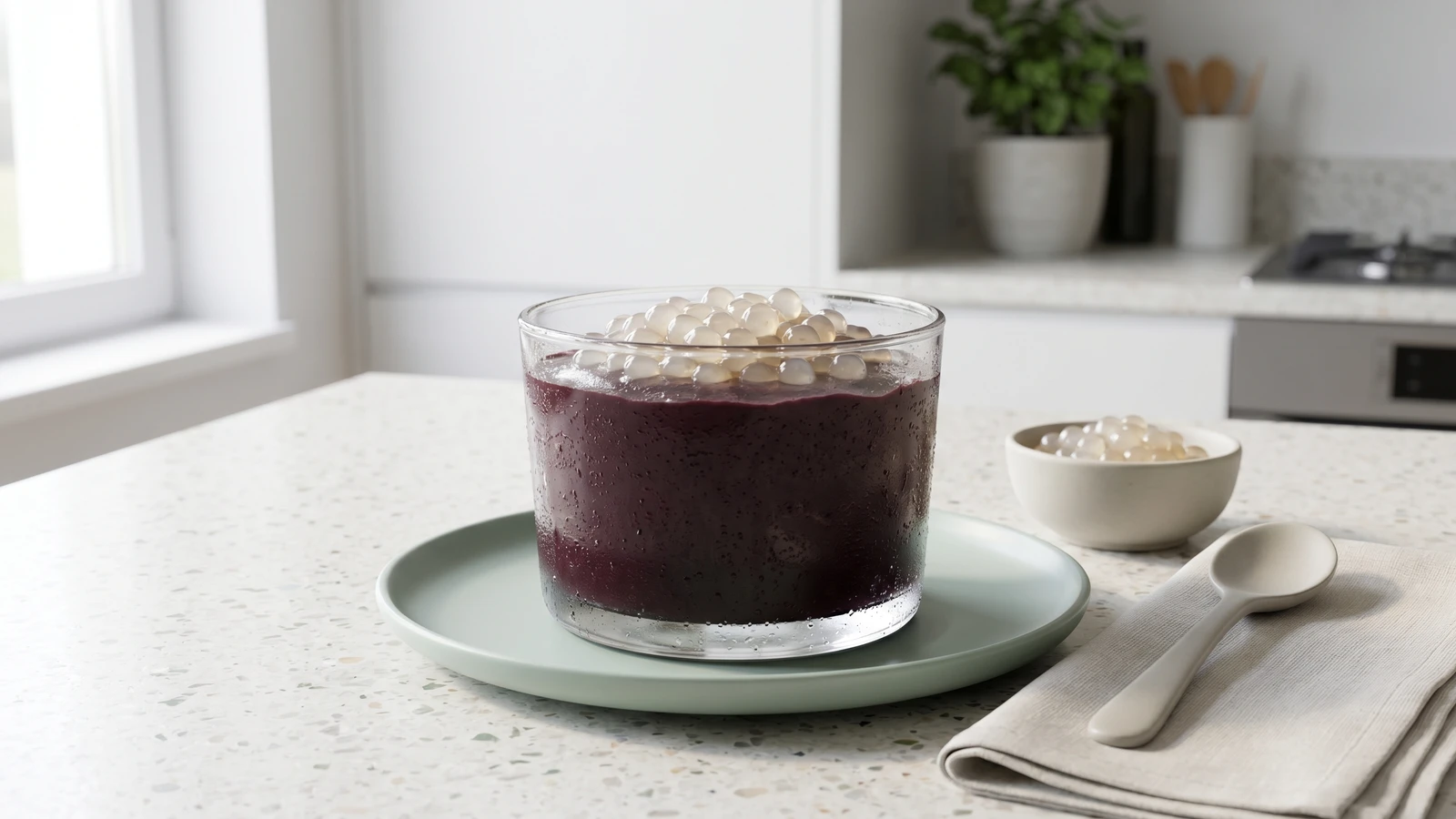
You think açaí is either a meal in Pará or a sweet bowl from the south. Here it becomes sobremesa without lying about either one: dark mousse, glossy pearls, no powder.
You may be standing in front of the freezer case thinking, isso não é pra mim. There are purple packs, yellow packs, words like grosso, médio, fino, cupuaçu, bacuri, and suddenly dessert feels like an exam. Good. That's where a gente starts. Cozinhar não é dom, é um aprendizado. Cooking is reading the label, measuring with cups and spoons, and doing the next plain thing.
At home, sobremesa belongs after the pê-efe, not instead of it: rice, beans, something from the pan, something green, then a cold spoonful if the day asks for it. This glass respects the two açaí lineages without pretending they're the same story. In Pará, açaí belongs first to the meal, thick and unsweetened, often with fish and farinha d'água. In the south and southeast, it became sweet and frozen. Here, a gaúcha who made her life in Belém gives it dessert manners, and nobody has to erase the first table to enjoy the second.
The method is simple, but it has points. Read the pulp label so you buy real unsweetened açaí, preferably grosso or médio. Cook the tapioca pearls until they go translucent, then rinse them so they stay glossy instead of turning into glue. Bloom the gelatin before it meets the cold fruit, because dry gelatin dumped into mousse makes little rubber beads, and we are not doing that nonsense today.
By the end you have a dark, chilled mousse with a cap of coconut-slick tapioca pearls. It tastes like a fruit that came from the north and a sobremesa that learned to behave at a family table. Comida de verdade can be cold, sweet, and eaten with a small spoon. Anota aí.
Açaí comes from Amazonian palms and belongs first to Indigenous and ribeirinho foodways; in Pará it is traditionally beaten thick, left unsweetened, and eaten as part of the meal with fish, shrimp, rice, and farinha d'água. The sweet, cold açaí that spread through southern Brazilian cities in the late twentieth century is a different lineage, shaped by freezers, banana, guaraná syrup, and dessert counters. This mousse follows the family story of a woman from Rio Grande do Sul who married a paraense, lived in Belém for thirty-five years, and turned northern açaí pulp into a sobremesa without erasing the savory table it came from.
Quantity
1/3 cup
not farinha de tapioca
Quantity
3 cups
for cooking the pearls
Quantity
1/2 cup
Quantity
2 tablespoons, plus more to taste
Quantity
1/8 teaspoon
divided
Quantity
2 teaspoons
Quantity
3 tablespoons
for blooming the gelatin
Quantity
2 packs (200 g each), about 1 3/4 cups total
thawed in the fridge until cold and pourable
Quantity
1/2 cup
Quantity
1 tablespoon
Quantity
1 cup
| Ingredient | Quantity |
|---|---|
| small tapioca pearls (sagu de tapioca)not farinha de tapioca | 1/3 cup |
| waterfor cooking the pearls | 3 cups |
| full-fat coconut milk | 1/2 cup |
| sugar | 2 tablespoons, plus more to taste |
| fine saltdivided | 1/8 teaspoon |
| unflavored gelatin powder | 2 teaspoons |
| cold waterfor blooming the gelatin | 3 tablespoons |
| frozen unsweetened açaí pulpthawed in the fridge until cold and pourable | 2 packs (200 g each), about 1 3/4 cups total |
| sweetened condensed milk | 1/2 cup |
| lime juice (optional) | 1 tablespoon |
| cold heavy cream | 1 cup |
Buy unsweetened polpa de açaí, preferably grosso. Médio works and is usually cheaper, but the mousse will be a little softer. Fino is thinner and less intense, so use it only if that's what you can get and add 1 extra teaspoon gelatin. Leave the packs in the fridge until they're cold and pourable, not warm. Warm açaí loses its clean fruit taste and makes the cream slump.
Bring 3 cups water to a boil in a 2-liter saucepan. Stir in the tapioca pearls and a tiny pinch of the salt, then lower to a lively simmer. Stir for the first minute so they don't clump at the bottom. Cook until most pearls turn translucent with only a small white dot in the center, 12 to 18 minutes. The dot finishes softening as they cool, and if you chase perfect transparency in the pot you'll end up with paste.
Drain the pearls in a fine-mesh sieve and rinse under cold water until they feel slippery and separate. Rinsing removes the loose surface starch, which is the difference between a glossy topping and a glue cap. Return the pearls to the pan with the coconut milk, sugar, and another tiny pinch of salt. Warm over low heat for 2 minutes, just until shiny and lightly sweet. Cool completely.
Sprinkle the gelatin over 3 tablespoons cold water in a small cup and let it sit for 5 minutes, until it looks swollen and matte. Melt it gently in short microwave bursts or over a pan of hot water until clear. Don't boil it. Gelatin is structure, not flavor, and boiling weakens the set.
Put the cold pourable açaí pulp, condensed milk, lime juice if using, and the last tiny pinch of salt in a blender. Blend just until smooth and dark, about 20 seconds. Taste it. It should be earthy, lightly sweet, and bright enough that the cream won't flatten it. If your açaí is very bitter, add condensed milk 1 tablespoon at a time. You decide the sweetness, not a pre-sweetened purple syrup.
Whip the cold cream in a chilled bowl until it holds soft peaks, the kind that bend over at the tip instead of standing stiff. Stop there. Soft cream folds into the açaí and gives the mousse air; overwhipped cream turns grainy and heavy, and then you wonder why dessert feels like work.
Stir 1/2 cup of the açaí base into the melted gelatin until smooth, then stir that mixture back into the rest of the açaí. This keeps the gelatin from setting into strings when it hits the cold fruit. Add the açaí base to the whipped cream in two additions, folding with a spatula until no pale streaks remain. Fold from the bottom and turn the bowl, because the air you keep now is the softness you eat later.
Divide the mousse among 6 small glasses, about 150 ml each. Tap each glass once on the counter to settle big air pockets, then chill uncovered for 30 minutes. Cover and chill until set, at least 4 hours. The mousse should wobble gently when you move the glass and hold a spoon mark on the surface.
Spoon the cooled tapioca pearls over the set mousse just before serving, or up to 8 hours ahead if the glasses will stay covered and cold. The pearls should look glossy and separate, not dry. Serve cold, straight from the fridge, while the glass has a little condensation and the mousse is firm enough to scoop cleanly.
1 serving (about 180g)
Culinary guides, cultural storytelling, and the editorial depth that makes cooking meaningful.
Discover Culinary ExplorerChef Juliana
You think curdled milk means you ruined dessert. Good. Tonight you'll do it on purpose, with lemon, yolks, cravo, and sugar, until the pot turns into golden gruminhos.

Chef Juliana
You are not ruining the milk. You're curdling it on purpose, slowly, until sugar, eggs, cinnamon, and patience turn cheap ingredients into dessert.

Chef Juliana
You think curdled milk means failure. Not here. Milk, yolks, sugar, and lemon cook into golden curds in amber whey, a Minas sweet where the ponto teaches the whole recipe.

Chef Juliana
You already trust rice for dinner. Trust it for dessert: cook it gently with milk, coconut, and canela until each grain turns soft, creamy, and impossible to blame on lack of talent.