
Chef Dimitra
Aegean Island Kakavia (Κακαβιά)
Aegean kakavia is the fisherman’s soup named for the pot itself: small rockfish, potato, onion, lemon, and enough olive oil to turn a poor catch rich.
A cooking platform built around craft, culture, and the stories behind what we eat.
Created by
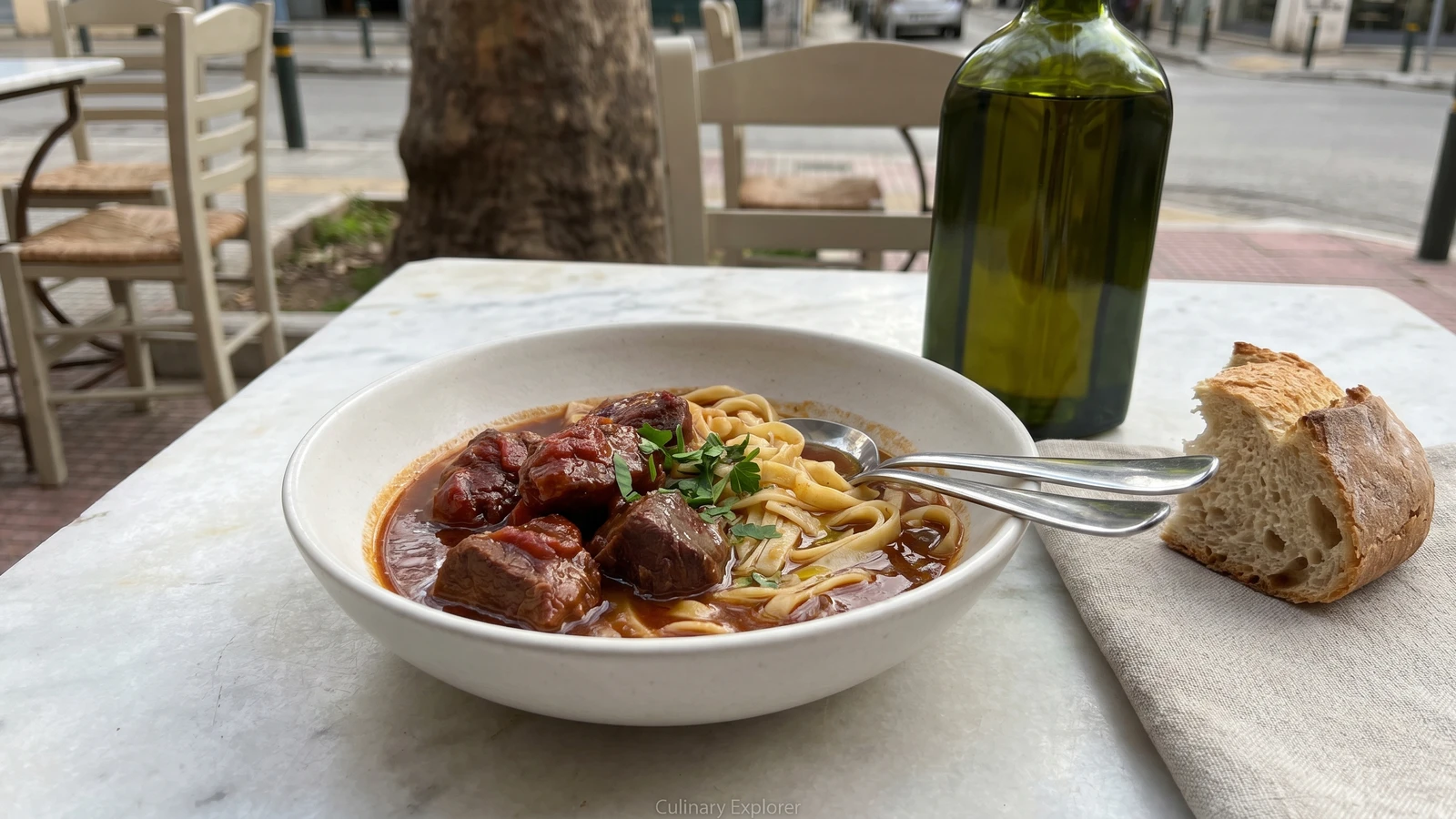
Thessaloniki's beef kokkinisto is a red tomato braise with cinnamon and clove, built on one honest step: sear the meat properly before the sauce begins.
Moshari kokkinisto in Thessaloniki is beef cooked red, soft enough to break with a spoon, in tomato sauce scented quietly with cinnamon and clove. The region is the dish's surname here: in the north, especially in the refugee and Politiki kitchens, the warm spices sit naturally beside tomato and meat. Not loud. Present.
Kokkinisto means 'reddened,' a family of Greek tomato braises that took its present form after tomatoes became common in Greek cooking in the nineteenth century. The cinnamon-and-clove version is especially at home in northern urban and refugee kitchens, where Constantinopolitan and Asia Minor habits kept warm spices close to meat sauces. In other regions the same method may lean toward allspice, garlic, or no sweet spice at all.
Quantity
1.2kg
cut into 5cm pieces and patted dry
Quantity
12g
divided
Quantity
3g
Quantity
80ml
divided
Quantity
2 large, about 300g
finely chopped
Quantity
3
minced
Quantity
2 tbsp
Quantity
150ml
Quantity
500g
grated, or use 400g good canned crushed tomatoes
Quantity
250ml
Quantity
1
Quantity
3
Quantity
1
Quantity
1 tsp
only if the tomatoes are sharp
Quantity
2 tbsp
chopped, for serving
| Ingredient | Quantity |
|---|---|
| beef chuck or shincut into 5cm pieces and patted dry | 1.2kg |
| fine sea saltdivided | 12g |
| freshly ground black pepper | 3g |
| extra virgin olive oildivided | 80ml |
| yellow onionsfinely chopped | 2 large, about 300g |
| garlic clovesminced | 3 |
| tomato paste | 2 tbsp |
| dry red wine | 150ml |
| ripe tomatoesgrated, or use 400g good canned crushed tomatoes | 500g |
| hot beef stock or hot water | 250ml |
| cinnamon stick | 1 |
| whole cloves | 3 |
| bay leaf | 1 |
| sugar (optional)only if the tomatoes are sharp | 1 tsp |
| flat-leaf parsley (optional)chopped, for serving | 2 tbsp |
Pat the beef very dry and season it with 8g of the salt and the black pepper. Let it stand while you chop the onions. Wet meat fights the pan before it ever meets the tomato.
Heat 50ml of the olive oil in a heavy pot over medium-high heat. Brown the beef in two or three batches, leaving space between the pieces, until each side is deep brown. This is the step that decides the kokkinisto. Crowd the pot and the meat steams grey, so the sauce tastes thin no matter how long you simmer it.
Lift the browned beef to a plate. Add the remaining 30ml olive oil and the onions to the pot with a pinch of the remaining salt. Cook for 8 to 10 minutes, scraping the bottom, until the onions are soft and sweet at the edges. Add the garlic for the last minute.
Stir in the tomato paste and cook for 2 minutes, until it darkens from bright red to brick red and leaves a little mark on the bottom of the pot. Pour in the wine and scrape well. Let it bubble for 3 minutes so the raw wine smell leaves.
Return the beef and its juices to the pot. Add the grated tomatoes, hot stock or water, cinnamon stick, cloves, bay leaf, and the rest of the salt. The liquid should come about two-thirds of the way up the meat, not drown it. Bring it just to a boil, then lower the heat at once.
Cover the pot with the lid slightly ajar and simmer gently for 1 hour 45 minutes to 2 hours, turning the meat once or twice. The sauce should murmur, not jump. When the beef yields to a spoon and the tomato has thickened into a glossy red sauce, it is ready.
Remove the cinnamon stick, cloves, and bay leaf. Taste the sauce. If the tomatoes are sharp, add the sugar and simmer 5 minutes more. Rest the kokkinisto off the heat for 15 minutes before serving with hilopites, rice, mashed potatoes, or fried potatoes, and parsley if you like.
1 serving (about 310g)
Culinary guides, cultural storytelling, and the editorial depth that makes cooking meaningful.
Discover Culinary ExplorerChef Dimitra
Aegean kakavia is the fisherman’s soup named for the pot itself: small rockfish, potato, onion, lemon, and enough olive oil to turn a poor catch rich.

Chef Dimitra
Corfu's bourdeto is a red, pepper-hot fish braise, traditionally made with scorpionfish, potatoes, tomato, and enough heat to announce the Ionian table.

Chef Dimitra
Central Macedonia's spring lamb fricassee braises shoulder with romaine, dill, and spring onion, then finishes the pot with avgolemono, the egg-lemon sauce that makes it silk.

Chef Dimitra
In Chania, tsigariasto is goat or lamb browned in olive oil, softened with wine, and left to braise without water until the pot gives back only glossy meat juices.