
Chef Dimitra
Aegean Island Kakavia (Κακαβιά)
Aegean kakavia is the fisherman’s soup named for the pot itself: small rockfish, potato, onion, lemon, and enough olive oil to turn a poor catch rich.
A cooking platform built around craft, culture, and the stories behind what we eat.
Created by
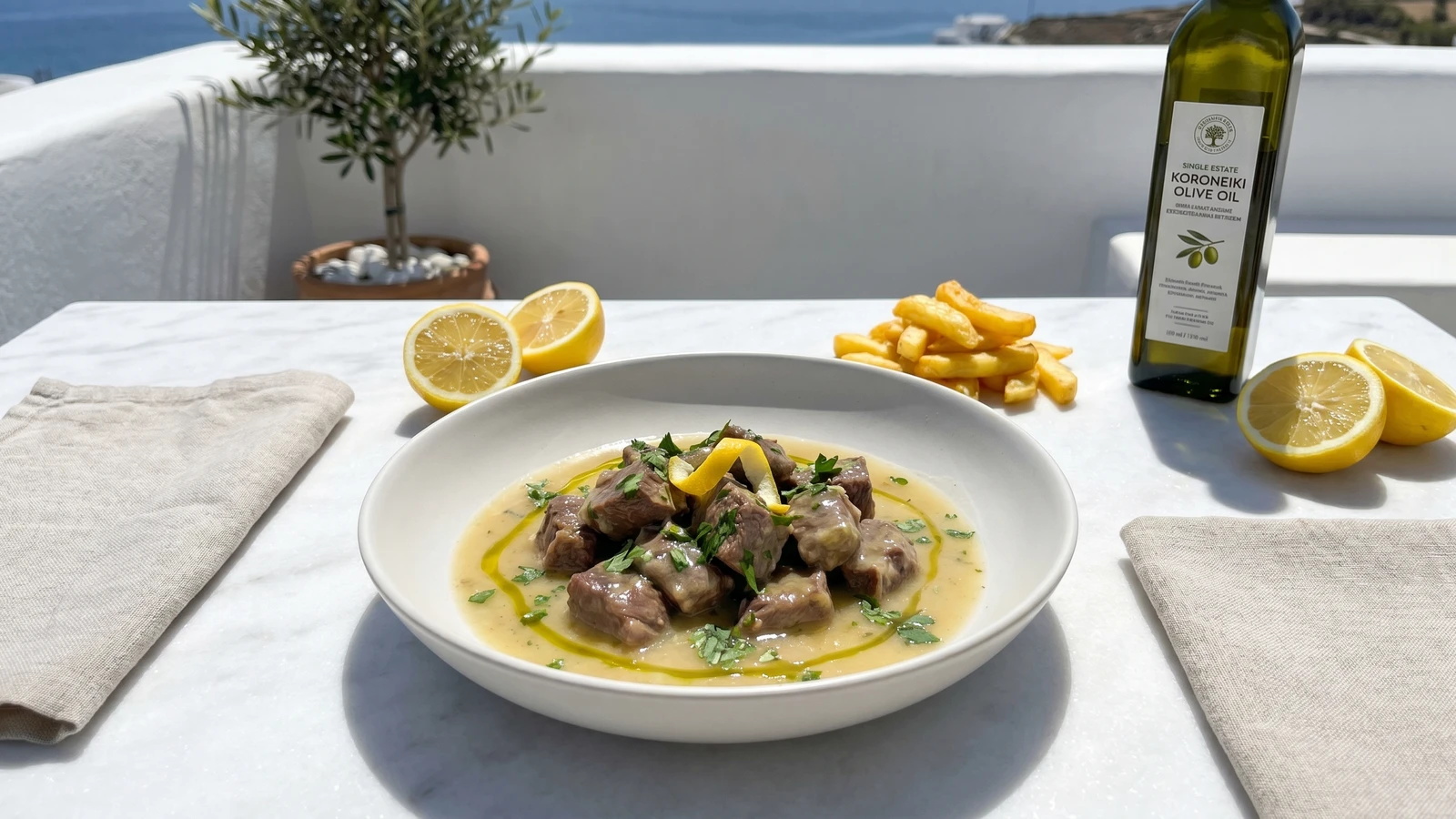
Sterea Ellada's lemon beef is pale, glossy, and sharp with lemon, a one-pot braise where good olive oil, patient simmering, and no tomato do the work.
Moschari Lemonato belongs to the mainland table, especially Sterea Ellada, where a pot of beef can be bright and pale instead of red with tomato. The sauce is lemon, olive oil, onion, wine, and the beef's own juices, reduced until it clings lightly to each piece. It should taste clean, not sour, and rich without heaviness.
The one rule is the lemon. Add it near the end, after the beef has softened and the sauce has already found its body. Lemon boiled for two hours turns flat and a little bitter. Lemon added late stays alive, lifts the meat, and keeps the dish itself.
Serve it with fried potatoes, rice, or hilopites, the small Greek egg noodles that catch the sauce properly. This is not a show dish. It is the kind of pot that goes on before the day takes hold, and by lunch the kitchen smells of beef, oregano, and lemon peel.
Lemonato is a family of pale Greek braises found across the mainland and islands, but the beef version is especially at home in Central Greece, where meat, olive oil, mountain oregano, and lemon formed a sauce before tomato became the default red answer. Tomatoes entered Greek cooking widely only in the nineteenth century, so these lemon-and-oil braises preserve an older habit of souring meat with citrus or wine. The dish is often made with veal in Greece, where moschari can mean young beef as well as beef more broadly.
Quantity
1.2kg
cut into 5cm pieces
Quantity
9g
Quantity
1/2 teaspoon
Quantity
80ml
Quantity
2 large
finely chopped
Quantity
3
lightly crushed
Quantity
150ml
Quantity
500ml
plus more as needed
Quantity
2
Quantity
1 teaspoon
Quantity
2 strips
yellow part only
Quantity
80ml
from about 2 large lemons
Quantity
1 tablespoon
optional, for a slightly thicker village-style sauce
Quantity
2 tablespoons
chopped, optional for serving
| Ingredient | Quantity |
|---|---|
| beef chuck, shin, or boneless short ribcut into 5cm pieces | 1.2kg |
| fine sea salt | 9g |
| freshly ground black pepper | 1/2 teaspoon |
| extra virgin olive oil, preferably Koroneiki | 80ml |
| yellow onionsfinely chopped | 2 large |
| garlic cloveslightly crushed | 3 |
| dry white wine | 150ml |
| hot water or light beef stockplus more as needed | 500ml |
| bay leaves | 2 |
| dried Greek oregano | 1 teaspoon |
| lemon peelyellow part only | 2 strips |
| fresh lemon juicefrom about 2 large lemons | 80ml |
| all-purpose flour (optional)optional, for a slightly thicker village-style sauce | 1 tablespoon |
| flat-leaf parsley (optional)chopped, optional for serving | 2 tablespoons |
Pat the beef very dry and season it with the salt and pepper. Let it stand for 15 minutes while you chop the onions. Dry meat browns; wet meat sweats, and this dish needs the quiet depth of browned beef under the lemon.
Warm the olive oil in a wide heavy pot over medium-high heat. Brown the beef in two or three batches, turning until the pieces have a deep golden crust on several sides, about 8 minutes per batch. Do not crowd the pot. Move the browned meat to a plate.
Lower the heat to medium. Add the onions to the same pot and cook for 8 to 10 minutes, scraping up the browned bits, until the onions are soft and honey-colored at the edges. Add the garlic and cook for 1 minute, just until it smells sweet.
Return the beef and any juices to the pot. If you want a slightly thicker sauce, sprinkle in the flour now and stir for 1 minute so it loses its raw taste. Pour in the wine and let it bubble for 2 minutes, then add the hot water or stock, bay leaves, oregano, and lemon peel.
Bring the pot just to a boil, then lower the heat until the liquid barely trembles. Cover and cook for 1 hour 45 minutes to 2 hours, turning the beef now and then, until a fork slides in without argument. Add a splash of hot water if the pot looks dry.
Remove the bay leaves and lemon peel. Stir in the fresh lemon juice and simmer uncovered for 8 to 10 minutes, until the sauce is glossy and lightly thickened. Taste for salt. The lemon should be bright, not harsh; if your lemons are fierce, stop at 60ml and add the rest only if the pot asks for it.
Let the beef rest off the heat for 10 minutes so the sauce settles. Spoon it into shallow bowls with its pale lemon sauce, a little parsley if you like, and fried potatoes, rice, or hilopites beside it.
1 serving (about 275g)
Culinary guides, cultural storytelling, and the editorial depth that makes cooking meaningful.
Discover Culinary ExplorerChef Dimitra
Aegean kakavia is the fisherman’s soup named for the pot itself: small rockfish, potato, onion, lemon, and enough olive oil to turn a poor catch rich.

Chef Dimitra
Corfu's bourdeto is a red, pepper-hot fish braise, traditionally made with scorpionfish, potatoes, tomato, and enough heat to announce the Ionian table.

Chef Dimitra
Central Macedonia's spring lamb fricassee braises shoulder with romaine, dill, and spring onion, then finishes the pot with avgolemono, the egg-lemon sauce that makes it silk.

Chef Dimitra
In Chania, tsigariasto is goat or lamb browned in olive oil, softened with wine, and left to braise without water until the pot gives back only glossy meat juices.