
Chef Lesia
Berezovyi Sik (березовий сік, birch sap drink)
Birch sap looks like water until you taste it: cold, faintly sweet, mineral, and gone almost as soon as spring admits it has arrived.
A cooking platform built around craft, culture, and the stories behind what we eat.
Created by
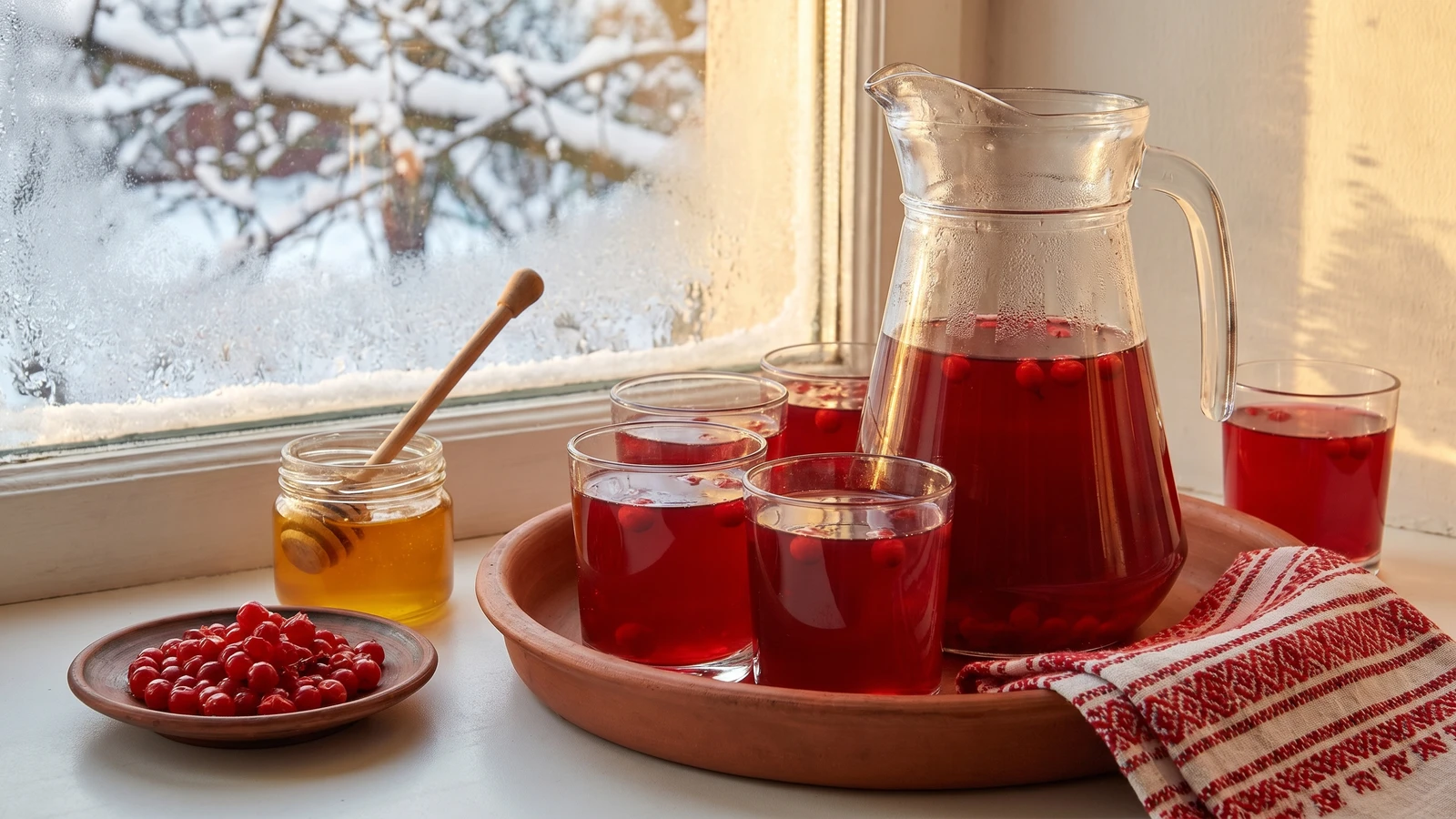
Kalyna stains the jug a fierce winter red, bitter at first sip, honeyed at the edges. Press the berries raw, simmer only the skins, and the drink keeps its bright bite.
Kalyna is red in a way winter understands: glassy clusters hanging on after the leaves have gone, dark as blood under frost, too sharp and bitter to flatter you. Bite one raw and it argues. Crush it with honey and water and it becomes mors, a drink that wakes the mouth instead of putting it to sleep.
The method is the whole point. You press the berries raw, catch that fierce juice, then simmer only the skins and seeds until the smell changes from twiggy to warm berry tea. Only when the pot has cooled do you stir the raw juice and honey back in, because boiling would steal the clean bite and a good part of the vitamin C. Aunt Nadia wrote it shorter, in her square little hand: 'do not cook the red.'
Make a big jug. In the Kherson steppe kalyna was more often a yard shrub than a damp hedgerow plant, but every winter table understands it: a sharp glass after rich food, a warm cup when your throat is cross, enough for eight guests or one hungry Ukrainian insisting it is medicine.
Kalyna, Viburnum opulus or guelder rose, has been a Ukrainian sign of beauty, blood, family continuity, and homeland for centuries, appearing in wedding songs, rushnyky, and yard plantings; the 1914 Sich Riflemen song 'Oi u luzi chervona kalyna' made the red berry a public emblem too. In cooking, it belongs especially to damp forest-steppe and Polissia hedges, while southern families often plant it near the house; mors keeps the raw pressed juice apart from the simmered skins because heat dulls both the berry's vitamin C and its clean bitter edge.
Quantity
500g
fresh after frost or frozen, stripped from stems
Quantity
2.5 litres
Quantity
120-180g
to taste
Quantity
a small pinch
| Ingredient | Quantity |
|---|---|
| kalyna berries (Viburnum opulus, guelder rose)fresh after frost or frozen, stripped from stems | 500g |
| water | 2.5 litres |
| mild honeyto taste | 120-180g |
| sea salt (optional) | a small pinch |
Strip the kalyna from its stems, rinse gently, and pick out any brown or green berries. If they have not met a frost, freeze them overnight first; the cold takes the hard shout out of the bitterness and lets the berry speak properly.
Put the berries in a deep bowl and crush them with a potato masher until the skins split and the red juice gathers at the bottom. Press through a fine sieve into a jug, working firmly but not grinding the seeds into a paste. Keep this raw juice aside. This is the bright part.
Tip the crushed skins and seeds into a pot with the water and bring it to a gentle simmer. Let it murmur, not roar, until the smell changes from green and twiggy to warm berry tea and the water turns clear red. Strain it well and press the solids once more, then discard them.
Let the strained berry water cool until it is warm to your finger, not hot. Stir in the honey until it melts, then add the reserved raw juice and a tiny pinch of salt if the bitterness is standing too far forward. Taste. The honey should round the kalyna, not bury it.
Pour the mors into a big jug and chill it until the color looks settled and jewel-dark. Serve cold in small glasses, or warm it gently for a winter cup, stopping before it simmers. If a little berry sediment gathers at the bottom, stir it back in; that's where the mouth-puckering life sits.
1 serving (about 320g)
Culinary guides, cultural storytelling, and the editorial depth that makes cooking meaningful.
Discover Culinary ExplorerChef Lesia
Birch sap looks like water until you taste it: cold, faintly sweet, mineral, and gone almost as soon as spring admits it has arrived.

Chef Lesia
Raw beets turn water into something dark, sour, and alive: a crimson drink for the glass, and the old quiet souring for borshch when vinegar has no business there.

Chef Lesia
Dried chebrets looks like a handful of dusty twigs until hot water wakes it, and suddenly the cup smells of bees, sun-baked grass, and rain on the steppe.

Chef Lesia
Dried pears turn water the color of late honey, then the jar begins to whisper. Serve it cold and tart, with fine bubbles, orchard smoke, and August still in the glass.