
Chef Lupita
Arroz a la Oaxaqueña
Oaxaca's red rice, stained with tomato and fried in lard, steamed with carrots, ejotes, black beans, and epazote. The side that anchors a Oaxacan family meal and earns its place beside the main.
A cooking platform built around craft, culture, and the stories behind what we eat.
Created by
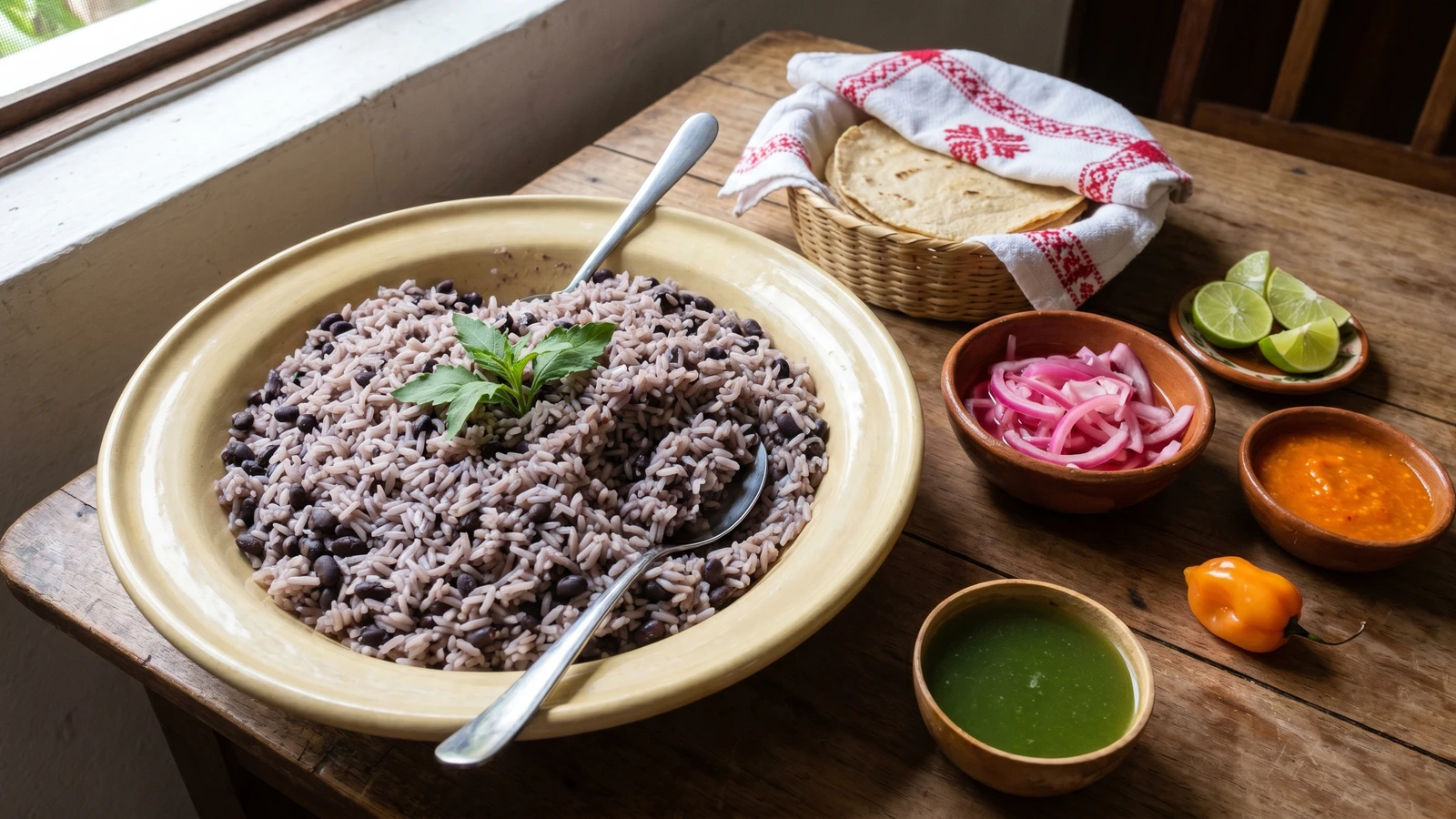
Yucatan's one-pot rice and black beans, built on lard, epazote, and a whole habanero, with the dark bean broth giving the grains their color and their backbone.
This is a Yucatecan dish, even though the name and the bones of it crossed the Gulf from Cuba. The Peninsula has always looked east as much as west. Merida traded with Havana for centuries, the boats came and went, and the cooks of Yucatan took the Cuban one-pot of black beans and rice and made it their own with epazote, with habanero, with the lard that anchors every serious dish on that side of the country.
The technique is not complicated and that is the point. You cook the beans first with epazote and a pricked habanero. You save the broth. You build a sofrito in lard, toast the rice in it, then pour the dark bean broth back in and let the pot do the work. The broth is what gives the rice its color and its weight. If you cook the rice in plain water and stir the beans in at the end, you have made something else. The rice and the beans have to share a pot from the beginning. That is the recipe.
My mother did not cook Yucatecan food. I learned this dish from a senora named Dona Lupe who ran a comedor near the Mercado Lucas de Galvez in Merida. She watched me toast the rice the first time and shook her head until the grains were the right shade of pale gold. She said: 'Si el arroz no canta en la manteca, el plato no sirve.' If the rice does not sing in the lard, the dish is no good. I have never forgotten it. Saber cocinar es saber vivir.
Moros y Cristianos arrived in the Yucatan Peninsula through the centuries-long maritime trade between Merida, Campeche, and Havana, particularly intensified during the colonial sugar and henequen economies of the 18th and 19th centuries. The name references the Reconquista and the centuries of Moorish rule in Spain, with the black beans standing in for the Moors and the white rice for the Christians, a culinary metaphor that traveled from Andalusia to the Caribbean to the Peninsula. The Yucatecan version distinguishes itself from its Cuban parent through three specific adaptations: the use of epazote in place of bay-and-oregano, the whole habanero pricked for perfume rather than heat, and pork lard rather than olive oil as the cooking fat.
Quantity
1 cup
picked over and rinsed
Quantity
6 cups, divided
Quantity
1 medium
half left whole, half finely chopped
Quantity
1
halved crosswise
Quantity
3
finely chopped
Quantity
2 large sprigs
Quantity
1
left whole and pricked once with a knife
Quantity
1 1/2 teaspoons, plus more to taste
Quantity
3 tablespoons
Quantity
2 cups
Quantity
1
finely chopped
Quantity
2
finely chopped
Quantity
1/2 teaspoon
Quantity
1
Quantity
for serving
Quantity
for serving
Quantity
for serving
| Ingredient | Quantity |
|---|---|
| dried black beans (frijol negro)picked over and rinsed | 1 cup |
| water | 6 cups, divided |
| white onionhalf left whole, half finely chopped | 1 medium |
| head of garlichalved crosswise | 1 |
| garlic clovesfinely chopped | 3 |
| fresh epazote | 2 large sprigs |
| fresh chile habaneroleft whole and pricked once with a knife | 1 |
| kosher salt | 1 1/2 teaspoons, plus more to taste |
| manteca de cerdo (pork lard) | 3 tablespoons |
| long-grain white rice | 2 cups |
| small green bell pepperfinely chopped | 1 |
| plum tomatoesfinely chopped | 2 |
| ground cumin | 1/2 teaspoon |
| bay leaf | 1 |
| pickled red onion with sour orange (optional) | for serving |
| salsa de chile habanero (optional) | for serving |
| lime wedges (optional) | for serving |
Place the rinsed black beans in a heavy pot with 5 cups of water, the whole onion half, the halved garlic head, and one sprig of epazote. Bring to a boil over high heat, then drop to a low simmer. Cook uncovered for about an hour, until the beans are tender but still hold their shape. Add the habanero and one teaspoon of salt in the last fifteen minutes. Do not salt earlier or the skins will toughen.
Strain the beans through a colander set over a bowl. Reserve the cooking liquid. Discard the onion half, garlic head, and the spent epazote sprig. Set the habanero aside. You should have about 3 cups of dark, savory bean broth. If you have less, top it up with water. This broth is the cooking liquid for the rice and where the color of the dish comes from. Do not throw it out.
Place the rice in a fine-mesh strainer and rinse under cold water until the water runs clear. Shake out the excess and spread the rice on a clean kitchen towel for five minutes. Wet rice steams when it hits the lard and refuses to brown. Dry rice toasts properly. Esto no es decoración, es trabajo.
In a wide heavy pot or cazuela, melt the lard over medium heat. Add the chopped onion and cook for three minutes until translucent. Add the chopped garlic, green bell pepper, and tomato. Cook for five more minutes, stirring, until the tomato breaks down and the lard turns red around the edges. Stir in the cumin and bay leaf. La manteca es el sabor. Olive oil will give you a different dish, and not a Yucatecan one.
Add the dried rice to the sofrito. Stir constantly for three to four minutes. The grains will turn from chalky white to translucent at the edges and start to smell nutty. This is the step that decides whether your rice is loose and separate or a sticky mass. Do not skip it. Do not rush it.
Pour in 3 cups of the reserved bean broth (top up with water if short). Add the drained beans, the remaining sprig of epazote, and the remaining half teaspoon of salt. Taste the broth before it absorbs. It should be assertively seasoned. Bland broth makes bland rice and there is no fixing it once the lid goes on.
Bring the pot to a vigorous boil for thirty seconds. Stir once, then lower the heat to the lowest setting. Cover tightly. Cook for 18 to 20 minutes without lifting the lid. Lifting it lets the steam out and the rice goes uneven. Trust the pot.
Pull the pot off the heat and let it sit, still covered, for ten minutes. This is when the grains finish absorbing and firm up. Lift the lid, fish out the bay leaf and epazote stems, and fluff gently with a fork from the edges toward the center. The black beans should be visible against the rice, scattered through like the name says: Moors and Christians. Serve in a clay cazuela with pickled red onion, salsa de habanero, and lime at the table. Así se hace y punto.
1 serving (about 250g)
Culinary guides, cultural storytelling, and the editorial depth that makes cooking meaningful.
Discover Culinary ExplorerChef Lupita
Oaxaca's red rice, stained with tomato and fried in lard, steamed with carrots, ejotes, black beans, and epazote. The side that anchors a Oaxacan family meal and earns its place beside the main.
Chef Lupita
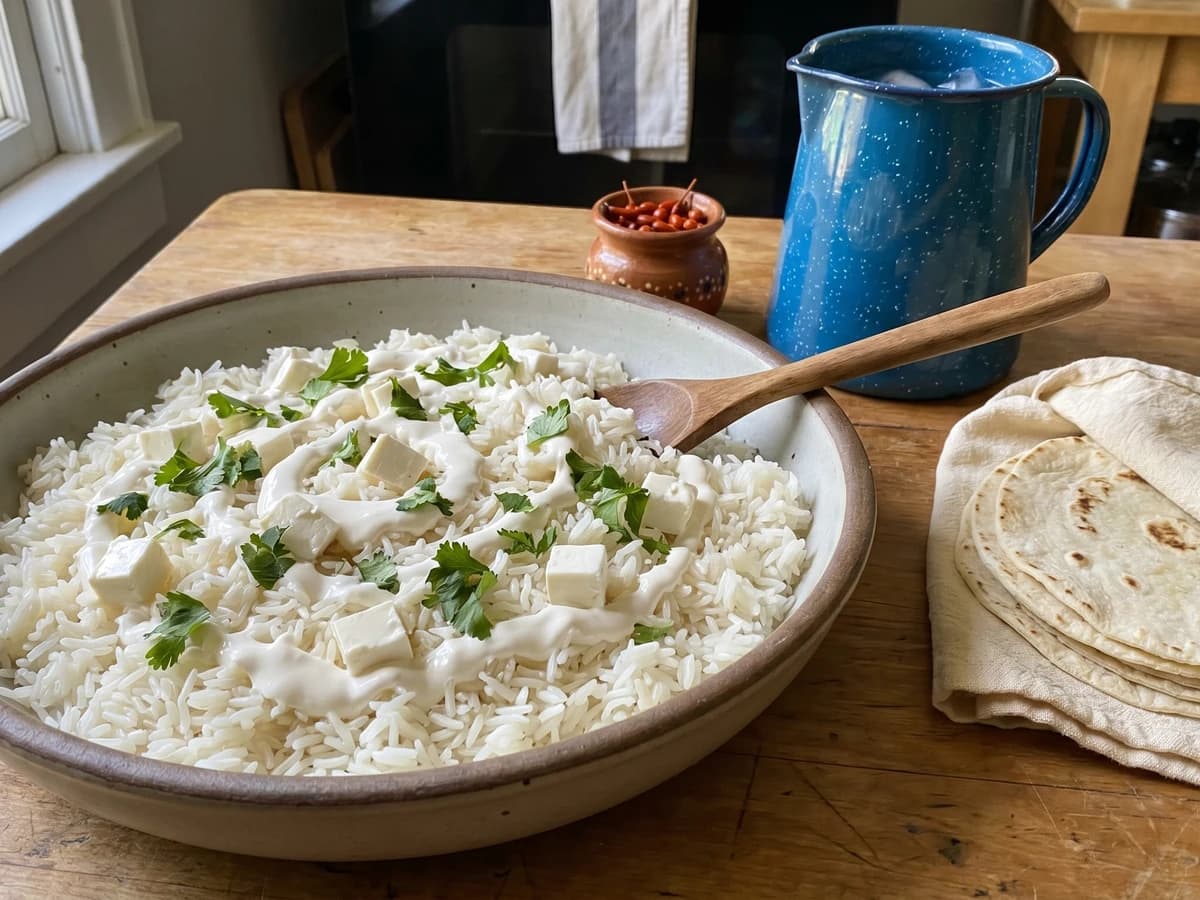
Sinaloa's home-cook white rice topped with cold cubes of cream cheese that soften into the warm grain, finished with crema and a sprinkle of chiltepin at the table. The trick that makes a side dish feel like a small luxury.
Chef Lupita
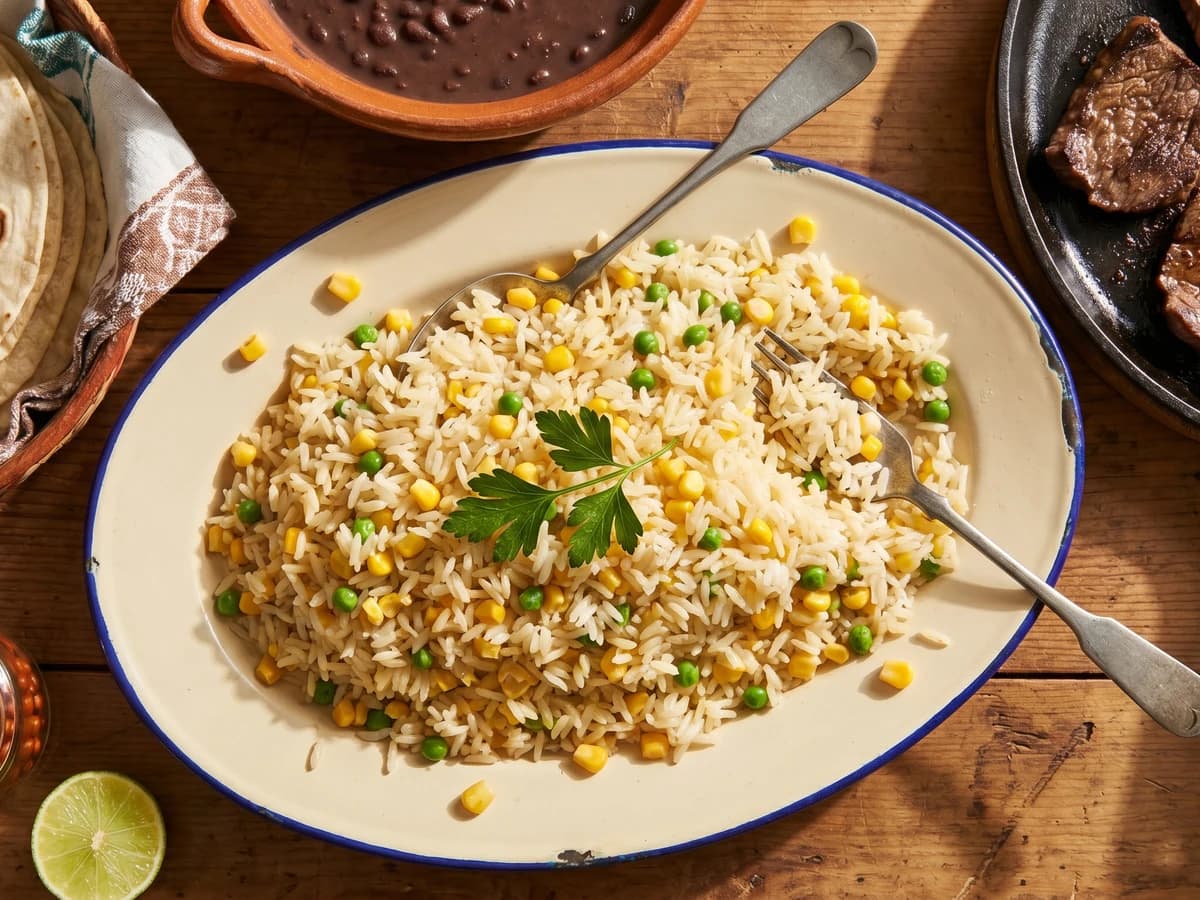
Sonora's white rice, toasted in butter and steamed with sweet corn and tender peas. The clean, quiet partner to a plate of carne asada, not the red rice of central Mexico.

Chef Lupita
Yucatán's white rice with sweet corn kernels, toasted in lard with garlic and onion. The quiet base that holds up against the peninsula's bold achiote-stained stews.