
Chef Lupita
Arroz a la Oaxaqueña
Oaxaca's red rice, stained with tomato and fried in lard, steamed with carrots, ejotes, black beans, and epazote. The side that anchors a Oaxacan family meal and earns its place beside the main.
A cooking platform built around craft, culture, and the stories behind what we eat.
Created by
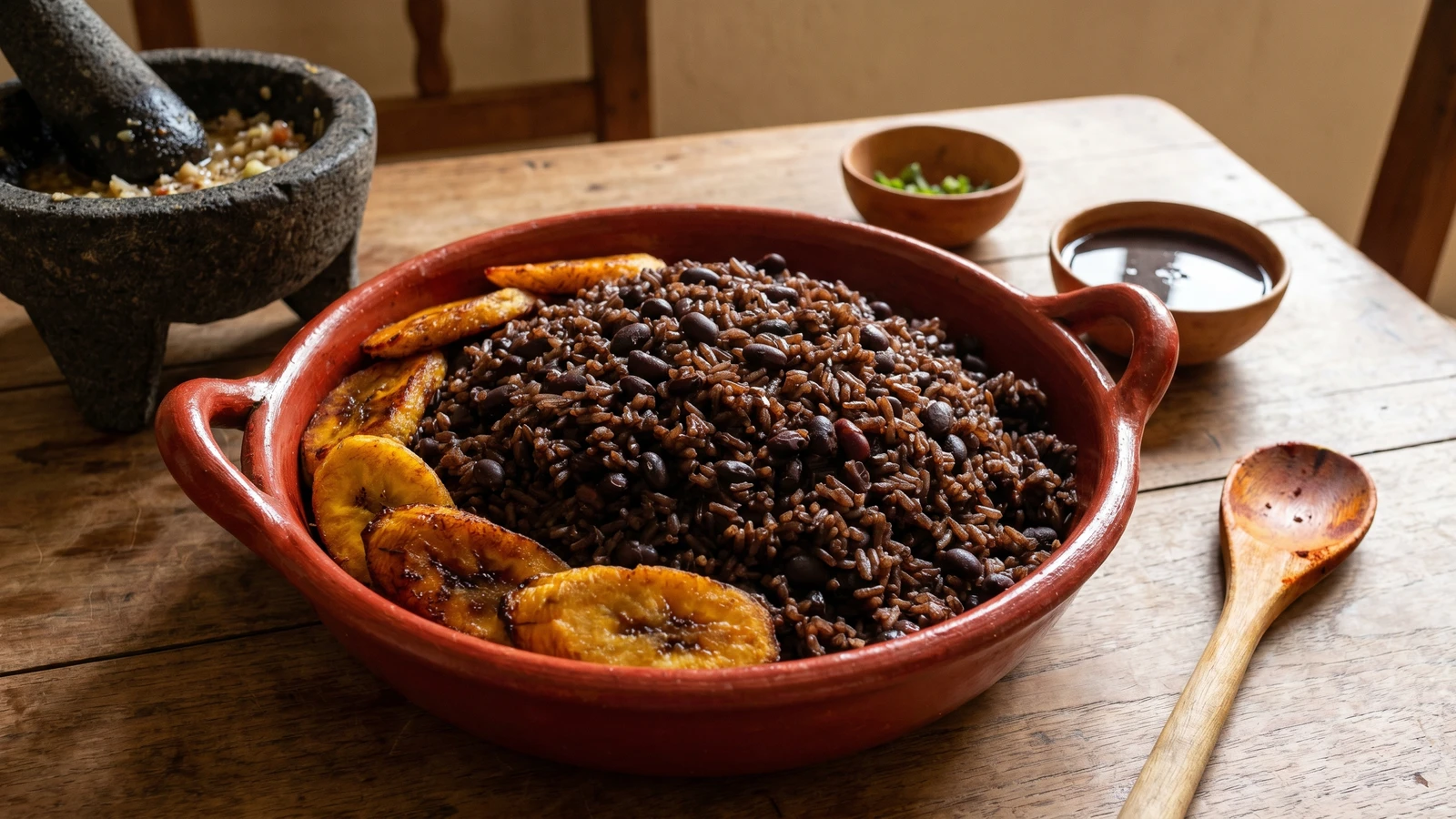
Veracruz's jarocho rice and black beans, darkened with bean broth, epazote, achiote, and pork lard, then sharpened with the Afro-Cuban garlic-vinegar mojo that came through the port.
Veracruz, the jarocho coast from the port to Alvarado and the Sotavento, is where this pot belongs. Moros y Cristianos came through the Gulf with Cuba close enough to feel in the music, the sugar trade, the tobacco, the garlic-vinegar mojo. But this is not Cuban congrí copied into Mexico. This is Veracruz taking what arrived by ship and cooking it with frijol negro, epazote, achiote, and manteca de cerdo.
The black beans are the moros. The white rice is the cristianos. Cooked together, the rice gives up its whiteness and takes the dark broth. That is the point. Do not cook plain white rice and spoon beans on top. That is lunch when you are tired. Moros y Cristianos is one pot, one color, one decision made correctly from the beginning.
I learned this version from a señora near the Mercado Hidalgo in the port, the kind of cook who could feed dockworkers, cousins, and three unexpected guests without raising her voice. She fried the rice in lard until it sounded dry against the cazuela, then added the black bean broth hot and closed the lid like the matter was settled. It was. La cocina no es decoración, es trabajo. Serve it in red barro, with plátano macho frito if the market has ripe ones. Saber cocinar es saber vivir.
Moros y Cristianos carries a Spanish name that refers to medieval Christians and Muslims, but the rice-and-black-bean pot took its household form in Cuba. In the 19th century, the Veracruz-Havana maritime route moved sugar, tobacco, music, workers, and cooks between the two ports, and the dish settled into jarocho kitchens with local epazote, achiote, and pork lard. It is related to Cuban congrí, but in Veracruz the bean broth darkens the rice more heavily and the seasoning belongs to the Gulf coast.
Quantity
1 1/2 cups
picked over and rinsed
Quantity
enough for soaking, plus 8 cups for cooking
Quantity
1/2 medium
for the bean pot
Quantity
4
smashed, for the bean pot
Quantity
2 sprigs
Quantity
1
Quantity
2 teaspoons, divided, plus more to taste
Quantity
2 cups
rinsed until the water runs clear and drained for 20 minutes
Quantity
3 tablespoons
Quantity
1 small
finely chopped
Quantity
4
finely chopped
Quantity
1
slit lengthwise
Quantity
1 tablespoon
Quantity
1/2 teaspoon
Quantity
3 cups, plus more if needed
Quantity
2 cups
Quantity
3
Quantity
1/2 teaspoon
Quantity
2 tablespoons
Quantity
1 tablespoon
or 2 teaspoons orange juice plus 1 teaspoon lime juice
Quantity
2
sliced on the bias
Quantity
1/4 cup
for frying the plantains
| Ingredient | Quantity |
|---|---|
| dried black beans (frijol negro)picked over and rinsed | 1 1/2 cups |
| cold water | enough for soaking, plus 8 cups for cooking |
| white onionfor the bean pot | 1/2 medium |
| garlic clovessmashed, for the bean pot | 4 |
| fresh epazote | 2 sprigs |
| bay leaf | 1 |
| kosher salt | 2 teaspoons, divided, plus more to taste |
| long-grain white ricerinsed until the water runs clear and drained for 20 minutes | 2 cups |
| pork lard (manteca de cerdo) | 3 tablespoons |
| white onionfinely chopped | 1 small |
| garlic clovesfinely chopped | 4 |
| fresh chile jalapenoslit lengthwise | 1 |
| achiote paste | 1 tablespoon |
| dried Mexican oregano | 1/2 teaspoon |
| warm black bean cooking liquid | 3 cups, plus more if needed |
| cooked black beans | 2 cups |
| garlic cloves for the mojo | 3 |
| kosher salt for the mojo | 1/2 teaspoon |
| cane vinegar or white vinegar | 2 tablespoons |
| sour orange juice (naranja agria)or 2 teaspoons orange juice plus 1 teaspoon lime juice | 1 tablespoon |
| ripe plantains (platano macho maduro) (optional)sliced on the bias | 2 |
| pork lard or unrefined coconut oil (optional)for frying the plantains | 1/4 cup |
Place the black beans in a large bowl and cover with cold water by three inches. Let them soak overnight. Drain and rinse them the next day. This gives you beans that cook evenly and a cleaner black broth for the rice. The broth is not a by-product here. It is the color of the dish.
Put the soaked beans in a heavy pot with 8 cups cold water, the half onion, smashed garlic, epazote, and bay leaf. Bring to a simmer, then lower the heat and cook uncovered until the beans are tender but not broken, about 1 hour 20 minutes to 1 hour 40 minutes. Add 1 teaspoon salt only after the beans have softened, then cook 10 minutes more. Remove the onion, garlic, epazote stems, and bay leaf. Reserve at least 3 cups of the dark cooking liquid and 2 cups of beans for the rice.
Rinse the rice under cold water until the water runs mostly clear, then drain it for 20 minutes. Wet rice jumps in hot fat and unrinsed rice turns gluey. In a small bowl, dissolve the achiote paste in 1/4 cup of the warm bean liquid. Achiote clumps if you throw it straight into the pot. Respect the ingredient and it behaves.
Melt the pork lard in a 4-quart clay cazuela or heavy pot over medium heat. Add the chopped onion and cook until it softens and turns translucent at the edges, about 4 minutes. Add the chopped garlic, slit chile jalapeno, and Mexican oregano. Cook for 1 minute, just until the garlic smells sharp and alive. This is not a chile-forward dish. The jalapeno perfumes the fat. It does not turn the pot into a dare.
Add the drained rice to the lard and stir steadily for 4 to 5 minutes. The grains should turn pearly and make a dry, sandy sound against the pot. This frying step is why the grains stay separate after they drink the bean broth. No me vengas con atajos. If you skip it, you get paste.
Stir in the dissolved achiote, the remaining warm bean cooking liquid, 2 cups cooked black beans, and the remaining 1 teaspoon salt. The liquid should look almost black with a reddish edge from the achiote. Taste it now. It should be slightly saltier than you want the finished rice, because the grains will absorb the seasoning. Bring to a lively simmer.
Cover the pot tightly, lower the heat to the lowest setting, and cook for 18 to 20 minutes. Do not stir. Do not lift the lid every five minutes to check your feelings. When the rice is ready, small holes will mark the surface and the liquid will be absorbed. Turn off the heat and let the covered pot rest for 15 minutes. Resting is part of cooking. Asi se hace y punto.
While the rice rests, pound the 3 garlic cloves and 1/2 teaspoon salt in a molcajete until you have a rough paste. Stir in the cane vinegar and sour orange juice. This is the jarocho echo of the Afro-Caribbean garlic-vinegar mojo: sharp, practical, and strong enough to cut through beans and lard.
Open the pot and remove the slit jalapeno. Drizzle 1 tablespoon of the mojo around the edge of the rice, then fluff gently with a fork from the outside toward the center. Do not beat the rice to death. Pass the remaining mojo at the table for people who know what they are doing.
If serving plantains, fry the slices in pork lard or unrefined coconut oil until the edges are deep gold and the centers are soft. Spoon the moros y cristianos from the cazuela family-style, with the fried plantains alongside. This is Veracruz, not Cuba and not Cartagena. The port brought the conversation. The epazote, achiote, lard, and black bean broth made it jarocho. Cada estado, su propia cocina.
1 serving (about 270g)
Culinary guides, cultural storytelling, and the editorial depth that makes cooking meaningful.
Discover Culinary ExplorerChef Lupita
Oaxaca's red rice, stained with tomato and fried in lard, steamed with carrots, ejotes, black beans, and epazote. The side that anchors a Oaxacan family meal and earns its place beside the main.
Chef Lupita
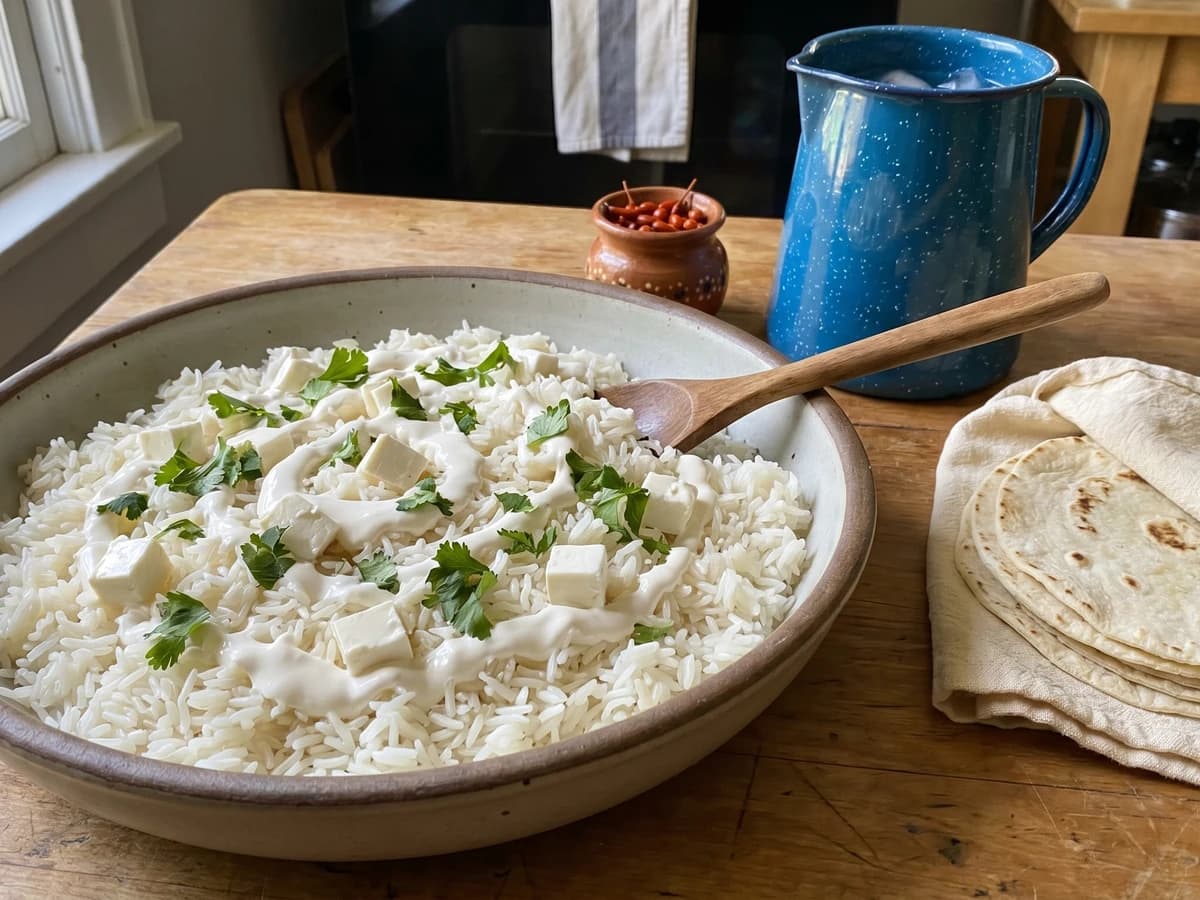
Sinaloa's home-cook white rice topped with cold cubes of cream cheese that soften into the warm grain, finished with crema and a sprinkle of chiltepin at the table. The trick that makes a side dish feel like a small luxury.
Chef Lupita
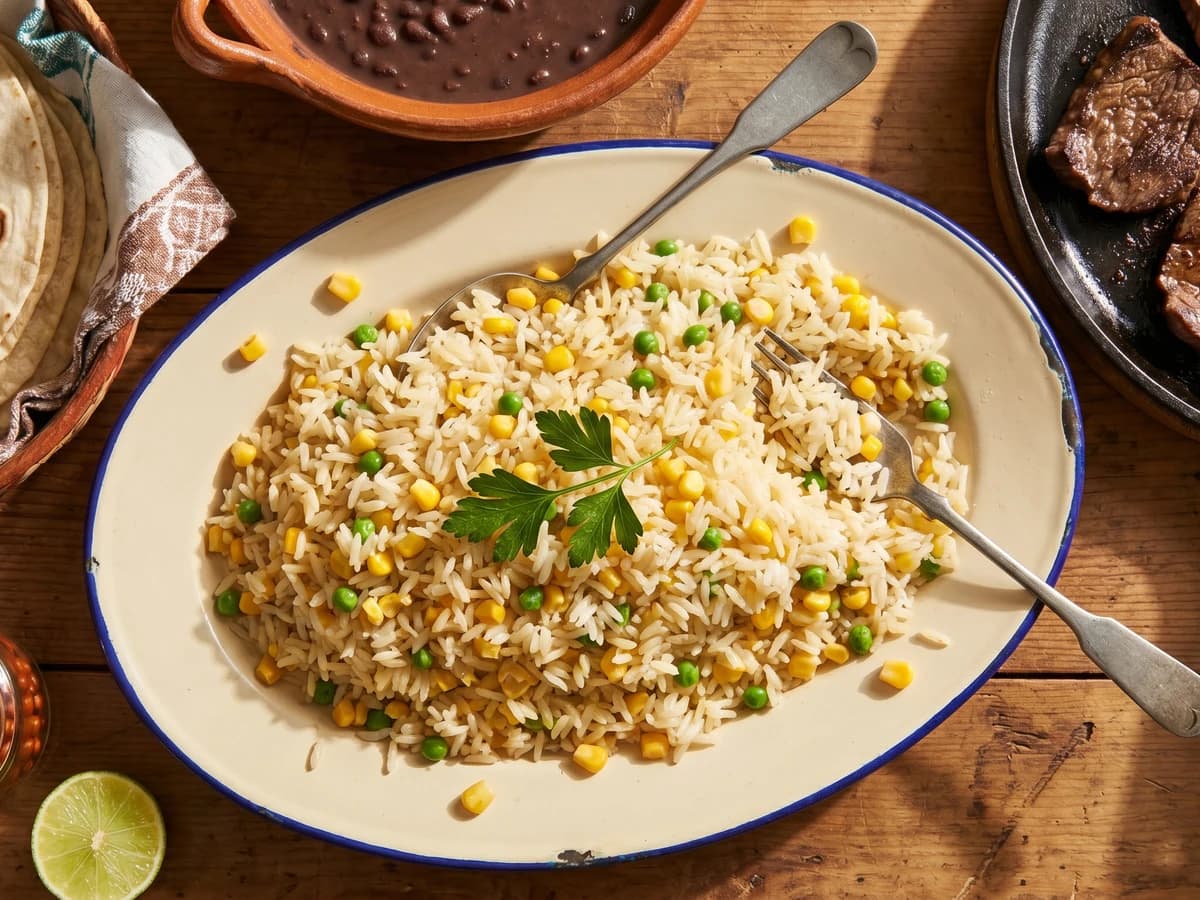
Sonora's white rice, toasted in butter and steamed with sweet corn and tender peas. The clean, quiet partner to a plate of carne asada, not the red rice of central Mexico.

Chef Lupita
Yucatán's white rice with sweet corn kernels, toasted in lard with garlic and onion. The quiet base that holds up against the peninsula's bold achiote-stained stews.