
Chef Lupita
Aporreadillo Michoacano con Huevo
Michoacán's Tierra Caliente almuerzo, where salted beef is softened, pounded, fried in lard, folded with egg and chile perón salsa, then served beside morisqueta like a proper working table.
A cooking platform built around craft, culture, and the stories behind what we eat.
Created by
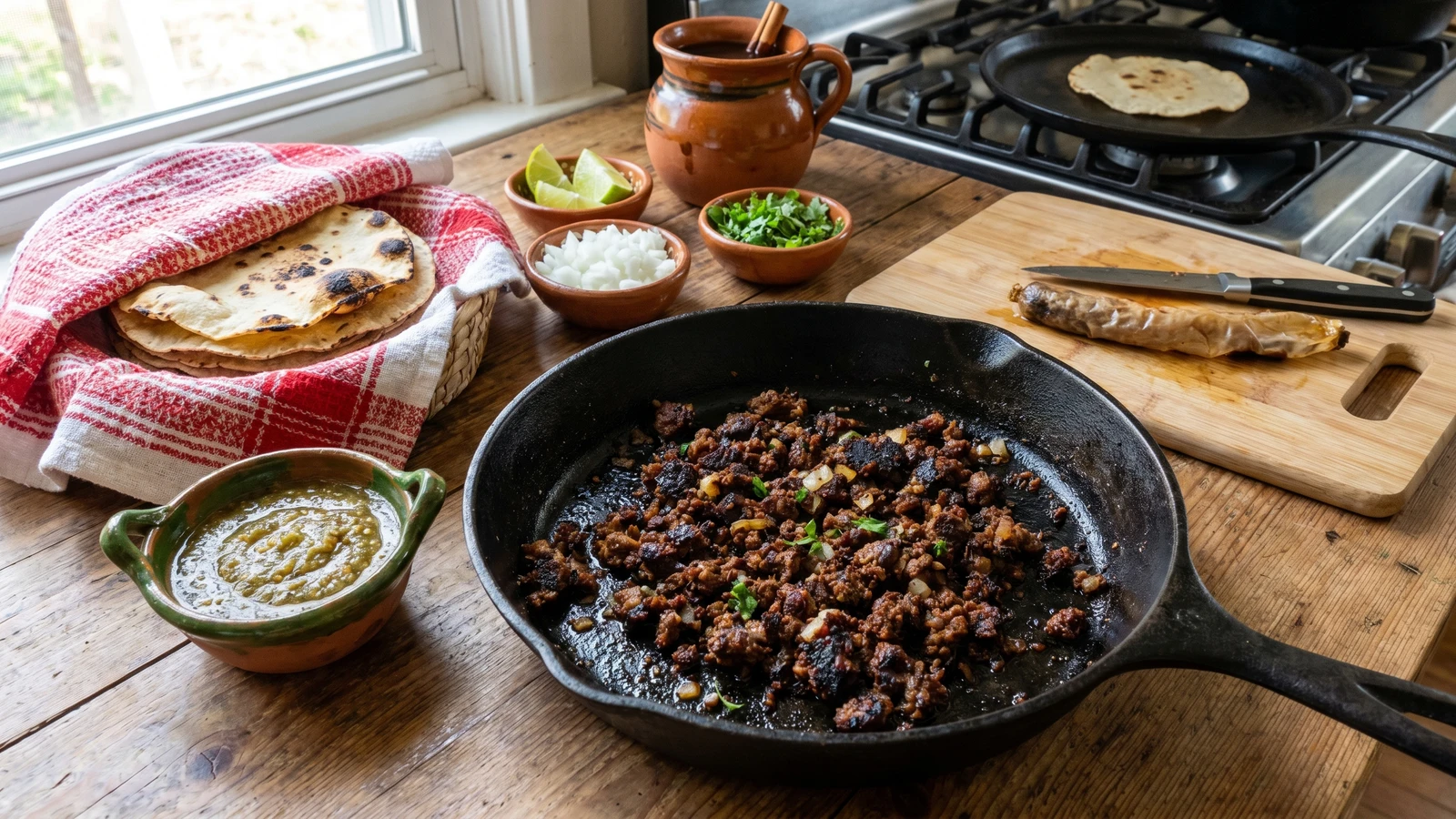
Tlaxcala and Hidalgo's blood sausage breakfast, crumbled moronga crisped in lard with hierbabuena and chile serrano, eaten in warm corn tortillas with charred tomatillo salsa.
This is breakfast in Tlaxcala. It is also breakfast in the small towns of Hidalgo, in the fondas that open at six in the morning and serve workers heading into the fields or the mines. Moronga frita is not a delicate dish and it is not trying to be. It is dark, iron-rich, perfumed with hierbabuena, and crisped in lard until the edges crackle. Eaten in a corn tortilla with a green salsa sharp enough to wake you up.
Moronga is blood sausage. The Spanish brought the technique. Tlaxcala and Hidalgo made it their own by seasoning the blood with hierbabuena, that softer, rounder cousin of mint that grows wild in the central highlands, and by frying it in manteca with onion and chile serrano. Other states have their own versions. Yucatan has rellena. The norte has its own variation. But the central highlands moronga with hierbabuena is its own thing, and that is what you are making.
My mother did not cook moronga. It was not a Jalisco dish. I learned it from a senora named Dona Refugio at the Mercado de Tulancingo in Hidalgo, who pulled me behind her counter at seven in the morning and showed me how she crumbled it into the pan, how she waited for the crust to form before she stirred. She told me people are afraid of moronga because they hear the word blood and they stop listening. She said: tell them it tastes like the best chorizo they have ever eaten, only deeper. She was right. Cada estado, su propia cocina.
Moronga descends from the morcilla tradition the Spanish brought to New Spain in the 16th century, but its incorporation of hierbabuena (a native mint cultivated in the central highlands since pre-Columbian times) and chile serrano marks it as a thoroughly mexicanizado dish. In Tlaxcala and Hidalgo, moronga production has historically been tied to the matanza, the seasonal pig slaughters that took place in rural communities through the early 20th century, when the blood had to be used immediately and the resulting sausage was a way to extend a single animal across many meals. The dish remains a fonda and mercado breakfast staple in both states, often served alongside chicharron prensado, longaniza, and refried beans as part of a working-class almuerzo.
Quantity
1 pound
in its casing
Quantity
2 tablespoons
Quantity
1
finely diced
Quantity
2
finely minced
Quantity
2
finely chopped
Quantity
1 tablespoon
finely chopped
Quantity
to taste
Quantity
1 pound
husked and rinsed
Quantity
3
stemmed
Quantity
1
peeled
Quantity
1/4 small
Quantity
1/4 cup
Quantity
1 teaspoon, plus more to taste
Quantity
12
warmed on a comal
Quantity
for serving
Quantity
for serving
Quantity
for serving
| Ingredient | Quantity |
|---|---|
| fresh moronga (Mexican blood sausage)in its casing | 1 pound |
| manteca de cerdo (pork lard) | 2 tablespoons |
| small white onionfinely diced | 1 |
| garlic clovesfinely minced | 2 |
| fresh chile serranofinely chopped | 2 |
| fresh hierbabuena leavesfinely chopped | 1 tablespoon |
| kosher salt | to taste |
| fresh tomatilloshusked and rinsed | 1 pound |
| fresh chile serrano (for salsa)stemmed | 3 |
| garlic clove (for salsa)peeled | 1 |
| white onion (for salsa) | 1/4 small |
| fresh cilantro leaves and tender stems | 1/4 cup |
| kosher salt (for salsa) | 1 teaspoon, plus more to taste |
| hand-pressed corn tortillaswarmed on a comal | 12 |
| diced raw white onion (optional) | for serving |
| chopped fresh cilantro (optional) | for serving |
| lime wedges (optional) | for serving |
Heat a dry comal or heavy skillet over medium-high. Lay the tomatillos, serranos, garlic, and onion piece directly on the hot surface. Turn them every few minutes until the tomatillos are blistered and softened and the chiles have black spots on their skins, about eight to ten minutes total. The tomatillos will go from bright green to a duller olive color and they will start to weep their juice. That weeping is what you want. Raw tomatillo salsa tastes like grass. Charred tomatillo salsa tastes like food.
Transfer the charred tomatillos, chiles, garlic, and onion to a blender or a molcajete. Add the cilantro and salt. If you are using a blender, pulse it. Do not puree it smooth. Salsa verde for moronga should have texture, little flecks of chile and onion you can see. If you are using a molcajete, grind the garlic, chile, and salt to a paste first, then work in the tomatillos one at a time. Taste it. Adjust salt. Set it aside at room temperature so the flavors settle while you cook the moronga.
Lay the moronga on a cutting board. With a paring knife, slit the casing lengthwise and peel it back. Discard the casing. The filling inside is dark, soft, and already cooked. It will look like a coarse paste flecked with onion and herbs. This is normal. Moronga is sold pre-cooked because the blood has to be set quickly when the pig is butchered. Your job is to crisp it, not cook it through.
Melt the manteca in a heavy 10-inch skillet over medium heat. Add the diced white onion and cook for two minutes until it turns translucent. Add the minced garlic and chopped serrano. Cook for thirty seconds more, just until the garlic is fragrant. La manteca es el sabor. Do not substitute oil here. The lard carries the flavor that the moronga grew up with.
Crumble the moronga into the skillet in rough chunks, not fine crumbs. You want pieces the size of a kidney bean. Spread them in a single layer and let them sit untouched for three to four minutes. The bottom needs to crisp into a dark brown crust. When you smell that crust starting to form, stir once, spread again, and let it crisp on a new side for another three minutes. The moronga is ready when the edges are crisp and dark and the inside is still soft. Stir in the chopped hierbabuena off the heat. The mint should hit the residual warmth and release its oil without cooking out.
While the moronga finishes, warm the tortillas on a separate dry comal over medium heat, about twenty seconds per side. They should puff slightly and pick up a few light brown spots. Stack them in a cloth servilleta to hold the warmth. Cold tortillas ruin a hot taco. Así se hace y punto.
Bring the skillet of moronga and the bowl of salsa verde to the table along with the warm tortillas, raw white onion, cilantro, and lime. Each person spoons moronga into a tortilla, covers it with salsa verde, and finishes with onion, cilantro, and a squeeze of lime. Eat with your hands. This is breakfast food in Tlaxcala and Hidalgo, eaten standing up at a fonda counter before the workday starts. Do not put it on a fork. Saber cocinar es saber vivir.
1 serving (about 400g)
Culinary guides, cultural storytelling, and the editorial depth that makes cooking meaningful.
Discover Culinary ExplorerChef Lupita
Michoacán's Tierra Caliente almuerzo, where salted beef is softened, pounded, fried in lard, folded with egg and chile perón salsa, then served beside morisqueta like a proper working table.

Chef Lupita
Guerrero's Costa Grande aporreado is salted cecina pounded soft, scrambled with egg, and finished in a red guajillo and chile de árbol salsa loud with garlic and cilantro.

Chef Lupita
Los Altos de Chiapas turns two-night fermented white corn into a tart-sweet atole, cooked with canela and piloncillo, then poured hot into jícaras for desayuno.

Chef Lupita
Oaxaca's Mixteca region ferments nixtamalized masa for days until it turns tart and alive, then simmers it with piloncillo and canela into a thick, warm atole served at first light in clay.