Culinary Explorer

A cooking platform built around craft, culture, and the stories behind what we eat.
Discover Culinary Explorer
Moqueca de Camarão Baiana

Moqueca de Camarão Baiana

Created by

You think Bahia is too far from your stove. It isn't. Get the dendê right, keep the coconut milk full, and this shrimp moqueca becomes a pot you can trust.

Main Dishes
Brazilian
Special Occasion
Comfort Food
One Pot
25 min
Active Time
25 min cook50 min total
Yield4 servings

You hear moqueca and that little voice starts: isso não é pra mim. Bahia, dendê, shrimp, panela de barro, all of it suddenly sounds like a test you didn't study for. Anota aí: cooking isn't a gift, it's something you learn, and this pot is not here to humiliate you. It's here to teach you timing.

I won't pretend this dish is mine the way it belongs to the baianas who carry the Afro-Bahian kitchen, the terreiro food calendar, and the street food tradition with their own hands and histories. That's not my chair. My job here is to write a home version that respects the grammar: dendê, full-fat coconut milk, onion, tomato, peppers, cilantro, shrimp, and patience where patience is needed.

The method is plain. You season the shrimp so it tastes like itself. You build a real refogado until the onion softens and the tomato collapses, because sauce starts as vegetables, not powder. You add coconut milk and dendê, then the shrimp only at the end, because shrimp is bossy and overcooks fast. Three minutes too many and it turns rubbery, looking at you like it paid rent.

Serve it with arroz soltinho, a spoon of feijão if that's your table, and something green. That is the pê-efe speaking through a special pot: rice, beans, the main food in the middle, a green thing beside it. Comida de verdade can be festive and still be dinner.

Bahian moqueca belongs to the Afro-Bahian stew canon, shaped by Indigenous coastal cooking, Portuguese colonial kitchens, and West African ingredients and techniques carried through Bahia. Azeite de dendê, coconut milk, dried shrimp, peanuts, and cashews form the same Yoruba-Jeje grammar that also runs underneath vatapá, caruru, xinxim, and efó, though each dish has its own place and rules. Capixaba moqueca from Espírito Santo is a separate dish, made without dendê, coconut milk, or bell pepper, not a lesser version of this one.

The technique, the tradition, and the story behind every dish.

Discover Culinary Explorer

Ingredients

large shrimp

Quantity

1 1/2 pounds

peeled and deveined

fine salt

Quantity

1 teaspoon, divided, plus more to taste

lime juice

Quantity

2 tablespoons

azeite de dendê

Quantity

3 tablespoons, divided

neutral oil

Quantity

2 tablespoons

onion

Quantity

1 large

thinly sliced

red bell pepper

Quantity

1

thinly sliced

yellow bell pepper

Quantity

1

thinly sliced

garlic

Quantity

3 cloves

minced

tomatoes

Quantity

2 medium

chopped

fresh malagueta or small hot chile (optional)

Quantity

1 small

minced

peeled dried shrimp (camarão seco) (optional)

Quantity

1/2 cup

ground in a pilão or food processor

roasted peanuts

Quantity

2 tablespoons

ground

roasted cashews

Quantity

2 tablespoons

ground

full-fat coconut milk

Quantity

1 can (13.5 ounces or 400 ml)

water

Quantity

1/2 cup, as needed

cilantro

Quantity

1/2 cup, plus more for serving

chopped

scallions

Quantity

2 tablespoons

chopped

lime wedges

Quantity

as needed

for serving

cooked white rice

Quantity

for serving

Equipment Needed

  • Panela de barro or heavy 4-liter pot
  • Food processor or pilão for grinding dried shrimp and nuts
  • Wooden spoon
  • Microplane or knife for garlic

Instructions

  1. 1

    Season the shrimp

    Pat the shrimp dry, then toss them with the lime juice and 1/2 teaspoon salt. Let them sit while you prep the vegetables, about 15 minutes, no longer. The salt wakes up the shrimp and the lime brightens it, but too much time in acid starts changing the texture before the pot even has a chance.

  2. 2

    Build the refogado

    Warm the neutral oil with 1 tablespoon dendê in a panela de barro or a heavy 4-liter pot over medium heat. Add the onion and bell peppers and cook, stirring now and then, until the onion goes soft and the peppers bend without snapping, about 6 minutes. This is where the sweetness starts. Rush it and you'll have raw edges floating in sauce, which is nobody's dinner.

    A panela de barro is lovely here because it holds gentle heat, but a heavy pot works. Use what you have and control the heat. Technique first, every time.
  3. 3

    Collapse the tomato

    Add the garlic, tomatoes, malagueta if using, and the remaining 1/2 teaspoon salt. Cook until the garlic smells sweet and the tomatoes slump into the pot, about 4 minutes. Garlic needs only a minute before it turns bitter, and tomato needs a few more to stop tasting raw. Let each one do its job.

  4. 4

    Thicken the base

    Stir in the ground dried shrimp, ground peanuts, and ground cashews. Cook for 1 minute, stirring so nothing sticks, until the mixture looks a little thicker and smells deep and nutty. This is not decoration. These ingredients give the sauce body and that Afro-Bahian depth you cannot get from a packet pretending to be flavor.

  5. 5

    Add coconut and dendê

    Pour in the full-fat coconut milk and 1/4 cup water, scraping the bottom of the pot. Bring it to a gentle bubble, then lower the heat and simmer for 8 minutes, until the sauce turns glossy and coats a spoon. Full-fat coconut milk carries the sauce. Reduced-fat coconut milk waters it down and makes the pot taste thin, and then people blame Bahia instead of the can.

  6. 6

    Cook the shrimp

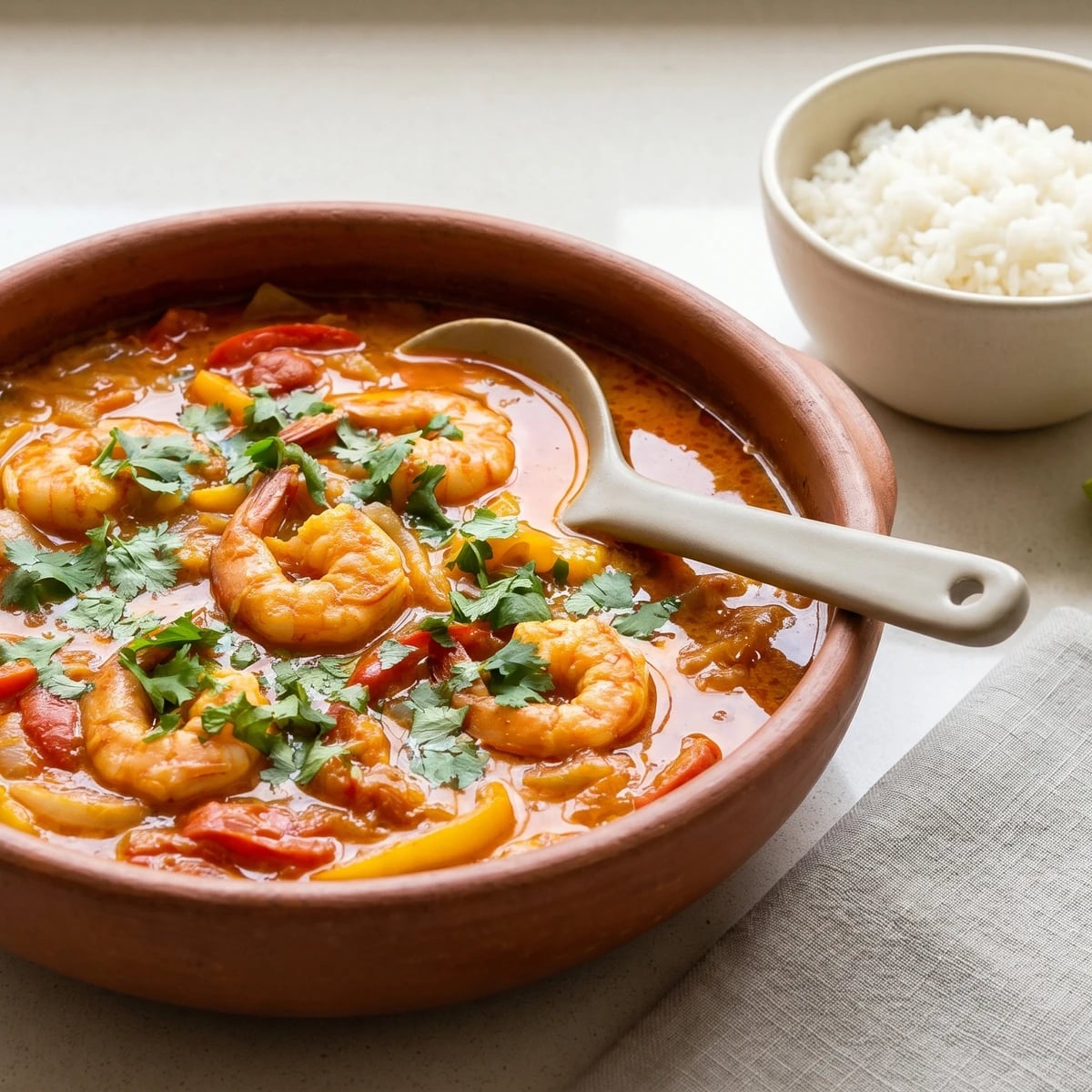
    Nestle the shrimp into the sauce in one even layer and cook gently, turning once, until they curl into loose C shapes and turn pink and opaque, about 3 to 5 minutes. Pull the pot off the heat the moment they're done. Tight little O shapes mean they went too far, and shrimp does not forgive a distracted cook.

  7. 7

    Finish the pot

    Stir in the remaining 2 tablespoons dendê, the cilantro, and the scallions. Taste and adjust the salt, then let the moqueca rest off the heat for 5 minutes. The rest lets the sauce settle around the shrimp, and the final dendê keeps its rust-orange perfume alive instead of cooking flat.

  8. 8

    Serve with rice

    Serve the moqueca in shallow bowls or straight from the clean pot, with arroz soltinho and lime wedges. Spoon sauce over the rice so it catches the dendê at the rim. If you have feijão and something green beside it, the plate is complete. Special, yes. Still a pê-efe at heart.

Chef Tips

  • Dendê is non-negotiable here. Refined deodorized palm oil is not dendê, and annatto mixed into another oil is not dendê either. If the oil doesn't smell earthy, fruity, and unmistakably red-orange, it's the wrong bottle.
  • Buy full-fat coconut milk. The reduced-fat kind dilutes the sauce and can turn grainy in the pot. A Tuesday shortcut is canned coconut milk, not a weakened one.
  • Camarão seco is powerful and salty, so taste before adding extra salt. If you can't find it, make the moqueca anyway, but know the sauce will be softer and less Bahian in its backbone.
  • Shrimp cooks fast. Have the rice ready, the table close, and everyone mostly behaving before the shrimp goes in. Once it's done, dinner is now.
  • Bell peppers and tomatoes should look alive, firm, glossy, not tired. If the tomatoes are sad and out of season, use good canned whole tomatoes crushed by hand. That's an honest shortcut. Tomato powder is not.
  • Do not freeze finished shrimp moqueca if you can help it. The sauce survives, the shrimp complains. Refrigerate leftovers up to 2 days and rewarm gently, barely enough to loosen the sauce.

Advance Preparation

  • Grind the dried shrimp, peanuts, and cashews up to 2 days ahead and keep them covered in the fridge.
  • Slice the onion and peppers up to 1 day ahead, but chop the cilantro close to serving so it stays bright.
  • Cook the rice before the shrimp goes into the pot. Moqueca waits badly once the shrimp is done.

Frequently Asked Questions

Nutrition Information

1 serving (about 560g)

Calories
755 calories
Total Fat
44 g
Saturated Fat
26 g
Trans Fat
0 g
Unsaturated Fat
17 g
Cholesterol
355 mg
Sodium
1600 mg
Total Carbohydrates
40 g
Dietary Fiber
3 g
Sugars
9 g
Protein
50 g

Note: Chef personas and recipes are created with AI assistance. Cook with care: follow safe food-handling practices, check doneness with a thermometer when needed, and adapt for allergies and your kitchen.

Where cooking meets culture.

Culinary guides, cultural storytelling, and the editorial depth that makes cooking meaningful.

Discover Culinary Explorer

More from Moqueca Baiana, Vatapá, Caruru & Dendê Stews

Browse the full collection