
Chef Juliana
Açaí com Camarão do Pará
You think açaí belongs with banana and granola because that's the version that traveled. In Pará, thick unsweetened açaí sits beside shrimp, rice, and farinha. Anota aí: same fruit, different meal.
A cooking platform built around craft, culture, and the stories behind what we eat.
Created by
You think seafood in a clay pot belongs to someone braver. It doesn't. Sweet siri, urucum oil, lime and coentro solve a Brazilian dinner without coconut, dendê, or drama.
You know that quiet little 'isso não é pra mim' that shows up the second seafood enters the kitchen? I know it. I had the same voice in my head, and mine was loud enough to ruin onions before breakfast. But cozinhar não é dom, é um aprendizado. Crab in a pot is not a ceremony. It's timing, a real refogado, and the discipline to leave the spoon alone.
This is comida de verdade from the coast of Espírito Santo, and it still belongs beside the everyday plate. Put arroz branco soltinho next to it, spoon the pirão from its own broth, add something green, and if your house wants feijão beside seafood, let the house be itself. The pê-efe bends. It doesn't break.
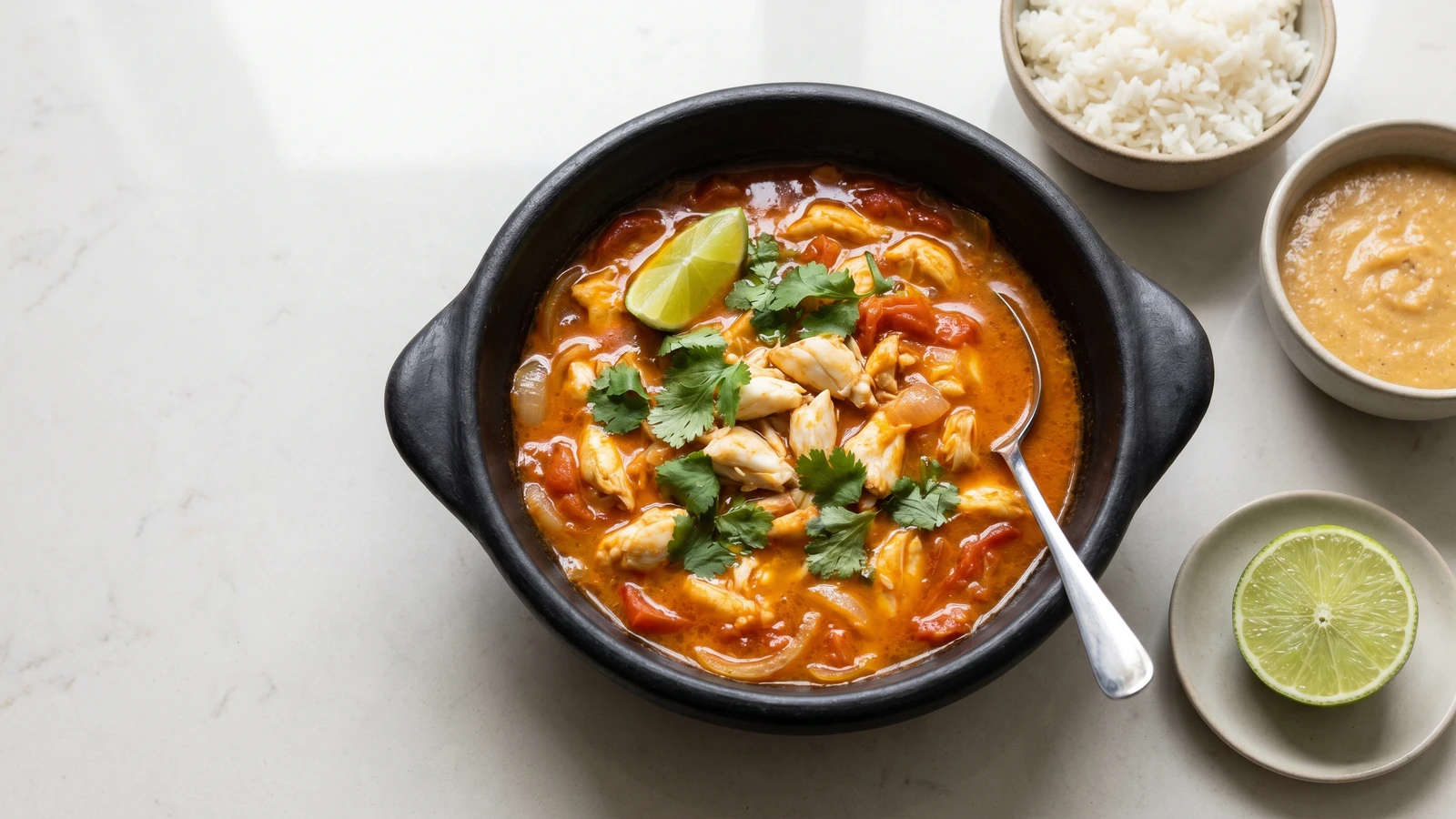
Capixaba moqueca has a backbone: limão, alho, tomate, cebola, coentro and urucum-colored oil. Anota aí: no coconut milk, no azeite de dendê, no bell pepper. That absence is not a missing step; it's the dish saying who it is. The pot matters too. The black panela de barro of Goiabeiras is the real one, but a heavy pot at home will still get dinner solved if you treat it properly.
Layer, cover, simmer gently, and don't stir. The tomatoes slump, the onion sweetens, the siri stays in soft pieces, and the broth becomes too good to throw away. That's why a gente turns it into pirão. Nothing here gets wasted, because real food has manners.
Moqueca capixaba belongs to Espírito Santo's coastal clay-pot tradition: seafood stewed with tomato, onion, coentro, lime and urucum, without coconut milk, dendê, or bell pepper. The craft of making the black clay pots by the Paneleiras de Goiabeiras was registered by IPHAN as Brazilian intangible heritage in 2002, and the pot is as much craft as cookware. The slogan 'moqueca é capixaba, o resto é peixada' is Capixaba pride, not a court ruling; Bahia has its own dendê moqueca, and muma de siri is another old Capixaba crab dish worth teaching back to the table.
Quantity
1 1/4 pounds (560 g)
fresh or thawed frozen, picked over for shells
Quantity
2
1 juiced and 1 cut into wedges
Quantity
1 teaspoon, plus more to taste
Quantity
4 cloves
minced
Quantity
1/4 cup
Quantity
1 tablespoon
or 2 teaspoons pure ground annatto (colorau)
Quantity
2 medium
thinly sliced
Quantity
4 medium
chopped
Quantity
3
thinly sliced, whites and greens separated
Quantity
1 cup loosely packed
stems finely chopped and leaves roughly chopped
Quantity
1/2 cup
Quantity
1/3 cup
for pirão
Quantity
4 cups
for serving
Quantity
as needed
for serving
| Ingredient | Quantity |
|---|---|
| picked crab meat (siri catado)fresh or thawed frozen, picked over for shells | 1 1/4 pounds (560 g) |
| limes1 juiced and 1 cut into wedges | 2 |
| fine salt | 1 teaspoon, plus more to taste |
| garlicminced | 4 cloves |
| mild olive oil or neutral oil | 1/4 cup |
| annatto seeds (urucum)or 2 teaspoons pure ground annatto (colorau) | 1 tablespoon |
| onionsthinly sliced | 2 medium |
| ripe tomatoeschopped | 4 medium |
| scallionsthinly sliced, whites and greens separated | 3 |
| fresh coentrostems finely chopped and leaves roughly chopped | 1 cup loosely packed |
| water | 1/2 cup |
| fine cassava flour (farinha de mandioca fina) (optional)for pirão | 1/3 cup |
| cooked white ricefor serving | 4 cups |
| sautéed couve (optional)for serving | as needed |
Put the crab meat in a wide bowl and run your fingertips through it for bits of shell. Do it slowly, because one sharp little piece can ruin the trust between you and dinner. Season with 1 tablespoon lime juice, 1/2 teaspoon salt, and half the garlic. Fold gently and let it sit 10 minutes while you chop. The lime wakes up the sweetness; leave it sitting too long and the crab gets tight and dull.
Warm the oil with the annatto seeds over low heat until the oil turns clear orange-red, about 2 to 3 minutes. Strain the seeds out and keep the oil. If you're using pure ground annatto or colorau, warm the oil first, then stir in the powder for 30 seconds. Keep the heat low. Burnt urucum tastes bitter and dusty, and this dish is supposed to taste clean.
If you're using a clay pot, warm it over low heat for 5 minutes before raising the heat to medium. Clay hates shock. Add 3 tablespoons of the urucum oil, saving the last tablespoon for the top. Add the onions and the remaining 1/2 teaspoon salt, then cook until the onions go soft and see-through, about 5 minutes. Add the remaining garlic, the scallion whites, and the chopped coentro stems for 1 minute, just until you smell them. This is the base. Rush it and the sauce tastes raw; burn the garlic and it follows you through the whole pot.
Spread half the tomatoes over the refogado. Spoon the seasoned siri over the tomatoes in an even layer, then cover with the remaining tomatoes and the scallion greens. Pour the 1/2 cup water around the edge of the pot, not straight over the crab, and drizzle the reserved urucum oil on top. Do not stir. The layers protect the crab so it stays in soft pieces instead of breaking into crumbs before it even cooks.
Cover the pot and cook over medium-low heat until the tomatoes slump, the edges bubble softly, and the crab is hot all the way through, about 8 to 10 minutes. Shake the pot once or twice instead of stirring. If your crab was raw, cook 2 to 3 minutes more, until it turns opaque and firm. A hard boil punishes seafood. Gentle heat keeps the siri sweet.
Taste the broth and adjust with salt and a squeeze of lime. Scatter the coentro leaves over the top, cover again, and let the pot rest off the heat for 5 minutes. Resting lets the sauce settle and the crab hold its shape. This is also where the Capixaba line stays clear: no coconut milk, no dendê, no bell pepper. That's not absence. That's definition.
Ladle 1 to 1 1/2 cups of broth from the edge of the pot into a small pan. Bring it to a low simmer, then rain in the cassava flour slowly with one hand while whisking with the other. Cook 2 to 3 minutes, until glossy and thick enough to mound softly on a spoon. If it's too stiff, loosen it with a spoonful of water or broth. Dump the flour in all at once and you'll get little pellets. Anota aí: pirão rewards patience for about ninety seconds.
Bring the moqueca to the table in the pot. Serve with arroz branco soltinho, pirão, lime wedges, and something green, like couve. If there's feijão in the fridge, it can sit beside it. The everyday Brazilian plate isn't a prison; it's a formula that knows how to make room.
1 serving (about 480g)
Culinary guides, cultural storytelling, and the editorial depth that makes cooking meaningful.
Discover Culinary ExplorerChef Juliana
You think açaí belongs with banana and granola because that's the version that traveled. In Pará, thick unsweetened açaí sits beside shrimp, rice, and farinha. Anota aí: same fruit, different meal.

Chef Juliana
You think savory açaí is not for you. I understand. Then you taste the cold, dark bowl beside hot fried fish, rice, greens, and farinha, and dinner gets very quiet.

Chef Juliana
You think salted beef and rice sound like trouble. Anota aí: soak the charque, brown it properly, build the refogado, and this one pot resolves dinner.

Chef Juliana
You think a Maranhão green rice belongs to somebody else's clever hands. It doesn't. Wilt the vinagreira, build the refogado, fold it through arroz soltinho, and dinner gets bright, coastal, and yours.