
Chef Juliana
Caranguejada Capixaba
You don't need restaurant courage for whole crabs. You need a legal, fresh crab, a real refogado, urucum-stained oil, and the good manners to save the broth for pirão.
A cooking platform built around craft, culture, and the stories behind what we eat.
Created by
You think fish in a clay pot is for someone else. It isn't. Layer it, color the oil with urucum, keep your spoon out, and dinner almost solves itself.
You may be looking at the fish counter thinking, isso não é pra mim. Good. That's the sentence a gente is going to cook right through. Fish looks delicate, the word moqueca sounds like it belongs to somebody's grandmother, and suddenly a Tuesday dinner starts pretending it's a test. It isn't. Cozinhar não é dom, é um aprendizado, and this one is mostly arranging things in the right order and having the discipline to leave them alone.
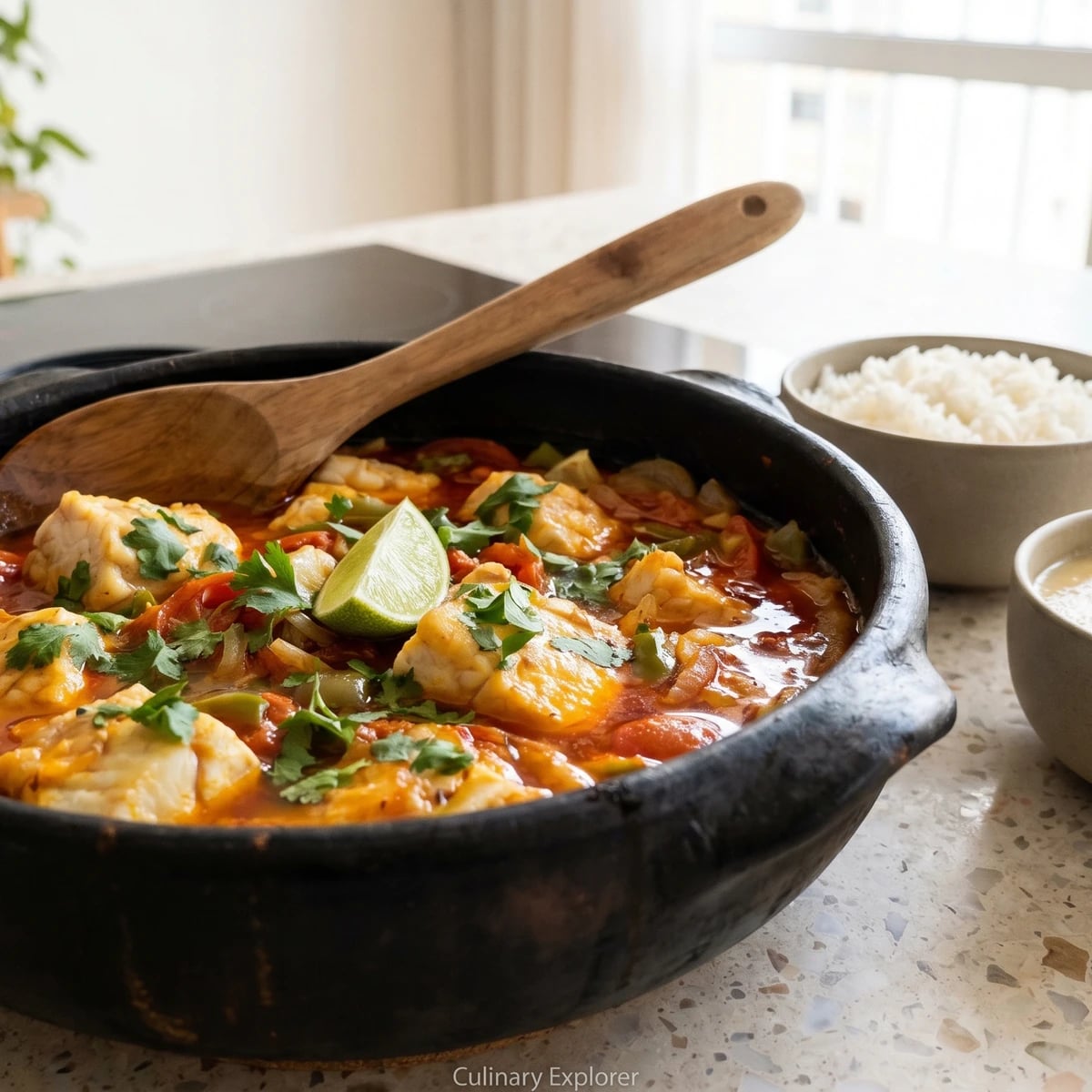
This is comida de verdade in one pot: fish, tomato, onion, coentro, garlic, limão, and urucum turning the oil that warm orange-red of Espírito Santo. No azeite de dendê, no coconut milk, no bell pepper. That absence is not a missing step. It's the definition of moqueca capixaba. The pot does the soft work while you make rice, warm beans if you have them, and wash something green. There it is: the pê-efe learning how to dress up without becoming silly.
The method is plain. Season the fish so the salt and limão reach it before the pot does. Stain the oil with urucum so the color blooms in fat, not in watery broth. Layer onion, tomato, and herbs so they melt into a sauce under the fish. Then don't stir. Anota aí: stirring breaks the fish and clouds the broth. Shake the pot gently if you must fuss with something. I say this as a woman who once tried to rescue delicate fish with a spoon and made seafood confetti. We learn.
Serve it from the pot, because the broth is part of the food, not a decoration. Spoon that caldo over arroz soltinho, save what remains for pirão, and let nobody tell you real cooking needs a packet, a powder, or a crown between Bahia and Espírito Santo. Both traditions know what they're doing. Today, a gente is cooking the Capixaba one.
Moqueca capixaba is tied to Espírito Santo's black, unglazed panela de barro, made by the Paneleiras de Goiabeiras, whose craft was recognized by IPHAN as Brazilian intangible cultural heritage in 2002. Its color comes from urucum, not dendê, and the dish traditionally leaves out coconut milk and bell pepper, which separates it from the Bahian version. The local slogan, "moqueca é capixaba, o resto é peixada," is Capixaba pride talking, not a verdict; Brazil is big enough for more than one good pot.
Quantity
700 g
cut into 4 large pieces
Quantity
1 1/2 teaspoons
divided
Quantity
2 tablespoons
Quantity
3 cloves
minced
Quantity
3 tablespoons
Quantity
1 tablespoon
or 2 teaspoons colorau made from urucum
Quantity
2 medium
thinly sliced
Quantity
4
sliced into rounds
Quantity
1/2 cup
chopped, plus more for finishing
Quantity
2 tablespoons
chopped
Quantity
1/2 cup
only if needed
Quantity
1 tablespoon
for finishing
Quantity
as needed
for serving
| Ingredient | Quantity |
|---|---|
| firm white fish filletscut into 4 large pieces | 700 g |
| saltdivided | 1 1/2 teaspoons |
| fresh lime juice | 2 tablespoons |
| garlicminced | 3 cloves |
| olive oil or neutral oil | 3 tablespoons |
| urucum seedsor 2 teaspoons colorau made from urucum | 1 tablespoon |
| onionsthinly sliced | 2 medium |
| ripe tomatoessliced into rounds | 4 |
| coentrochopped, plus more for finishing | 1/2 cup |
| scallionschopped | 2 tablespoons |
| water or light fish broth (optional)only if needed | 1/2 cup |
| extra-virgin olive oilfor finishing | 1 tablespoon |
| lime wedges (optional)for serving | as needed |
Pat the fish dry and lay the pieces in a shallow dish. Season with 1 teaspoon of the salt, the lime juice, and the garlic, turning the pieces gently so they are coated on all sides. Let them sit for 15 to 20 minutes while you cut the vegetables. The fish should smell clean and bright, not sharp with too much lime. Longer is not better here; too much acid tightens the fish before it reaches the pot.
Warm the oil in a black panela de barro or a heavy 3 to 4 liter pot over medium-low heat. Add the urucum seeds and stir for 1 to 2 minutes, until the oil turns orange-red and smells lightly earthy, then scoop the seeds out. If using colorau, stir it into the warm oil for 30 seconds. Urucum gives color through fat, so let it bloom in the oil instead of dumping it into the broth like a sad shortcut.
Add half the onion to the stained oil and cook for 3 to 4 minutes, just until it starts to murchar and turn glossy. You are not browning it. You are making a soft bed so the fish does not grab the bottom of the pot and so the sweetness of the onion begins the sauce.
Lay half the tomato slices over the onion, then scatter half the coentro and scallions. Set the fish pieces on top in one layer, scraping any garlic and juices from the dish over them. Cover with the remaining onion, tomatoes, coentro, scallions, and the remaining 1/2 teaspoon salt. These layers matter because the vegetables collapse into sauce around the fish while the fish stays whole.
Cover the pot and cook over medium-low heat for 15 to 20 minutes, until the tomatoes have released their juices, the sauce is glossy, and the fish flakes when nudged at the thickest part. Do not stir. If the pot looks dry after 8 minutes, add water or light fish broth 2 tablespoons at a time around the edge. Stirring breaks the fish; a gentle shake of the pot moves the sauce without turning dinner into flakes.
Turn off the heat and let the moqueca rest, covered, for 5 minutes. Finish with the extra-virgin olive oil and a little fresh coentro. The rest lets the fish settle and the caldo thicken slightly, so every spoonful tastes like one pot instead of separate vegetables floating around.
Serve straight from the pot with arroz branco soltinho, feijão if it is part of your table today, and something green. Spoon the broth over the rice. Save any leftover caldo for pirão by warming it and whisking in farinha de mandioca little by little until it turns creamy. Nothing here gets wasted, because comida de verdade keeps feeding you after the first plate.
1 serving (about 350g)
Culinary guides, cultural storytelling, and the editorial depth that makes cooking meaningful.
Discover Culinary Explorer
Chef Juliana
You don't need restaurant courage for whole crabs. You need a legal, fresh crab, a real refogado, urucum-stained oil, and the good manners to save the broth for pirão.

Chef Juliana
You think crab shells are restaurant food. They're not. Siri, a real refogado, urucum oil, and farinha turn into the little starter everyone fights over.

Chef Juliana
You don't need courage for shrimp moqueca, you need ripe tomatoes, a heavy pot, and the sense to stop the heat when the camarão curls pink. Urucum does the color here, not dendê.

Chef Juliana
You thought moqueca needed fish and ceremony. Wrong. Eggs, tomato, onion, coentro, limao, and urucum make a meatless pot that still resolves dinner.