
Chef Isabel
Almussafes Valenciano
Almussafes is Valencian bar-counter food: a crusty roll filled with sobrasada, cheese, and onion, then pressed on the plancha until the bread crisps and the filling runs together.
A cooking platform built around craft, culture, and the stories behind what we eat.
Created by
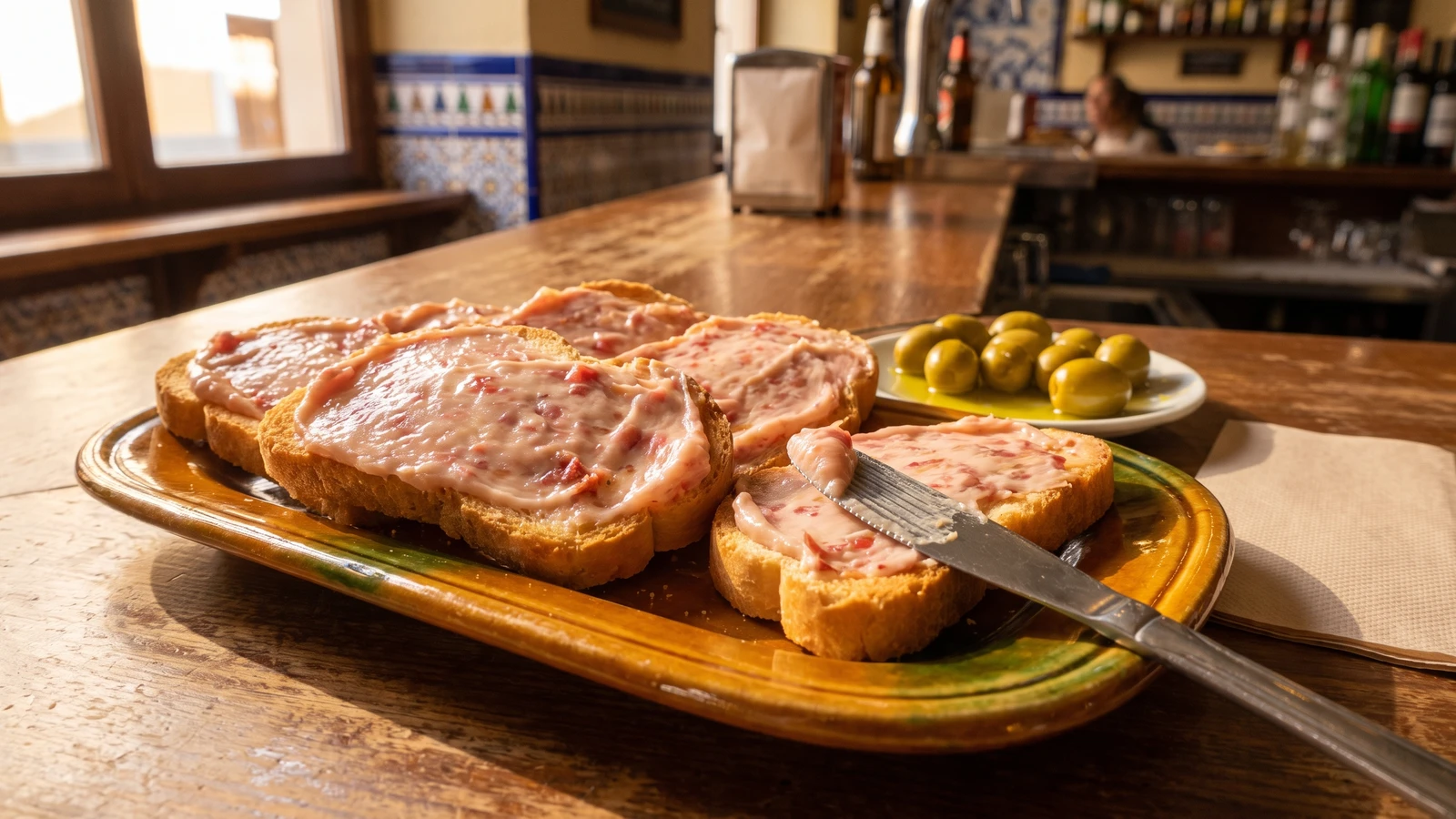
This Zaragoza montadito is cured jamon beaten into soft butter and spread over warm toast. The whole trick is chopping the ham fine enough that it melts into the butter, not fights it.
Montadito de jamon batido is Aragones, and Zaragoza knows exactly what it is: cured ham chopped very fine, beaten with softened butter, then smoothed over small warm toasts. It is not pate, though it eats like one. It is ham and butter, plain as that, and the better the ham, the better the montadito.
The method that decides it is the chopping. The jamon must be cut small before it goes anywhere near the butter, almost a rough paste, so the fat of the butter carries the salt and cured sweetness through every bite. Leave the ham in thick pieces and you get butter with bits in it. Chop it right, then beat it well, and it turns spreadable and clean.
In Aragón, jamon de Teruel is the one to look for, mild, cured, and not too aggressive. If you are far from Teruel, use good jamon serrano. Prosciutto is softer and sweeter, so it will work at a pinch, but the spread will taste rounder and less dry-cured. No hace falta haber pisado España. You do need decent ham, unsalted butter, and bread warm enough to wake them both.
Serve it in small montaditos, open-faced, before lunch or as a quick supper with olives and something sharp to drink. My Margin beside this one says only: chop finer than you think. Siempre sale, si lo sigues.
Jamón batido belongs to Zaragoza's bar and home table, where small montaditos turn a little cured ham into something generous enough to share. Aragón's protected ham tradition is strongest around Teruel, whose dry mountain air suits long curing and gives the ham its firm, clean saltiness. Beating chopped ham with butter is a practical preservation habit as much as a pleasure: fat stretches the cured meat, softens its salt, and makes it spreadable over bread.
Quantity
150g
trimmed and chopped very fine
Quantity
100g
softened
Quantity
1 teaspoon
Quantity
1 small pinch
Quantity
12 small slices
cut about 1cm thick
Quantity
for brushing the bread
| Ingredient | Quantity |
|---|---|
| jamon de Teruel or good jamon serranotrimmed and chopped very fine | 150g |
| unsalted buttersoftened | 100g |
| extra virgin olive oil (optional) | 1 teaspoon |
| fine salt (optional) | 1 small pinch |
| barra or rustic white breadcut about 1cm thick | 12 small slices |
| extra virgin olive oil | for brushing the bread |
Leave the butter at room temperature until it gives easily under a spoon but is not oily. Cold butter will not take the ham properly, and melted butter turns the spread greasy. You want it soft, pale, and ready to beat.
Trim away any hard rind or dry yellow fat from the jamon, then chop the slices very fine with a sharp knife. Keep going until it looks almost minced, with no long strands. Pésalo, no lo adivines: too much ham makes the butter seize and too little gives you a polite spread that tastes of almost nothing.
Put the softened butter in a bowl and beat it with a wooden spoon until smooth. Add the chopped jamon and beat firmly for two to three minutes, scraping the sides, until the ham is evenly worked through the butter and the spread holds in soft ridges. Add the teaspoon of olive oil only if it feels stiff; it should spread, not slump.
Taste a little on bread before adding salt. Jamon usually brings enough. If it tastes flat, add one small pinch and beat again. This is not the place to be brave with salt; the ham will speak louder as the butter warms on the toast.
Brush the bread lightly with olive oil and toast it on a griddle, in a dry pan, or under a grill until the edges are crisp and the middle is still a little tender. Warm bread matters here because it softens the jamon butter just enough to gloss the surface without melting it into a puddle.
Spread a generous spoonful of jamon batido over each warm toast, smoothing it right to the edges. Serve at once, while the bread is still warm and the butter has a satin sheen. Tal como se hace allí: small, plain, and good.
1 serving (about 32g)
Culinary guides, cultural storytelling, and the editorial depth that makes cooking meaningful.
Discover Culinary ExplorerChef Isabel
Almussafes is Valencian bar-counter food: a crusty roll filled with sobrasada, cheese, and onion, then pressed on the plancha until the bread crisps and the filling runs together.

Chef Isabel
The Murcian bicicleta is the anchovy-free cousin of the marinera: ensaladilla rusa mounded on a crisp rosquilla de pan. Keep the salad cold and the bread dry until the last minute.

Chef Isabel
The Barcelona bikini is Catalan bar food at its plainest: white bread, jamón dulce, melting cheese, butter, and gentle heat until the crust crisps and the middle runs.

Chef Isabel
This is the bocadillo of the northern pantry: good tuna in olive oil, sweet piquillo peppers from Navarra, and a crusty barra that stays clean if you drain the tin properly.