
Chef Takumi
Almond Tofu (杏仁豆腐, Annin Dōfu)
A cool square of almond-scented milk, set softly and served with mikan in thin syrup, is dinner-party food without theater. The only stern demand is restraint with the fragrance.
A cooking platform built around craft, culture, and the stories behind what we eat.
Created by
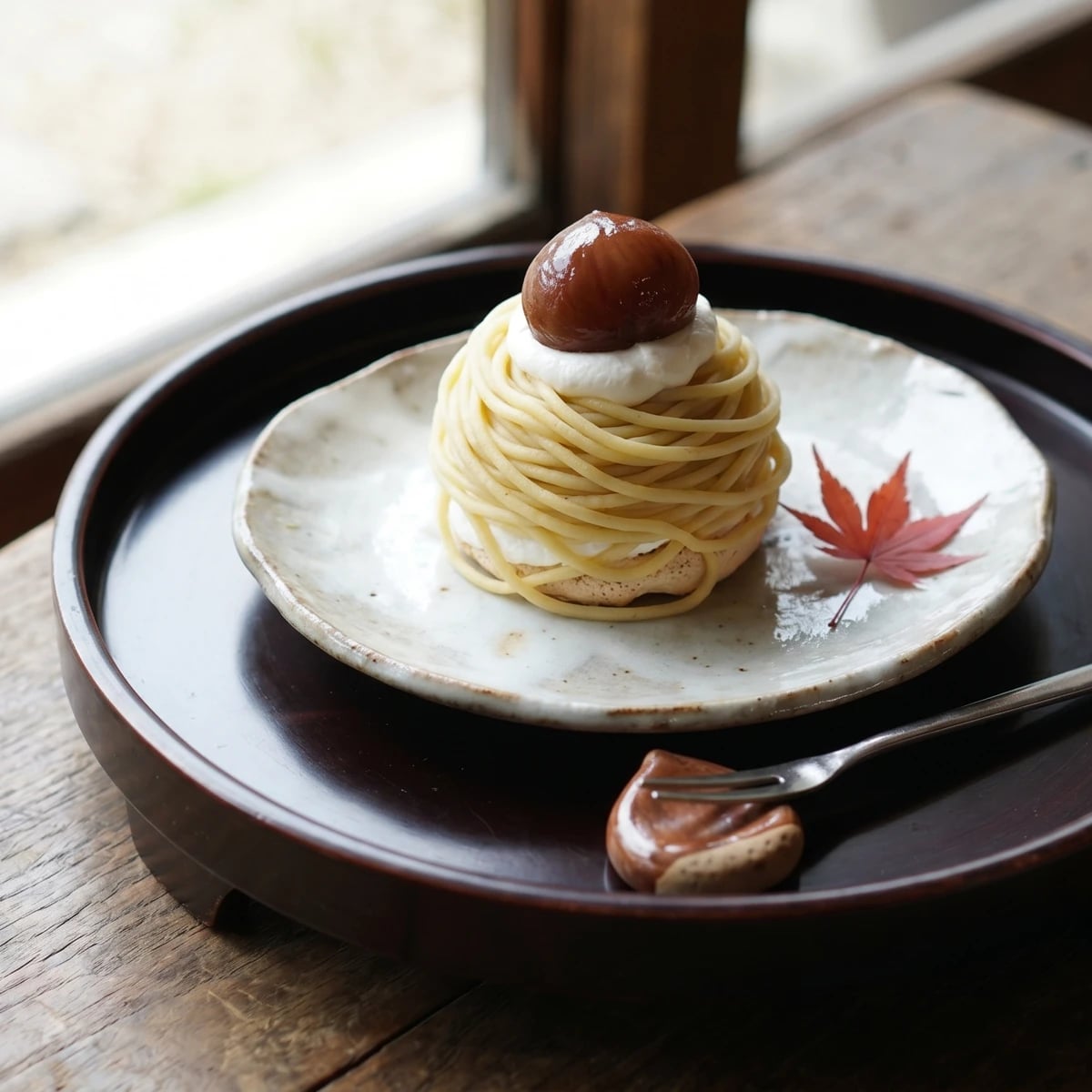
Chestnut paste in fine yellow strands looks fearsome, but the secret is quiet: dry meringue, cold cream, and a chestnut puree soft enough to pipe cleanly.
Chestnuts decide this cake before the piping bag ever appears. Mont Blanc looks like a pastry-shop trick, all those pale gold threads piled into a small mountain, but the work is more patient than difficult. Use chestnuts with real sweetness and the season has already done half the cooking for you.
The Japanese Mont Blanc we make here is not the French one copied blindly. It is the Tokyo version that settled into our autumn: a crisp meringue or sponge base, a little whipped cream, and sweet chestnut paste pushed through a fine-holed tip until it falls like soft noodles. The one detail that decides it is texture. Too stiff and the paste breaks into dry ropes. Too loose and it slumps. You want it smooth, cool, and just yielding enough to hold its shape.
Don't hurry the chestnuts. Simmer them until tender, then work them through a sieve while warm because warm starch gives way more kindly than cold starch. After that, the cream must be cold and the hand light. Pile the cake with height, not heaviness. Even a birthday cake should leave room to breathe.
Mont Blanc entered Japan through the pastry shop Mont-Blanc, founded in Tokyo's Jiyugaoka in 1933 by Chimao Sakota, who adapted the European chestnut dessert for Japanese customers. The Japanese version became known for its yellow chestnut cream, often made from sweetened chestnuts, and for a small, individual cake form suited to kissaten and department-store pastry counters. Its popularity tied the dessert strongly to autumn, when kuri, Japanese chestnuts, are at their prime.
Quantity
500g
or 300g peeled chestnuts
Quantity
120g
divided
Quantity
1 small pinch
Quantity
1 teaspoon
Quantity
2 tablespoons
softened
Quantity
3 to 5 tablespoons
as needed
Quantity
2
Quantity
100g
Quantity
1 teaspoon
Quantity
1/2 teaspoon
Quantity
1 cup
very cold
Quantity
1 tablespoon
Quantity
8
for garnish
| Ingredient | Quantity |
|---|---|
| fresh Japanese chestnutsor 300g peeled chestnuts | 500g |
| granulated sugardivided | 120g |
| sea salt | 1 small pinch |
| vanilla extract | 1 teaspoon |
| unsalted buttersoftened | 2 tablespoons |
| whole milkas needed | 3 to 5 tablespoons |
| large egg whites | 2 |
| superfine sugar | 100g |
| cornstarch | 1 teaspoon |
| rice vinegar | 1/2 teaspoon |
| heavy creamvery cold | 1 cup |
| powdered sugar | 1 tablespoon |
| sweetened chestnuts (optional)for garnish | 8 |
Score each chestnut across the rounded side and soak them in hot water for 20 minutes. This softens the shell and makes peeling less of a wrestling match, which is good for the cook and better for the chestnut. Peel away the shell and inner skin while they are still warm.
Put the peeled chestnuts in a small pot, cover with water, and add 60g of the granulated sugar and the salt. Simmer gently for 35 to 45 minutes, until a skewer slips through without force. Hard boiling knocks the pieces about and makes the flavor muddy, so keep the water only quietly moving.
Drain the chestnuts, saving a little cooking liquid. Press the warm chestnuts through a fine sieve or food mill, then beat in the vanilla, butter, and enough milk to make a smooth paste. It should be soft enough to pipe but firm enough to hold a ridge. If it cracks, add milk by the teaspoon. If it droops, chill it briefly.
Heat the oven to 120C. Beat the egg whites until foamy, then add the superfine sugar little by little and beat until glossy peaks stand upright. Fold in the cornstarch and rice vinegar. Pipe or spoon 8 small rounds onto parchment and bake for about 1 hour, until dry outside and easy to lift. Let them cool in the oven with the door cracked so they dry without browning.
Whip the cold heavy cream with the powdered sugar until it holds soft peaks. Stop there. Stiff cream turns grainy under the chestnut paste and makes the little mountain heavy, which is not what we came for.
Set each meringue on a small tray or plate. Spoon or pipe a rounded mound of whipped cream on top, leaving a narrow edge of meringue visible. The cream gives height and lightness, while the meringue gives contrast under the soft chestnut.
Fit a piping bag with a Mont Blanc tip or a small multi-hole tip and fill it with the chestnut paste. Pipe from the outside inward, circling gently so the strands fall over the cream without pressing it flat. Keep the bag close to the cake and let the paste settle. Force it from high above and it lands like string. Guide it quietly and it becomes a mountain.
Set one sweetened chestnut on each cake and chill for 20 minutes before serving. Serve the same day if using meringue, because the base softens as it drinks moisture from the cream. That little crisp edge is part of the pleasure.
1 serving (about 110g)
Culinary guides, cultural storytelling, and the editorial depth that makes cooking meaningful.
Discover Culinary Explorer
Chef Takumi
A cool square of almond-scented milk, set softly and served with mikan in thin syrup, is dinner-party food without theater. The only stern demand is restraint with the fragrance.

Chef Takumi
A Japanese baked cheesecake is not trying to float away. It is dense, smooth, and quietly tart, with a clean slice doing the work of decoration.

Chef Takumi
A blackened top, a barely set center, and no crust to fuss over. Basuchī looks dramatic, but the whole dish rests on hot heat and patient chilling.

Chef Takumi
Castella asks for no butter, no decoration, and no bravery: only warm eggs beaten patiently, a careful bake, and one night of rest so the crumb turns moist and fine.