
Chef Takumi
Aji Fry (アジフライ, panko-fried horse mackerel)
Aji fry is weeknight fish with no mystery: fresh horse mackerel opened cleanly, breaded lightly, and fried until the panko crackles while the flesh stays sweet.
A cooking platform built around craft, culture, and the stories behind what we eat.
Created by
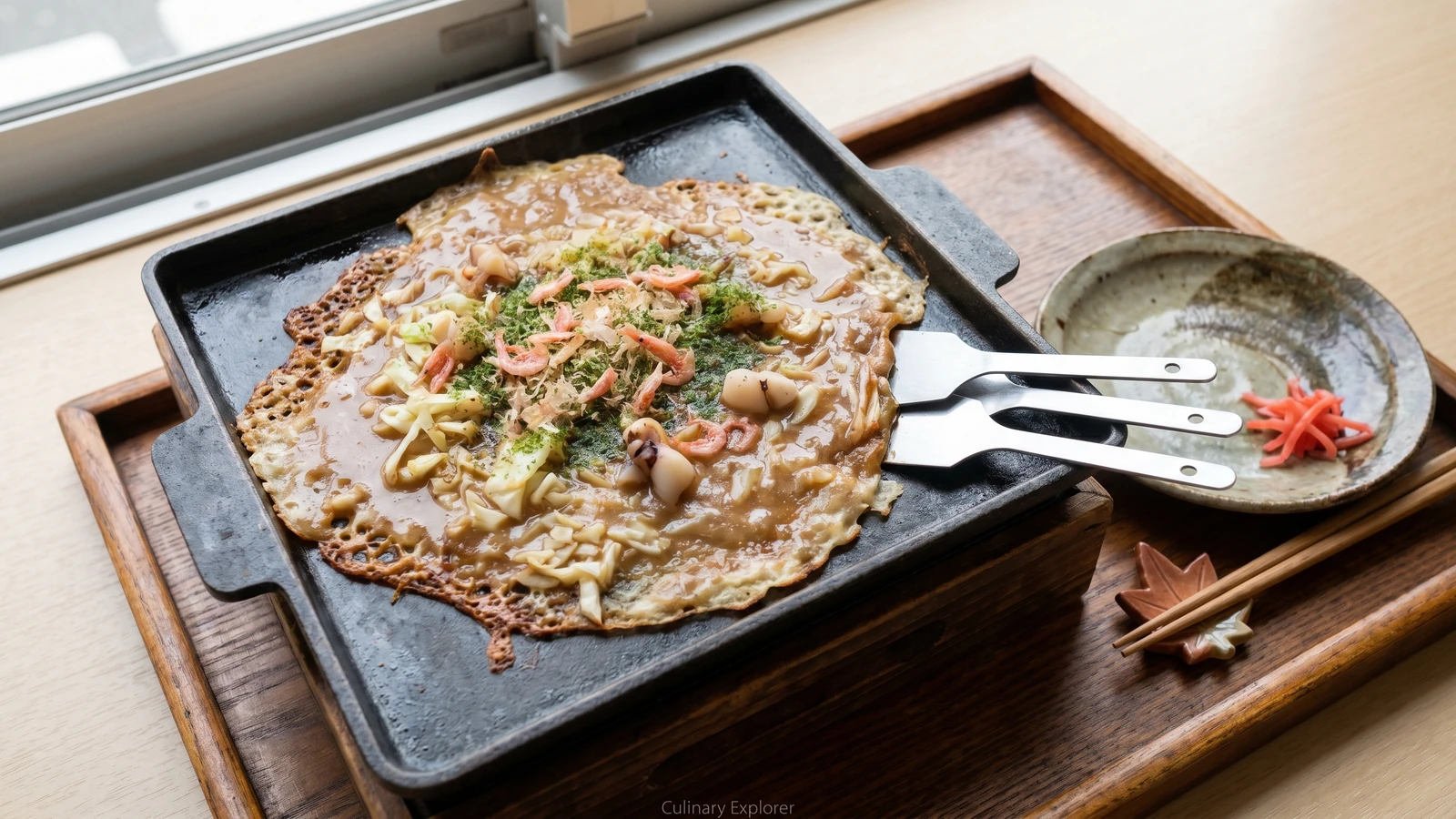
Monjayaki looks like it has gone wrong until it goes right: loose batter, dry-cooked cabbage, a ring on the griddle, then crisp little bites scraped as they form.
Monjayaki asks you to trust a batter that looks too thin to behave. That's the hesitation. It pools, slips, and seems to have no intention of becoming dinner. Then the griddle does its quiet work, and the looseness becomes the point.
The one detail that decides it is the ring. Cook the cabbage, squid, sakura ebi, and scraps first, with the batter left in the bowl. Then chop and shape the hot mixture into a low wall, a dote, and pour the thin broth into the center. That wall holds the liquid long enough for the flour to thicken, so the seafood seasons the batter and the batter binds the seafood. Skip the ring and you have a flood, which is educational, but not supper.
This is Tokyo shitamachi food, eaten from the iron plate with tiny spatulas while the bottom browns in patches. It isn't tidy. Good. We have tidy dishes for tidy moods. Here the pleasure is in scraping up the crisp edge, waiting a moment, and taking the next bite while the center stays glossy and soft. Leave it thinner than you think. Monjayaki is not a pancake trying to stand tall, it's a griddle dish made to be gathered slowly.
Monjayaki is closely tied to Tokyo's old low-city neighborhoods, especially Tsukishima, where monja restaurants became a local marker in the twentieth century. One common account traces the name to mojiyaki, batter used by children at dagashiya snack shops to draw letters, or moji, on a hot plate in the late Edo to Meiji period. Its loose batter and scraped eating style distinguish it from the thicker okonomiyaki associated more strongly with western Japan.
Quantity
1 piece (about 5g)
Quantity
10g
Quantity
2 cups
Quantity
1/3 cup
Quantity
1 tablespoon
Quantity
1 tablespoon
Quantity
1 teaspoon
Quantity
1/4 teaspoon
Quantity
4 cups
very finely chopped
Quantity
120g
cut into small pieces
Quantity
2 tablespoons
Quantity
1/3 cup
Quantity
2 tablespoons
finely chopped
Quantity
2
thinly sliced
Quantity
1 tablespoon
for the griddle
Quantity
for finishing
Quantity
for finishing
| Ingredient | Quantity |
|---|---|
| konbu (dried kelp) | 1 piece (about 5g) |
| katsuobushi (bonito flakes) | 10g |
| cold water | 2 cups |
| all-purpose flour | 1/3 cup |
| Worcestershire-style chūnō sauce | 1 tablespoon |
| soy sauce | 1 tablespoon |
| mirin | 1 teaspoon |
| sea salt | 1/4 teaspoon |
| green cabbagevery finely chopped | 4 cups |
| cleaned squidcut into small pieces | 120g |
| sakura ebi or small dried shrimp | 2 tablespoons |
| tenkasu (tempura scraps) | 1/3 cup |
| beni shōga (red pickled ginger)finely chopped | 2 tablespoons |
| scallionsthinly sliced | 2 |
| neutral oilfor the griddle | 1 tablespoon |
| aonori (optional) | for finishing |
| katsuobushi flakes (optional) | for finishing |
Wipe the konbu with a damp cloth, but don't wash it. Put it in the cold water and warm it slowly over low heat. Pull the konbu when the water trembles and small bubbles climb the sides, before it boils. Boiling konbu pulls out bitterness and a slick texture, and monjayaki needs a clean, light base because the griddle will concentrate everything.
Bring the water just to a gentle boil, add the katsuobushi all at once, and take the pot off the heat. Let the flakes sink for two or three minutes, then strain through a cloth or fine strainer without pressing. Don't squeeze. Pressing gives you harsh, oily flavor, and this dish already has enough cheerful noise from the griddle.
Whisk the flour with a splash of cooled dashi until smooth, then whisk in the remaining dashi, chūnō sauce, soy sauce, mirin, and salt. The batter should be much thinner than pancake batter, closer to a cloudy broth. That looseness is honmono here. It lets the cabbage and seafood season the whole pan instead of sitting inside a heavy cake.
Put the cabbage, squid, sakura ebi, tenkasu, beni shōga, and scallions into the bowl with the batter, but don't stir everything together into one thick mass. Lift the solids out with a slotted spoon when you cook, leaving most of the liquid behind. The dry first cook sweetens the cabbage and firms the squid before the broth arrives.
Heat a tabletop teppan or electric griddle to medium-high and oil it lightly. Lift the solids onto the griddle, letting the thin batter drain back into the bowl. Chop and turn the mixture with metal spatulas for three to four minutes, until the cabbage softens, the squid turns opaque, and the dried shrimp smells warm and sweet. Keep it moving now because you want fragrance and tenderness, not scorching.
Shape the cooked filling into a wide, low ring with an empty center, pressing the wall firmly so it has no gaps. This is the dote, the little embankment. It isn't decoration. It is the pan you build from the food itself, and it holds the batter where it can thicken instead of running across the griddle.
Stir the batter in the bowl, then pour half into the center of the ring. When it bubbles and thickens at the edges, about one minute, pour in the rest. Use the spatulas to nudge any leaks back inside. The flour settles quickly, so stirring just before pouring keeps the center from turning watery on top and pasty at the bottom.
When the center looks glossy and thick, chop the ring into it and spread everything into a thin, even layer. Don't mound it. A thin layer gives you the two pleasures of monjayaki: a soft, seasoned middle and crisp browned bits where the batter meets the iron.
Scatter aonori and a few katsuobushi flakes over the top. Let the bottom set for a minute, then scrape small bites with tiny spatulas, pressing each bite briefly against the griddle so it catches and browns. Eat as it cooks. The best piece is the one that has just decided to let go.
1 serving (about 210g)
Culinary guides, cultural storytelling, and the editorial depth that makes cooking meaningful.
Discover Culinary ExplorerChef Takumi
Aji fry is weeknight fish with no mystery: fresh horse mackerel opened cleanly, breaded lightly, and fried until the panko crackles while the flesh stays sweet.
Chef Takumi
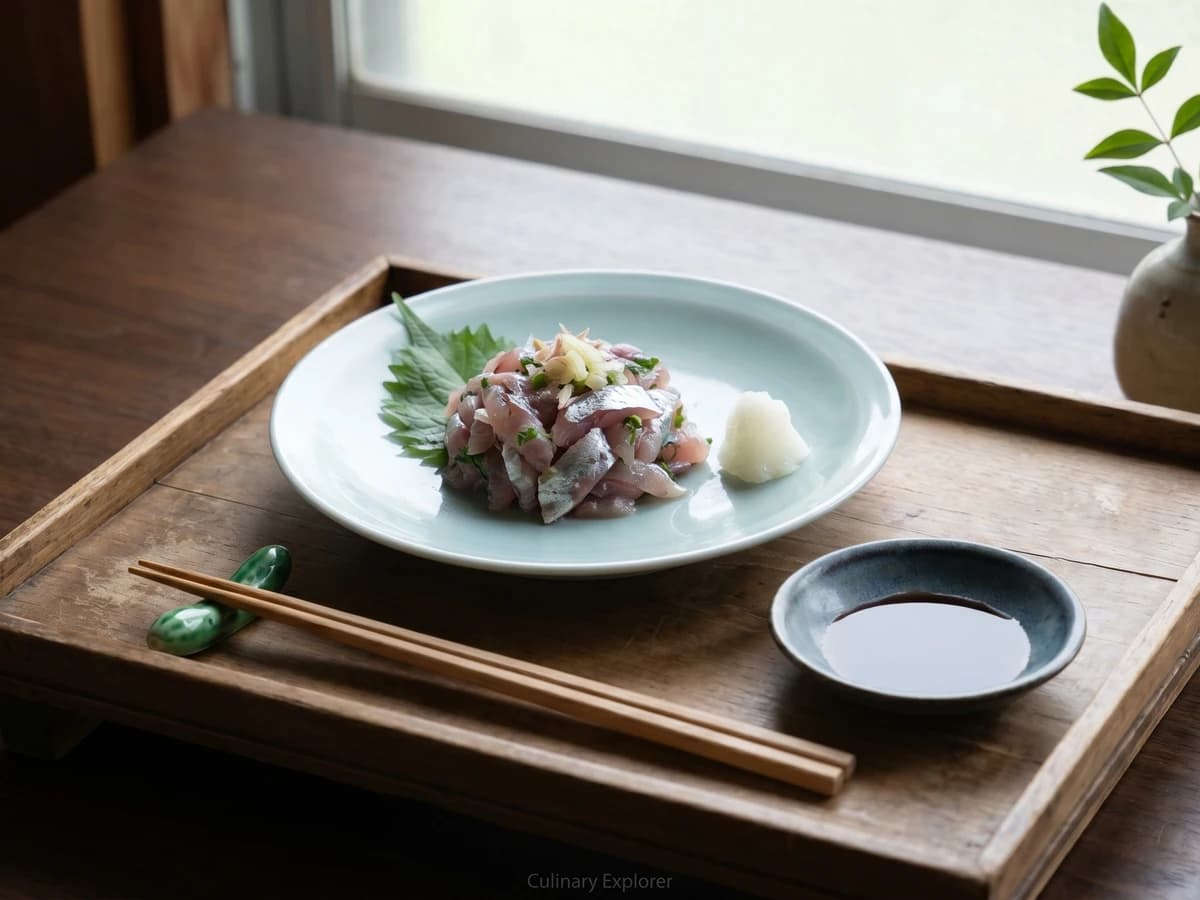
Summer horse mackerel, chopped just enough to catch ginger and scallion, becomes a cool, clean main dish with rice. The secret is fresh fish and a knife that does not bruise it.
Chef Takumi
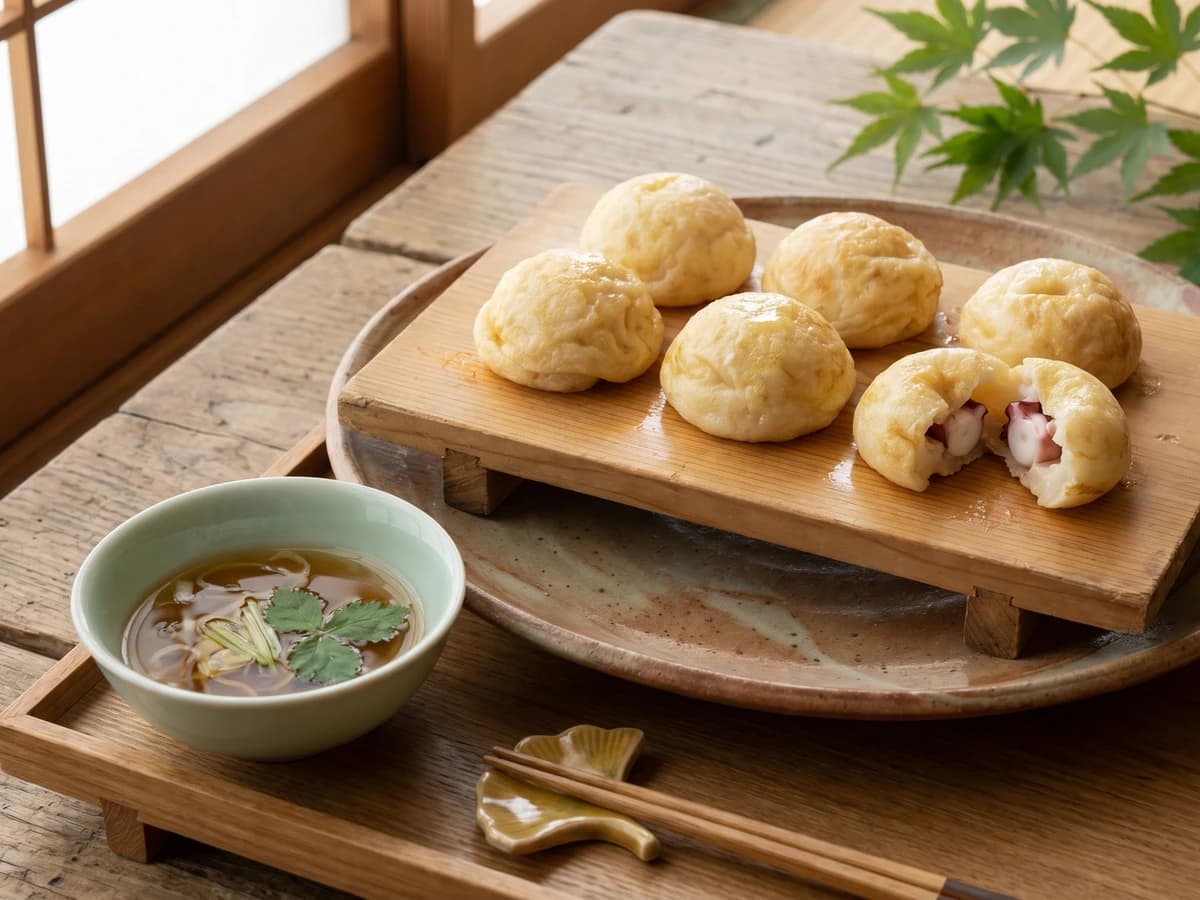
Akashi-yaki is not sauced takoyaki. It is egg-rich batter, tender octopus, and clear dashi, cooked pale and soft so each ball can be dipped like a small custard dumpling.

Chef Takumi
A whole anago looks like a test of nerve. It is mostly good sourcing, a dry skin, cold batter, and oil hot enough to leave the eel sweet under its lace.