Oaxaca's fried masa fingers, pinched shut around a filling of chorizo and potato, then crisped in hot lard and dressed with black bean paste, crema, queso fresco, and salsa verde the way the market women of the Central de Abastos have always served them.
Appetizers & Snacks
Mexican
Comfort Food
Game Day
Potluck
50 min
Active Time
25 min cook•1 hr 15 min total
Yield14 to 16 molotes, serving 4 to 6
This is Oaxacan street food. Not Mexico City, not Puebla. Oaxaca. Specifically the Valles Centrales, where you find molotes at every market stall worth eating at, lined up on sheet pans behind glass cases, fried to order or kept warm on a rack over the fryer. The Central de Abastos, the 20 de Noviembre, the Mercado de la Merced in Oaxaca de Juarez: the women behind those counters have been making these since before you were born, and they'll be making them long after.
A molote is a torpedo of masa, pinched shut at both ends around a filling, and fried until the outside is golden and crackles under your teeth. The filling here is papa y chorizo, which is the most common and, I'll say it, the best. The chorizo renders its fat into the potato and stains everything orange-red. The potato absorbs every bit of that flavor and gives the molote body. You don't need anything complicated inside because the outside is doing the other half of the work: masa made pliable with lard, fried in more lard, so the shell has that particular richness that oil alone cannot give you. La manteca es el sabor.
The dressing is where the dish becomes unmistakably Oaxacan. A smear of frijoles negros refritos across the top, a drizzle of Oaxacan crema (thinner than crema from other states, more pourable, slightly tangy), crumbled queso fresco, and salsa verde made with tomatillo and chile serrano. Every element has a job. The beans give salt and earth. The crema cools the fried shell. The queso adds a dry, crumbly counterpoint. The salsa cuts through the fat. Nothing is decoration. Everything earns its place on the plate.
I learned to shape molotes from a senora named Dona Carmen at the Central de Abastos in 2014. She worked the masa with one hand and pinched the ends shut with the other, and each one came out identical, five inches long, tapered at the tips, smooth as a river stone. Mine looked like they'd been in a fight. She laughed and told me to keep going. By the twentieth one, I had it. That's how you learn this food: by doing it until your hands know the shape. No me vengas con atajos.
The word 'molote' likely derives from Nahuatl roots related to the concept of something rolled or elongated, and the technique of encasing fillings in fried nixtamalized masa predates the Spanish conquest, though the original fillings would have been beans, squash, or wild greens rather than the Old World chorizo and potato that define the modern version. Oaxaca's antojito tradition, which includes molotes alongside tlayudas, memelas, tetelas, and empanadas de amarillo, represents one of the most diverse masa-based street food cultures in Mexico, with each form distinguished by its shape, filling, and cooking method. The Central de Abastos market in Oaxaca de Juarez, the largest market in the state, remains the primary site where these forms are practiced daily by women whose families have held market stalls for generations.
The technique, the tradition, and the story behind every dish.
or 2 cups masa harina mixed with 1 1/2 cups warm water
pork lard (manteca de cerdo)
Quantity
3 tablespoons
softened, for the masa
kosher salt
Quantity
1 teaspoon
for the masa
Mexican chorizo
Quantity
8 ounces
casings removed
waxy potatoes (Yukon Gold or red)
Quantity
3/4 pound
white onion
Quantity
1/2 medium
finely diced
pork lard or vegetable oil
Quantity
1 1/2 pounds
for frying
Oaxacan-style refried black beans
Quantity
1 cup
warm
Oaxacan crema or Mexican crema
Quantity
1/2 cup
queso fresco
Quantity
4 ounces
crumbled
tomatillos
Quantity
1 pound
husked and rinsed
fresh chile serrano
Quantity
2
stemmed
garlic clove
Quantity
1
fresh cilantro leaves and tender stems
Quantity
1/4 cup
kosher salt (for salsa)
Quantity
1/2 teaspoon, plus more to taste
Ingredient
Quantity
fresh masa for tortillasor 2 cups masa harina mixed with 1 1/2 cups warm water
2 pounds
pork lard (manteca de cerdo)softened, for the masa
3 tablespoons
kosher saltfor the masa
1 teaspoon
Mexican chorizocasings removed
8 ounces
waxy potatoes (Yukon Gold or red)
3/4 pound
white onionfinely diced
1/2 medium
pork lard or vegetable oilfor frying
1 1/2 pounds
Oaxacan-style refried black beanswarm
1 cup
Oaxacan crema or Mexican crema
1/2 cup
queso frescocrumbled
4 ounces
tomatilloshusked and rinsed
1 pound
fresh chile serranostemmed
2
garlic clove
1
fresh cilantro leaves and tender stems
1/4 cup
kosher salt (for salsa)
1/2 teaspoon, plus more to taste
Equipment Needed
•Heavy deep skillet or 5-quart Dutch oven for frying
•Instant-read or deep-fry thermometer
•Tortilla press or flat surface with plastic wrap for shaping
•Slotted spoon or kitchen spider
•Wire rack set over a sheet pan for draining
•Blender for salsa verde
Instructions
1
Cook the potatoes
Place the potatoes whole and unpeeled in a saucepan. Cover with cold water by an inch and add a generous pinch of salt. Bring to a boil over high heat, then reduce to a steady simmer and cook until a knife slides through the center without resistance, about 20 to 25 minutes depending on the size. Drain, let them cool enough to handle, then peel and cut into small dice, about a quarter inch. Set aside.
2
Cook the chorizo filling
Crumble the chorizo into a dry skillet over medium heat. You do not need oil. Mexican chorizo carries enough fat in its own mixture to render itself out. Break it into small pieces with a wooden spoon and cook for six to eight minutes, stirring often, until the fat has rendered and the meat is cooked through and starting to crisp at the edges. The pan should be slicked orange-red from the chile and the achiote in the sausage.
Use Mexican chorizo, the soft kind in a casing, not Spanish chorizo. Spanish chorizo is a cured sausage and will not crumble or render. They are completely different products.
3
Combine chorizo and potato
Add the diced onion to the chorizo and cook for two minutes until softened. Add the diced potato and stir everything together, pressing lightly so the potato absorbs the rendered chorizo fat. The potato should be stained orange and glistening. Season with salt only if it needs it. The chorizo is already seasoned aggressively. Let the filling cool to room temperature before you start shaping. Hot filling melts the masa and you will not be able to seal the molotes.
4
Prepare the masa
If using fresh masa, place it in a large bowl. Add the softened lard and salt. Knead with your hands for three to four minutes until the lard is fully incorporated and the masa is smooth, pliable, and does not crack at the edges when you press it flat. If using masa harina, mix it with the warm water first, let it hydrate for five minutes, then knead in the lard and salt the same way. The masa should feel like soft clay: moist but not sticky, firm but not stiff. If it cracks when you fold a small piece, add water a teaspoon at a time. If it sticks to your hands, add a little more masa harina.
Fresh masa from a tortilleria is always better. If you have a Mexican market nearby that sells fresh masa, buy it. The texture and corn flavor are not comparable to reconstituted masa harina. But masa harina works when fresh is not an option. That is a compromise, not a failure.
5
Shape the molotes
Pinch off a piece of masa about the size of a golf ball, roughly two ounces. Roll it between your palms into a smooth ball. Place the ball on a piece of plastic wrap or a cut-open plastic bag. Press it into an oval disc about five inches long and a quarter inch thick, using your fingers or a tortilla press lined with plastic. Place a tablespoon and a half of the cooled filling down the center, leaving a half inch border on each end. Lift the plastic to fold the masa over the filling lengthwise, pressing the edges to seal. Pinch the ends closed and taper them into points, shaping the molote into a torpedo about five inches long. Smooth the seams with wet fingers. Set the finished molote on a lightly floured tray and repeat with the remaining masa and filling.
The first three will look rough. That is normal. By the sixth or seventh, your hands will learn the shape. Keep the plastic lightly oiled and your fingers damp so the masa does not stick. Work quickly. Masa dries out fast and dry masa cracks during frying.
6
Make the salsa verde
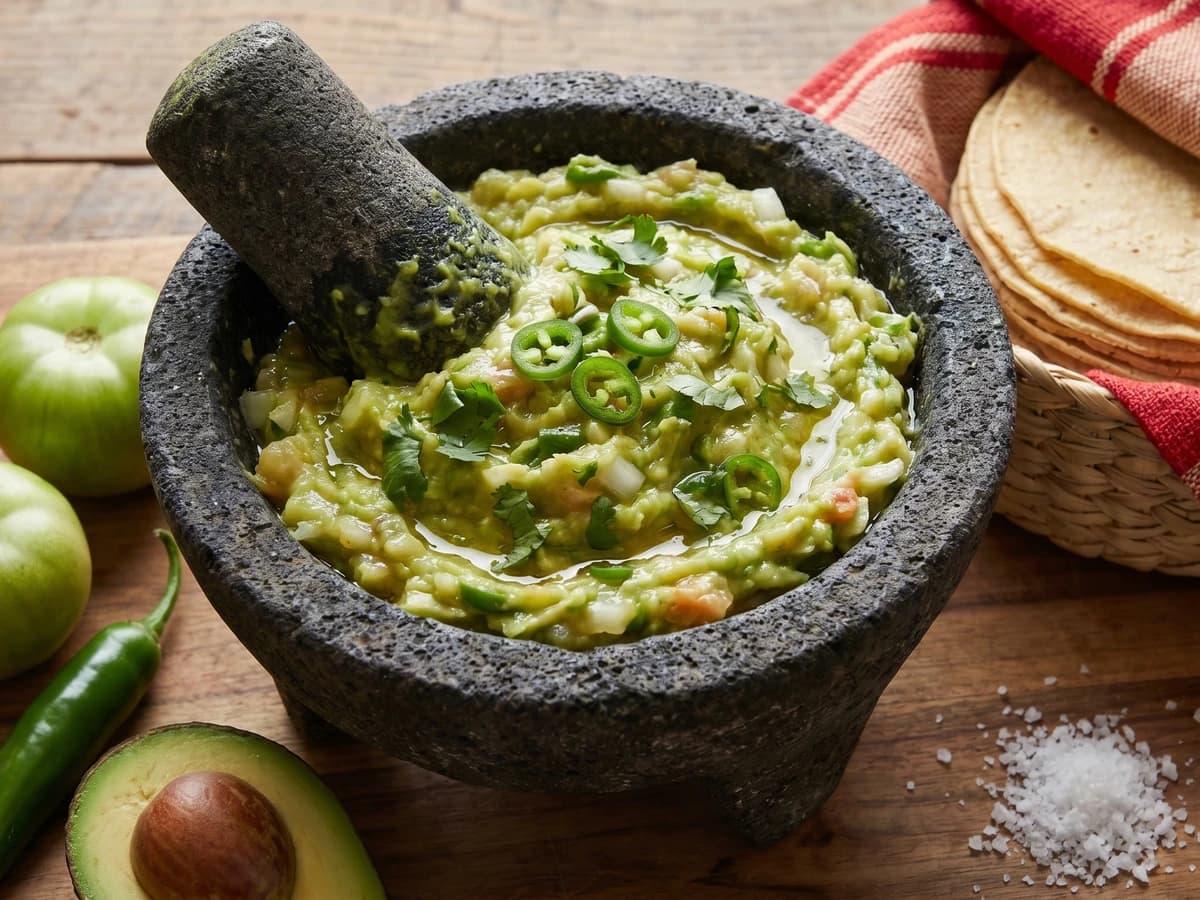
While you shape the molotes, bring a saucepan of water to a boil. Add the tomatillos and chile serrano. Boil for eight to ten minutes until the tomatillos turn from bright green to olive and are soft all the way through. Drain, reserving a quarter cup of the cooking liquid. Transfer the tomatillos, chiles, garlic, cilantro, and salt to a blender. Blend until smooth, adding a splash of the reserved liquid if the blender needs help moving. Taste it. It should be tart and bright with a clean serrano bite. Adjust salt. Pour into a bowl and set aside.
7
Fry the molotes
In a heavy, deep skillet or Dutch oven, heat the lard or oil over medium-high heat to 350 degrees Fahrenheit. If you do not have a thermometer, test with a small piece of masa: it should sizzle immediately and float to the surface within a few seconds. Fry the molotes in batches of three or four, turning them once, for about four to five minutes total until they are deep golden and the surface is covered in small blisters. Do not crowd the pan. Crowding drops the oil temperature and gives you greasy, pale molotes instead of crisp ones. Lift them out with a slotted spoon or spider and drain on a wire rack set over a sheet pan. Not paper towels. A rack lets the air circulate and keeps the bottom from getting soggy.
Lard gives you a better crust and a flavor that belongs to this dish. If you use vegetable oil, the molotes will still be good, but you will notice a difference. La manteca es el sabor.
8
Dress and serve
Place the hot molotes on a plate, two or three per serving. Spread a generous spoonful of warm refried black beans across the top of each one. Drizzle with the crema, letting it fall in uneven lines. Scatter crumbled queso fresco over everything. Spoon the salsa verde alongside or over the top, however the eater wants it. Serve immediately while the shell still crackles. A molote that sits too long is a molote that loses its reason for existing. Recetas probadas y garantizadas.
Chef Tips
•The black beans for the topping should be Oaxacan-style: cooked black beans mashed and fried in a little lard or oil with a leaf of hierba santa or avocado leaf if you can find it. The beans need to be thick enough to sit on top of the molote without sliding off, not soupy. If your refried beans are too thin, cook them down a few more minutes.
•Oaxacan crema is thinner and tangier than the crema you find in most Mexican markets outside Oaxaca. If you can only find the thicker version, thin it with a tablespoon of milk or buttermilk until it pours in a thin stream. Sour cream is not crema. Do not use sour cream.
•If you are making these for a crowd, you can shape all the molotes up to two hours ahead, keep them covered with a damp towel on a floured tray in the refrigerator, and fry them just before serving. Do not fry ahead and reheat. A reheated molote is a sad thing. The whole point is the contrast between the crisp shell and the soft filling the moment it comes out of the oil.
•The chorizo matters. A good Mexican chorizo from a carniceria will be seasoned with chile ancho, guajillo, vinegar, and spices. Supermarket chorizo in a plastic tube is often full of fillers and food coloring. Preguntale a las senoras del mercado. They know which brand is worth buying.
Advance Preparation
•The chorizo and potato filling can be made one day ahead and refrigerated. Bring it to room temperature before shaping so the cold filling does not crack the masa.
•The salsa verde can be made up to two days ahead and refrigerated. The flavor settles and the heat mellows slightly, which some people prefer.
•Shaped, unfried molotes can be held for up to two hours in the refrigerator under a damp towel. Do not freeze them raw. The masa texture suffers and they tend to crack open during frying.
Frequently Asked Questions
Nutrition Information
1 serving (about 450g)
Calories
1050 calories
Total Fat
65 g
Saturated Fat
26 g
Trans Fat
1 g
Unsaturated Fat
38 g
Cholesterol
95 mg
Sodium
1190 mg
Total Carbohydrates
92 g
Dietary Fiber
11 g
Sugars
6 g
Protein
25 g
Where cooking meets culture.
Culinary guides, cultural storytelling, and the editorial depth that makes cooking meaningful.