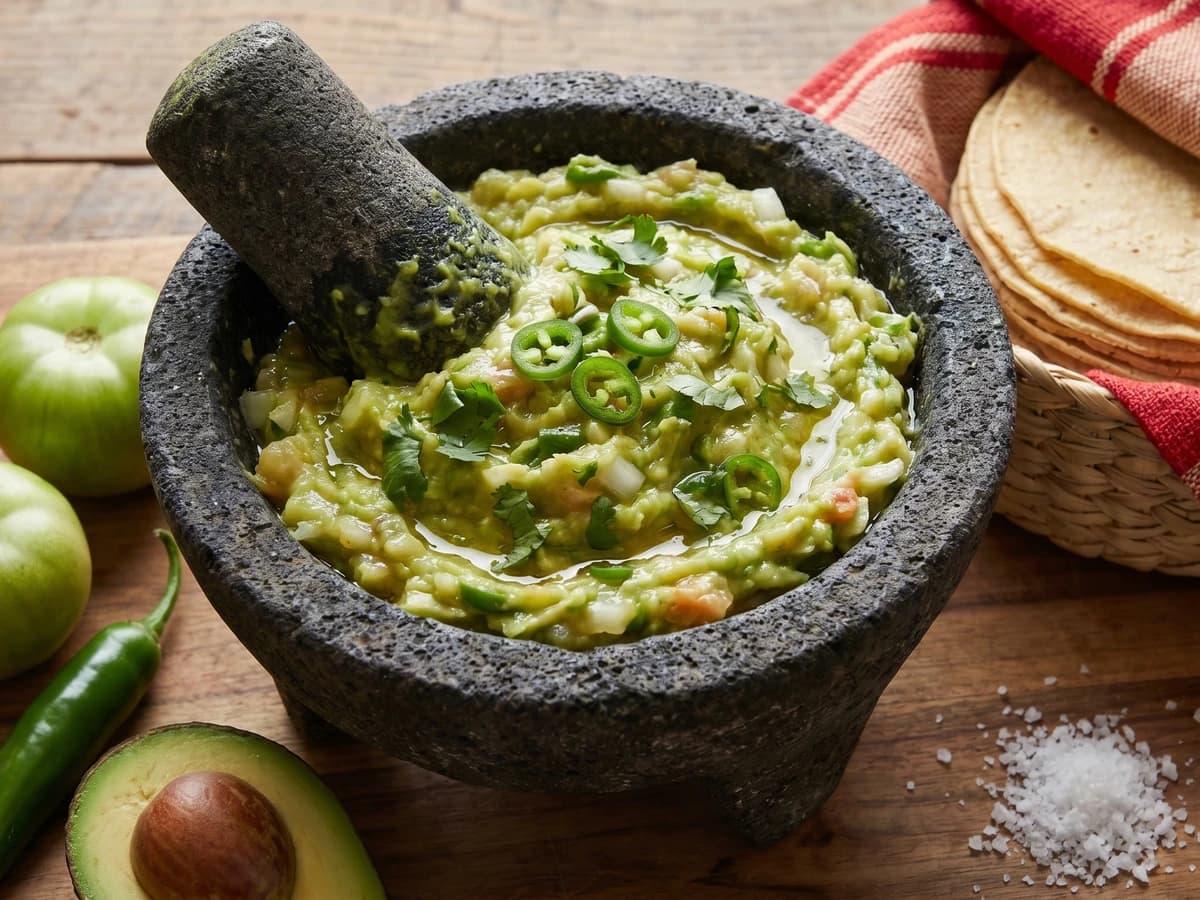
Ciudad de Mexico's open-face bolillo, split lengthwise, mounted with hot frijoles refritos and queso manchego, broiled until bubbling, crowned with bright pico de gallo. The breakfast of a city that runs on bread and beans.
Appetizers & Snacks
Mexican
Weeknight
Quick Meal
Comfort Food
15 min
Active Time
10 min cook•25 min total
Yield4 servings (8 mollete halves)
Molletes are capitalinos. This is a Ciudad de Mexico dish, born in the cafeterias and fondas of the Centro Histórico where office workers, students, and grandmothers all order the same thing for breakfast or for a late merienda. There are mollete-like dishes in other parts of Mexico, but the version with bolillo, refried beans, melted cheese, and salsa mexicana on top is ours. The chilangos own this one.
The whole dish rests on the bolillo. Not a baguette. Not a hoagie roll. A bolillo, that crusty oval roll with a soft white crumb that you find at any panadería in the country and at every corner panadería in the capital. Day-old bread is better than fresh. The dryness gives the bread structure under the weight of the beans. The beans must be hot and spreadable, fried in lard the way frijoles refritos are supposed to be made, not the canned brick that someone scoops out of a tin. The cheese is queso manchego mexicano, which has nothing to do with Spanish manchego, or queso Chihuahua from the north. Both melt into the bubbling golden sheet that gives the mollete its identity. Yellow cheddar is a Tex-Mex error. Do not make it.
My mother kept a paper bag of bolillos on top of the refrigerator and when they went stale, she would split them open, smear the cut side with manteca, pile on whatever beans were left from the night before, and run them under the broiler. The pico de gallo was whatever the mercado had that morning. That is the soul of the dish. It is a way of using bread that has begun to harden and beans that have begun to thicken, and turning them into something that tastes like the city you live in. Cada estado, su propia cocina, y los molletes son del DF.
The bolillo itself arrived with the French during the Second Mexican Empire in the 1860s, when Maximilian's court brought European baking traditions that local panaderos adapted into the smaller, crustier roll Mexico would adopt as its everyday bread. The mollete as a hot open-face preparation took shape in Mexico City during the 20th century, particularly in the cafeterias and lunch counters that proliferated in the Centro and Roma neighborhoods through the 1940s and 1950s, where workers needed a hot, cheap, filling breakfast that the cook could assemble in minutes from leftover beans and yesterday's bread. The dish should not be confused with the Andalusian mollete, a soft flat bread that shares only the name; the Mexico City version is a distinct dish whose closest culinary cousins are the molletes of Antequera in Spain only by accident of vocabulary.
The technique, the tradition, and the story behind every dish.
queso manchego mexicano or queso Chihuahuashredded
2 cups
Roma tomatoesfinely diced
3 medium
white onionfinely diced
1/2 medium
fresh chile serranofinely chopped, seeds in
2
fresh cilantro leaveschopped
1/3 cup
fresh lime juice
2 tablespoons
kosher salt
3/4 teaspoon, divided
pickled jalapeños en escabeche (optional)
for serving
salsa verde or salsa roja (optional)
for serving
Equipment Needed
•Sheet pan
•Bread knife for splitting the bolillos
•Small skillet for warming the beans
•Sharp paring knife and a wooden cutting board for the pico de gallo
Instructions
1
Hollow and prepare the bolillos
Heat the broiler with a rack positioned about six inches below the element. Split each bolillo lengthwise without cutting all the way through. With your fingers, pull out some of the soft crumb from the center of each half. You want a shallow trough that will hold the beans, not a hollow boat. Save the crumb for breadcrumbs another day. A bolillo that is one or two days old works better than a fresh one. Fresh bread goes soggy under the beans. Slightly stale bread holds its structure.
If your bolillos are very fresh, put the halves cut side up on a sheet pan and dry them in a 300F oven for ten minutes before you build the molletes. This is not cheating. This is what your panadero would tell you to do.
2
Toast the bread with lard
Spread the softened manteca generously on the cut side of each bolillo half, edge to edge. Arrange them cut side up on a sheet pan and slide under the broiler for two to three minutes, until the edges turn golden and the bread crisps up. Watch them. Bread under a broiler turns from gold to black in fifteen seconds. La manteca es el sabor. Butter will work but it tastes like a different sandwich. Lard tastes like a mollete.
3
Make the pico de gallo
While the bread toasts, combine the diced tomato, white onion, chopped serrano, cilantro, lime juice, and half a teaspoon of salt in a bowl. Stir with a spoon. Taste it. The salt should sharpen the tomato, the lime should lift the onion, the serrano should sit at the back of your throat. Adjust. Let it rest while you build the molletes so the flavors come together. This is salsa mexicana, the same red-white-green that flies on the flag. No me vengas con atajos. Do not use canned diced tomatoes for this. The water content is wrong and the flavor is dead.
4
Spread the beans
Pull the toasted bolillos out of the oven. The beans need to be hot and spreadable, not stiff from the refrigerator. If they have firmed up, loosen them in a small skillet with a tablespoon of lard or bean broth over medium heat until they move like soft mashed potatoes. Spread a thick layer over each bolillo half, filling the trough and going right to the edges. A thin layer of beans makes a thin mollete. Mound them. This is comfort food. Stinginess has no place here.
5
Top with cheese and broil
Cover the beans completely with shredded manchego or Chihuahua. The cheese should hide the beans. Return the sheet pan to the broiler for three to four minutes, until the cheese melts into a single bubbling sheet with golden brown spots on top. Listen for the sizzle. Watch for the first browned blister and pull the pan. Manchego mexicano melts beautifully, stretches, and tastes like Mexico. Do not use yellow cheddar. Cheddar on a mollete is a Tex-Mex mistake.
Queso Oaxaca shredded into ribbons works if you cannot find manchego or Chihuahua. Avoid anything pre-shredded with anti-caking powder. It melts greasy.
6
Top with pico and serve
Transfer the molletes to a wooden board or a wide plate. Spoon a generous mound of the pico de gallo across the top of each one, letting the lime juice run down into the melted cheese. Set the salsa verde and the jalapeños en escabeche on the table. Eat immediately with your hands. Molletes go cold fast and the bread loses its crisp. Saber cocinar es saber vivir.
Chef Tips
•If you can make your own frijoles refritos from scratch, do it. Cook pinto or black beans with onion, garlic, and a sprig of epazote, then mash them in a hot skillet with a generous spoon of lard until they are smooth and glossy. Canned refried beans are a compromise, not an upgrade. If you must use canned, loosen them with lard and a little water and warm them properly.
•Manchego mexicano and queso Chihuahua are the right cheeses. Both come from the north, both melt into a stretchy golden sheet. If you cannot find either, queso Oaxaca shredded into ribbons works. Monterey Jack is acceptable. Yellow cheddar is not Mexican cheese and has no business on this plate.
•The pico de gallo should be made fresh and eaten the same day. A pico that sits overnight turns watery and the onion gets aggressive. If you have leftovers, drain off the juice and use it for hot sauce or in a vinaigrette. Do not put yesterday's pico on today's mollete.
•For a heartier version, the chilangos add chorizo, machaca, or a fried egg on top before the pico. That is breakfast molletes. The plain version is the after-school snack, the late-night merienda, the dinner you make when there is nothing else in the kitchen and bread, beans, and cheese will do.
Advance Preparation
•The frijoles refritos can be made up to four days ahead and refrigerated. Reheat with a splash of bean broth or water and a spoon of lard to bring them back to spreadable.
•The pico de gallo can be made up to two hours ahead and held at room temperature. Do not refrigerate it. Cold dulls the tomato and the lime fades.
•Molletes themselves must be assembled and broiled at the moment of eating. They do not hold, they do not reheat well, and a mollete that has gone cold is a sad imitation of what it should be.
Frequently Asked Questions
Nutrition Information
1 serving (about 335g)
Calories
650 calories
Total Fat
31 g
Saturated Fat
16 g
Trans Fat
0 g
Unsaturated Fat
15 g
Cholesterol
75 mg
Sodium
1055 mg
Total Carbohydrates
65 g
Dietary Fiber
8 g
Sugars
3 g
Protein
28 g
Where cooking meets culture.
Culinary guides, cultural storytelling, and the editorial depth that makes cooking meaningful.