Chef Lupita
Acúmara Tatemada al Comal
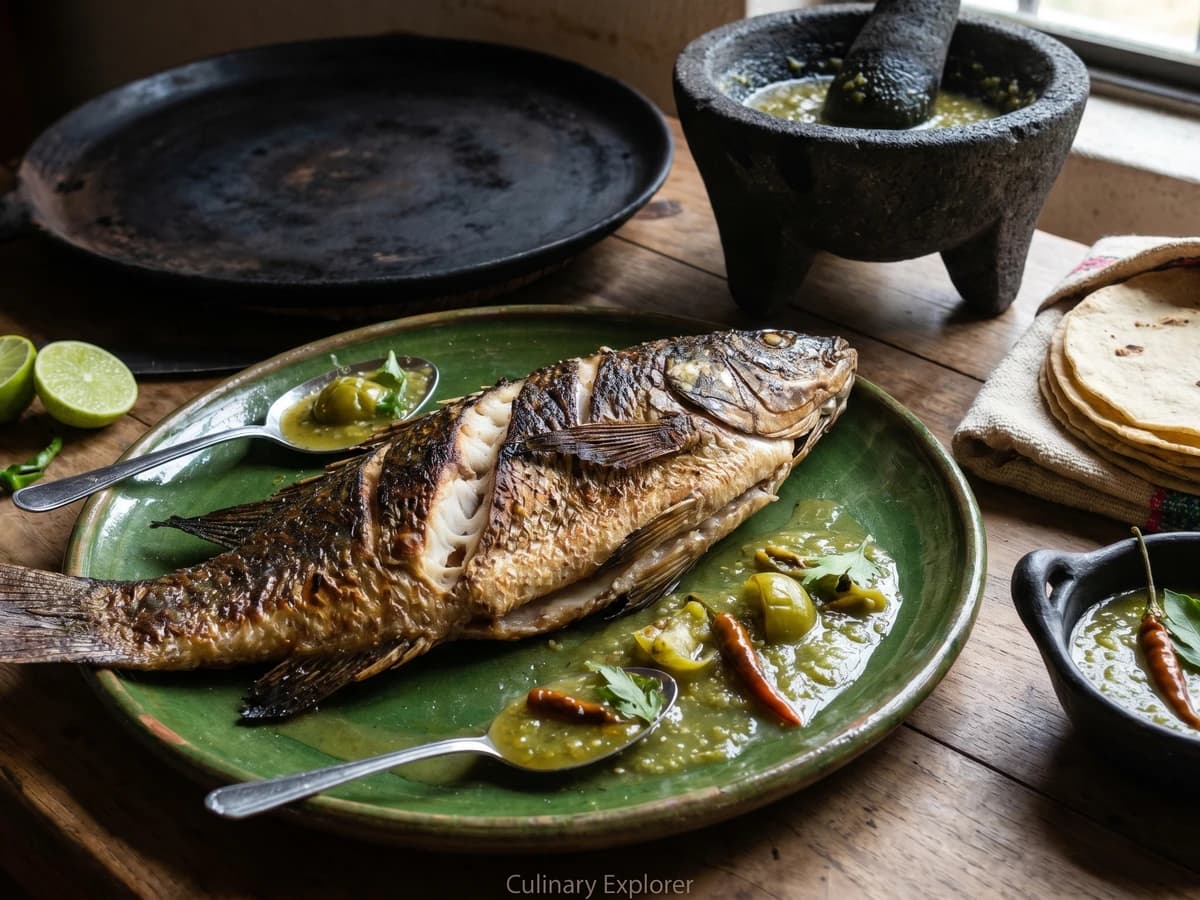
Michoacán's Lake Pátzcuaro acúmara, a whole kurucha from the lago tatemada on a comal de leña and served with chile perón atápakua, corn tortillas, and P'urhépecha discipline.
A cooking platform built around craft, culture, and the stories behind what we eat.

Created by
Oaxaca's bright red mole, built on toasted guajillo, ancho, costeño, and pasilla oaxaqueño with charred tomato and a whisper of Mexican chocolate, ladled over slow-simmered beef the way they make it in the Valles Centrales.
This is from Oaxaca. Specifically from the Valles Centrales, where the seven moles live and where every cook will tell you that mole rojo is not mole negro's little sister. It is its own dish with its own logic.
Mole negro gets its near-black color from chilhuacle negro and burned tortilla. Mole rojo gets its color from guajillo, ancho, and ripe red tomato, brightened by chile costeño rojo and deepened by chile pasilla oaxaqueño. The result is sharper, fruitier, more direct than negro. It tastes like the chile, not like the smoke. Some Oaxacan cooks call it coloradito's bigger cousin and that is fair enough, though every senora I asked at the 20 de Noviembre market drew the line in a slightly different place.
The beef is not incidental. In Oaxaca, mole rojo most often goes with chicken or turkey, but in the cattle-raising parts of the Mixteca and along the road toward Tlaxiaco, you will find it ladled over slow-simmered beef shank or chuck. The richness of the beef and the brightness of the red mole hold each other up. One without the other tilts.
My mother did not cook Oaxacan food. She was from Jalisco. But there is a page in her notebook, dated 1991, copied from a woman named Doña Esperanza who ran a comedor in Etla. The note in the margin says: 'fría bien la pasta, no tenga prisa.' Fry the paste well, do not rush. That is the whole recipe in five words. Saber cocinar es saber vivir.
Oaxaca's classification of seven moles, negro, rojo, coloradito, amarillo, verde, chichilo, and manchamanteles, was codified through 20th-century cookbooks and tourism literature, but the dishes themselves predate the formal taxonomy by centuries, evolving from the convergence of pre-Columbian chile-and-seed grinding traditions with Spanish spice imports including cinnamon, cloves, and almonds. Mole rojo specifically draws on the Mixteca region's deep tradition of chile guajillo and chile costeño cultivation, and its lighter color and brighter chile-forward profile reflect the Valles Centrales pantry rather than the smokier Sierra Norte pantry that produces mole negro. The UNESCO inscription of Traditional Mexican Cuisine as Intangible Cultural Heritage in 2010 leaned heavily on Michoacan as the supporting case, but Oaxaca's mole tradition was central to the argument, with the seven moles offered as evidence of regional depth that flat 'Mexican food' descriptions erase.
Quantity
3 pounds
cut into 2-inch chunks, bone-in if possible
Quantity
1 medium
halved
Quantity
1
halved crosswise
Quantity
6
separated for the mole
Quantity
2
Quantity
1 tablespoon, plus more to taste
Quantity
10
stemmed and seeded
Quantity
6
stemmed and seeded
Quantity
3
stemmed and seeded
Quantity
2
stemmed and seeded
Quantity
4 medium
Quantity
3
husked and rinsed
Quantity
1
quartered
Quantity
1/4 cup, plus 1 tablespoon for garnish
Quantity
1/4 cup
skins on
Quantity
2 tablespoons
Quantity
1 small
peeled and sliced
Quantity
1
torn
Quantity
1 small slice
Quantity
1 stick, about 2 inches
Quantity
3
Quantity
5
Quantity
1/2 teaspoon
Quantity
1 ounce
chopped
Quantity
1/4 cup
Quantity
for serving
warmed
Quantity
for serving
Quantity
for garnish
Quantity
for garnish
| Ingredient | Quantity |
|---|---|
| beef chuck or beef shankcut into 2-inch chunks, bone-in if possible | 3 pounds |
| white onionhalved | 1 medium |
| head of garlichalved crosswise | 1 |
| garlic clovesseparated for the mole | 6 |
| bay leaves | 2 |
| kosher salt | 1 tablespoon, plus more to taste |
| dried chile guajillostemmed and seeded | 10 |
| dried chile anchostemmed and seeded | 6 |
| dried chile costeño rojostemmed and seeded | 3 |
| dried chile pasilla oaxaqueñostemmed and seeded | 2 |
| ripe tomatoes | 4 medium |
| tomatilloshusked and rinsed | 3 |
| small white onionquartered | 1 |
| raw sesame seeds | 1/4 cup, plus 1 tablespoon for garnish |
| raw almondsskins on | 1/4 cup |
| raw pumpkin seeds (pepitas) | 2 tablespoons |
| ripe plantainpeeled and sliced | 1 small |
| stale corn tortillatorn | 1 |
| white bread (pan blanco) | 1 small slice |
| Mexican cinnamon (canela) | 1 stick, about 2 inches |
| whole cloves | 3 |
| black peppercorns | 5 |
| dried Mexican oregano | 1/2 teaspoon |
| Mexican chocolate (Oaxacan if available)chopped | 1 ounce |
| manteca de cerdo (pork lard) | 1/4 cup |
| hand-pressed corn tortillas (optional)warmed | for serving |
| white rice (optional) | for serving |
| sesame seeds (optional) | for garnish |
| sliced raw white onion (optional) | for garnish |
Place the beef in a heavy stockpot. Cover with cold water by two inches. Add the halved onion, halved head of garlic, bay leaves, and salt. Bring to a gentle simmer over medium heat. Skim the gray foam that rises in the first fifteen minutes. Reduce the heat until you see lazy bubbles every few seconds. Cover partially and cook for two and a half hours, until the beef pulls apart with light pressure from a fork. Cold water and a low simmer pull the flavor out clean. A rolling boil will cloud the broth and toughen the meat. You will need this broth to build the mole, so do not rush it.
While the beef simmers, heat a dry comal or heavy skillet over medium. Toast each variety of chile separately, about 30 seconds per side, pressing them flat with a spatula. The skin will puff and the kitchen will smell like the inside of a chile vendor's stall at the Central de Abastos. The pasilla oaxaqueño is the thinnest and burns the fastest. Watch it. The guajillo and ancho hold up better but still need your attention. Burned chile is bitter chile and there is no fixing it later.
Place the toasted chiles in a heatproof bowl and cover with hot tap water. Hot water, not boiling. Boiling water cooks the skin and makes the mole taste like burned rubber. Let the chiles soften for 25 minutes. They should bend without cracking when you lift one out.
On the same comal, char the tomatoes, tomatillos, quartered small onion, and 6 garlic cloves (still in their skins) over medium-high heat. Turn them as the skins blister and blacken in spots. The tomatoes should collapse and weep their juice. The tomatillos turn from green to olive. The garlic skins blacken and the cloves soften inside. This char is where the mole gets its depth. Slip the garlic out of its papery skins once cool enough to handle.
Lower the comal to medium. Toast the sesame seeds, stirring constantly, until they turn pale gold and start to jump. Set aside, reserving 1 tablespoon for garnish. Toast the almonds and pepitas the same way, separately, until fragrant. Last, toast the cinnamon stick, cloves, and peppercorns for about a minute, until you smell them. La cocina no es decoración, es trabajo. Every one of these toasted bits is layered flavor that you cannot fake later.
In a small skillet, melt 2 tablespoons of the lard over medium heat. Fry the plantain slices until dark gold on both sides and soft in the middle. Lift them out. In the same lard, fry the torn tortilla and the slice of bread until both turn deep brown and crisp. The plantain brings sweetness and body. The bread and tortilla thicken the mole and give it the velvety texture that distinguishes a serious mole from a thin chile sauce.
Drain the soaked chiles, reserving the soaking liquid for emergencies but do not use it unless you must. Working in batches, blend the chiles with the charred tomatoes, tomatillos, onion, and peeled garlic. Add a ladle of the warm beef broth to help the blender move. Blend until completely smooth. In a second batch, blend the toasted sesame, almonds, pepitas, cinnamon, cloves, peppercorns, oregano, fried plantain, fried tortilla, and fried bread with another ladle of broth until you have a thick paste. Strain both purees through a fine-mesh sieve into the same bowl, pressing hard on the solids. Discard the skins and grit. The strain is non-negotiable. Skip it and your mole will be sandy. Asi se hace y punto.
In a heavy 6-quart cazuela or Dutch oven, melt the remaining 2 tablespoons of lard over medium heat. When it shimmers, pour in the strained mole base. It will sputter. Stir constantly with a wooden spoon for 8 to 10 minutes. The mole will darken from bright red to a deep brick red, and the fat will start to glisten on the surface. La manteca es el sabor. This frying step is what turns a chile puree into a mole. Skip it and you have soup.
Strain the beef broth and reserve the meat. Add 4 to 5 cups of the warm broth to the fried mole, one ladle at a time, stirring to incorporate. The mole should coat the back of a spoon and slide off in a slow ribbon. Drop in the chopped Mexican chocolate and stir until it melts. The chocolate is not for sweetness. It rounds the edge off the chile and gives the mole its red-brown shine. Simmer gently for 30 minutes, stirring often so nothing sticks. Taste for salt now. The mole should be deep, complex, faintly sweet, faintly bitter, with the chile carrying everything underneath.
Slide the cooked beef back into the mole and let it warm through for 10 minutes, spooning the sauce over each piece. Serve in shallow clay bowls with the sauce ladled generously over the meat. Scatter the reserved sesame seeds and a few rings of raw white onion across the top. Serve with white rice and warm hand-pressed corn tortillas at the table. Recetas probadas y garantizadas.
1 serving (about 310g)
Culinary guides, cultural storytelling, and the editorial depth that makes cooking meaningful.
Discover Culinary ExplorerChef Lupita
Michoacán's Lake Pátzcuaro acúmara, a whole kurucha from the lago tatemada on a comal de leña and served with chile perón atápakua, corn tortillas, and P'urhépecha discipline.

Chef Lupita
Puebla's weekday adobo of pork shoulder braised in a thick guajillo and ancho sauce sharpened with vinegar, cumin, and clove. The deep red of a market spice stall, the dish a poblana cooks without thinking.

Chef Lupita
Loreto's pit-roasted clams, planted hinge-up in beach sand and tatemadas under a fast fire of dried romerillo brush, the resinous Baja desert shrub that gives this dish its smoke.

Chef Lupita
Oaxaca's eighth mole, the silky, almond-and-cinnamon almendrado, served over poached chicken. Mild, sweet, restrained, and a quiet rebuttal to anyone who thinks Mexican food has to be hot to be Mexican.