Chef Lupita
Acúmara Tatemada al Comal
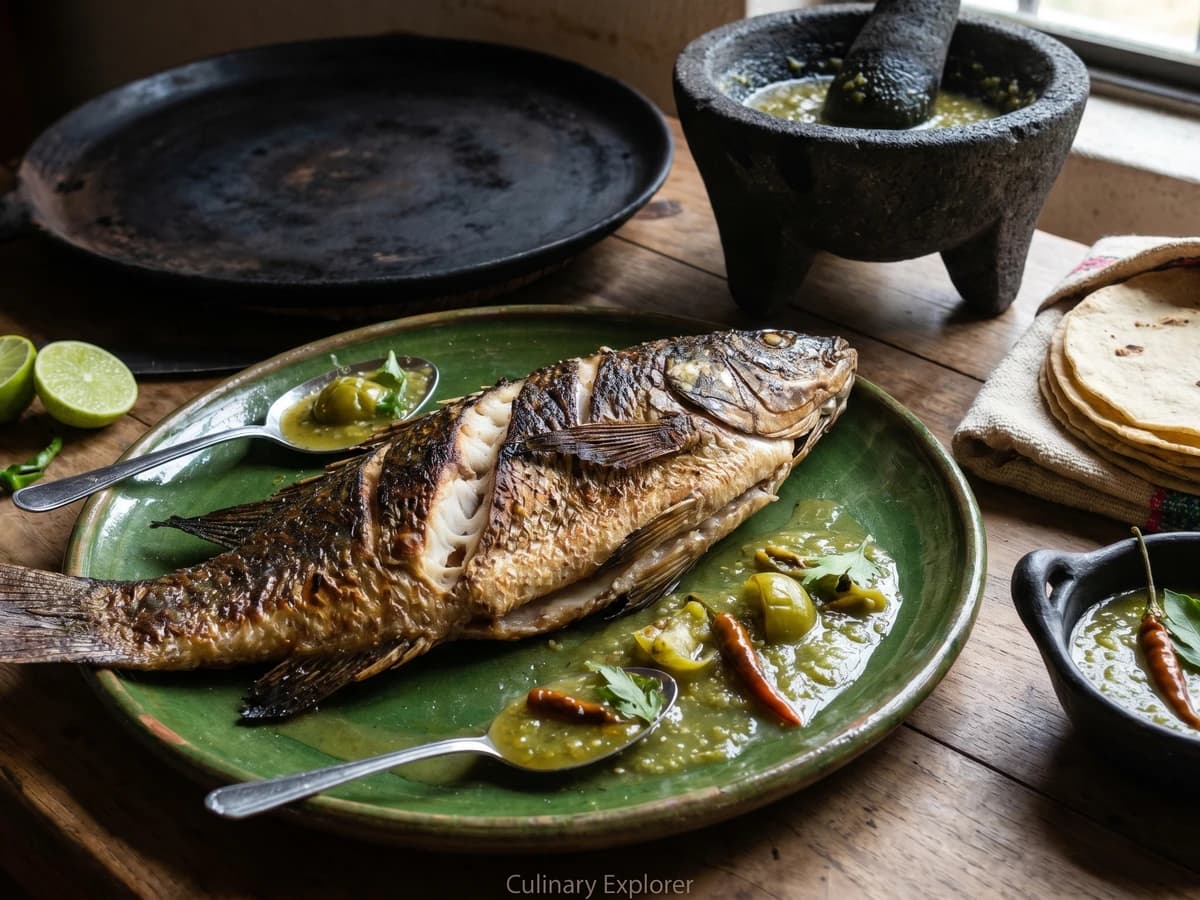
Michoacán's Lake Pátzcuaro acúmara, a whole kurucha from the lago tatemada on a comal de leña and served with chile perón atápakua, corn tortillas, and P'urhépecha discipline.
A cooking platform built around craft, culture, and the stories behind what we eat.
Created by
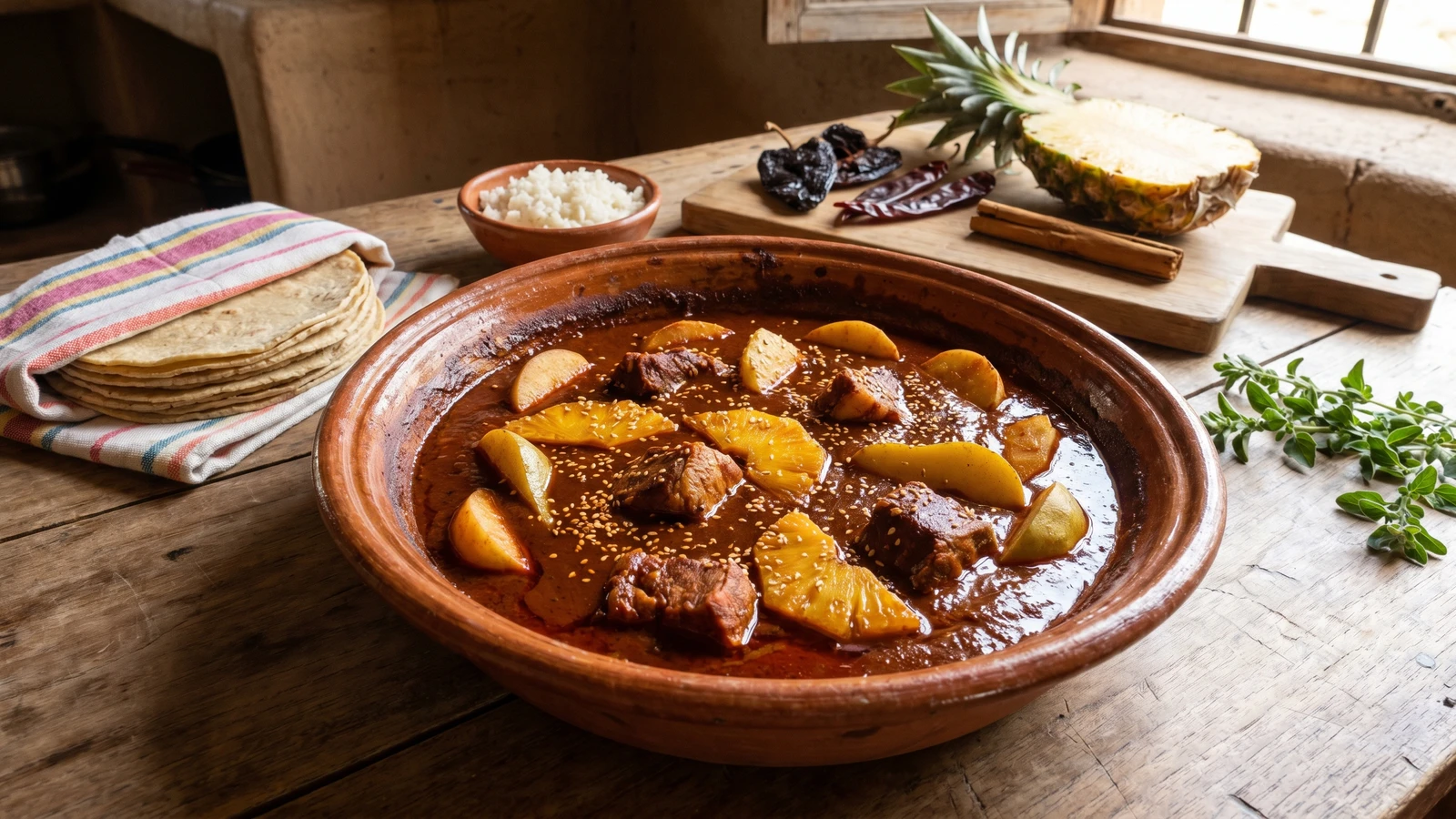
Oaxaca's tablecloth-stainer mole, built on toasted ancho and guajillo, fried plantain, pineapple, and pears, simmered with pork until the fruit gives up its juice and the chile takes over.
Manchamanteles is one of the seven moles of Oaxaca. Some cooks in Puebla will tell you it belongs to them. The argument has been going on for at least a hundred years and I am not going to settle it here. What I will tell you is this: every Oaxacan abuela I have cooked with from the Valles Centrales to the Sierra Norte has a manchamanteles in her repertoire, and the version I am giving you is built from notes I took in the kitchen of a senora named Estela in Teotitlan del Valle who has been making it for sixty years.
The name means tablecloth-stainer. The mole is so deeply colored from ancho and guajillo, so loaded with the juice of pineapple and stewed fruit, that one drop on white linen is permanent. Embrace it. Set the table with a cloth that has already been stained and stop worrying.
This is the mole that breaks the rule about meat and fruit. Pork shoulder, sometimes chicken, simmered with pineapple, pears, apple, and a fried plantain that goes into the chile base for body. The plantain is not a garnish. It is structural. Without it the mole is thin and the sweetness has nowhere to land. The vinegar and piloncillo at the end pull the sweetness into balance. Sweet alone is a compote. Sweet with chile, acid, and lard is manchamanteles.
My mother did not make this mole. It was not in her notebook. I learned it from the women of Oaxaca, on a trip in 2009 that I funded with the sales of my second cookbook. I came home with three notebooks of variations and the conviction that this mole has been overlooked outside Oaxaca because people cannot place it. It is not negro and it is not rojo. It is its own animal. Cada estado, su propia cocina, and within Oaxaca, cada cocinera, su propio manchamanteles.
Manchamanteles is one of the moles included in Oaxaca's seven-mole canon, alongside negro, rojo, coloradito, amarillo, verde, and chichilo, though Puebla also lays claim to the dish and 17th-century convent records from both regions reference fruit-based moles served at religious feasts. The combination of New World chiles and tropical fruits with Old World cinnamon, cloves, and stewed apples reflects the post-conquest culinary fusion that defined colonial Mexican cooking, and the dish was historically served on the feast of Corpus Christi in both Oaxaca and Puebla. The pineapple is essential and not interchangeable, since pineapple is native to the Americas and was already cultivated in southern Mexico before European contact, while the European fruits, apple and pear, arrived with the Spanish and were folded into the dish over the following century.
Quantity
3 pounds
cut into 2-inch chunks
Quantity
1 pound
traditional in some Oaxacan versions
Quantity
1 medium plus 1/2
the medium halved for the broth, the half chopped for the mole
Quantity
1, plus 4 cloves
head halved crosswise for broth, 4 cloves reserved for the mole
Quantity
2
Quantity
1 tablespoon, plus more to taste
Quantity
8
stemmed and seeded
Quantity
4
stemmed and seeded
Quantity
2
stemmed and seeded
Quantity
3 tablespoons
Quantity
1/4 cup
skin on
Quantity
2 tablespoons
Quantity
1
peeled and sliced into 1-inch rounds
Quantity
2 medium
Quantity
1 thick slice
Quantity
1 stick (3 inches)
Quantity
4
Quantity
6
Quantity
1/2 teaspoon
Quantity
1 (about 3 cups)
peeled, cored, and cut into 1/2-inch wedges
Quantity
2
peeled, cored, and cut into thick wedges
Quantity
1
peeled, cored, and cut into thick wedges
Quantity
2 tablespoons
Quantity
1 tablespoon
grated (or dark brown sugar)
Quantity
for serving
Quantity
for serving
warmed
Quantity
for garnish
| Ingredient | Quantity |
|---|---|
| bone-in pork shouldercut into 2-inch chunks | 3 pounds |
| bone-in chicken thighs (optional)traditional in some Oaxacan versions | 1 pound |
| white onionthe medium halved for the broth, the half chopped for the mole | 1 medium plus 1/2 |
| head of garlichead halved crosswise for broth, 4 cloves reserved for the mole | 1, plus 4 cloves |
| bay leaves | 2 |
| kosher salt | 1 tablespoon, plus more to taste |
| dried chile anchostemmed and seeded | 8 |
| dried chile guajillostemmed and seeded | 4 |
| dried chile pasillastemmed and seeded | 2 |
| manteca de cerdo (pork lard) | 3 tablespoons |
| whole almondsskin on | 1/4 cup |
| sesame seeds | 2 tablespoons |
| ripe plantainpeeled and sliced into 1-inch rounds | 1 |
| Roma tomatoes | 2 medium |
| white bolillo or stale country bread | 1 thick slice |
| Mexican canela (true cinnamon) | 1 stick (3 inches) |
| whole cloves | 4 |
| whole black peppercorns | 6 |
| dried Mexican oregano | 1/2 teaspoon |
| small ripe pineapplepeeled, cored, and cut into 1/2-inch wedges | 1 (about 3 cups) |
| firm-ripe pearspeeled, cored, and cut into thick wedges | 2 |
| firm-ripe applepeeled, cored, and cut into thick wedges | 1 |
| apple cider vinegar | 2 tablespoons |
| dark piloncillograted (or dark brown sugar) | 1 tablespoon |
| cooked white rice (optional) | for serving |
| hand-pressed corn tortillas (optional)warmed | for serving |
| toasted sesame seeds (optional) | for garnish |
Place the pork shoulder and chicken thighs, if using, in a large stockpot. Cover with cold water by two inches. Add the halved onion, the halved head of garlic, the bay leaves, and the salt. Bring to a gentle simmer over medium heat. Skim the gray foam in the first fifteen minutes. Cook at a low simmer for one hour and fifteen minutes, until the pork is tender but not falling apart. Strain and reserve the broth. You should have about six cups. Set the meat aside, covered. Cold water and a slow simmer make a clean broth. A rolling boil clouds it and toughens the meat.
While the meat simmers, heat a dry comal or heavy skillet over medium. Toast the ancho, guajillo, and pasilla separately, about 20 to 30 seconds per side, pressing them flat with a spatula. The skin will puff and the kitchen will smell like the inside of a chile vendor's stall. That smell is the oils releasing. Do not let any of them blacken. Burned chile is bitter chile. Transfer the toasted chiles to a heatproof bowl, cover with hot tap water, not boiling, and let them soften for 25 minutes.
On the same comal, toast the almonds for two to three minutes until they smell nutty. Push them to one side and add the sesame seeds. Toast, stirring constantly, until they turn pale gold and start to jump in the pan. Pull everything off the heat. In a small dry pan, briefly toast the canela stick, cloves, and peppercorns for thirty seconds, just until fragrant. The spices in this mole are subtle. Toast them once and stop.
Set the tomatoes directly on the comal over medium-high heat and char them on all sides until the skin blisters and the flesh softens, about eight minutes. Set aside. In a small skillet, melt one tablespoon of the manteca over medium heat. Fry the plantain rounds until deep golden on both sides, about three minutes per side. The plantain is the backbone of manchamanteles. It gives the mole its sweet, full body. Fry the bread slice in the same fat until golden, then set everything aside.
Drain the soaked chiles, discarding the soaking water, which is bitter. Place the chiles in a high-powered blender with the charred tomatoes, the chopped half onion, the four reserved garlic cloves, the toasted almonds, half of the toasted sesame seeds, the fried plantain, the fried bread, the canela stick (broken in half), the cloves, the peppercorns, and the oregano. Add two cups of the reserved pork broth. Blend on high for two full minutes until completely smooth. You should have a thick, deep red-brown puree. Strain through a medium-mesh sieve, pressing on the solids with a wooden spoon. Discard what stays behind.
In a wide, heavy cazuela or Dutch oven, melt the remaining two tablespoons of manteca over medium heat. When the fat shimmers, pour in the strained puree all at once. It will sputter, so stand back. Cook, stirring constantly with a wooden spoon, for ten to twelve minutes. The puree will darken and the fat will start to separate at the edges. La manteca es el sabor. This step is what separates a serious mole from a thin one. Skip it and the chile will taste raw and the spices will taste loose.
Stir in three more cups of the reserved pork broth. The mole should now have the body of heavy cream. If it is too thick, add a little more broth. Add the apple cider vinegar and the grated piloncillo. Stir and let simmer for ten minutes. Taste. The mole should taste sweet but not dessert-sweet, slightly tart, deeply chile-forward, with the spices behind everything. Adjust salt now. The vinegar and piloncillo balance is the heart of manchamanteles. Sweet alone is a fruit compote. Sweet with acid and chile is a mole.
Return the cooked pork (and chicken, if using) to the cazuela. Add the pineapple, pears, and apple. Stir gently to coat everything in the mole. Simmer over low heat, partially covered, for 25 to 30 minutes. The fruit should soften but still hold its shape, the pineapple should give up some of its juice into the sauce, and the meat should finish becoming tender. The mole will turn slightly more orange from the pineapple. That is correct. Manchamanteles means tablecloth-stainer. The color is the dish's signature.
Pull the cazuela off the heat and let it rest, covered, for fifteen minutes before serving. Mole always needs a rest. The flavors settle and the fat rises. Spoon the meat, fruit, and a generous ladle of mole onto warm plates. Scatter the remaining toasted sesame seeds across the top. Serve with white rice and warm corn tortillas. Asi se hace y punto.
1 serving (about 410g)
Culinary guides, cultural storytelling, and the editorial depth that makes cooking meaningful.
Discover Culinary ExplorerChef Lupita
Michoacán's Lake Pátzcuaro acúmara, a whole kurucha from the lago tatemada on a comal de leña and served with chile perón atápakua, corn tortillas, and P'urhépecha discipline.

Chef Lupita
Puebla's weekday adobo of pork shoulder braised in a thick guajillo and ancho sauce sharpened with vinegar, cumin, and clove. The deep red of a market spice stall, the dish a poblana cooks without thinking.

Chef Lupita
Loreto's pit-roasted clams, planted hinge-up in beach sand and tatemadas under a fast fire of dried romerillo brush, the resinous Baja desert shrub that gives this dish its smoke.

Chef Lupita
Oaxaca's eighth mole, the silky, almond-and-cinnamon almendrado, served over poached chicken. Mild, sweet, restrained, and a quiet rebuttal to anyone who thinks Mexican food has to be hot to be Mexican.