Chef Lupita
Acúmara Tatemada al Comal
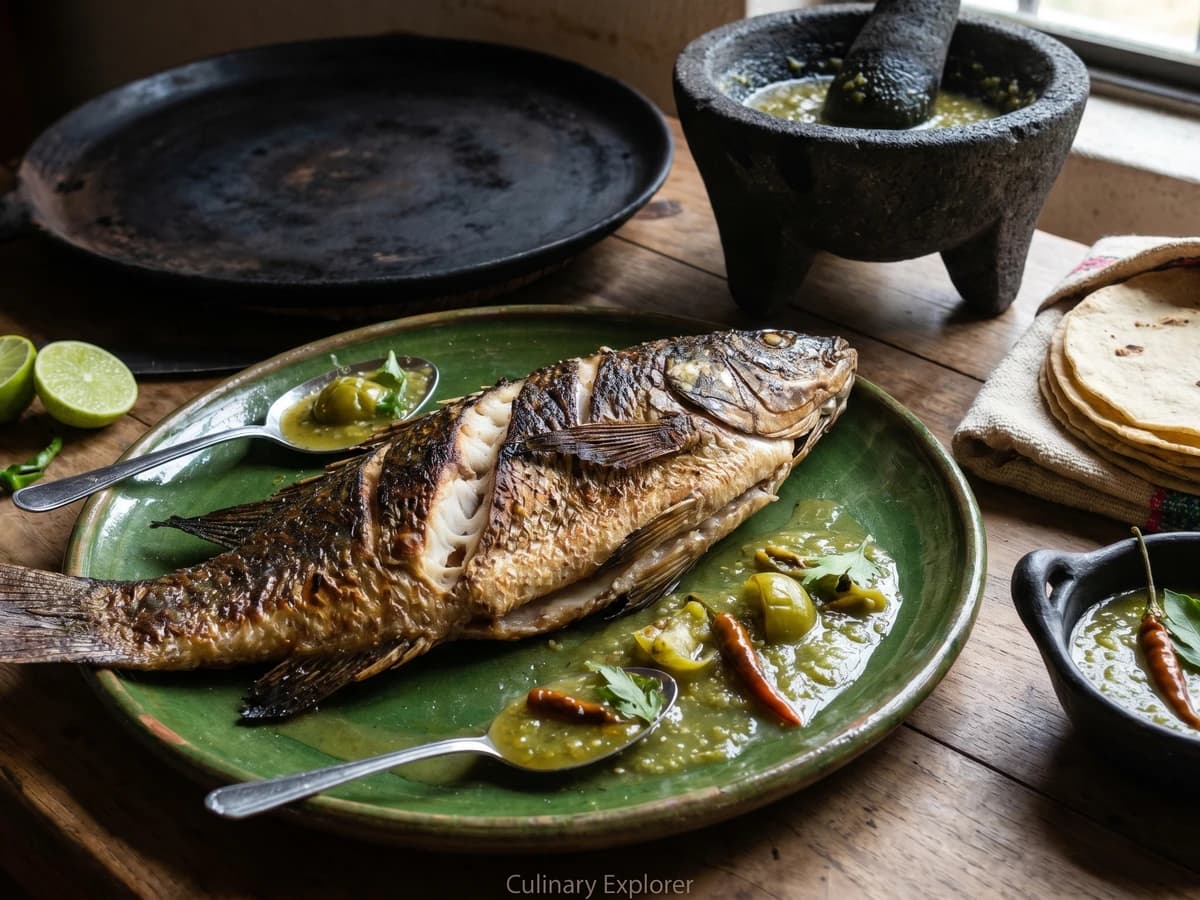
Michoacán's Lake Pátzcuaro acúmara, a whole kurucha from the lago tatemada on a comal de leña and served with chile perón atápakua, corn tortillas, and P'urhépecha discipline.
A cooking platform built around craft, culture, and the stories behind what we eat.

Created by
Michoacán's Meseta P'urhépecha baptism mole, chicken braised in guajillo, ancho, cacao, sesame, and lard, made for a crowded patio where cocineras measure ceremony by the cazuela.
Michoacán, Meseta P'urhépecha, the high country between Zacán, Cherán, Cocucho, Uruapan, and the road down to Lake Pátzcuaro: this is where this baptism mole lives. It is not Puebla's mole poblano and it is not chocolate sauce. The Meseta cocineras serve it for bautizo because the sauce feeds a patio full of relatives and still tastes like ceremony: guajillo for red depth, ancho for sweetness, cacao to round the chile, and chicken from the corral simmered until the broth knows what it is carrying.
The women who keep this dish alive are the cocineras tradicionales of Zacán, Janitzio, Cocucho, Cherán, and Uruapan. I have watched them work at fogones de leña, setting chiles on the comal and deciding by smell, not by clock. The milpa gives the corn tortilla that thickens the mole, the monte gives thyme, mejorana, oregano, and laurel in the market herb bundles, and the lago gives its own words, kurucha and acúmara, even when this baptism table belongs to chicken.
This is close to atápakua in its respect for thick sauce, but it is mole: chiles toasted, seeds fried in manteca de cerdo, sauce strained and refried until oil shines at the edge. No me vengas con atajos. A blender is fine. Skipping the frying is not. Cada estado, su propia cocina.
My mother did not write this one in her Jalisco notebook. I learned it in Michoacán, where a black-clay cazuela of Patamban can sit in the center of the table and make everybody quiet for the first bite. Saber cocinar es saber vivir.
The P'urhépecha, speakers of a language isolate, built a state centered around Tzintzuntzan and Lake Pátzcuaro that resisted Mexica expansion before the Spanish invasion; its ruler carried the title Cazonci. Ceremonial chicken mole in the Meseta reflects a post-conquest pot: native chile, cacao, corn, and comal technique joined with Spanish chicken, wheat bread, cinnamon, cloves, and sesame. In 2010 UNESCO inscribed Traditional Mexican Cuisine as Intangible Cultural Heritage using the Michoacán paradigm, recognizing the milpa system and the knowledge transmitted by cocineras tradicionales in communities including Zacán, Janitzio, Cocucho, Cherán, and Uruapan.
Quantity
2, about 7 to 8 pounds total
cut into serving pieces
Quantity
14 cups, plus more as needed
Quantity
1
halved, for the broth
Quantity
1
cut into thick slices, for roasting
Quantity
1
halved crosswise, for the broth
Quantity
6
unpeeled, for roasting
Quantity
3
Quantity
4 sprigs or 1 teaspoon dried
Quantity
4 sprigs or 1 teaspoon dried
Quantity
1 1/2 tablespoons, plus more to taste
Quantity
12
stemmed and seeded
Quantity
4
stemmed and seeded
Quantity
2
stemmed and seeded
Quantity
3
left whole for roasting
Quantity
6 tablespoons
divided
Quantity
1/2 cup
Quantity
1/3 cup
Quantity
1/4 cup
Quantity
1
torn into pieces
Quantity
2
toasted until brown and torn
Quantity
2 tablespoons
Quantity
1 1/2-inch piece
Quantity
4
Quantity
6
Quantity
8
Quantity
1/2 teaspoon
Quantity
1 teaspoon
Quantity
2 ounces
chopped
Quantity
1 tablespoon
Quantity
2 tablespoons
for serving
Quantity
for serving
Quantity
for serving
warmed
| Ingredient | Quantity |
|---|---|
| whole chickenscut into serving pieces | 2, about 7 to 8 pounds total |
| cold water | 14 cups, plus more as needed |
| large white onionhalved, for the broth | 1 |
| medium white onioncut into thick slices, for roasting | 1 |
| head of garlichalved crosswise, for the broth | 1 |
| garlic clovesunpeeled, for roasting | 6 |
| bay leaves | 3 |
| fresh thyme or dried tomillo | 4 sprigs or 1 teaspoon dried |
| fresh marjoram or dried mejorana | 4 sprigs or 1 teaspoon dried |
| kosher salt | 1 1/2 tablespoons, plus more to taste |
| dried chile guajillostemmed and seeded | 12 |
| dried chile anchostemmed and seeded | 4 |
| dried chile pasillastemmed and seeded | 2 |
| Roma tomatoesleft whole for roasting | 3 |
| manteca de cerdodivided | 6 tablespoons |
| raw sesame seeds | 1/2 cup |
| raw unsalted peanuts | 1/3 cup |
| hulled pumpkin seeds | 1/4 cup |
| day-old bolillotorn into pieces | 1 |
| day-old corn tortillastoasted until brown and torn | 2 |
| raisins | 2 tablespoons |
| canela | 1 1/2-inch piece |
| whole cloves | 4 |
| allspice berries | 6 |
| black peppercorns | 8 |
| cumin seeds | 1/2 teaspoon |
| dried Mexican oregano | 1 teaspoon |
| chocolate de metate made with cacaochopped | 2 ounces |
| grated piloncillo | 1 tablespoon |
| toasted sesame seeds (optional)for serving | 2 tablespoons |
| arroz rojo (optional) | for serving |
| corundas or hand-pressed corn tortillas (optional)warmed | for serving |
Put the chicken pieces in a large pot with the cold water, halved onion, halved head of garlic, bay leaves, thyme, mejorana, and salt. Bring it to a gentle simmer over medium heat. Skim the gray foam during the first 15 minutes. Cook until the chicken is just tender, 35 to 45 minutes, pulling breast pieces early if they finish first. Strain and save the broth. Keep the chicken covered so it does not dry out.
Heat a dry comal over medium. Wipe the guajillo, ancho, and pasilla chiles with a dry cloth, then toast them separately. The guajillo needs about 15 to 20 seconds per side, the ancho a little longer, and the pasilla burns fastest. The skins should puff and smell deep, never blacken. Cover the toasted chiles with hot water and soak for 20 minutes. Drain them. Use broth for blending, not the soaking water, which can carry bitterness.
On the same comal, roast the tomatoes, sliced onion, and unpeeled garlic cloves. Turn them until the tomatoes blister, the onion softens at the edges, and the garlic cloves feel tender under their skins. Peel the garlic. This is where the mole begins to taste like fogón instead of blender.
Melt 2 tablespoons of manteca de cerdo in a wide skillet over medium heat. Fry the sesame seeds, peanuts, pumpkin seeds, bolillo pieces, toasted tortillas, and raisins in batches until the seeds smell nutty and the bread turns golden. Move each batch to a bowl as it finishes. Toast the canela, cloves, allspice, peppercorns, cumin, and Mexican oregano for 20 to 30 seconds, just until fragrant. Do not wander off. Burned spice takes over the whole cazuela.
Blend the soaked chiles, roasted tomatoes, roasted onion, peeled garlic, fried seeds, bread, tortillas, raisins, and toasted spices in batches with about 4 cups of the reserved chicken broth. Blend longer than you think. The sauce should be smooth enough to coat a spoon without gritty chile skin. Strain it through a medium-fine sieve into a bowl, pressing hard on the solids. This is work. La cocina no es decoración, es trabajo.
Heat the remaining 4 tablespoons manteca de cerdo in a black-clay cazuela or heavy Dutch oven over medium heat. Add the strained mole puree carefully. It will sputter. Stir with a wooden spoon for 12 to 15 minutes, until the color deepens to brick red and the fat begins to shine at the edges. This refrying is not decoration. It cooks the raw chile taste out and gives the sauce authority. Así se hace y punto.
Add 3 to 4 more cups of chicken broth, little by little, until the mole loosens into a thick sauce. Stir in the chopped chocolate de metate and grated piloncillo. Taste for salt. Add the cooked chicken pieces and simmer gently for 20 to 25 minutes, spooning sauce over the top, until the chicken is fully coated and the thickest pieces register 165F. The sauce should cling to the meat, not run like soup.
Turn off the heat and let the mole rest for 30 minutes. Mole needs that pause. The chile, cacao, seed, and chicken broth settle into each other. Rewarm gently if needed, then scatter toasted sesame seeds over the top. Serve family-style in the cazuela with arroz rojo and corundas or hand-pressed corn tortillas. Flour tortillas are a northern tradition. They do not belong on this Meseta table. Recetas probadas y garantizadas.
1 serving (about 560g)
Culinary guides, cultural storytelling, and the editorial depth that makes cooking meaningful.
Discover Culinary ExplorerChef Lupita
Michoacán's Lake Pátzcuaro acúmara, a whole kurucha from the lago tatemada on a comal de leña and served with chile perón atápakua, corn tortillas, and P'urhépecha discipline.

Chef Lupita
Puebla's weekday adobo of pork shoulder braised in a thick guajillo and ancho sauce sharpened with vinegar, cumin, and clove. The deep red of a market spice stall, the dish a poblana cooks without thinking.

Chef Lupita
Loreto's pit-roasted clams, planted hinge-up in beach sand and tatemadas under a fast fire of dried romerillo brush, the resinous Baja desert shrub that gives this dish its smoke.

Chef Lupita
Oaxaca's eighth mole, the silky, almond-and-cinnamon almendrado, served over poached chicken. Mild, sweet, restrained, and a quiet rebuttal to anyone who thinks Mexican food has to be hot to be Mexican.